HelloRoam is a global eSIM provider offering instant mobile data in 185+ countries. Buy prepaid travel eSIM plans with no extra fees, no contracts, and instant activation on any eSIM-compatible device.
Comparing eSIM vs physical SIM comes down to three things: how fast it sets up, what it costs, and how secure it is while you travel. An eSIM is a chip built into your phone that activates via a QR code scan. A physical SIM is a removable nano card you slot in by hand. The difference between eSIM and SIM card is that one is embedded in hardware and one is removable plastic. Here is a straightforward side-by-side guide built for Canadian travellers heading to the US, Mexico, Europe, and beyond.
Last updated:eSIM vs SIM card: an e SIM downloads a carrier profile to your phone by QR code, while a physical SIM card must be purchased in a store or ordered by mail and delivered to your address. SIM vs eSIM comes down to convenience and cost. eSIM versus SIM: eSIM wins on setup speed, security, and multi-country switching. eSIM card vs SIM card: the eSIM is soldered into your phone and cannot be removed, while a SIM card slides in and out. The difference between eSIM and SIM card for Canadian travellers is that an eSIM activates in minutes with no store visit, while a physical SIM card requires delivery or an airport kiosk queue. Is eSIM better than physical SIM? For any phone made after 2018, yes. Physical SIM vs eSIM: physical SIM wins only for older handsets. eSIM advantages include instant activation, no plastic to carry, and better security against SIM swap fraud. eSIM disadvantages include no support on pre-2018 phones and a non-transferable chip. How to convert physical SIM to eSIM in Canada: log into your Rogers, Bell, or Telus account, request a QR code, and scan it in Settings. How to convert eSIM to SIM: contact your carrier and request a replacement nano SIM card. Skip the SIM swap on your next trip abroad. A prepaid eSIM activates instantly with no store visit and no delivery wait. HelloRoam offers prepaid eSIM plans starting at CA$1.56 across 185+ countries with no physical card, no shipping, and no hidden fees. An e-sim compatible phone stores multiple profiles and switches between networks in seconds from your phone settings. Browse HelloRoam eSIM plans for 185+ countries, covering popular Canadian travel destinations including the US, Mexico, the UK, Europe, Japan, and the Caribbean.
Instant Activation
Scan a QR code from home and arrive already connected. No delivery, no SIM ejector tool, no carrier counter to queue at.
Lower Cost
Plans start at CA$1.56 with no shipping fees. Physical SIMs at airport counters often cost CAD 15 to CAD 60 CAD before data.
Easy Country Switching
Hold multiple eSIM profiles on one phone and switch between countries without ever opening the SIM tray.
Better Security
The eSIM chip is built into your phone and cannot be removed or cloned. Your connection stays locked to your device.
Eco-Friendly
No plastic card, no packaging, no shipping. Every eSIM purchased keeps one more physical card out of the waste stream.
Dual SIM Support
Keep your Canadian carrier number active for calls and texts while the HelloRoam eSIM handles your travel data abroad.
A prepaid eSIM activates in under five minutes. Scan the QR code from your HelloRoam confirmation email before you leave home, and your data is ready the moment your plane lands. There is no waiting for a courier, no tracking down a carrier kiosk in an unfamiliar airport, and no fumbling with a SIM ejector pin in the arrivals hall. Physical SIM cards demand planning: order one in advance or hunt for a shop after you clear customs. For Canadians heading to New York, Cancun, London, or Tokyo, that convenience gap matters more than most people expect.
HelloRoam eSIM plans start at CA$1.56 with no shipping costs and no handling fees added at checkout. A physical SIM picked up at an airport carrier counter typically runs CAD 15 to CAD 60 CAD before you load any data onto it. Pay one flat price upfront with HelloRoam and connect to local networks at local rates for the entire trip. On a two-week holiday, those upfront physical SIM costs plus the carrier data add-on can easily outpace what a prepaid eSIM would have cost, as of April 2026.

Heading from Montreal to Mexico City, then on to Madrid? Store multiple eSIM profiles on one phone and flip between them in a few taps without opening the SIM tray. With physical SIM cards, each country means a separate nano SIM to carry, label, and keep track of while you travel. An eSIM-compatible phone holds your Rogers, Bell, or Telus carrier line active for calls and texts while a HelloRoam travel eSIM handles data at full local speeds. No tools, no tiny cards to misplace in a jacket pocket, no stress at the gate.
Every physical SIM card starts as plastic, a blister pack, and a delivery shipment. Across millions of travellers each year, that adds up to a significant amount of waste. An eSIM is entirely digital from start to finish: no card, no packaging, and no carbon cost from shipping. If you travel regularly and want to shrink the footprint of each trip, choosing an e SIM over a physical SIM card is one of the most straightforward changes you can make, and it costs nothing extra to do it.
A plain feature-by-feature look at how HelloRoam eSIM stacks up against a physical SIM for Canadian travellers
| Feature | Physical SIM | |
|---|---|---|
| Instant Activation | ||
| No Physical Card Needed | ||
| 185+ Countries | ||
| Multiple Profiles on One Device | ||
| No Shipping or Handling Fees | ||
| Eco-Friendly (Zero Plastic) | ||
| Dual SIM Support |
Browse prepaid eSIM plans for your next destination

Unlimited eSIM Plan
Stay connected across Mexico.
From

Unlimited eSIM Plan
Stay connected across Morocco.
From

Unlimited eSIM Plan
Stay connected across United States.
From

Unlimited eSIM Plan
Get connected in Japan in minutes.
From

Unlimited eSIM Plan
Get connected in Turkey in minutes.
From

Unlimited eSIM Plan
Stay connected across China.
From
Get connected in 4 easy steps
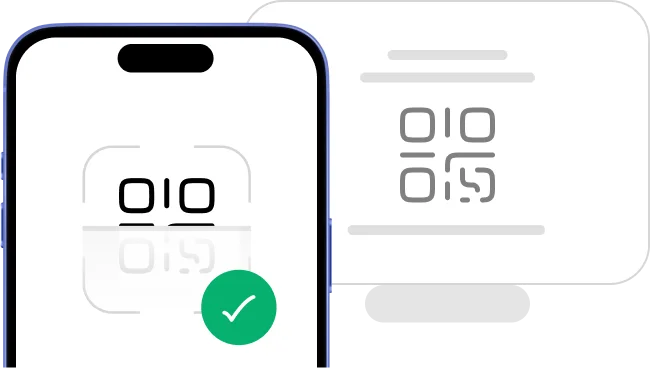
Install your eSIM before you leave home. Scan the QR code, confirm the install in your settings, and your plan is ready to go.


Have questions about eSIM vs SIM cards or how to set one up? Our support team is available around the clock. Reach us through live chat or WhatsApp anytime.
The right choice depends on your phone model and how you prefer to travel. An eSIM suits most modern phones well: no store visit required, no nano SIM card to swap at the airport, and the chip cannot be physically removed from your device. That last point protects against SIM swap fraud, a growing concern for travellers. If your phone does not include eSIM hardware, a physical SIM card is still a reliable option.

Switching from a physical SIM to an eSIM is a straightforward process with all three major Canadian carriers. Log into your Rogers, Bell, or Telus account through their app, find the eSIM or digital SIM option, and request a transfer. The carrier sends a QR code to your email or displays one in the app. Scan it on your phone, confirm the install, and your digital profile is active. Your physical SIM stops working once the eSIM takes over, so verify the switch is complete before you remove the old card.
Is eSIM better than a physical SIM card? For most Canadian travellers with a phone made after 2018, yes. It downloads and activates through a QR code scan in minutes, with no card to lose and no delivery wait. The esim vs physical sim comparison consistently favours eSIM on activation speed, security, and cost. HelloRoam eSIM plans start at CA$1.56 and cover 185+ countries including the US, Mexico, and Europe. A physical SIM still makes sense for older phones that lack eSIM hardware or for destinations where local carrier eSIM support is limited.
An eSIM is more secure than a physical SIM card because the chip is soldered inside your phone and cannot be popped out or swapped into another device. SIM swap fraud works by getting a physical SIM removed from the victim's phone, a step that becomes far harder when there is no removable card. Your HelloRoam eSIM profile is locked to your device using GSMA encryption standards and stays bound to that phone until you transfer it intentionally.
An eSIM is the practical choice for most Canadians travelling to the US or Mexico. Local physical SIM cards in both countries can cost less per gigabyte, but buying one requires finding a carrier store, presenting ID, and waiting for activation. A HelloRoam prepaid eSIM activates from home before your flight, so you land in Fort Lauderdale or Cancun already connected. For a March Break trip or a quick cross-border weekend, eSIM convenience is hard to beat.
eSIM advantages over a physical SIM card include QR code activation in minutes, no plastic card to lose at any point during your trip, and the ability to hold multiple carrier profiles on a single device. The difference between eSIM and SIM is that physical sim vs esim comes down to hardware: eSIM is embedded, physical SIM is removable. HelloRoam eSIM connects you to 202+ networks across 185+ countries. Activate your travel plan from your couch before leaving for the airport and switch between countries without stepping inside a phone shop at any stop.
An eSIM provides the same level of privacy as a physical SIM card. Both use identical protocols to connect to cell towers, and the same network-level data applies to each. The security edge eSIM holds is physical: no one can remove the chip from your phone or slip it into another device. HelloRoam eSIM profiles are device-locked and encrypted to the GSMA standard, so your connection stays tied to your phone throughout your trip.
Most smartphones released after 2018 support two or more eSIM profiles running at the same time. Apple iPhones from the XS onward support dual eSIM, and the iPhone 13 and newer can run two eSIMs simultaneously with no physical SIM required. Samsung Galaxy S21 and later also support multiple profiles. HelloRoam lets you load a travel data eSIM alongside your existing Bell, Rogers, or Telus carrier eSIM so your Canadian number stays reachable while you are away.
An eSIM is much harder to compromise than a physical SIM card. There is no chip to remove, no card to clone, and no way to hand it off to another device. GSMA encryption covers every HelloRoam eSIM profile across 185+ countries. SIM swap attacks that rely on a thief physically handling your SIM card hit a dead end with an e-sim, which gives you a meaningful security advantage on every trip.
HelloRoam eSIM plans are data-only and do not assign a new phone number to your device. Your existing Canadian number stays active on your primary carrier line as usual. This two-line setup works well for travel: Rogers, Bell, or Telus handle your calls and texts while HelloRoam delivers data across 185+ countries. If you need a local number at your destination, a carrier eSIM from a local provider would be needed for that.
Your phone number belongs to your carrier account, not to the SIM type. Moving from a physical SIM to an eSIM with Rogers, Bell, or Telus keeps your number exactly the same. Adding a HelloRoam travel eSIM does not touch your existing Canadian number at all. Your home line stays active for calls and texts while HelloRoam handles data in 185+ countries abroad.

The Samsung M53 does not support eSIM. Samsung eSIM capability begins with the Galaxy S20 and higher-end models, plus the Z Flip and Z Fold series. Budget Samsung A-series and M-series phones generally do not include eSIM hardware. To check your model, go to Settings, tap Connections, then SIM Manager and look for an eSIM option. Visit helloroam.com to verify compatibility before purchasing a plan.
HelloRoam eSIM plans start at CA$1.56 for fixed data packages, as of April 2026. Plan sizes range from 3GB to 20GB, with unlimited daily plans also available for longer trips. Compare that to a physical SIM from an airport counter at CAD 15 to CAD 60 CAD plus a separate data top-up on arrival. Most Canadian travellers find that switching to a prepaid eSIM cuts their international data bill by 50% or more.
Adding a second eSIM to your iPhone takes roughly two minutes. Open Settings, tap Cellular, then tap Add eSIM. Scan the QR code from your HelloRoam order confirmation email and follow the on-screen prompts. iPhones from the XS (2018) onward support multiple stored eSIM profiles. The iPhone 13 and later can keep two eSIMs active at the same time, so your Rogers or Bell line and your HelloRoam travel plan both work together without any SIM juggling.
An eSIM is worth it for any Canadian with a compatible phone who travels internationally or wants to ditch the wait for a physical card in the mail. HelloRoam eSIM saves travellers up to 84% compared to Bell, Rogers, and Telus daily roaming add-ons. Buy your plan online, skip the carrier store, and have data ready before you clear security at Pearson, YVR, or any other departure airport.
For Canadian travellers with a phone made after 2018, an eSIM is the better choice over a physical SIM card. Activation takes minutes via QR code, there is no nano SIM card to track down or lose, and a single device can hold up to 20 profiles for different countries or carriers. HelloRoam eSIM plans cover 185+ countries starting at CA$1.56. Physical SIM cards remain the practical option only for older phones that lack eSIM hardware.
Running two lines on a dual SIM phone draws slightly more battery when both are active, and some older models limit the second SIM to 4G even when 5G is available on the primary line. Tracking two separate data balances is a minor but real overhead. On certain Android phones, only one SIM can access 5G at a time. For most Canadians using dual SIM to keep their home number reachable while HelloRoam handles data abroad, these are small trade-offs compared to the savings.
eSIM disadvantages include limited support on phones made before 2018, reduced carrier choice in some lower-infrastructure markets, and the fact that an eSIM is not transferable between devices once installed. If you sell or replace your phone, you need to set up a new profile on the new device rather than physically moving a card across. In the physical sim vs esim trade-off, physical SIM wins only for older phones. For most HelloRoam customers with an eSIM-compatible phone, the instant QR code setup and stronger security outweigh these limitations comfortably.
The practical downside of eSIM compared to a physical SIM card is that you cannot hand it to someone else or slide it into a replacement phone if your device breaks. An eSIM is locked to the device it was installed on and is not transferable without setting up a fresh profile. Physical SIM cards are still the right call for phones that predate 2018 or lack eSIM hardware. For any phone made in the last seven years, eSIM is quicker to set up, more secure, and simpler to manage.
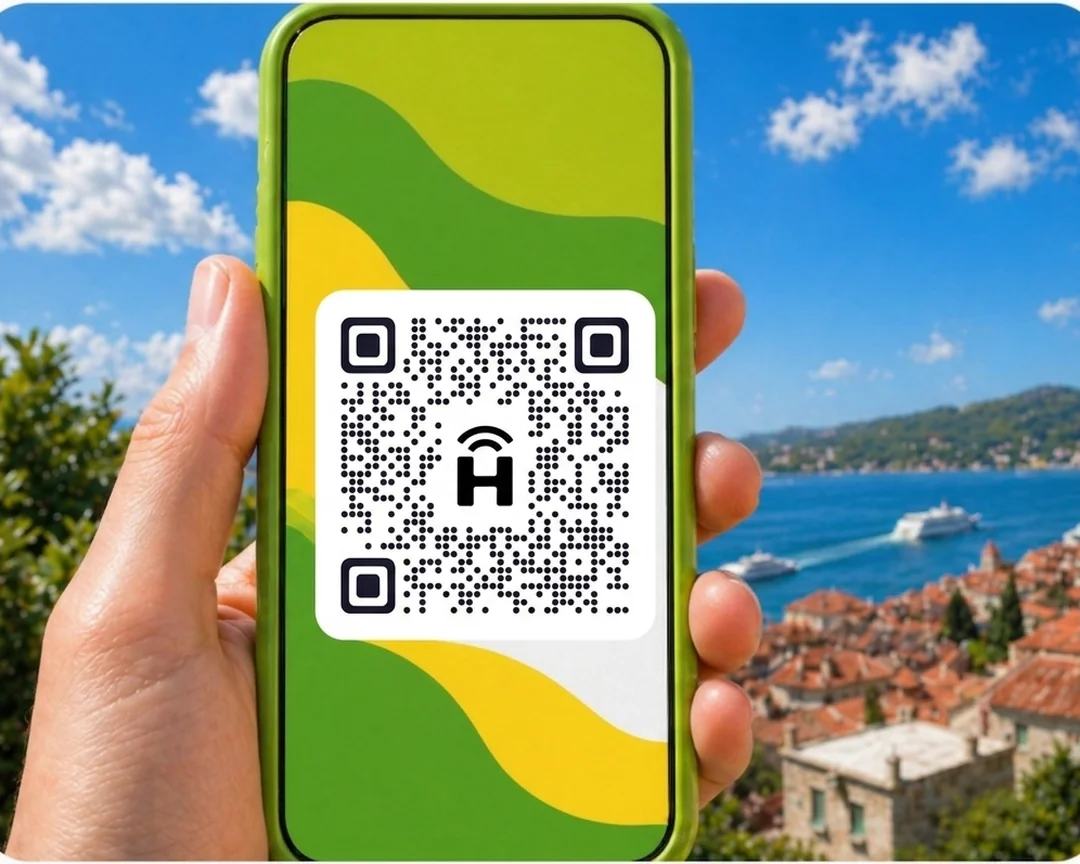
An eSIM is a chip built permanently into your phone during manufacturing. Instead of inserting a nano SIM card, you receive a QR code from your provider, scan it on your device, and a carrier profile downloads and activates your cellular connection in under five minutes. HelloRoam uses this technology to give Canadian travellers access to 202+ networks across 185+ countries, with no store visit, no shipping, and no physical card to keep safe.
The most common eSIM risk is losing access if you factory reset your phone without removing the eSIM profile first, since an eSIM is not transferable to another device after installation. Always delete or back up your eSIM profile before selling, trading in, or wiping your phone. Outside of that, eSIM carries no greater security risk than a physical SIM card. HelloRoam applies the GSMA encryption standard to every eSIM profile it issues.
The main disadvantage of eSIM is that you cannot take it out of your phone and put it in a different device the way you can with a physical SIM card. An eSIM is not transferable between phones once activated. You also need a Wi-Fi connection or existing mobile data to complete the initial profile download. For most Canadian travellers with a modern, eSIM-compatible phone, the convenience of scanning a QR code from home and landing already connected far outweighs those limitations.

An eSIM has no impact on signal strength or data speeds. Both eSIM and physical SIM connect to cell towers using the same underlying technology, and your speeds depend entirely on the carrier network, your location, and your plan tier. The GSMA confirms that eSIM meets identical technical standards to physical SIM on every network. Connecting to a Rogers or Bell partner network abroad through a HelloRoam eSIM gives you the same speeds as a local SIM would.
An eSIM is the better choice for most people with a phone made after 2018. Setup takes minutes via QR code, there is no physical card to lose, and the chip cannot be removed from your device, which protects you against SIM swap fraud. HelloRoam eSIM plans cover 185+ countries starting at CA$1.56. A physical SIM card is the better pick only for older phones that do not include eSIM hardware.
The most common reason a second eSIM will not activate is that your phone or carrier does not support two active eSIMs at the same time. iPhones before the 13 series can store multiple eSIM profiles but only run one active eSIM plus one physical SIM simultaneously. Check Settings, then Cellular, to see your available SIM slots. Also make sure your phone is network-unlocked, since carrier-locked devices can block third-party eSIM profiles including HelloRoam.
For international travel from Canada, eSIM is the better option for most travellers. HelloRoam eSIM connects you to 202+ networks across 185+ countries starting at CA$1.56, as of April 2026. Activate your plan before you leave home and step off the plane in Florida, the UK, or Japan already online. Your Canadian number stays active on your Bell, Rogers, or Telus line throughout the trip while HelloRoam handles all your data.
See exactly how much Bell, Rogers, and Telus charge per day abroad, and what a prepaid eSIM costs instead.
Two popular eSIM providers compared side by side so you can make an informed choice.

Affordable prepaid eSIM plans built for travellers who want great value, not surprises on the bill.
Keep working from anywhere in the world with a reliable data plan that follows you across borders.
Buy, activate, and track your eSIMs from anywhere, on any trip.