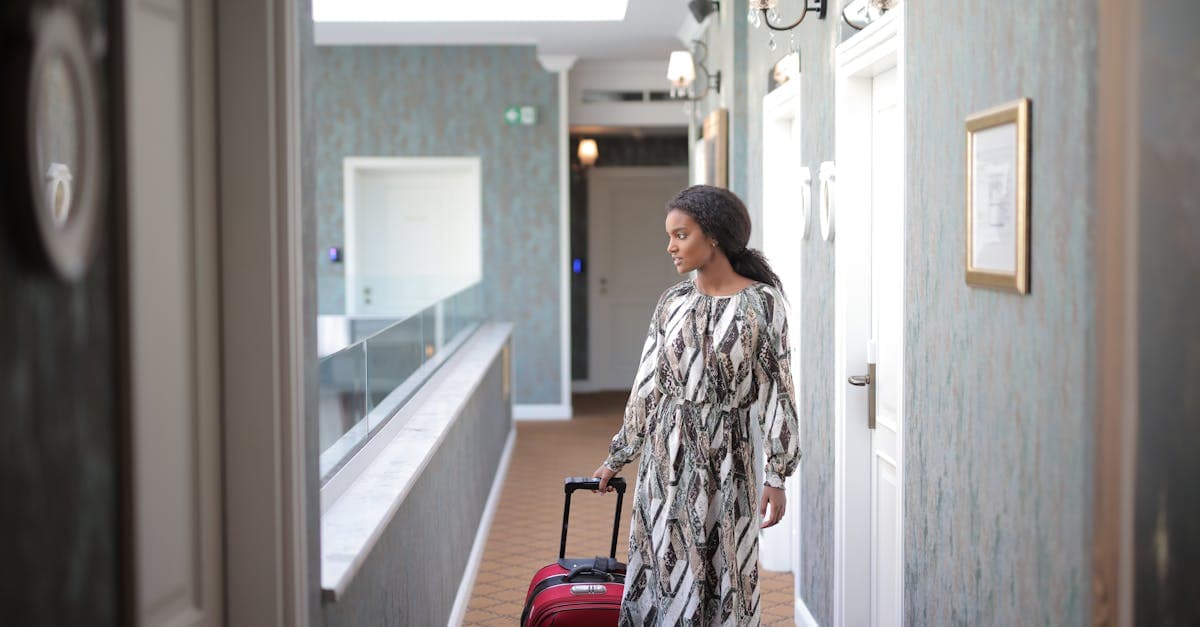
If friends or family are flying in from abroad to join you, a HelloRoam Canada eSIM installed at home before their flight gives them data once they land, for maps, ride apps and the group chat.
Your Core Canada Packing List
These items earn their place on almost any trip across the country, whatever the month.
- Clothing: a base layer, a fleece or light down mid-layer, a waterproof shell, quick-dry pants and a warm hat.
- Footwear: waterproof walking shoes or boots with a grippy sole, plus a lighter pair for town.
- Documents: your provincial or territorial health card, travel insurance details, booking confirmations and, if you're flying, the ID covered in the flying section below.
- Health: prescriptions in their original labelled containers, sunscreen, insect repellent and a small first aid kit.
- Tech: your phone and charger, a power bank in your carry-on and offline maps saved before you leave town.
- Daypack extras: a reusable water bottle, sunglasses and snacks for long drives or trails.
Bring your health card even when you stay inside Canada. Health Canada says your provincial or territorial plan keeps covering emergency hospital and physician services when you leave your province or territory for a few hours, days or weeks, but it may not cover costs such as prescription drugs and ambulance services (checked October 2026). It also says to have adequate coverage, which may include private health insurance, whenever you travel within Canada. Check your own plan's page before you go.
Canada's Regions in January and July
Pack for the place as well as the month. In January, Vancouver's airport averages 4.1°C, while Yellowknife's averages -25.5°C. The table uses Environment and Climate Change Canada's climate normals for 1991 to 2020. These are long-term averages from a weather station in or near each place.
| Place (station) | January daily average | July daily average | Snowfall per year |
|---|---|---|---|
| Vancouver (airport) | 4.1°C | 18.2°C | 36.6 cm |
| Banff | -8.5°C | 14.7°C | 183.8 cm |
| Calgary (airport) | -7.6°C | 16.9°C | 138.7 cm |
| Winnipeg (airport) | -16.3°C | 19.5°C | 126.2 cm |
| Toronto (Pearson airport) | -5.0°C | 22.1°C | 114.5 cm |
| Montreal (Trudeau airport) | -9.2°C | 21.7°C | 216.6 cm |
| Halifax (Stanfield airport) | -5.7°C | 19.2°C | 215.2 cm |
| Whitehorse | -15.0°C | 14.5°C | 147.6 cm |
| Yellowknife (airport) | -25.5°C | 17.1°C | 155.0 cm |
- West Coast: rain is the main thing to pack for. Vancouver's airport averages 171.2 mm of rain in November and 34.1 mm in July, so a hooded rain shell matters most from fall to spring.
- Rockies: Parks Canada says mountain weather changes quickly and it can snow any month of the year. In July, Banff averages a daily high of 22.5°C and a low of 6.8°C, so pack a warm layer even in summer.
- Prairies: Winnipeg has the coldest January in the table outside the territories, and its January nights average -21.2°C. Pack full winter gear for a Prairie trip from December to February.
- Ontario and Quebec: Montreal's Trudeau airport averages a July high of 26.7°C and 216.6 cm of snow a year, so a summer trip and a winter trip need two very different bags.
- Atlantic Canada: Halifax gets the most precipitation of the places in the table, 1,393.3 mm a year, so waterproof boots and a hooded shell earn their space in any season.
- The North: Yellowknife's January nights average -29.4°C, and Whitehorse's January averages -15.0°C. Pack the full winter kit below, and read the satellite notes further down before a trip north.
Winter Trips Need Insulated Boots, Mitts and Ice Grips
Every station in the table, Vancouver included, averages some snow each month from November to March. Pack for it:
- Insulated, waterproof boots with a deep tread.
- Ice grips that slip over your boots for icy sidewalks and trails.
- A toque, mitts and a scarf or neck warmer, so you can cover your face, ears and hands.
- A long insulated parka, or your three layers under a windproof shell.
- Thermal leggings or long underwear, warm socks, lip balm and hand cream.
Wind makes cold more dangerous. Environment and Climate Change Canada says that at a wind chill of -28 to -39, exposed skin can freeze in 10 to 30 minutes, and at -40 to -47 it can freeze in 5 to 10 minutes. It adds that in sustained winds over 50 km/h, frostbite can occur faster than that. Check the wind chill in the forecast each morning and dress for it.
Driving? British Columbia requires winter tires or chains on most routes from October 1 to April 30. Quebec requires winter tires from December 1 to March 15 on vehicles registered in Quebec, rental cars included. Check the province's own page before a winter road trip.
Spring and Fall Bring Frosty Nights and Mild Afternoons
Shoulder months mix cold nights with mild days, so pack all three layers, a warm hat, light gloves and waterproof shoes. Leave out bulky pieces you can't layer.
- April and May: Calgary averages 22.9 cm of snow in April, Vancouver's airport averages 85.2 mm of rain, and Banff's May nights average 0.5°C.
- September and October: Banff's September averages a high of 16.7°C and a low of 2.2°C, and by October Toronto Pearson's daily average falls to 10.0°C.
Summer Packing Covers Bugs, Sun and Wildfire Smoke
Summer days are warm in the south: Toronto Pearson averages a daily high of 27.4°C in July and 26.3°C in August. Pack light layers, a sun hat, sunglasses and sunscreen, plus a warm layer for mountain evenings.
Bring insect repellent for time near lakes, rivers and forests. Health Canada says the right DEET concentration is up to 30% for adults and children older than 12, and up to 10% for children aged 6 months to 12 years. It says not to use DEET on babies younger than 6 months, and to put sunscreen on first, then repellent. Its guidance also limits how often to apply DEET to children by age, so read it before you use DEET on a child. CATSA allows insect repellent in your carry-on in containers of 100 mL or less.
Plan for wildfire smoke too. The Government of Canada says to check the Air Quality Health Index (AQHI), or InfoSmog in Quebec, and says a well-fitting NIOSH-certified N95 or equivalent respirator mask (KN95 or KF94) may reduce the fine particles you breathe in, though not the gases in smoke. It says a respirator shouldn't be used by children under 2, by anyone who has trouble breathing while wearing one or by anyone who needs help to take it off. Pack a few masks if your trip falls in wildfire season, and be ready to change or cancel plans if conditions get worse.
Flying Within Canada: ID, Liquids and What to Leave at Home
- ID: WestJet says Transport Canada requires every passenger aged 18 and older to show original ID on a domestic flight. That means one valid Canadian federal, provincial or territorial photo ID with your name and date of birth, or two valid non-photo IDs from those same governments, one of them with your name and date of birth. A passport works too. Digital copies don't count, and neither do fishing, hunting or boating licences.
- Liquids: CATSA's travel checklist says liquids, aerosols and gels in your carry-on must be 100 mL or less, and all of them must fit in one clear, closed, resealable plastic bag of no more than 1 L.
- Batteries: CATSA says to pack power banks and other lithium battery devices in your carry-on, and to keep them out of overhead bins and checked bags. It also says many airlines ban charging devices on board, so check your airline's battery rules before you fly.
- Hiking gear: CATSA says hiking poles must be checked, and knives and tools go in checked bags only.
- Leave at home: CATSA says bear spray is not allowed in carry-on or checked baggage, and camping stove fuel is prohibited. Buy bear spray after you land: Parks Canada says it's sold at Parks Canada visitor centres and some shops in Banff and Lake Louise.
National Parks: Bear Spray, Passes and No Signal
Parks Canada's Banff hiking checklist includes bear spray, sunscreen and sunglasses, a first aid kit and emergency blanket, a headlamp with spare batteries, a hat and gloves, a rain or wind jacket, extra warm clothing, a fully charged phone and a satellite emergency communication device. Its backcountry advice is to always carry bear spray, keep it accessible and know how to use it.
A Parks Canada Discovery Pass covers admission to more than 80 destinations for 12 months. Banff's fee page lists it at $83.50 for an adult and $167.50 for a family or group, against $12.25 for one adult day (checked October 2026). At those prices, an adult saves with the pass from the seventh day in Banff. Youth 17 and under get in free.
Staying Connected When the Signal Drops
Parks Canada says cell coverage is not reliable throughout Banff National Park, and not always reliable in the backcountry or other remote areas. Before you leave town, download offline maps and trail details, and charge a power bank.
Your phone may still reach help by satellite:
- Apple's Emergency SOS via satellite works in Canada on iPhone 14 or later with iOS 16.1 or later, when you're outside with a clear view of the sky and have no cellular or Wi-Fi coverage. Apple says satellite connectivity might not work above 62° latitude.
- Rogers Satellite is open to all Canadians on any provider, but it needs a compatible phone. It supports texting, satellite-ready apps and text-to-911. It works in most outdoor areas where you can see the sky and have no cellular or Wi-Fi coverage. Coverage only reaches south of the 58th parallel, and some regions are excluded. Rogers says the service, text-to-911 included, may be delayed, limited or unavailable. Some Rogers plans include it, so check Rogers' page for what it costs on yours.
- Whitehorse, at about 60.7° north, is beyond Rogers Satellite's line, and Yellowknife, at about 62.5° north, is past both lines. For trips that far north, carry a satellite messenger: Parks Canada lists devices such as Garmin inReach, SPOT and Zoleo that can start an emergency response.
If your road trip crosses into the US, check whether your Canadian plan includes US roaming before you go. If it doesn't, a separate eSIM with mobile data for the US leg is one option, and our guide shows how to install an eSIM before you leave.
Visitors Joining Your Trip Need a Few Extras
Friends or family flying in from abroad have a different checklist. IRCC says visa-exempt foreign nationals need an electronic travel authorization (eTA) to fly to or transit through a Canadian airport, though US citizens are exempt (checked October 2026). It costs CAD $7, and IRCC says to apply only on its official Government of Canada website. Ask them to check IRCC's page for their own passport before they book.
Their phone must be carrier-unlocked and eSIM-ready, so have them check if their phone supports eSIM before they buy. HelloRoam's Canada eSIM is data-only and connects to the Rogers network. HelloRoam support is available 24/7 by email and WhatsApp.
For health questions before their trip, see our guide to travel vaccinations for Canada.
Questions travellers ask
What is the 5-4-3-2-1 packing method for cold weather?
Stylist credits blogger Geneva Vanderzeil with the 5-4-3-2-1 method, coined in 2015: five tops, four bottoms, three dresses and three pairs of shoes, two swimwear items and two bags, and one hat, one accessory and one pair of sunglasses. For a Canadian winter, keep the countdown and swap the summer pieces: 5 tops (warm layers count), 4 bottoms (thermal leggings count), 3 cold-weather accessories (a toque, mitts and a scarf), 2 pairs of footwear (insulated boots and town shoes) and 1 insulated parka.
What is the 3-3-3 rule for packing for a trip?
It's a capsule packing rule. Stylist describes it as three tops, three bottoms and three pairs of shoes that mix and match into several outfits. It suits a short summer city trip in Canada. For winter or the mountains, keep the idea and add the layers, boots and accessories from the winter list.
Sources
- Canadian Climate Normals 1991-2020 (Environment and Climate Change Canada)climate.weather.gc.ca
- How publicly funded health care coverage works (Health Canada)canada.ca
- Hiking, Banff National Park (Parks Canada)parks.canada.ca
- Backcountry camping, Banff National Park (Parks Canada)parks.canada.ca
- Fees, Banff National Park (Parks Canada)parks.canada.ca
- Passes, permits and fees (Parks Canada)parks.canada.ca
- Emergency contacts (Parks Canada)parks.canada.ca
- Wind chill and the Wind Chill Index (Environment and Climate Change Canada)canada.ca
- Designated Winter Tire and Chain Routes (Province of British Columbia)gov.bc.ca
- Requirements for winter tires (Gouvernement du Québec)quebec.ca
- Insect repellents (Health Canada)canada.ca
- Outdoor adventure travel tips (CATSA)catsa-acsta.gc.ca
- Wildfire smoke, air quality and your health: protecting your physical and mental health (Government of Canada)canada.ca
- Identification and entry requirements (WestJet)westjet.com
- Travel checklist (CATSA)catsa-acsta.gc.ca
- Guidelines for batteries (CATSA)catsa-acsta.gc.ca
- Use Emergency SOS via satellite on your iPhone (Apple)support.apple.com
- Connect to a satellite with your iPhone (Apple)support.apple.com
- Rogers Satellite (Rogers)rogers.com
- Find out about electronic travel authorization (eTA) (IRCC)canada.ca
- How to use the 5-4-3-2-1 method to nail holiday packing every time (Stylist)stylist.co.uk
- The 3-3-3 packing method (Stylist)stylist.co.uk
Written by
HelloRoam Team
The HelloRoam Team writes our guides on trip planning, visas and eSIMs. For every new or updated guide, we check each fact at its source. Sources include government, park and weather service pages. We note the date we read each one. A second review then checks every fact against its source before the guide goes live. If we cannot confirm a fact, we leave it out. We link those sources inside the guide, so you can check them.