
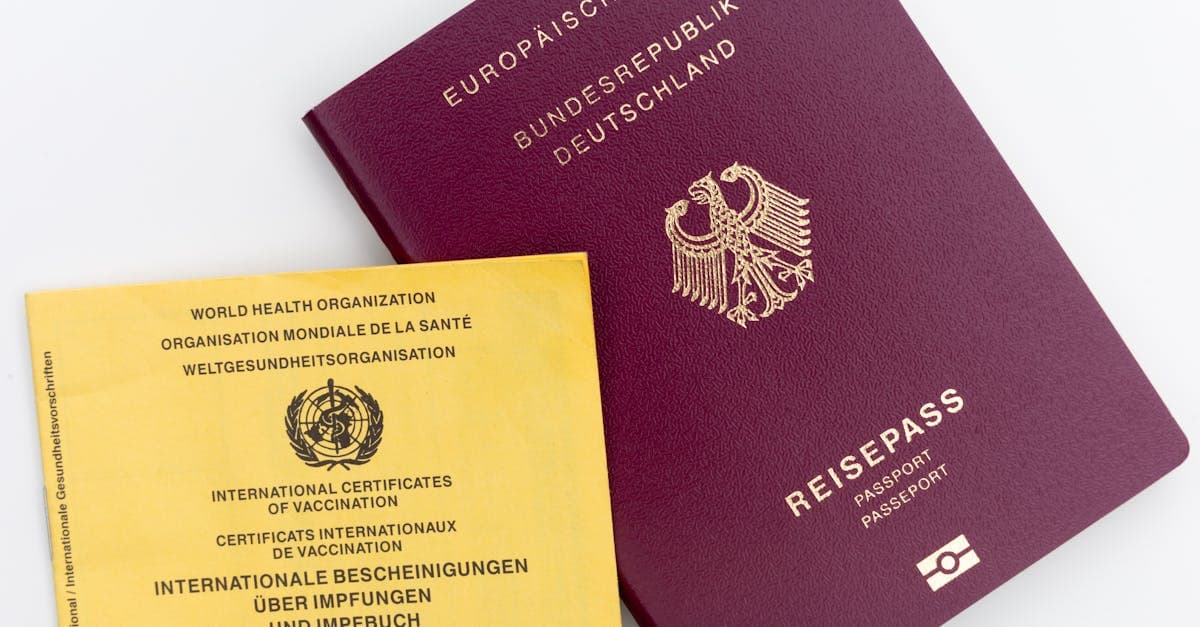
Visitors need no vaccine to enter Canada. The Public Health Agency of Canada (PHAC) ended COVID-19 vaccine proof for all travellers on 1 October 2022, and Canada does not ask for yellow fever proof either.
Visitors can install a HelloRoam Canada eSIM at home, so maps, transit apps, and booking emails work from the arrival hall to the hotel.
Visitors Need No Vaccine to Enter Canada
As of October 2026, the Government of Canada's traveller entry requirements page lists travel documents, visas and customs rules, and no vaccine. The 2022 PHAC decision that dropped vaccine proof also ended COVID-19 testing, quarantine and the health questions in ArriveCAN.
Yellow fever is not on the list. The US Centers for Disease Control and Prevention (CDC) page for Canada says the vaccine is neither required to enter nor recommended.
One temporary health rule does apply to some arrivals. Until 27 November 2026, anyone who has been in the Democratic Republic of the Congo, Uganda or South Sudan in the past 21 days falls under PHAC's Ebola border measures. Travellers allowed in must quarantine for 21 days unless exempt, and some foreign nationals cannot enter at all. PHAC has extended these measures before, so check its Ebola border page before you fly.
Routine shots still make sense for any trip. The CDC's Canada page says all international travellers should be fully vaccinated against measles. It also suggests hepatitis A for most travellers and hepatitis B for unvaccinated travellers under 60. A CDC notice dated 4 June 2026 also flags a hepatitis A outbreak in Manitoba, at Level 1, the lowest of its four levels. Manitoba Health says the risk to the general public remains low.
Flu season in the Northern Hemisphere usually runs from November to April, according to travel.gc.ca. A flu shot from one hemisphere may only partly protect you in the other, which matters for winter visitors from Australia, South Africa or South America.
Still planning the trip? Our Canada packing list by season covers what to bring for every region.
Routine Shots Come First for Canadians Going Abroad
Routine vaccinations matter no matter where you're going, travel.gc.ca says. The Canadian Immunization Guide, PHAC's guide for health professionals, sets out what that means for travellers:
- Measles, mumps and rubella (MMR): 2 doses if you were born in 1970 or later and 1 dose if born before 1970, unless you have proof of immunity. Babies can get an early dose from 6 months of age before a trip where measles is a concern.
- Tetanus and diphtheria: a booster every 10 years. Adults who have never had a whooping cough (pertussis) dose as an adult get Tdap once.
- Polio: one adult booster for travel where poliovirus is circulating. Polio is still endemic in Afghanistan and Pakistan.
- Chickenpox (varicella): 2 doses for adults 18 to 49 who are not immune.
- Flu and COVID-19: all travellers are encouraged to get a flu shot. The guide also advises a complete COVID-19 series, plus a booster if eligible, at least 2 weeks before departure.
- Hepatitis B: travel is a good time to start it if you never had it. The destination pages on travel.gc.ca recommend it for all travellers.
Shots on your province's routine schedule are free for eligible residents in Alberta and B.C. In Alberta, Health Link at 811 can tell you whether you're up to date.
Destination Vaccines Depend on Where You Go and What You Do
Every destination page on travel.gc.ca has a "Pre-travel vaccines and medications" list in its Health section. This table shows what those lists name beyond routine shots for seven destinations, read in October 2026.
| Destination | Vaccines named beyond routine shots | Yellow fever proof to enter |
|---|---|---|
| Mexico | Hepatitis A, hepatitis B; rabies if at higher risk | Not required |
| Dominican Republic | Hepatitis A, hepatitis B; rabies if at higher risk | Only if arriving from, or transiting more than 12 hours in, some states of Brazil |
| Cuba | Hepatitis A, hepatitis B; rabies if at higher risk | If coming from, or transiting an airport in, a country where yellow fever occurs |
| Thailand | Hepatitis A, hepatitis B; Japanese encephalitis and rabies if at higher risk | If coming from, or transiting an airport in, a country where yellow fever occurs |
| India | Hepatitis A, hepatitis B, typhoid; Japanese encephalitis and rabies if at higher risk | If coming from, or transiting an airport in, a country where yellow fever occurs |
| Peru | Hepatitis A, hepatitis B; yellow fever depending on itinerary; rabies if at higher risk | Not required |
| Kenya | Hepatitis A, hepatitis B; yellow fever depending on itinerary; meningococcal if at higher risk; one adult polio booster; rabies if at higher risk | If coming from a country where yellow fever occurs |
For six of the seven, all but Cuba, travel.gc.ca also lists a malaria risk in certain areas or seasons and says antimalarial pills may be advised depending on your itinerary. Further down, the same Health sections say a typhoid vaccine may be recommended for some travellers to Cuba, Thailand and Kenya. They also say cholera vaccination may be recommended for high-risk travellers to the Dominican Republic, Thailand, India and Kenya. All seven note that a chikungunya vaccine is approved in Canada. Raise these at the same visit.
Hepatitis A. It is one of the most common vaccine-preventable diseases in travellers. Studies cited in the Canadian Immunization Guide estimate that 44% to 55% of reported cases in Canada are linked to travel. One dose gives protective antibody levels in 95% to 100% of people. A booster 6 to 36 months later, depending on the brand, likely protects for at least 20 years.
Typhoid. The guide says the vaccine should be offered to travellers going to South Asia, including India, Pakistan, Bangladesh, Nepal and Sri Lanka. It is not routinely advised for short resort holidays. You can get one shot at least 14 days before exposure, or take four oral capsules on alternate days. Each gives about 50% protection, so safe food and water habits still count.
Yellow fever. The vaccine is recommended for risk areas in Africa and Central and South America, and some countries require proof of it on an International Certificate of Vaccination or Prophylaxis (ICVP). The certificate becomes valid 10 days after the shot and, since 11 July 2016, lasts for life. Some countries check it before you board. The Government of Canada warns that without it, you may be refused entry, quarantined for up to six days or vaccinated at the border.
Rabies. Rabies is almost always fatal once symptoms appear, travel.gc.ca says. The guide suggests rabies shots before travel when safe care after a bite may be hard to reach, for frequent or long-term travellers to high-risk areas, and for children. Since 30 January 2026, guidance from the National Advisory Committee on Immunization (NACI) sets the number of doses by risk group. NACI names travellers who are not immunocompromised and whose risk is expected to last less than 3 years as an example of a group now advised 2 doses. Most other groups are advised 3 doses, or 2 plus a booster. You still need care after any bite.
Japanese encephalitis. Risk is low for most travellers, especially on short city visits, because the mosquitoes that spread it live mainly in rural farming areas of Asia. Adults 18 to 65 who are short on time can get the doses 7 days apart.
Meningococcal. Saudi Arabia requires proof of meningococcal vaccination for Hajj pilgrims, for Umrah pilgrims from certain countries and for seasonal Hajj workers, so check the Saudi Ministry of Health's rules. The vaccine is also advised for higher-risk travel to the meningitis belt of sub-Saharan Africa, which includes Kenya.
Less common shots. The cholera and travellers' diarrhea vaccine (Dukoral) is not routinely recommended, since most tourists face an extremely low cholera risk. A chikungunya vaccine may be considered for adults 18 to 64 going to an outbreak area, but it is not recommended for people 65 or older.
Rules and outbreaks change. Check your destination's page and the travel health notices on travel.gc.ca before you go, and confirm entry rules with that country's embassy or consulate in Canada.
Twinrix Covers Hepatitis A and B in One Series
Twinrix, made by GlaxoSmithKline (GSK), protects against hepatitis A and hepatitis B in one series. The Government of Canada recommends both vaccines for travellers to Mexico, and the Canadian Immunization Guide says that, with few exceptions, people who need both should get the combined vaccine.
- Standard adult schedule: 3 doses, at 0, 1 and 6 months.
- Faster adult schedule: doses on day 0, day 7 and day 21, then a booster at 12 months.
- Leaving in less than 21 days: the guide advises separate hepatitis A and hepatitis B shots instead, with both series finished after you're home.
The Winnipeg Regional Health Authority (WRHA) travel clinic lists Twinrix at $95 per adult dose, so three doses come to $285 before visit fees.
Book About 6 Weeks Before You Fly
The Government of Canada advises seeing a provider or travel health clinic about 6 weeks before your trip. The Canadian Immunization Guide says ideally at least 4 to 6 weeks, so vaccines with several doses have time to finish. Fraser Health in B.C. suggests 6 to 8 weeks, because most vaccines take several weeks to work fully.
Leaving sooner? Book anyway: travel.gc.ca says it's still worthwhile, and some vaccines have faster schedules for short notice.
Bring your itinerary, the medicines you take and any vaccine records. On the trip, carry copies of general records and leave the originals at home, but always carry the original yellow fever certificate.
Most Travel Vaccines Are Paid Out of Pocket
In the provinces we checked, public plans pay for routine shots but not for most travel-only ones. MyHealth Alberta says most vaccines given for travel are not free. Fraser Health says there is a cost in B.C. for travel shots that are not on the routine schedule. The WRHA says Manitoba's health plan does not provide vaccines for travel.
Prices vary by clinic, so ask for a quote. As one public example, the WRHA Travel Health clinic in Winnipeg lists these prices on its fee page, last updated 25 September 2026:
| Vaccine or visit | WRHA price (CAD) |
|---|---|
| Hepatitis A, adult (2-dose series) | $75 per dose |
| Hepatitis B, adult (3-dose series) | $50 per dose |
| Twinrix, adult (3-dose series) | $95 per dose |
| Typhoid, injectable | $50 per dose |
| Yellow fever | $190 per dose |
| Japanese encephalitis (2-dose series) | $250 per dose |
| Meningococcal ACYW-135 | $150 per dose |
| Rabies (3-dose series) | $220 per dose |
| Dukoral (series of two) | $130 for the series |
| New trip visit, one person | $60 to $120 |
Check your benefits before you pay. MyHealth Alberta and the WRHA both suggest asking your private or extended health insurer what it covers, and the WRHA gives an itemized receipt for claims.
Travel health insurance is a separate purchase for care while you're away, and PHAC's measles notice suggests considering it. Our guide to travel insurance for Canadians explains coverage, costs and claims.
Pharmacies, Clinics and Doctors All Give Travel Shots
Fraser Health says travel shots can be given at a travel health clinic, a doctor's office or a pharmacy. MyHealth Alberta points travellers to a private travel clinic, a doctor or a pharmacist. In B.C., pharmacists can update routine shots for people 5 and older.
Yellow fever is the exception. In Canada, you can only get it at a Yellow Fever Vaccination Centre designated by PHAC, which also issues the certificate. These are not only travel clinics: PHAC's Ontario list, updated 9 October 2026, includes many Shoppers Drug Mart and Rexall pharmacies.
That list doubles as a clinic finder. The Government of Canada suggests it as one way to find travel health services, since listed sites may also offer more than yellow fever shots. In Toronto alone, it names pharmacies, private travel clinics and medical clinics across the city. Call ahead, because PHAC says it can't guarantee every listing is up to date.
A Few Vaccines Are Required and the Rest Are Recommended
Only a few vaccines are legal requirements for travel. The Canadian Immunization Guide names two: yellow fever proof for certain countries, and meningococcal proof for Hajj and some Umrah pilgrims to Saudi Arabia. The rest are recommendations based on your trip.
Recommended still matters. The guide calls immunization a cornerstone of travel health that can be life-saving. Pregnant travellers, older travellers, children and people with weak immune systems may need different advice, so they should talk to a provider rather than rely on a list. People visiting friends and relatives abroad face higher risk too, partly because their trips tend to be longer and more often rural.
Keep Your Phone Ready for the Trip
Your phone does a lot of work on a trip: boarding passes, maps, ride apps and messages home. You can install a HelloRoam eSIM data plan for your destination at home, then turn on its data line when you arrive.
Before you buy, check that your phone supports eSIM, and keep the setup steps for iPhone and Android handy.
Plans are sold for single countries and for regions, and a regional plan uses one eSIM across the borders it covers.
Going to Mexico? Start with our data plans for Mexico. Visiting somewhere else, or several countries? Browse eSIM plans by destination.
Sources
- Vaccines and medications before travel (Government of Canada, modified 28 August 2026)travel.gc.ca
- Immunization of travellers: Canadian Immunization Guide (PHAC, partial update June 2026)canada.ca
- Hepatitis A vaccines: Canadian Immunization Guide (PHAC)canada.ca
- Hepatitis B vaccines: Canadian Immunization Guide (PHAC, Table 3 schedules)canada.ca
- Typhoid vaccines: Canadian Immunization Guide (PHAC)canada.ca
- Summary of NACI statement of 30 January 2026: rabies pre-exposure prophylaxiscanada.ca
- Government of Canada to remove COVID-19 border and travel measures effective October 1 (PHAC, 26 September 2022)canada.ca
- Traveller entry requirements (Government of Canada)travel.gc.ca
- Ebola disease: border measures for travellers entering Canada (PHAC)canada.ca
- Canada: traveler view (US CDC Travelers' Health)wwwnc.cdc.gov
- Measles: advice for travellers (travel health notice, updated 13 November 2025)travel.gc.ca
- International Certificate of Vaccination or Prophylaxis (Government of Canada)travel.gc.ca
- Yellow Fever Vaccination Centres in Canada (PHAC)canada.ca
- Yellow Fever Vaccination Centres in Ontario (PHAC, updated 9 October 2026)canada.ca
- Find a travel health clinic (Government of Canada)travel.gc.ca
- Travel immunizations (Fraser Health, updated 26 February 2026)fraserhealth.ca
- Immunization and travel (MyHealth Alberta, current as of 11 May 2026)myhealth.alberta.ca
- Travel Health services and vaccine charges (WRHA, updated 25 September 2026)wrha.mb.ca
- Mexico travel advice: health (Government of Canada)travel.gc.ca
- Dominican Republic travel advice: health (Government of Canada)travel.gc.ca
- Cuba travel advice: health (Government of Canada)travel.gc.ca
- Thailand travel advice: health (Government of Canada)travel.gc.ca
- India travel advice: health (Government of Canada)travel.gc.ca
- Peru travel advice: health (Government of Canada)travel.gc.ca
- Kenya travel advice: health (Government of Canada)travel.gc.ca
- Hepatitis A in Canada: Level 1 travel health notice (US CDC, 4 June 2026)wwwnc.cdc.gov
- Hepatitis A: 2025 outbreak update (Manitoba Health)gov.mb.ca
Written by
HelloRoam Team
The HelloRoam Team writes our guides on trip planning, visas and eSIMs. For every new or updated guide, we check each fact at its source. Sources include government, park and weather service pages. We note the date we read each one. A second review then checks every fact against its source before the guide goes live. If we cannot confirm a fact, we leave it out. We link those sources inside the guide, so you can check them.
 USA


 India