Traveller Advice

Carry-On Luggage Guide for Canadian Travellers in 2026

Standard carry-on bags on major Canadian airlines must fit within each carrier's published size limit. Air Canada, WestJet, and Porter include one overhead bag in every base fare with no extra charge. Flair does not. For multi-carrier itineraries, a 21-inch roller bag clears every Canadian carrier's limit, making it the safest, most no-fuss starting point.

By Meera PatelTravel WriterHow we write our guides

Published

Carry-On Luggage Guide for Canadian Travellers in 2026

Carry-On Luggage Rules for Canadian Flights: 2026 Guide

![Traveller carrying carry on luggage and camera descends stairs, ready for a Canadian adventure.

Top Carry-On Luggage Facts at a Glance

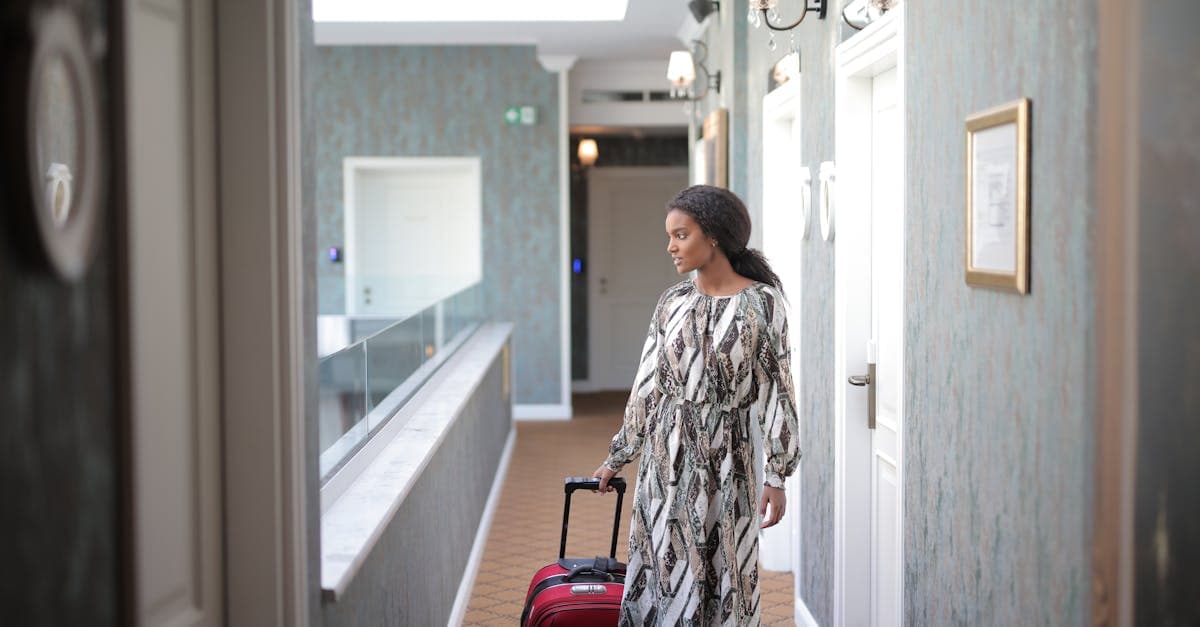
![Woman pulling carry on luggage through a stylish hotel corridor with effortless travel elegance.

AirlineMax Dimensions (cm)Weight LimitCarry-On Fee?
Air Canada55 × 40 × 2310 kgNo
WestJet53.5 × 38 × 2410 kgNo
Porter53 × 38 × 2310 kgNo
Air Transat51 × 38 × 2310 kgNo
Flair56 × 35 × 2310 kgYes (~C$29–C$59/segment)

Travelling carry-on only shaves time off every arrival. No bag claim, no waiting at the carousel: just straight through to ground transport. Data coverage rounds out the lean-travel kit: HelloRoam offers international plans starting at ~C$3.41 for US and UK destinations, connecting through T-Mobile and T-Mobile UK networks. [Browse All eSIM Plans and set it up before the departure gate opens.

Most travellers know roughly what a carry-on is. What actually qualifies under each carrier's policy is a more specific question, and the answer has direct implications for what you can bring without paying extra.

What Is Considered Carry-On Luggage?

![Close-up of a black carry on luggage bag rolling over a cobblestone street.

Any bag stored in the overhead bin during your flight qualifies. That's the complete definition. A personal item is a separate, smaller allowance that stows under the seat in front of you. Airlines treat these as two distinct categories with different size limits, and conflating them at the gate costs real money.

The International Air Transport Association (IATA) sets a global carry-on guideline of 56x45x25 cm as the outer ceiling. Canadian carriers publish their own limits within that framework, none of them required to match the IATA benchmark exactly, and most running tighter than it. Shopping for a bag using the IATA maximum as your guide is a reliable way to end up with something too large for Air Transat.

Three myths that keep generating clunky gate confrontations:

Soft shells always squeeze through. A stuffed soft bag still fails the sizer if it measures over the airline's limit. The fabric stretches. The sizer doesn't.

Wheels and handles don't count toward total size. They do. Airlines measure total external dimensions, spinner wheels and telescoping handles included. A bag labelled as 21 inches by its manufacturer often measures larger once the hardware is factored in.

Hard shells can't qualify as carry-on. Both materials qualify. The only criteria is whether the bag fits the published dimensions. Straightforward in principle, though bag manufacturers don't always make it easy to verify before purchase.

The variation between Canadian carriers is wider than most travellers expect, and some of the gaps surface in places that catch even frequent flyers off guard.

Canadian Airline Carry-On Size Rules in 2026

![Carry on luggage stored in an airplane overhead compartment following Canadian airline size rules.

Canadian carriers enforce the same weight cap on overhead bags across the board: 10 kg, every major carrier, no exceptions. Dimensions are a different story entirely. Since mid-2024, gate agents at YYZ, YVR, and YUL have been running bags through sizers with more consistency than at any point in recent years. Bags that sailed through unchecked for years are getting flagged now. Worth knowing before you show up at the gate with something that's borderline.

Air Canada allows the most generous overall footprint of the five major carriers: a full 55 × 40 × 23 cm [aircanada.com. WestJet and Porter sit in the middle range, close enough that the same 21-inch bag clears both without issue. Porter carries one concrete caveat though: its Dash 8 turboprop routes use narrower overhead bins than jet aircraft. A bag that clears Porter's published limit on a jet may still get gate-checked on a turboprop leg from Billy Bishop to Halifax. Check your aircraft type before you pack, not after.

Air Transat runs the tightest specification of the group at 51 × 38 × 23 cm. That's a detail worth confirming for travellers buying a bag specifically aimed at charter-heavy sun routes to Cuba or Mexico: the IATA standard bag won't clear it.

Flair's specification is longer but narrower than its competitors. An unusual shape for a finicky policy. And unlike every other carrier in this table, Flair charges you for the privilege of using the overhead bin at all.

Key fact: Gate enforcement at major Canadian hubs tightened significantly starting in mid-2024. A bag that cleared without issue in previous years may not pass unchallenged today. Check your bag against the specific carrier's published dimensions before you travel, not once you're at the gate.

Flair's fee structure is its own separate calculation. For families travelling on budget fares, that calculation turns out sharper than most people expect at the time of booking.

Flair's Carry-On Fee: What Budget Travellers Need to Know

![Budget traveller carrying black carry on luggage up stairs, navigating Flair's carry-on fee policy.

Flair is Canada's only remaining ultra-low-cost carrier (ULCC) still charging separately for carry-on bags. The fee applies per segment, both ways on a return trip, and it scales with route demand and how early you book. The gate price runs higher than the online rate.

Pre-purchase at booking. Every time.

The family math is stark. Four passengers on a round-trip Flair itinerary can pay up to ~C$472 in carry-on fees before a single seat selection or snack is added. On some sale routes, that carry-on charge alone rivals the cost of the base airfare.

Picture booking a promotional fare and only realising at the final checkout screen that the carry-on charge for both legs has quietly doubled what you thought you'd saved. The fee is technically disclosed, but it's buried deep enough in the booking flow that it rarely registers until the credit card is already out.

Swoop, once Canada's second ultra-low-cost carrier, was absorbed into WestJet by 2024. Flair operates alone in this pricing tier now.

For comparison, first checked bag fees on Air Canada and WestJet run roughly ~C$70 to ~C$130 round-trip on economy fares. On Flair, carry-on charges for a family can exceed that range, making it the pricier option for groups despite the budget carrier positioning. The supposed savings on the base fare can quietly disappear into bag fees before the trip even starts.

With fee structures mapped, choosing a bag that works across every carrier you're actually likely to fly is the next practical step.

What Size Suitcase Qualifies for Carry-On?

![Assorted hard and soft suitcases on display to help travellers choose the right carry on luggage size.

A 21-inch roller fits safely in most Canadian airline overhead bins and clears the size gauges at busy hubs like YYZ, YVR, and YUL [outdoorgearlab.com. Anything exceeding roughly 55x40x23 cm risks a gate check, regardless of what the manufacturer's listing says.

There's a measurement trap most buyers fall into. "21 inches" refers to the bag body alone. Factor in wheels at the base and a fully collapsed handle at the top, and the real-world height runs closer to 23 to 24 inches. Airlines check the entire bag, not just the shell [ca.heys.com. Measure the whole unit before purchase, not at the gate.

Soft or hard shell? Soft-sided bags compress slightly under pressure, which buys real tolerance on carriers with snug bin limits [cntraveler.com. A polycarbonate hard shell won't flex at all, but it protects laptops and fragile items without adding meaningful weight, and slides into overhead bins cleanly. For anyone consistently travelling with electronics, hard shell is the practical pick.

Expandable bags deserve a specific caution. That extra zipper adds genuinely useful space at home but pushes the bag past airline limits when fully deployed. Gate enforcement at major Canadian airports has tightened considerably over the past couple of years. Expanding for the homeward pack is a gamble on a fee you didn't budget for.

Personal items carry their own cap, typically around 43x33x16 cm or smaller. A structured daypack fits. A tote with overstuffed side pockets often doesn't.

Once you've got the right dimensions, the packing itself determines whether a week of clothes actually fits.

How to Pack a Carry-On Bag for Any Canadian Trip

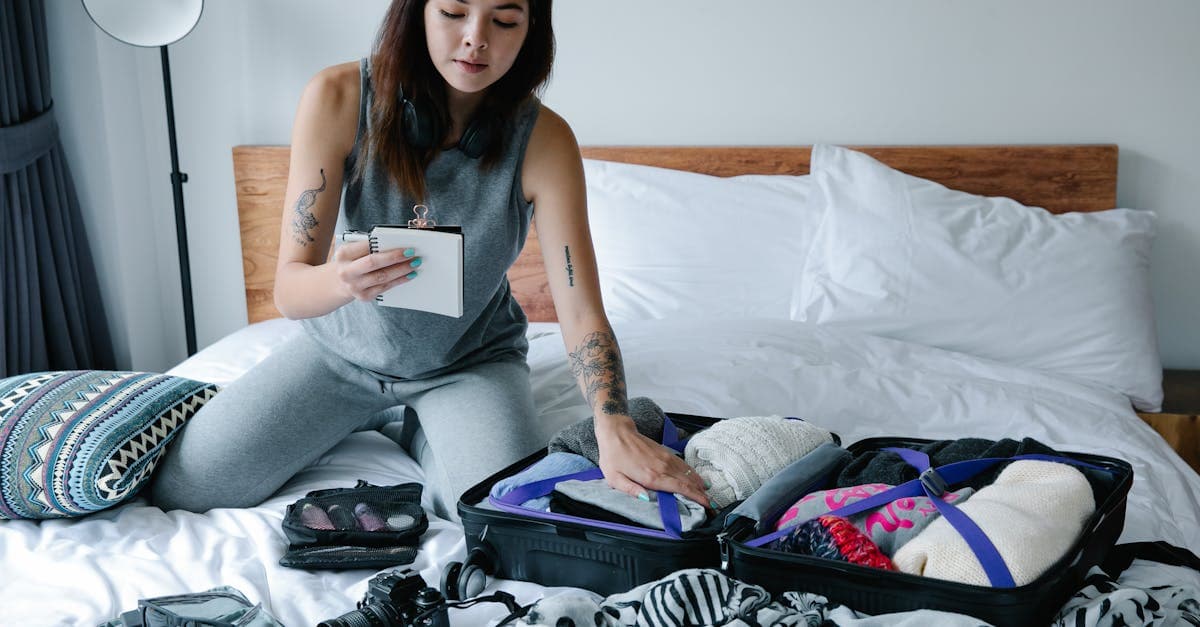
![Open suitcase neatly packed with clothing and travel essentials for a Canadian carry on trip.

Rolling clothes rather than folding saves roughly 20 to 30 percent of usable bag space and keeps items presentable on arrival [packhacker.com. Combined with packing cubes, a well-organized 21-inch bag handles a full week of travel without creative tricks.

A reliable packing sequence:

  1. Heaviest items nearest the wheels. Shoes, your toiletries kit, and any hardback books go at the base. This keeps the bag balanced upright and reduces handle strain on long airport corridors.
  2. Roll clothes into cubes by category. One cube for tops, one for bottoms. Cubes compress into odd-shaped gaps other items can't fill, and you can pull a single category without disturbing everything else.
  3. Wear your bulkiest items on travel day. Boots, a winter jacket, and a thick sweater represent a significant portion of bag weight and volume. Put them on your body instead of in the bag.
  4. Liquids in one clear, one-litre bag. CATSA limits each container to 100 ml. Solid shampoo bars and deodorant sticks skip the liquids bag entirely and reclaim usable space.
  5. Pack merino wool layers. A merino base layer handles multiple wears between washes. Two or three merino pieces replace double the equivalent synthetics for a week-long trip.

The system sounds fiddly until the first time you unpack at a hotel and find everything exactly where you expect it.

Tech and connectivity complete the carry-on kit.

Tech Essentials and Connectivity Before You Fly

![Traveller setting up a travel eSIM on a smartphone resting on carry on luggage before a flight.

Your phone, laptop, and power bank all clear carry-on security without issue. Keep them accessible for the security bin. That's the easy part. The prep that actually matters happens before you reach the airport.

Download offline maps for your destination before leaving home wifi. Google Maps and Apple Maps both support offline areas. A boarding pass cached locally sidesteps any connectivity gap between check-in and gate. Neither download takes more than a few minutes.

Confirm your phone is unlocked before buying any travel plan. Go to Settings, then General or About, and look for carrier lock status. Most Canadian phones sold after 2019 are unlocked by federal regulation. Phones purchased directly from a carrier on a subsidized plan sometimes aren't. Confirming takes under a minute and saves a frustrating conversation at the wrong moment.

Once you've verified the phone is unlocked, an eSIM activates entirely over wifi in under five minutes, with no physical SIM swap on arrival. Scan a QR code, the profile installs, and the eSIM is ready the moment you land. Dual-SIM functionality, available on most recent iPhones and Android flagships, keeps your Canadian number active for Interac e-Transfer notifications while routing all data through a local plan abroad.

Set up the eSIM before departure, not in the arrivals hall hunting for a signal.

Abroad, data costs can quietly undo the savings you built by going carry-on only.

Staying Connected Abroad When You Travel Carry-On Only

![Stylish woman browsing her smartphone at an airport while travelling carry on luggage only.

Carrier roaming charges can quietly erase the savings you built by travelling lean. Rogers, Bell, and Telus each charge roughly $14 to $17 CAD per day for international roaming through their standard add-ons. On a 10-day Europe trip, that daily rate adds up to roughly C$150 to C$170.

A travel eSIM covers the same destinations for considerably less. Comparable plans for a 10-day Europe trip run $27 to $48 CAD, contract-free and activatable before you leave home.

Activation is clean and fast. Scan a QR code, the profile installs in under two minutes, and the plan is live when the wheels touch down. No kiosk queue in arrivals. No SIM ejector tool. No small plastic card to misplace between the gate and customs.

Key fact: HelloRoam covers 190-plus destinations with Canada plans starting from ~C$7.52 for 1GB over 7 days on Bell, Telus, and Rogers Wireless networks.

For snowbirds wintering in Florida or Mexico, a multi-month eSIM plan is far more predictable than a daily roaming add-on stretched across a 90-day stay. Pre-arrival activation means coverage starts from the arrivals hall, not after you've tracked down airport wifi to troubleshoot a connection problem.

[Browse All eSIM Plans to compare destination coverage and pricing before you fly.

Do Pilots Prefer Soft or Hard Luggage?

![Woman packing a hard-shell suitcase on a wooden floor, deciding between soft and hard carry on luggage.

Most pilots and frequent flyers favour hard-shell bags for overhead storage [outdoorgearlab.com. The structured shell holds its shape under compression, protecting electronics and fragile contents when a neighbour's oversize bag gets shoved in beside it. Polycarbonate, the material used in most quality hard-shells, absorbs impact by flexing slightly and returning to shape, rather than transferring force directly to whatever's packed inside [cntraveler.com.

That said, hard-shells have one genuine weakness.

Porter's Dash 8 turboprops run notoriously compact overhead bins. A full 21-inch hard-shell sometimes doesn't clear the hatch, and gate agents will check it through rather than argue. Soft-sided bags compress just enough to fit where hard cases won't, which is why travellers who regularly hop regional routes keep one of each type in rotation: hard-shell for mainline jets, soft-sided for turboprop legs.

The choice really comes down to what's inside and where you're going. Carry a laptop or camera gear? The hard-shell earns its keep every flight. Heading to a smaller airport on a prop plane? The soft bag's flexibility isn't weakness, it's engineering working in your favour.

The right bag, packed right, is the whole equation.

Reviewed by HelloRoam's editorial team. Last updated: 18 April 2026.

Questions travellers ask

What is considered a carry-on luggage?

A carry-on is any bag stored in the overhead bin during your flight. It is a separate allowance from your personal item, which is a smaller bag that stows under the seat in front of you. Airlines treat these as two distinct categories with different size limits, and mixing them up at the gate can result in unexpected fees. The IATA sets a global guideline of 56x45x25 cm, though most Canadian carriers publish their own tighter limits.

What size suitcase qualifies for carry-on?

A 21-inch roller bag fits safely in most Canadian airline overhead bins and clears size gauges at major hubs like YYZ, YVR, and YUL. Anything exceeding roughly 55x40x23 cm risks a gate check, regardless of the manufacturer's label. Keep in mind that '21 inches' typically refers to the bag body alone — with wheels and a collapsed handle included, the real-world height often runs closer to 23 to 24 inches, so always measure the entire bag before purchase.

Do pilots prefer soft or hard luggage?

The article does not address pilot preferences specifically. For travelers, however, hard-shell bags protect laptops and fragile items without adding meaningful weight and slide cleanly into overhead bins, making them a practical choice for those carrying electronics. Soft-sided bags compress slightly under pressure, which can provide useful tolerance on carriers with snug overhead bin limits.

Sources

  1. Carry-On Luggage Sizeca.heys.com
  2. outdoorgearlab.comoutdoorgearlab.com
  3. The Best Carry-On Luggage of 2026, Tested and Reviewedcntraveler.com
  4. Best Carry On Luggage for Travelpackhacker.com
  5. Carry On Baggageaircanada.com

Written by

Meera Patel

Meera Patel is a travel writer at HelloRoam covering mobile data and travel connectivity for international visitors. She writes practical eSIM setup guides for visitors arriving at major airports and covers data plans for scenic drives, tourist routes, and urban stays. Meera's guides serve families, solo travelers, and business visitors who all need reliable internet on the road.

Keep planning