Before you leave Australia: Japan travel essentials
Paperwork is light. As of October 2026, Smartraveller says Australians don't need a visa to visit Japan for less than 90 days as a tourist, for business or to see friends and family. Visitors aged 16 and over are photographed and fingerprinted on arrival, and the Visit Japan Web service lets you pre-register your immigration and customs details. Rules can change, so check Smartraveller and the Embassy of Japan in Australia before you book.
 Get your Japan eSIM before you flyInstall it at home, then turn on data roaming for it when you land. From A$4.54.See Japan plans
Budget for Japan's international tourist tax too, charged when you leave. JNTO says it rose from ¥1,000 to ¥3,000 a person on 1 July 2026, and airlines usually build it into the ticket price.
Pick your dates before you pick your route. The Japan Meteorological Agency's average first-bloom dates for cherry blossom (1991 to 2020) are 24 March in Tokyo, 26 March in Kyoto and 27 March in Osaka. JNTO warns that prices jump and trains and hotels often book out over New Year (27 December to 4 January) and Golden Week (29 April to 5 May), plus the weekends either side, and in the week around 15 August. Our guide to Japan's weather month by month helps you work around them.
The Reserve Bank of Australia's rate on 13 October 2026 was A$1 = ¥110.17. Hotels and most shops take Visa and Mastercard, but JNTO calls Japan "still very much a cash culture", and small shops and remote ryokan may only take yen. Smartraveller notes that some bank and convenience-store ATMs don't accept foreign cards. Seven Bank's ATMs in 7-Eleven stores take many overseas cards, though Seven Bank says some may not work, so check with your bank before you fly.
The 10-day and 16-day routes, day by day
Both routes share the first eight days. The 10-day version then stays in Osaka and flies home from Kansai Airport. The 16-day version heads down the Kii Peninsula, up into the Kiso Valley and across to Mt Fuji before looping back to Tokyo.
| Days | 10-day route | 16-day route |
|---|---|---|
| 1 to 3 | Tokyo, with Kamakura as an option on day 3 | Tokyo, with Kamakura as an option on day 3 |
| 4 to 6 | Kyoto | Kyoto |
| 7 | Nara, then on to Osaka | Nara, then on to Osaka |
| 8 | Osaka | Osaka |
| 9 | Osaka, or a day back in Kyoto | Train south to Nachi Falls |
| 10 | Fly home from Kansai Airport | Train via Nagoya to the Kiso Valley |
| 11 to 16 | Trip ends on day 10 | Kiso Valley walk (days 11 and 12), Fujiyoshida and Mt Fuji (13 to 15), back to Tokyo to fly home (16) |
Ten days suits a first trip on standard annual leave. Sixteen suits a second visit, or anyone happy to swap city time for long train rides and small towns. The 16-day route has two full travel days, so it isn't the place to save time.
Tokyo (東京, days 1 to 3): getting your bearings in Japan's capital
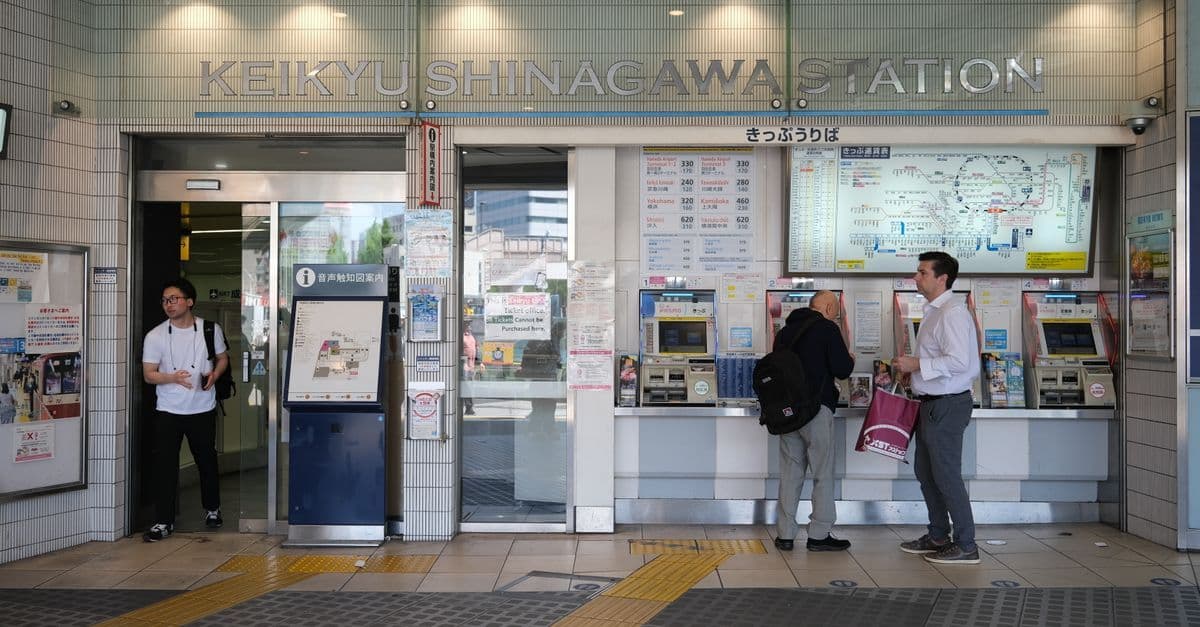
Get a transport card sorted first. On an iPhone 8 or later, Apple says you can add a Suica card to Apple Wallet and top it up from a payment card already in Wallet. The Welcome Suica Mobile app can set up a Suica before or after you land, while the plastic Welcome Suica card needs no deposit but only works for 28 days. Either way, you tap through train gates, onto buses and at convenience stores.
Day 1 is arrival. From Narita, the Narita Express runs direct to Tokyo, Shinagawa, Shibuya and Shinjuku stations. From Haneda, the Tokyo Monorail runs to Hamamatsucho. Drop your bags and walk Shinjuku or Shibuya that evening.
Day 2 covers the classics. Start at Senso-ji in Asakusa, which GO TOKYO calls the oldest Buddhist temple in the capital, and graze along Nakamise-dori's 90 or so shops. Spend the afternoon in Harajuku and finish at Shibuya Scramble Crossing, where a wave of people crosses every two minutes. For a night view, our Tokyo Skytree visit guide has the details.
Day 3 is flexible. Kamakura's Great Buddha, a huge copper statue that sits in the open air at Kotoku-in temple, makes a good day trip. If you'd rather stay in town, try teamLab Borderless at Azabudai Hills, or spend a slow half-day in Akihabara or Yanaka.
Kyoto (京都, days 4 to 6): Fushimi Inari, Arashiyama and the Golden Pavilion
Kyoto City's official guide, kyoto.travel, puts Tokyo to Kyoto at about 130 minutes on a Nozomi Shinkansen, or 170 minutes on a Hikari. The Japan Rail Pass covers the Hikari, while the Nozomi needs an extra ticket (see the transport section below).
Day 4 ends at Fushimi Inari Taisha, the head shrine of Japan's Inari shrines and home of the Senbon Torii gates. It sits right next to Inari Station on the JR Nara Line, two stops and about five minutes from Kyoto Station.
Day 5 heads west to Arashiyama, about 25 minutes from Kyoto Station, then back across town for an evening walk through Gion.
Day 6 starts at Kinkaku-ji, the Golden Pavilion, which opens at 9am. To dodge the crowds at Kyoto Station, kyoto.travel suggests the JR Sagano Line to Enmachi and a city bus from there. Nishiki Market works for lunch.
Kyoto's buses get crowded, so mix trains and buses as the city suggests. Its Subway & Bus 1-Day Pass covers the subway and city buses, plus Kyoto Bus, Keihan Bus and West Japan JR Bus on most routes. The city's Hands Free Kyoto service lists counters at Kyoto Station that store bags or carry them to your hotel.
Osaka (大阪, days 7 to 9): Nara on the way, then the castle and Dotonbori
Day 7 stops in Nara on the way. Visit Nara calls it a short train ride from both Kyoto and Osaka, and says Nara Park alone is worth a full day. Todai-ji's Great Buddha Hall opens from 7.30am to 5.30pm between April and October, and from 8am to 5pm from November to March.
Kintetsu trains link Kyoto, Nara and Osaka-Namba. Dotonbori is right outside Namba Station, and Osaka's official guide calls it the symbolic shopping district of the Minami area, lined with giant 3D signs and restaurants on both sides.
Day 8 starts at Osaka Castle. The main tower opens from 9am to 6pm, and its 8th-floor deck looks out over the city. Have lunch at Kuromon Market, about 150 shops under a 580-metre arcade with a focus on fresh fish, then spend the evening in Dotonbori.
Day 9 is a spare day on the 10-day route. Use it for more of Osaka, or head back to Kyoto, about 30 minutes from Osaka Station on the JR Special Rapid.
Day 10 is the flight home. Nankai's Rapi:t limited express takes about 40 minutes between Namba and Kansai Airport. Check flights home from Kansai when you book: flying into Tokyo and out of Osaka saves doubling back.
On the 16-day route, day 9 heads south instead, down the coast of Wakayama Prefecture.
Nachi Falls and Kiso Valley (days 9 to 12): pilgrimage trails and old post towns
Day 9 takes the Kuroshio limited express south from Shin-Osaka. The Kumano tourism bureau says some services run all the way to Kii-Katsuura, and a local bus takes about 25 minutes from there to Nachisan. Japan's highest single-drop waterfall, Kumano Nachi Taisha shrine and Seiganto-ji temple sit together on the mountain. If your legs are fresh, walk up Daimon-zaka, about 600 metres of 14th-century stone steps under 900-year-old cedars.
Day 10 is a long travel day. The Nanki limited express takes about four hours from Kii-Katsuura to Nagoya. From Nagoya, take the JR Chuo line to Nagiso Station, then a local bus to Tsumago.
Day 11 is the walk. The Nakasendo was the old inland road between Kyoto and Edo, now Tokyo, and Nagano's tourism site says the stretch from Tsumago to Magome is about 8 kilometres and takes two to three hours. Both post towns keep their Edo-period streets.
You don't need to carry your bags. From late March to the end of November, the tourist information centres in Tsumago and Magome forward luggage between the two towns for ¥1,000 a bag: drop it off between 8.30am and 11.30am and collect it after 1pm.
Day 12 is your buffer. Rest, or ride the JR Chuo line up the valley to Narai, a post town that stretches a full kilometre and sits three minutes' walk from Narai Station.
Fujiyoshida and return to Tokyo (富士吉田, days 13 to 16): Mt Fuji and the final stretch
Day 13 is a travel day to Fujiyoshida, at the foot of Mt Fuji. Day 14 is for Chureito Pagoda in Arakurayama Sengen Park. Climb the 398 steps to the deck for Fuji, the five-storey pagoda and the town below in one view. The city's tourism site puts it about 25 minutes on foot from Shimoyoshida Station on the Fujikyu line, and the park is open 24 hours.
Climbing Fuji only fits a summer trip. The official Mt Fuji climbing site says the 2026 season on the Yoshida Trail ran from 1 July to 10 September, with a ¥4,000 hiking fee and online registration, and that climbing outside the season is dangerous. The next season is due from early July to early September, with dates announced beforehand. Day 15 can stay local around Kawaguchiko, or swap to Hakone, an easy trip from town.
Day 16 runs back to Tokyo. Central Tokyo is about 1.5 hours away by express bus or train, which leaves time for a last wander through Ginza or Shibuya before the airport.
Travel light on the move days. Hotel front desks can often send bags on to your next stop or back to the airport, and bags sent from the airport usually arrive a day later.
On the way out, reverse your day 1 route to Narita or Haneda, and leave a generous margin before check-in closes.
Getting around Japan: JR Pass, Suica, and the Shinkansen
The Japan Rail Pass costs ¥50,000 for 7 days or ¥80,000 for 14 days in a standard car when you buy it on the official site, or ¥53,000 and ¥84,000 from an overseas agent. Children aged 6 to 11 pay about half. It covers JR trains, including the Hikari and Kodama Shinkansen and JR limited expresses, plus the Tokyo Monorail and the JR ferry to Miyajima. Seat reservations cost nothing extra.
Whether the pass pays off depends on your legs. The 10-day route has one long JR ride, Tokyo to Kyoto, while the 16-day route also uses JR for the Kuroshio, the Nanki and the Chuo line. Price your legs as single tickets on JR's own booking sites, then compare.
Some legs sit outside the pass and need their own tickets: Kintetsu trains between Kyoto, Nara and Osaka-Namba, Nankai's Rapi:t to Kansai Airport and the Fujikyu line to Fujiyoshida. A Suica also works in the other major IC card areas, including ICOCA's in Kansai.
Nozomi and Mizuho trains aren't covered by the pass. Holders can buy a special Nozomi Mizuho ticket for each ride instead: ¥4,960 from Tokyo to Kyoto or Shin-Osaka, or ¥6,500 to Hiroshima.
Mobile data on the road: roaming, pocket Wi-Fi, a SIM card or an eSIM
Your phone does a lot of work on this route: train times, maps, translation and bookings. Sort data before you fly, and estimate how much data you'll use for the trip length you've picked.
Roaming is the simplest option. Japan sits in Telstra's Zone 2, where the International Roaming Day Pass costs $10 a day for 2GB of data plus unlimited standard calls and texts, or up to $160 across a 16-day trip. Check your own provider's rate before you go.
Pocket Wi-Fi suits groups sharing one connection. Haneda and Narita both have rental kiosks, and some firms deliver the unit to your hotel. It's one more gadget to charge and hand back, so read how pocket Wi-Fi compares before you book.
A travel SIM card is the third route. Airport kiosks, major convenience stores and electronics stores such as BIC Camera and Yodobashi Camera sell them, and GO TOKYO puts most at ¥2,000 to ¥8,000. You need an unlocked phone with a SIM slot.
An eSIM skips the kiosk and the swap. Apple lists the iPhone XS, XS Max, XR and later as eSIM-ready, and you can check your phone supports eSIM for other models. Set it up over Wi-Fi before you leave with our eSIM install steps, and keep your Australian SIM in the phone so your number stays with you.
Free Wi-Fi helps but won't carry you. The Haneda and Narita terminals, many stations and major sights offer it, though sign-up steps vary and service ranges from good to patchy. If your eSIM won't connect after you land, HelloRoam's support team answers 24/7.
One last download before you board: Google Translate's Japanese language pack. Once downloaded, it translates without an internet connection, and you may also be able to point your camera at text to translate it.
Shorter and longer versions: 7, 12 and 14 days
Seven days works if you keep to two bases. Spend three nights in Tokyo and three in Kyoto, with Nara as a day trip, then fly home from Kansai Airport. The JR Haruka limited express takes about 80 minutes between the airport and Kyoto.
With only four or five days, keep to one region: Tokyo with a day trip to Kamakura, or Kyoto, Nara and Osaka if you can fly into and out of Kansai Airport.
Twelve days lets you add Hiroshima and Miyajima to the 10-day route. Hiroshima is on the Sanyo Shinkansen west of Shin-Osaka, and the JR Pass covers the JR ferry to Miyajima, though the island charges a ¥100 visitor tax.
For 14 days with kids, add rest days rather than more stops. The fee table below lists child prices where the sights publish them. Sending suitcases ahead from the airport saves dragging them through stations, which helps most with children.
It's tempting to load six cities into 10 days. The trains make hopping easy, and that's the trap: three cities done slowly beats six seen from station platforms.
With three weeks or more, think about chasing the blossom north. The Japan Meteorological Agency's average first-bloom date in Sapporo is 1 May, more than five weeks after Tokyo's.
Whatever the length, count your nights honestly. The day you land and the day you fly home are mostly travel, so a 10-day trip gives you about eight full days on the ground.
Budget: what Australians spend in Japan and what A$5,000 covers
A$5,000 covers two weeks in Japan for an average Australian holidaymaker, as long as flights are paid separately. Japan Tourism Agency figures for 2025 show Australians on holiday spent an average of ¥403,966 each in Japan, over an average stay of 13.2 nights, and that figure leaves out flights to Japan. At the RBA rate above, A$5,000 is about ¥550,000.
Accommodation was the biggest slice of that average at ¥166,240, ahead of food and drink at ¥86,467, shopping at ¥69,685, transport at ¥44,206 and entertainment and services at ¥37,288. Some fixed costs on these routes:
| Cost | Price | Source |
|---|---|---|
| Kinkaku-ji entry | ¥500 adults, ¥300 primary and middle-school students | Kinkaku-ji |
| Todai-ji Great Buddha Hall | ¥800 adults, ¥400 ages 6 to 12 | Todai-ji |
| Osaka Castle main tower | ¥1,200 adults, free for junior high school age and younger | OSAKA-INFO |
| Romancecar, Shinjuku to Hakone-Yumoto | Limited express ticket ¥1,200 adults, ¥600 children, plus the regular fare | Odakyu |
| Kyoto City lodging tax | ¥200 to ¥10,000 per person per night, set by the room rate | Kyoto City |
Shopping works differently from 1 November 2026. Japan's tax-free system becomes a refund: you pay the tax at the till, show your passport, and claim the tax back at customs when you leave, before you check in. GO TOKYO says purchases must reach ¥5,000, before tax, at one store on one day, and JNTO adds that you'll have 90 days to take the goods out of Japan. The system is new, so check the Japan Tourism Agency's tax-free shopping page before a big purchase.
Flights sit outside all of these numbers, so price them first. Our guide to airlines and cheaper times to fly covers the trip from Australia.
Questions travellers ask
Do I need to book Shinkansen seats in advance?
Not always, but book ahead at busy times and if you're carrying a big suitcase. JR Central makes every seat on Nozomi trains reserved-only during major peak periods, and its Shinkansen Online Reservation service takes bookings up to a year ahead for some tickets. On the Tokaido, Sanyo and Kyushu Shinkansen, a bag measuring 160 to 250 cm in total needs a reserved seat with an oversized baggage area, the Japan Rail Pass site says.
Can I take cold and flu tablets to Japan?
Check each one first. Smartraveller's Japan advice, read in October 2026, says Japan bans some medicines, including pseudoephedrine (found in some cold and flu tablets), the ADHD stimulant dexamphetamine, and medicinal cannabis or CBD oil. Narcotic medicines such as codeine need a Narcotic Certificate, and others may need a permit depending on the medicine and the amount. Smartraveller points to Japan's Ministry of Health, Labour and Welfare for the rules, so check your medicines there before you pack.
What happens if a typhoon or earthquake hits during my trip?
Expect some disruption and keep a spare day. Smartraveller says Japan's typhoon season runs from May to November, with most activity from July to September, and that there's a constant risk of earthquakes and tsunamis. It points travellers to the Japan Meteorological Agency for warnings and to NHK's free smartphone app, which can be set to send emergency alerts in English. Check Smartraveller's Japan page again in the week before you fly.
Sources
- Smartraveller: Japan travel advicesmartraveller.gov.au
- JNTO: Japan's international tourist tax is increasingjapan.travel
- Japan Meteorological Agency: cherry blossom flowering datesdata.jma.go.jp
- JNTO: travel FAQ (peak seasons, cash, cards)japan.travel
- Reserve Bank of Australia: exchange rates (F11.1)rba.gov.au
- Seven Bank: ATMs for foreign-issued cardssevenbank.co.jp
- Apple: add a travel card to Apple Wallet in Japansupport.apple.com
- GO TOKYO: IC cardsgotokyo.org
- Narita International Airport: rail accessnarita-airport.jp
- GO TOKYO: Sensoji Templegotokyo.org
- GO TOKYO: Shibuyagotokyo.org
- Kotoku-in: the Great Buddha of Kamakurakotoku-in.jp
- teamLab Borderless Tokyo, Azabudai Hillsteamlab.art
- Kyoto City official travel guide: getting to Kyotokyoto.travel
- Kyoto City official travel guide: getting aroundkyoto.travel
- Fushimi Inari Taisha: accessinari.jp
- Fushimi Inari Taisha: aboutinari.jp
- Kinkaku-ji: hours and admissionshokoku-ji.jp
- Visit Nara: for first-time visitorsvisitnara.jp
- Todai-ji: opening hours and admission feestodaiji.or.jp
- Kintetsu: access from Kansai International Airportkintetsu.co.jp
- OSAKA-INFO: Dotonboriosaka-info.jp
- OSAKA-INFO: Osaka Castle Museumosaka-info.jp
- OSAKA-INFO: Kuromon Marketosaka-info.jp
- Visit Wakayama: getting to Wakayamavisitwakayama.jp
- Tanabe City Kumano Tourism Bureau: Nachisantb-kumano.jp
- Tanabe City Kumano Tourism Bureau: trainstb-kumano.jp
- Go Nagano: walking the Nakasendo from Tsumago to Magomego-nagano.net
- Go Nagano: the Nakasendo Trail guidego-nagano.net
- Fujiyoshida City: Arakurayama Sengen Park and Chureito Pagodafujiyoshida.net
- Fujiyoshida City: accessfujiyoshida.net
- Official Mt Fuji climbing site: climbing seasonfujisan-climb.jp
- Official Mt Fuji climbing site: things to know before climbingfujisan-climb.jp
- GO TOKYO: luggage and storagegotokyo.org
- Japan Rail Pass: types and pricesjapanrailpass.net
- Japan Rail Pass: conditions for usejapanrailpass.net
- Japan Rail Pass: Nozomi and Mizuho ticketsjapanrailpass.net
- Japan Rail Pass: oversized baggagejapanrailpass.net
- JR Central: Nozomi reserved seating in peak periodsglobal.jr-central.co.jp
- Telstra: international roaming Day Passtelstra.com.au
- GO TOKYO: Wi-Fi and connectivitygotokyo.org
- Apple: set up eSIM on iPhonesupport.apple.com
- Google Translate Help: download languages to use offlinesupport.google.com
- Japan Tourism Agency: 2025 inbound consumption survey (final)mlit.go.jp
- Odakyu: Romancecar from Shinjuku to Hakoneodakyu-global.com
- Kyoto City: lodging taxcity.kyoto.lg.jp
- JNTO: changes are coming to Japan's tax-free shoppingjapan.travel
- GO TOKYO: tax-free shoppinggotokyo.org
- GO TOKYO: using and exchanging moneygotokyo.org
- Fushimi Inari Taisha: Senbon Toriiinari.jp
- Kyoto City: Hands Free Kyotohands-free.kyoto.travel
- JR Central: Ise-Kumano-Wakayama Area Tourist Pass (Limited Express Nanki)touristpass.jp
- National Tax Agency: International Tourist Taxnta.go.jp
- Japan Tourism Agency: inbound consumption survey, termsmlit.go.jp
- Haneda Airport: train and monorailtokyo-haneda.com
Written by
HelloRoam Team
The HelloRoam Team writes our guides on trip planning, visas and eSIMs. For every new or updated guide, we check each fact at its source. Sources include government, park and weather service pages. We note the date we read each one. A second review then checks every fact against its source before the guide goes live. If we cannot confirm a fact, we leave it out. We link those sources inside the guide, so you can check them.