That's the position as of October 2026, from Japan's Ministry of Foreign Affairs (MOFA) and its embassies in Jakarta and Canberra. Two changes stand out this year: visa fees jumped on 1 July 2026, and Japan passed a law for an online travel authorisation called JESTA. Both are covered below, with links to the official pages to check before you book.
| Route | Who it's for | Stay | Where you apply | Proof you show |
|---|---|---|---|---|
| Visa waiver through JAVES | Tourism, business, visiting family or friends | Up to 15 days a visit, repeat trips until it expires | Online, handled by Japan's missions in Indonesia | Registration notice, live on your own phone or tablet |
| Visa waiver on paper | Tourism, business, visiting family or friends | Up to 15 days a visit, repeat trips until it expires | A Japanese consulate in Indonesia, or JVAC in Jakarta | A sticker in your passport |
| JAPAN eVISA | Tourism only, for foreign residents of Australia | One entry, up to 90 days | Online, on the JAPAN eVISA website | Visa issuance notice, shown online at the airport |
| Paper visa | Family visits, business, multiple entry and other purposes | Set on the visa | The Japanese embassy or consulate for your state | A visa sticker in your passport |
A registered ePassport gives you 15 days in Japan without a visa
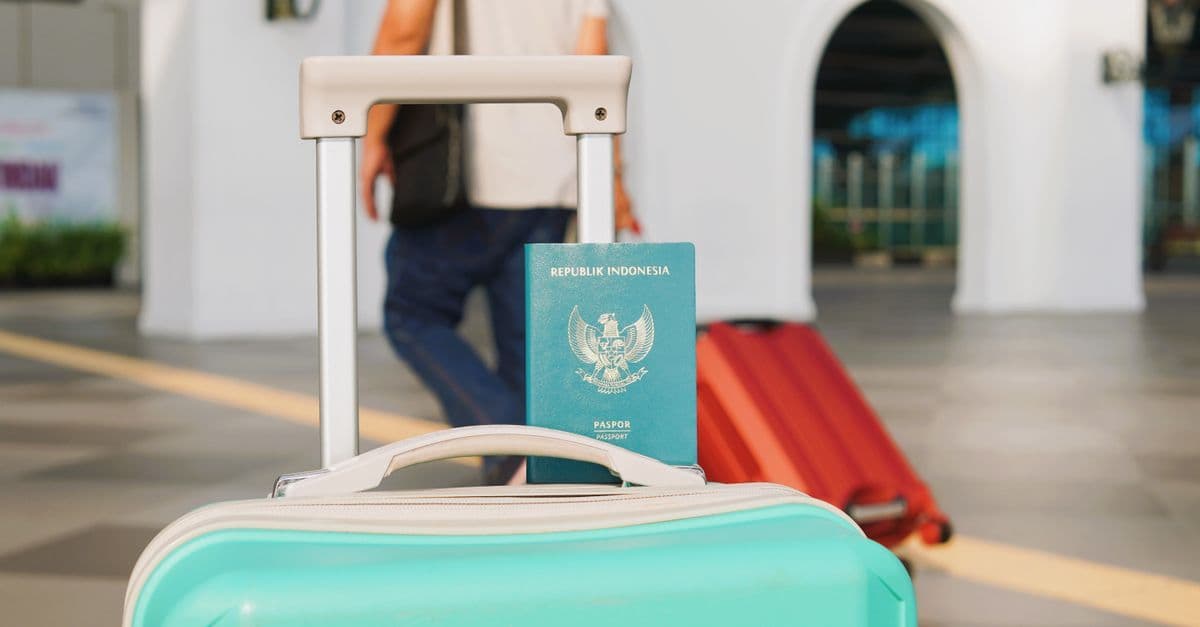
Japan has waived visas for Indonesian nationals since 1 December 2014, with a condition spelled out on MOFA's visa exemption list: your ICAO-compliant ePassport has to be registered with Japan's diplomatic missions in Indonesia before you travel. An ePassport carries a chip symbol on its front cover. If yours doesn't, you need a visa.
 Get your Japan eSIM before you flyInstall it at home, turn it on when you land. From A$4.54.See Japan plans
The registration covers short visits for tourism, business or seeing family and friends. It stays valid for three years, or until your passport expires if that comes sooner, and you can use it for repeat trips of up to 15 days each until then. A longer stay, or any work, needs a visa.
The Embassy of Japan in Indonesia is blunt about the risk. Indonesians with an ePassport who land without registering are turned away at the airport. Registering isn't a guarantee either: immigration officers make the final call on arrival, and they can ask about your plans, how long you're staying, and for a return or onward ticket.
Fifteen days goes quickly in Japan. If you're still choosing dates, our guide to when to visit Japan, month by month helps you pick a season before you book flights.
JAVES puts the waiver registration online
Since 27 March 2023, you can register through JAVES, the Japan Visa Exemption System, without visiting a consulate. The Embassy of Japan in Indonesia's JAVES page sets out the process:
- Create an account on the JAVES site, which runs on MOFA's evisa.mofa.go.jp domain.
- Enter your name exactly as your passport shows it, including any added or changed names on the endorsement pages. If you have a single name, put it in the family name field and a hyphen (-) in the given name field.
- Upload the passport's front cover, the photo and biodata page, and both endorsement pages. Skip page 48, the last page, because it isn't an endorsement page.
- Wait for the email confirming your registration, then open the Visa Exemption Registration Notice on your phone or tablet.
That notice is your proof. You show it on your own device, and the embassy says printouts and screenshots aren't accepted.
Prefer paper? Register in person at a Japanese consulate in Indonesia, or through the Japan Visa Application Center (JVAC) in Jakarta, and you get a sticker in your passport. The consulates don't charge for it, JVAC adds its own service fee, and processing takes about five working days.
One catch if you live in Australia. MOFA's JAVES contact sheet lists the Japanese office with jurisdiction over your place of residence in Indonesia as a contact point. The sheet doesn't say whether Indonesians living abroad can register online, so ask the JAVES help desk before you build a trip around it. The visa routes below run through Japan's offices in Australia instead.
Australian permanent residency doesn't replace the waiver or a visa
Japan's visa exemptions follow your passport, not where you live. The Embassy of Japan in Australia lists permanent residents, students and Temporary Graduate visa holders among the people who can apply for a Japanese visa at the embassy in Canberra. Japan also only issues visas to people who can return to their country of nationality or residence. That makes your Australian visa part of the application.
The embassy's visitor visa page says it won't take applications from people on a Tourist or Visitor visa, such as subclass 600. It wants your VEVO page as proof of your Australian visa, not the grant notification.
The JAPAN eVISA covers tourist trips for residents of Australia
MOFA's eVISA page lists Australia among the countries where foreign residents can apply online, unless they're already visa-exempt. MOFA doesn't say whether an Indonesian with an unregistered ePassport counts as visa-exempt here. If that's you, email MOFA's Japan Visa Information Hotline (japan-visa@bridge-ms.com) with your nationality and where you live before you apply. The eVISA covers one thing: a single-entry tourist visa for a stay of up to 90 days. You apply, pay and receive it online, with no sticker in your passport, although the consulate can still ask you in for an interview or for more documents.
Proving it takes a working phone. At check-in you show the visa issuance notice on your phone or tablet, and MOFA says it must be displayed with an internet connection. PDFs, screenshots and printouts aren't accepted.
Family visits and business trips go through your local consulate
The eVISA is for tourism only. MOFA sends visits to relatives or friends, business trips, study, work and transit to a paper application, lodged with the Japanese embassy or consulate for the area you live in:
| Where you live | Where to apply |
|---|---|
| ACT and nearby towns such as Queanbeyan and Jindabyne | Embassy of Japan, Canberra |
| NSW and NT | Consulate-General of Japan, Sydney |
| VIC, TAS and SA | Consulate-General of Japan, Melbourne |
| QLD | Consulate-General of Japan, Brisbane |
| Cairns area | Consulate-General of Japan, Cairns |
| WA | Consulate-General of Japan, Perth |
For a holiday or a visit to friends or relatives, the Canberra embassy's checklist asks for:
- the visa application form, with every field filled in or marked N/A
- a 45 mm by 35 mm photo taken in the last six months, plus proof of when it was taken, such as a receipt
- your passport and a copy of its photo page
- your VEVO page
- an itinerary on the embassy's template, with a simple daily plan and hotel details
- flight details in your passport name, in English or Japanese
- a three-month bank statement, no older than one month, showing enough money for the trip
- a copy of your student ID, if you have one
Consulates in other states publish their own lists. Check the one for your state before you gather documents.
Japanese visa fees jumped on 1 July 2026
The Embassy of Japan in Australia lists the new fees as A$156 for a single-entry visa and A$313 for multiple entry, up from A$31 and A$63. MOFA's fee notice puts them at about ¥15,000 and ¥30,000, paid in local currency, and says amounts can differ by nationality and the purpose of your trip. If a visa isn't issued, there's no visa fee. The ePassport registration itself is free at Japan's consulates in Indonesia.
Visit Japan Web is free, and lookalike sites are not
For the arrival forms, the Embassy of Japan in Australia recommends Visit Japan Web, the Digital Agency's service for entering your immigration and customs details before you fly. Visa-exempt travellers fill in the disembarkation card there, visa holders add their visa details, and you then use QR codes instead of paper forms when you enter Japan.
Copycat sites are the risk. In June 2025 the Digital Agency warned about a site charging Visit Japan Web users an application fee, and said it never asks users to pay. MOFA also warns about fraud websites made to look like the JAPAN eVISA site. Type the addresses yourself: www.evisa.mofa.go.jp for the eVISA and JAVES, and www.vjw.digital.go.jp for Visit Japan Web.
JESTA will add an online check for visa-exempt visitors by March 2029
The other 2026 change is a law, not a new visa. Japan's parliament passed the JESTA bill on 29 May 2026, and it was promulgated on 5 June 2026 as Law No. 32. According to the Immigration Services Agency's bill page and the outline it links, both in Japanese, visa-exempt visitors on short stays will need an electronic travel authorisation as a condition of landing. The start date is set by cabinet order, no later than 31 March 2029.
JESTA will cover visa-exempt short stays, and registered ePassport holders enter Japan visa-exempt. The bill outline doesn't say how JESTA will work alongside JAVES registration, and it isn't in force yet. For now, the waiver and visa routes above are how you get in.
Your phone now carries part of your entry paperwork
Both online routes depend on your phone. The JAVES waiver notice has to be shown on your own device, and the eVISA notice needs an internet connection at the airport. Charge your phone, know your login, and don't rely on a screenshot.
After immigration, you'll want data for trains, maps and messages home anyway. An eSIM set up before you leave Australia can connect as soon as you land, so you're not hunting for terminal Wi-Fi. HelloRoam covers 185+ destinations, including Japan, and with a regional plan one eSIM keeps working across borders if Japan is one stop of several.
Rules and fees change. Check MOFA and the embassy pages linked above before you book.
Questions travellers ask
How far ahead can I apply for a Japanese visa in Australia?
The Embassy of Japan in Canberra says a visa is valid for entry for three months from the day it's issued, so you can apply up to three months before you fly. It quotes at least five working days to process. Consulates in other states set their own timing, so check yours a few months out.
What happens to my Japan visa waiver registration if I renew my passport?
It doesn't carry over. The Embassy of Japan in Indonesia says a new passport or a name change means registering again. In person, bring both the old and new ePassports, or a letter from the relevant authority if you can't produce the old one. Without re-registering, you can't enter Japan on the waiver.
Sources
- MOFA: Exemption of Visa (Short-Term Stay)mofa.go.jp
- Embassy of Japan in Indonesia: visa waiver registration for Indonesian e-passport holdersid.emb-japan.go.jp
- Embassy of Japan in Indonesia: online pre-registration through JAVESid.emb-japan.go.jp
- MOFA: JAVES contact informationevisa.mofa.go.jp
- MOFA: The JAPAN eVISA systemmofa.go.jp
- MOFA: FAQ about JAPAN eVISAmofa.go.jp
- MOFA: Visa fees from 1 July 2026mofa.go.jp
- Embassy of Japan in Australia: VISA and Travel Informationau.emb-japan.go.jp
- Embassy of Japan in Australia: Temporary Visitor Visaau.emb-japan.go.jp
- Embassy of Japan in Australia: Visa Enquiries and FAQau.emb-japan.go.jp
- Digital Agency: Announcement Concerning Use of Visit Japan Webservices.digital.go.jp
- Immigration Services Agency of Japan: bills submitted to the 221st Diet (JESTA)moj.go.jp
- Immigration Services Agency of Japan: JESTA bill outline (PDF)moj.go.jp
Written by
HelloRoam Team
The HelloRoam editorial team writes about eSIM technology, travel connectivity, and mobile data tips for international travelers.