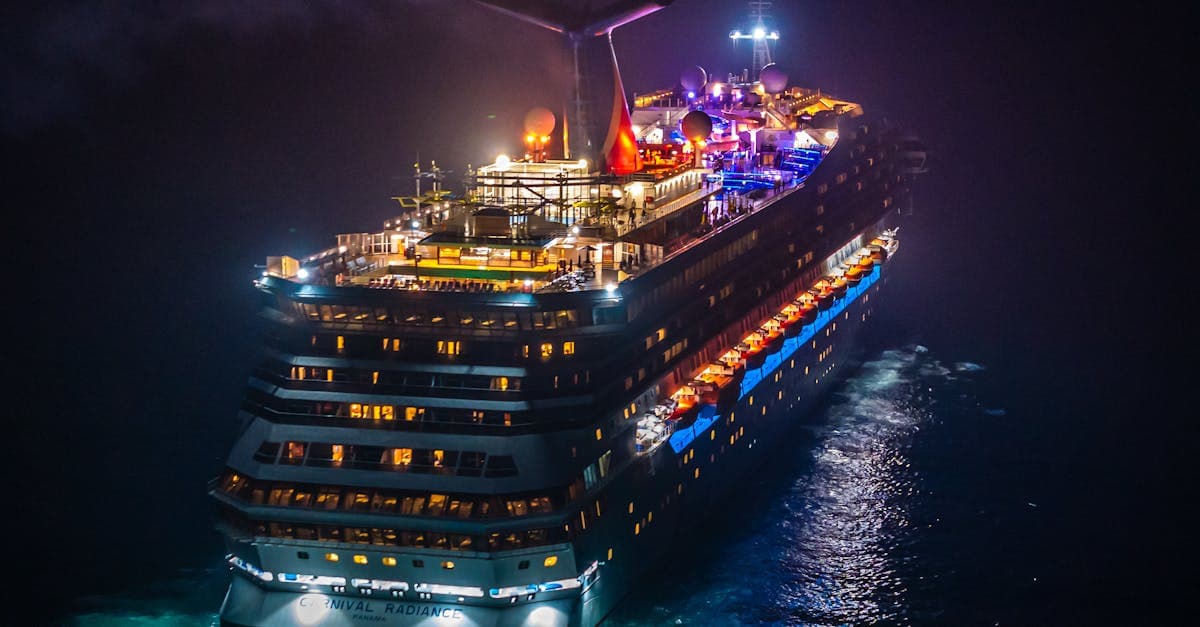
Quick Answer: Carnival Adventure Deck Plans at a Glance
The ship holds 2,636 passengers at double occupancy cruisemapper.com, which makes it a more contained experience than its fleetmate Carnival Splendor, a larger vessel built for 3,012 guests cruisemapper.com. That difference shows in corridor pace, lift queues, and how sea days feel. The full carnival adventure deck plans PDF is available for download on carnival.com.au, and it's worth opening before you lock in a cabin rather than after.
Some key figures to anchor your planning:
- Decks 5 to 12: staterooms and primary cabin corridors
- Decks 5 to 7: main dining rooms, atrium lobby, retail shops
- Deck 4: tendering operations and medical centre
- Decks 14 to 17: pools, spa, entertainment and sports facilities cruiseline.com
Understanding this layout before you pay a deposit means you can steer clear of the cabins most likely to trade a good night's sleep for someone else's fun.
Now, deck by deck, here is what to expect.
Carnival Adventure Deck Plans: What Each Deck Contains
The Carnival Adventure deck plan arranges the ship's spaces along a clear vertical logic: operations and dining at the base, staterooms through the middle, entertainment at the summit cruisedeckplans.com.
Deck 4 handles the logistics most passengers only encounter at tender ports like Mystery Island or Lifou. Tendering operations and the ship's medical centre sit here. You'll come down to Deck 4 whenever the ship can't dock and small boats carry passengers to shore.
Deck 5 marks the beginning of the cabin zones, sharing space with the first main dining room and a run of onboard shops. The dining room draws foot traffic through the evening, so cabins near the entrance corridor pick up noise during service windows.
Deck 6 expands the cabin footprint and adds the atrium lobby, a second main dining room, and the teens area. The lobby becomes the social hub on boarding day and during formal nights, which means it's lively when you'd rather not be near it.
Deck 7 is the Promenade Deck: a full exterior circuit of the ship, plus indoor lounges, the casino, and additional retail. Guest services sits in this zone, where passengers sort out WiFi packages and onboard accounts. Carnival's satellite internet packages are tiered by usage, though maritime satellite connections generally suit messaging and email better than video calls. At Pacific port stops like Noumea, Port Vila, or Suva, many passengers switch to a local eSIM for more consistent data. If that's your plan, confirm your handset's compatibility on the eSIM Compatible Devices list before you sail.
Decks 8 through 12 form the ship's main stateroom block. Less foot traffic, quieter corridors, and a solid case for booking higher if the budget stretches.
Deck 14 delivers the lido pool, a secondary pool, and the adults-only sundeck. Expect chair noise and music from mid-morning onwards on sea days.
Deck 16 houses the Byron Beach Club and the Adventure Park, Carnival's outdoor family activity zone.
Deck 17 holds sports facilities and the nightclub. Cabins directly below on Deck 12 may carry bass from late-night sets.
Knowing the layout, picking a cabin gets easier.
What Is the Best Deck to Have a Room on a Cruise Ship?
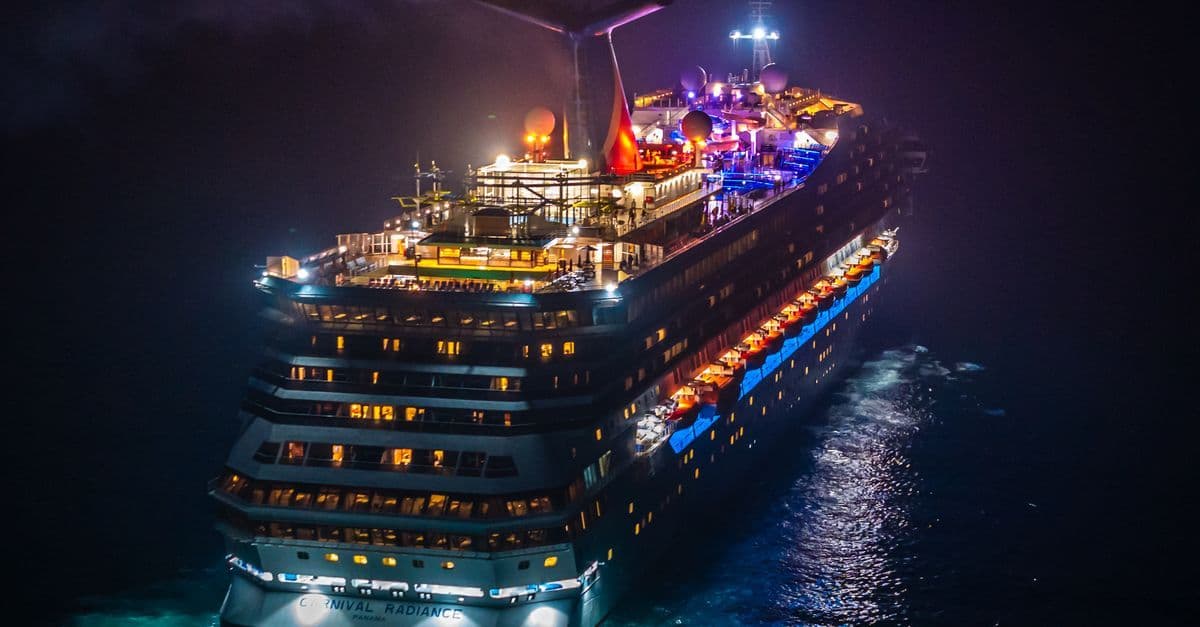
Mid-ship cabins on the middle passenger decks cut down on both motion and noise more reliably than any other cabin position. On Carnival Adventure, that places the sweet spot around Decks 7 to 9 in the midship corridor.
The physics are straightforward. A ship rolls and pitches around its centre of gravity, so the bow and stern amplify any movement while the middle stays comparatively still. Vertical position adds another layer: upper decks swing further in a roll, while lower decks sit closer to the waterline and absorb less of the sea's motion.
Avoid the cabins directly below Deck 14. Pool furniture and early-morning maintenance routines begin before most passengers want to be awake. Anything directly under Deck 17's nightclub will hear the bass line on late nights. Cabins adjacent to the main dining rooms on Decks 5 and 6 catch door traffic and conversation during the dinner service rush.
For motion-prone passengers, the lower midship options on Decks 5 or 6 offer a steadier ride, even if the porthole view doesn't compare to a balcony above.
Midship balcony cabins on Decks 8 or 9 are the most considered choice for Australian families on longer Pacific itineraries out of Sydney or Brisbane. The combination of outdoor space, a quieter corridor, and decent lift access to dining and the pool is hard to beat across a 10-night sailing.
Location sorted. Now weigh up the cabin category.
Carnival Adventure Cabin Types: Interior, Ocean View, Balcony and Suite
Carnival Adventure offers 41 distinct cabin categories across four main types: interior, ocean view, balcony, and suite. Every type includes at least one accessible configuration cruise1st.com.au.
The difference between categories weighs more heavily on longer voyages. A windowless interior on a 10-night Pacific sailing means limited natural light for more of the trip than most travellers anticipate. The price gap between interior and ocean view can reach several hundred Australian dollars per person, and for many Aussie families, that margin goes further on shore excursions than on the upgrade.
| Category | Key Feature | Best For |
|---|---|---|
| Interior | No window; lowest fare tier | Budget-focused travellers, short cruises |
| Ocean View | Fixed porthole or picture window | Natural light at mid-range cost |
| Balcony | Private verandah; Decks 7 to 9 midship prime | Families, couples, longer Pacific itineraries |
| Suite | Expanded layout with priority boarding perks | Extra space and embarkation benefits |
| Accessible | Available across all four categories | Passengers needing wider doorways or roll-in shower access |
Balcony cabins in the midship range on Decks 8 or 9 are the most nuanced choice for a Pacific sailing. On itineraries with two or three consecutive sea days out of Australian ports, a private verandah changes the feel of the voyage in a way it simply doesn't on a short three-night cruise.
Suites add priority embarkation at terminals like Sydney's Overseas Passenger Terminal, bathroom upgrades, and in some configurations, butler service. Whether the premium makes sense depends largely on how much time you actually spend in the cabin versus on deck or ashore.
Accessible staterooms span every category, from interior to suite, which means budget considerations and accessibility needs aren't forced trade-offs.
See how Adventure stacks up against Splendor.
Which Ship Is Better, Carnival Splendor or Adventure?
The honest answer depends on what you want from a cruise, and it may not be what you expect. Adventure suits first-timers and families on shorter Pacific runs better than Splendor does for one clear reason: it's smaller, which makes it simpler.
With the stateroom count covered in the quick answer above, Adventure never hits the crowd ceiling that larger ships reach on sea days. Navigation is intuitive. Parents with young kids won't spend the first two days mentally mapping the layout. Contrast that with Splendor's 13 decks and 1,503 staterooms cruisemapper.com: more people, more options, more organised chaos.
That scale is exactly what some travellers are chasing, though. Splendor carries a wider spread of entertainment venues, a broader dining programme, and more activity options for passengers who plan to barely set foot ashore. For frequent cruisers who've done Pacific itineraries before and want maximum variety between ports, Splendor edges ahead.
| Adventure | Splendor | |
|---|---|---|
| Best for | First-timers, families, Pacific runs | Frequent cruisers wanting variety |
| Ship feel | Intimate, easy to navigate | Larger, livelier, busier |
| Home ports | Sydney, Brisbane, Fremantle | Sydney, Brisbane, Fremantle |
Both ships sail Pacific itineraries from the same Australian home ports, and the itineraries often overlap. If you've never cruised before, Adventure is the less overwhelming entry point. If this is your third or fourth Carnival sailing and you want more to do at sea, Splendor delivers.
Ship sorted. Connectivity on board and ashore deserves the same thought before you sail.
Staying Connected on Carnival Adventure: WiFi, Ports and eSIM Options
Cruise WiFi on Carnival Adventure is a paid satellite service, and the gap between expectation and reality has caught plenty of Aussie passengers off guard. Throttled bandwidth means video calls and streaming stutter on busy sea days. It works for messaging and light browsing. Nothing more.
The harder moment comes when you dock.
In ports like Noumea, Port Vila, and Mystery Island, the ship's WiFi stays aboard. Local mobile networks cover those towns, but your Australian SIM trips into international roaming. Telstra, Optus, and Vodafone AU all apply their per-day roaming charges for any day you use data ashore. A four-stop Pacific itinerary compounds that cost quickly.
A local eSIM (a digital SIM profile installed before you leave home) sidesteps the per-day charge model entirely. Keep it dormant during sea days and activate it when you step off the gangway in Noumea. HelloRoam covers Pacific island port destinations and avoids the per-day charge that Aussie carrier roaming imposes. For current plans, see helloroam.com/en-AU/esim-australia.
Interior cabins on lower decks consistently return the weakest onboard WiFi signal. If you've paid for the ship's data package, a cabin positioned on a higher deck tends to deliver noticeably better reception. That trade-off sits alongside price when choosing your stateroom.
Pre-download what you'll need before boarding: offline Google Maps tiles for each port stop, WhatsApp for calls and messages over any data connection, and any streaming content for sea days. Port-call data handles navigation and communication comfortably. The ship's satellite service fills the gaps.
Still have questions? The most common ones are answered next.
Carnival Adventure Frequently Asked Questions
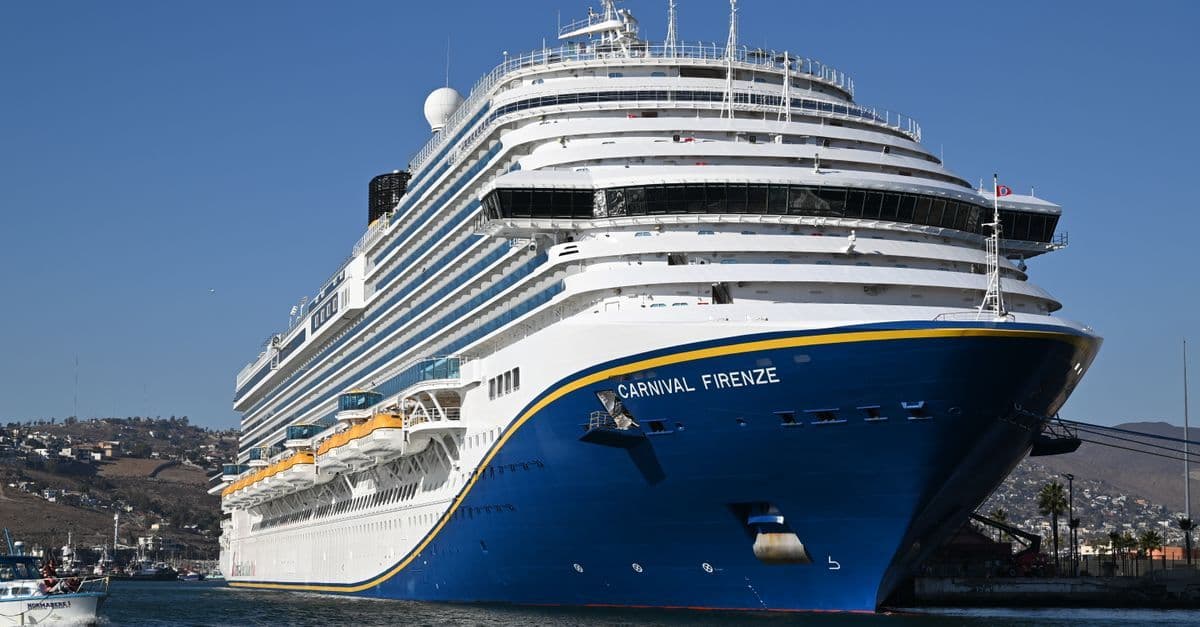
Carnival's boarding process is more organised than many first-timers expect. At Sydney's White Bay Cruise Terminal and other Australian home ports, boarding typically opens a few hours before scheduled departure. Carnival assigns staggered arrival windows on your boarding pass, and arriving outside your window generally means a longer queue at check-in.
The most common question new cruisers raise concerns the liquids policy. Carnival applies the same 3:1:1 approach as aviation security: containers of 100 ml or less, packed in a clear, resealable bag, one bag per passenger. The full embarkation security scan enforces this at every Australian home port.
Dress codes surprise most first-timers. Elegant nights on Pacific itineraries call for smart casual, not black tie. A collared shirt or a dress is the standard.
One practical point Aussie travellers often overlook: gratuities on Carnival are charged in USD and applied automatically to your onboard account. The AUD-to-USD conversion adds to your total sailing cost, so factor the exchange rate into your budget before departure.
One more Carnival policy worth unpacking before you pack: how upgrades actually work.
How Do You Get a Free Balcony Upgrade on Carnival?
Most cruise forum advice on balcony upgrades is wishful thinking. Complimentary cabin upgrades on Carnival happen, but they're rarely manufactured on demand. The actual mechanism is more structural, and understanding it sets more realistic expectations than "ask at check-in and hope."
VIFP (Very Important Fun Person) is Carnival's loyalty programme, and higher-tier status is the main genuine lever for complimentary upgrades. When ships aren't fully subscribed, higher-status members access upgrade pools before open allocation. If you've cruised with Carnival before, you're already earning points. Register in the programme and let status do its quiet work.
The bid system runs separately. Pre-cruise emails arrive between 14 and 30 days before departure, inviting you to offer a price for an improved cabin category thetraveltemple.com.au. That's not free, but bid-upgrade pricing is typically lower than booking the higher category outright from the start.
Timing matters in two directions. Booking very early places you in upgrade pools while premium inventory is still unsettled. Booking close to departure, when Carnival needs to fill remaining cabins, can produce a similar result. Neither is predictable.
The practical approach: book the cabin you'd be happy to spend ten nights in regardless. Set your Carnival account to receive upgrade alerts. If an offer lands in your inbox from day 14 onwards, evaluate it on its merits.
There's no secret handshake. Watch the inbox and pick the cabin that works.
What Is the 3:1:1 Rule on a Carnival Cruise?
Carnival's 3:1:1 is a beverage boarding policy, not an airport security rule carnival.com.au. It sets limits on what you can carry onto the ship on embarkation day, and getting it wrong means your drinks get confiscated at the gangway before you even find your cabin.
The allowances cover three categories:
- Non-alcoholic drinks: Up to 12 cans or sealed cartons per person. Soft drinks, juice, and sparkling water all qualify. Unsealed or oversized containers generally do not.
- Wine or Champagne: One bottle per person, carried on at embarkation only. This is the sole alcohol allowance under the policy.
- Everything else: Additional wine, spirits, and beer are collected at the gangway. No exceptions on boarding day.
The detail most travellers overlook: the allowance applies per person, not per cabin. Two passengers travelling together can combine their limits, which makes the policy considerably more generous in practice.
Gangway screening is methodical. Staff are specifically looking for excess alcohol, and bags go through the process quickly. Policy details do shift between sailings, so confirm the current allowances on Carnival's Australian booking and policy page before you pack. The per-person structure is the thing worth locking in before boarding day.
Reviewed by HelloRoam's editorial team. Last updated: 16 July 2026.
Questions travellers ask
What is the 3:1:1 rule on a Carnival cruise?
Carnival's 3:1:1 rule mirrors aviation security: liquids in containers of 100ml or less, packed in a clear resealable bag, one bag per passenger. This is enforced at the embarkation security scan at every Australian home port.
How to get a free balcony upgrade on Carnival?
Complimentary upgrades are most reliably linked to VIFP loyalty status, where higher-tier members access upgrade pools on undersold sailings. A separate bid system lets you offer a discounted price for a higher cabin category, with offers arriving 14 to 30 days before departure.
Which ship is better, Carnival Splendor or Adventure?
Adventure suits first-timers and families on Pacific itineraries due to its smaller, easier-to-navigate layout. Splendor's larger scale suits frequent cruisers who want more dining options and entertainment variety across longer voyages.
Sources
- carnival.com.aucarnival.com.au
- Carnival Adventure deck planscruisemapper.com
- Carnival Adventure Cabinscruise1st.com.au
- thetraveltemple.com.authetraveltemple.com.au
- Carnival Adventure Deck Plans & Cabin Detailscruisepassenger.com.au
- Carnival Adventure decks, cabins, diagrams and pics.cruisedeckplans.com
- Carnival Adventure Deck Plans (Layout & Map)cruiseline.com

Written by
Sophie Callahan
Sophie Callahan is a travel writer at HelloRoam covering travel tech and data plans for international visitors. She explains how to set up an eSIM before landing so readers arrive already connected. Sophie focuses on budget-friendly advice for backpackers and working holiday makers who need reliable data without overpaying.
 Singapore
 Indonesia