India asks e-Visa travellers to carry a copy of the electronic travel authorization (ETA) it emails, so print it and keep the email as a backup. HelloRoam, which wrote this guide, is a travel eSIM company with data plans for India; we don't take visa photos or handle visa forms.
The specs below come from India's visa portal, the High Commission of India in Ottawa, BLS International and the Government of Canada, all read on October 12, 2026. Limits can change, so recheck the official page you upload to before you pay.
e-Visa and regular visa photos follow different specs
Your visa type decides which column applies. Both application forms sit on India's official visa portal, indianvisaonline.gov.in, and its e-Visa section lists the visa types the e-Visa covers.
 Get your India eSIM before you flyInstall it at home, then turn on data roaming for it when you land. From CA$6.63.See India plans
| Spec | e-Visa | Regular visa through BLS |
|---|---|---|
| What you submit | One digital upload | A digital upload, plus the same photo printed and pasted on the paper form |
| File type | JPEG | JPEG |
| File size | 10 KB to 1 MB | 10 KB to 300 KB |
| Shape and pixels | Square (equal height and width) | Square, from 350 x 350 to 1,000 x 1,000 pixels |
| Printed photo | Not part of the application | One colour print, 2 x 2 inches (51 x 51 mm) |
| Background | Plain light-coloured or white, no shadows, no border | Plain white, no border |
| Clothing | No rule given | Dark colours |
| Head size | Full head, top of hair to chin, no measurement given | 25 to 35 mm (1 to 1-3/8 inches) on the visa portal, 35 to 40 mm on Ottawa's photo sheet |
| Passport photo page | PDF, 10 KB to 300 KB | PDF, 10 KB to 500 KB |
The regular visa's pixel limits come from the portal's photo upload guide. The print size, colour and clothing rules come from the High Commission of India in Ottawa's visa checklist booklet.
The e-Visa photo is a digital upload only
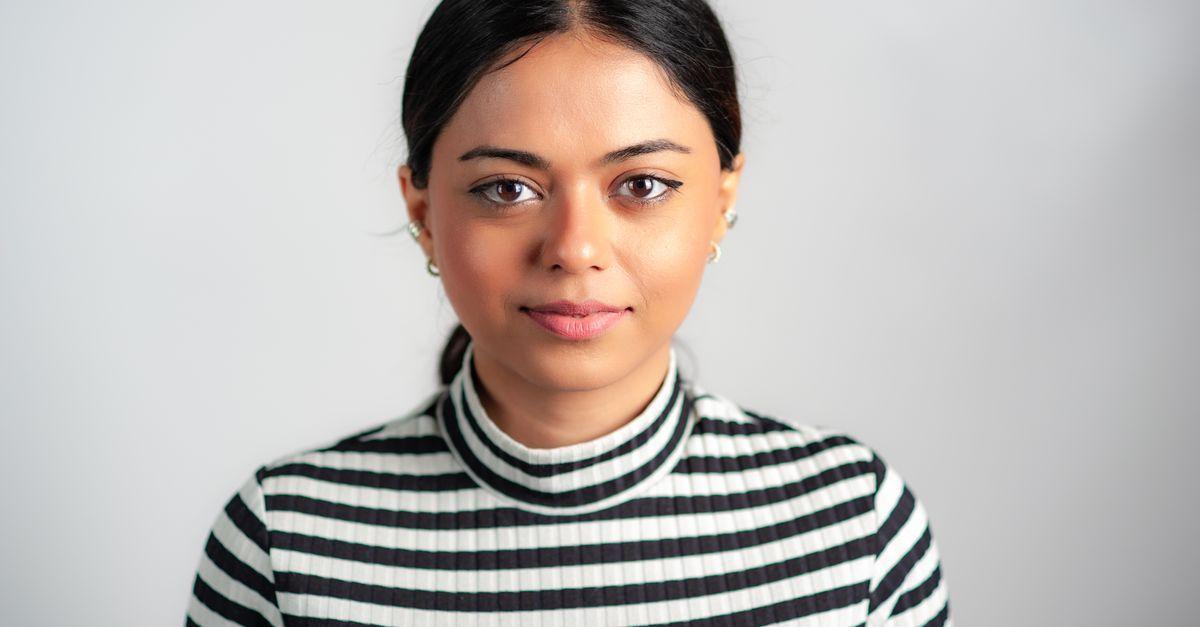
India's e-Visa instructions ask for a recent, front-facing photograph with a white background. The file must meet these specs:
- JPEG format, between 10 KB and 1 MB.
- Equal height and width, so the image is square.
- Full face, front view, eyes open and no glasses.
- Head centred, showing the full head from the top of the hair to the bottom of the chin.
- A plain light-coloured or white background, no shadows on the face or behind it, and no border.
You also upload the photo page of your passport as a PDF of 10 KB to 300 KB. The portal warns that an application can be rejected if the photo or documents are unclear or off-spec. When an image falls short, a request for a fresh copy arrives by email, usually within 24 hours; the re-upload tab sits at the bottom of the e-Visa page.
The e-Visa asks for no printed photo. Immigration officers take your biometric details on arrival in India, according to the same page.
A regular visa needs a print that matches the upload
The Ottawa High Commission's booklet asks for one colour photo, 2 x 2 inches (51 x 51 mm), on a plain white background without borders, with dark clothes and eyes open. The photo you upload online must be the same one you paste on the paper application.
The online form takes a square JPEG of 10 KB to 300 KB, between 350 x 350 and 1,000 x 1,000 pixels. The passport photo page goes up separately as a PDF of 10 KB to 500 KB.
Dark clothes have a reason. The High Commission's photo sheet says the person and the background must be easy to tell apart, and it calls a white shirt against a white background not acceptable.
Take the photo before you fill in the online form. The print and the upload have to match, and the booklet says a submitted form can't be changed: a mistake means filling in a fresh application.
Every regular visa ends with a visit in person. BLS says biometrics are required for all visa categories, and it doesn't accept visa applications by post. It also lists an in-house photo booth at its application centres, set up for the High Commission of India's specifications, with form filling and document upload among its optional paid services.
Two official pages give different head sizes
The visa portal's photo instructions for regular visas say the head should measure 1 inch to 1-3/8 inches (25 to 35 mm), from the top of the hair to the bottom of the chin.
The Ottawa booklet tells visa applicants to cross-check their photo against the High Commission's photo specification sheet. That sheet is written for passports. It asks for a head of 1.4 to 1.6 inches (35 to 40 mm), with the face filling 70 to 80% of the photo.
Neither page says which range a visa counter applies. If your print fits one range but not the other, ask BLS which sheet it checks against before your appointment.
A Canadian passport photo won't fit the Indian visa form
India's visa print is a 51 x 51 mm square. The 50 x 70 mm photo set out on Canada.ca's passport photo requirements page is a tall rectangle, so it can't stand in for the square print India wants. Order a 2 x 2 inch square print instead.
Indian passport photos follow their own rules. The High Commission of India in Ottawa says only ICAO-compliant photographs are accepted with passport applications from September 1, 2025. Its ICAO photo guidelines set 630 x 810 pixels, with the face taking up 80 to 85% of the photo. The High Commission's passport checklist booklet also asks for two printed photos at 2 x 2 inches (51 x 51 mm). The 630 x 810 pixel spec is for passport services, so a search result quoting it isn't describing a visa photo.
Pack two spare prints for the trip
Canada's travel advice for India explains what happens if your passport is lost or stolen there. You need an exit visa from the Foreigners Regional Registration Office (FRRO) to leave, and the FRRO asks for a police report, two current passport-size photographs and a letter from the High Commission of Canada in New Delhi or the Consulate General of Canada in Chandigarh or Mumbai.
The advice gives no size for those photos. Extra prints from your visa sitting are an easy thing to pack, kept apart from your passport.
Children need their own photo, passport and application
India's e-Visa FAQ says a minor child needs a separate e-Visa, with a passport valid for at least 6 months from the date of arrival. The e-Visa isn't available to anyone endorsed on a parent's or spouse's passport, so each child travels on their own passport.
The High Commission's photo sheet gives young children some leeway. Babies under one year don't have to have their eyes open, and children under ten get relaxed rules on face height and eye position. The child must still be alone in the photo, with no chair backs, toys or other people, looking at the camera with a neutral expression and mouth closed. The e-Visa page itself lists no exception for children.
For a regular visa, the Ottawa booklet says both parents sign a minor's application.
You can fix the photo at home without a paid service
The portal's photo upload guide accepts a picture from a digital camera or webcam, or a scan of a printed photo, and shows how to fix its size in Windows Paint. On a Mac, Apple's Preview app does the same job. Take it against a plain white wall in even light, so there are no shadows on your face or behind you.
- On Windows, right-click the photo, choose Properties and open the Details tab to see its width and height in pixels.
- Open it with Paint and tick Status Bar on the View tab. Use Select to mark a square around your head and shoulders. The status bar shows the size of your selection in pixels, so make the width and height equal. Crop it, then save it as a JPEG picture.
- On a Mac, open the photo in Preview and follow Apple's crop and resize steps: select a square around your head and shoulders and crop it from the Markup toolbar. Tools, then Show Inspector, displays the size of your selection.
- Choose Tools, then Adjust Size, to set the width and height in pixels. Then choose File, then Export, and pick JPEG in the Format menu. JPEG has a quality setting you can lower if the file is too big.
- Check the file before you upload. Width and height must be equal, and between 350 and 1,000 pixels for a regular visa. The file must be 10 KB to 1 MB for the e-Visa, or 10 KB to 300 KB for a regular visa. If a regular visa photo is still wider than 1,000 pixels, scan the 2 x 2 inch print at 300 dpi instead. That gives 600 x 600 pixels.
For the e-Visa, paid photo-and-form services aren't needed: India's e-Visa FAQ says no intermediary or travel agent is required. The High Commission of India in Ottawa keeps a list of fake e-Visa web addresses, with 140 entries noticed so far.
Check your phone, then add an India eSIM at home
Check your phone's eSIM support, then follow the eSIM setup steps for your phone at home on Wi-Fi, so mobile data works as soon as you land in India.
As of October 29, 2026, our India plans connect through Airtel. To pick a plan size, work out your daily data use first.
Questions travellers ask
Can I wear glasses in an Indian visa photo?
Not for the e-Visa: India's e-Visa page asks for a photo without spectacles. For a regular visa, the High Commission of India in Ottawa's photo sheet allows clear, thin-framed prescription glasses with no flash reflection, but not tinted or dark lenses. Taking your glasses off meets both.
Can I wear a turban, patka or hijab in the photo?
For a regular visa, yes, if it is worn for religious reasons. The High Commission of India in Ottawa's photo sheet, which its visa booklet points to, allows head coverings only for religious reasons, and the face must stay visible from the bottom of the chin to the top of the forehead, with both edges of the face clearly shown. India's e-Visa page gives no rule on head coverings. It asks for the full head from the top of the hair to the bottom of the chin.
Sources
- India Visa Online: e-Visa instructions, documents and FAQindianvisaonline.gov.in
- India Visa Online: Instructions (regular visa photo requirements)indianvisaonline.gov.in
- India Visa Online: Online Visa Photo Upload Processindianvisaonline.gov.in
- India Visa Online: Document Uploadindianvisaonline.gov.in
- High Commission of India, Ottawa: Checklist and Information Booklet for Visahciottawa.gov.in
- High Commission of India, Ottawa: Photo Specificationhciottawa.gov.in
- High Commission of India, Ottawa: Fake e-Visa URLs noticed so farhciottawa.gov.in
- BLS International Canada: Indian Visa and Passport Application Centreblsindia-canada.com
- BLS International Canada: Value Added Servicesblsindia-canada.com
- Government of Canada: Canadian passport photoscanada.ca
- Government of Canada: India travel advice and advisoriestravel.gc.ca
- High Commission of India, Ottawa: Guidelines for ICAO Compliant Photographs for Passport Applicationshciottawa.gov.in
- Apple Support: Crop, resize, or rotate an image in Preview on Macsupport.apple.com
- Apple Support: Convert image file types using Preview on Macsupport.apple.com
- High Commission of India, Ottawa: Checklist and Information Booklet for Passporthciottawa.gov.in
Written by
HelloRoam Team
The HelloRoam Team writes our guides on trip planning, visas and eSIMs. For every new or updated guide, we check each fact at its source. Sources include government, park and weather service pages. We note the date we read each one. A second review then checks every fact against its source before the guide goes live. If we cannot confirm a fact, we leave it out. We link those sources inside the guide, so you can check them.