Whatever month you choose, HelloRoam's eSIM plans for Florida keep weather radar, maps and theme park apps working from the moment you land, with 24/7 support if you need help mid-trip.
Florida Weather at a Glance for Canadian Travellers
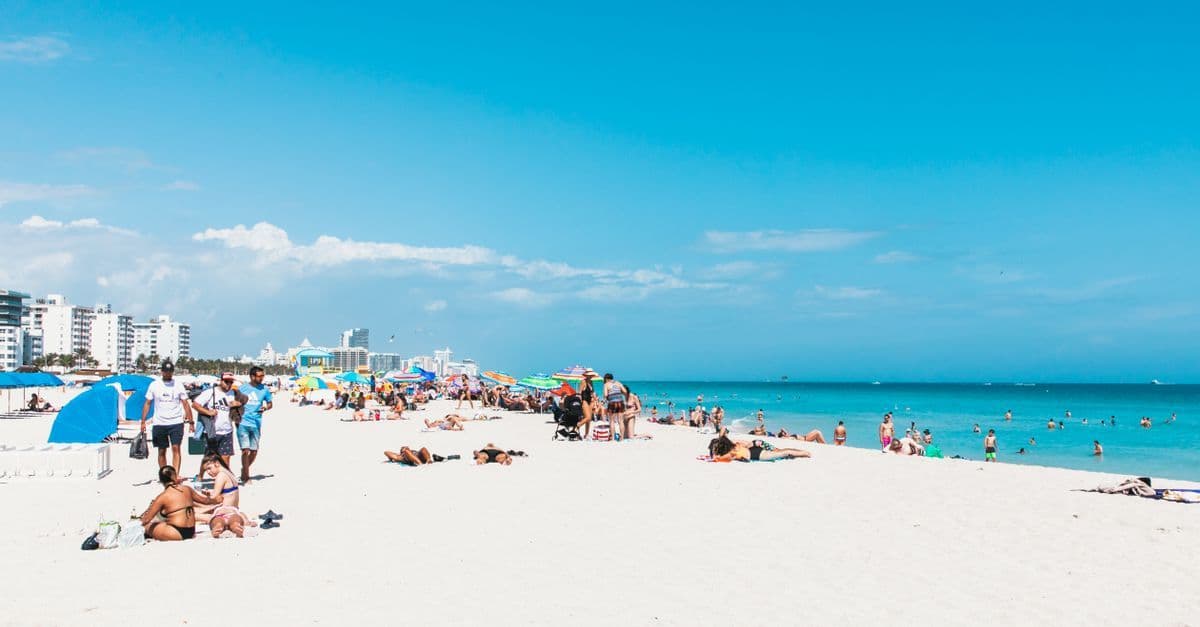
Florida has two seasons: a dry season from November through April and a rainy season from May through October. For a winter escape from November through March, average highs run 22 to 26°C in Orlando and 25 to 27°C in Miami. Midsummer highs reach 33°C, and the humidity ensures that number doesn't tell the full story.
 Get your USA eSIM before you flyInstall it at home, then turn on data roaming for it when you land. From CA$4.01.See USA plans
Florida's Dry and Rainy Seasons Shape Your Travel Dates

Florida's warm climate produces two sharply distinct seasonal patterns. In the dry months, rainfall is low and temperatures are mild. The rainy months deliver the reverse: frequent thunderstorms, heavy rain, and temperatures at their seasonal peak.
The switch is abrupt: Orlando's rain doubles from 102 mm in May to 204 mm in June. The National Weather Service office for Tampa Bay notes that the time and place storms favour change from day to day with the position and strength of the Bermuda High, so check each morning's forecast rather than planning around a fixed hour.
Humidity is the part the averages leave out. Run the National Weather Service's heat index formula for a 33°C afternoon at 60% humidity and the result is about 40°C. Plan outdoor days around that number, not the thermometer.
Florida Weather Month by Month: Dry Season vs Rainy Season
The table uses NOAA's 1991 to 2020 climate normals for Orlando International Airport (Central Florida) and Miami International Airport (South Florida). North Florida runs cooler in winter: Jacksonville's January high is 19°C and Tallahassee's 18°C, 3 to 4°C below Orlando.
| Month | Avg high (Orlando / Miami) | Rain (Orlando / Miami) | Season | Notes for Canadian Travellers |
|---|---|---|---|---|
| January | 22°C / 25°C | 63 / 46 mm | Dry | Coolest month: Orlando lows average 10°C, Miami 16°C |
| February | 24°C / 26°C | 52 / 55 mm | Dry | Warm days, cool evenings: Orlando lows average 11°C |
| March | 26°C / 27°C | 77 / 62 mm | Dry | Dry and warming: Orlando lows average 13°C |
| April | 29°C / 29°C | 66 / 85 mm | Dry | Our pick for warm, dry weather: 29°C in both cities |
| May | 31°C / 30°C | 102 / 161 mm | Rainy starts | Heat builds; the rainy season starts mid to late May |
| June | 33°C / 32°C | 204 / 267 mm | Rainy | Wettest month in both cities; hurricane season opens June 1 |
| July | 33°C / 33°C | 189 / 187 mm | Rainy | Peak heat: 33°C at 60% humidity feels like about 40°C |
| August | 33°C / 33°C | 195 / 243 mm | Rainy | Hurricane season's busiest stretch begins mid-August |
| September | 32°C / 32°C | 162 / 260 mm | Rainy | Atlantic hurricane season peaks on September 10 |
| October | 29°C / 30°C | 88 / 194 mm | Transitioning | Rainy season ends by mid-October on the Gulf coast; Miami stays wet |
| November | 26°C / 27°C | 45 / 90 mm | Dry | Orlando's driest month; hurricane season ends November 30 |
| December | 23°C / 26°C | 63 / 62 mm | Dry | Mild: Orlando lows average 12°C, Miami 18°C |
October is a transition month. Orlando's average high falls to 29°C and its rain to 88 mm, about half of September's 162 mm. The National Weather Service in Tampa Bay ends the rainy season on October 10 for West Central Florida and October 15 for Southwest Florida, so snowbirds planning an early arrival do better in the second half of the month. Hurricane season still runs to November 30.
Hurricane Season Runs June to November, with a September Peak
Hurricane season officially runs June 1 through November 30, and the real risk concentrates inside a narrower band: mid-August to mid-October, with the Atlantic peak on September 10, according to the National Hurricane Center.
A season that spares Florida entirely is the exception. NOAA's Hurricane Research Division records hurricane-force winds in Florida in 7 of the 10 seasons from 2016 to 2025, including three hurricanes in 2024 alone: Debby, Helene and Milton. That is often enough to plan around if you travel between August and October.
Recent storms have been instructive. Hurricane Ian came ashore on the barrier island of Cayo Costa as a Category 4 in September 2022, and its storm surge reached 10 to 15 feet (3 to 4.6 metres) above ground on Fort Myers Beach. With more than US$112 billion in damage, it is the costliest hurricane in Florida's history, the National Hurricane Center says. Idalia made landfall on the Big Bend coast as a Category 3 in 2023. Milton reached Category 5 over the Gulf and came ashore on Siesta Key as a Category 3 in October 2024, causing major damage around Sarasota and Tampa Bay. They came in three straight years.
If you travel between June and November, check how a travel insurance policy handles hurricanes before you buy it, not once a storm shows up in the forecast. Our guide to travel insurance for Canadians explains what a policy should cover.
Snowbirds arriving in November miss the peak, though late storms still happen: Hurricane Nicole came ashore in Florida in November 2022. A September trip to the Gulf Coast lands right on the peak. In season, check the National Hurricane Center's forecasts at nhc.noaa.gov before you go and while you are there.
How Florida Weather Varies from the Panhandle to the Keys
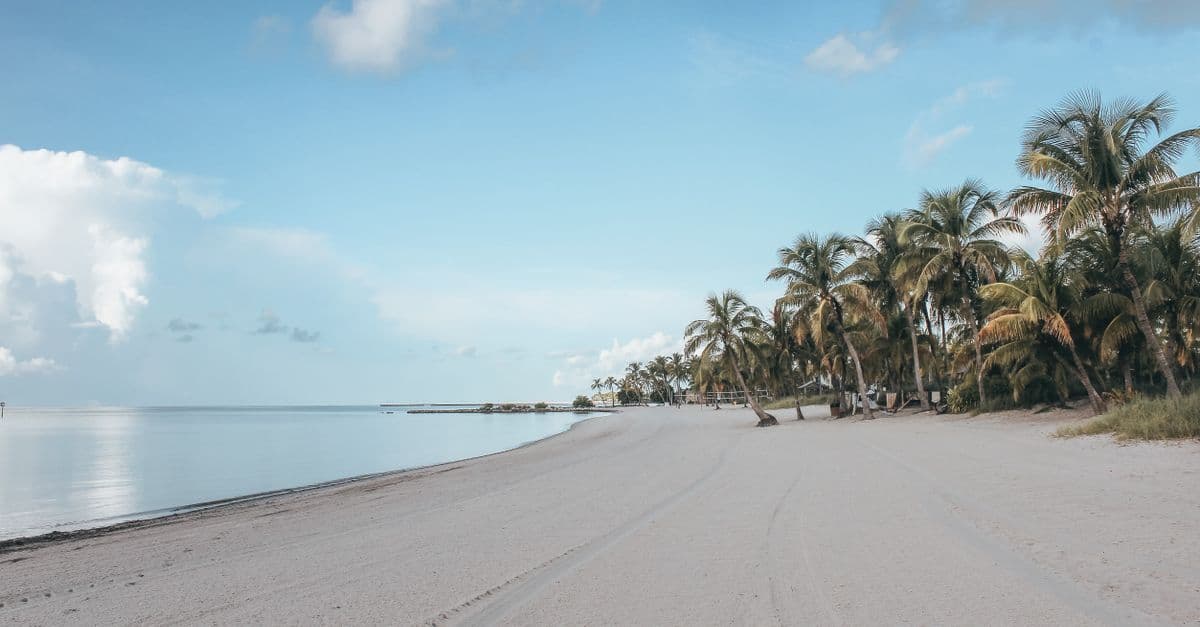
Florida's climate isn't one climate. On a January afternoon, Jacksonville (19°C) and Tallahassee (18°C) run 6 to 7°C cooler than Miami (25°C). In July the gap closes, with highs of 32 to 33°C from Tallahassee to Key West. Book "Florida" without specifying which Florida, and you might pack for the wrong season entirely.
North Florida
Jacksonville and Tallahassee carry a winter chill that catches visitors off guard. January lows average 6°C in Jacksonville and 5°C in Tallahassee, and Tallahassee dips to freezing on about 10 January nights in a normal year. Canadians heading to the Panhandle in December expecting South Florida warmth will be underdressed for what they find.
Central Florida
Orlando sits inland, and its July average high of 33°C runs a little above Miami's and Tampa's. June to September each bring 162 to 204 mm of rain, the wettest stretch of Orlando's year. Theme park visitors adapt fast: outdoor rides early, covered attractions when storms build.
Southwest Florida
Naples and Fort Myers pair mild winters with little rain. At Southwest Florida International Airport, January averages a 24°C high and a 12°C low, and February to April get just 38 to 49 mm of rain a month. That flips in summer: June brings 262 mm, and the National Weather Service dates Southwest Florida's rainy season from May 15 to October 15. This stretch of coast also took the worst of Ian's storm surge in 2022.
Southeast Florida
Miami and Fort Lauderdale stay warm through winter, with January highs of 24 to 25°C and lows of 16°C. Their wet season also runs longer than Orlando's: Miami still averages 194 mm of rain in October and Fort Lauderdale 187 mm, against 88 mm in Orlando.
The Florida Keys
Temperature stability is the Keys' defining characteristic. Key West averages a 19°C low in January and a 27°C low in July, and no month normally brings a freeze. Its January nights run 2 to 3°C warmer than Miami's.
Staying Connected in Florida: eSIM and Mobile Data for Canadians
An eSIM (a built-in digital SIM activated by QR code, no physical card required) lets you load a US data plan before leaving Canada. The connection is ready before your luggage reaches the carousel.
For Canadian travellers, your carrier's own US rates are the starting point. As of October 2026, Rogers charges CA$16 a day to roam in the US, or CA$60 for a 14-day US Travel Pass. Bell's Roam Better costs CA$13 a day in the US, and its 14-day US Travel Pass is also CA$60 and uses the data in your Bell plan. On a two-week trip, either pass costs far less than paying by the day. Check your own carrier's current US rates before you go, Telus included. Our comparison of eSIM vs roaming costs runs the numbers for Canadians.
Snowbirds staying for months have a different sum to do. Rogers and Bell each sell a 30-day US pass for CA$80; compare that with the monthly cost of an eSIM data plan sized to the data you actually use.
Before you buy, check your model on our list of eSIM-supported phones and make sure the phone is unlocked. No SIM tray, no plastic card, no kiosk queue on arrival. Your Canadian SIM can stay in the phone for calls and texts, but using it in the US follows your carrier's roaming terms. Pick the eSIM for mobile data, with its data roaming on. On an iPhone or a Pixel, each line has its own roaming switch, so keep data roaming off on your Canadian line unless you've added a pass. On a Samsung Galaxy and many other Android phones, one switch covers both lines, so leave it on.
HelloRoam's US plans connect to the AT&T and Verizon networks.
Browse US eSIM data plans on HelloRoam before you fly; the QR code arrives by email, so you can install it at home on your own Wi-Fi.
Packing and Planning for Florida's Weather
Four things are worth sorting out before you leave: a warm layer, a plan for storm days, travel insurance and your phone.
Your Florida pre-departure checklist
- Pack at least one light layer for December through February. January nights average 6°C in Jacksonville and 5°C in Tallahassee. Miami stays warmer at 16°C, but a long-sleeve for outdoor dinners earns its carry-on space.
- Don't cancel rainy-season plans over a grey afternoon forecast. Keep an indoor backup for later in the day.
- Buy travel insurance early. Get it the same day you book flights, not the week before departure.
- Verify eSIM compatibility at home, on your own Wi-Fi. On iPhone, the path is Settings > Cellular > Add eSIM. Finding out your handset isn't eSIM-ready at the departure gate is a problem with no quick fix.
Questions travellers ask
What are Florida's summer thunderstorms like?
Frequent and sometimes severe. For West Central and Southwest Florida, the National Weather Service in Tampa Bay says late May through June brings the most severe storms, with hail, damaging winds and waterspouts, and July to early September is the peak of the rainy season.
Sources
- U.S. Climate Normals 1991-2020: Orlando International Airport (NOAA NCEI)ncei.noaa.gov
- U.S. Climate Normals 1991-2020: Miami International Airport (NOAA NCEI)ncei.noaa.gov
- Monthly normals 1991-2020 for Jacksonville, Tallahassee, Tampa, Fort Myers, Fort Lauderdale and Key West (NOAA NCEI data service)ncei.noaa.gov
- Tropical Cyclone Climatology (National Hurricane Center)nhc.noaa.gov
- Continental United States Hurricane Impacts/Landfalls 1851-2025 (NOAA Hurricane Research Division)aoml.noaa.gov
- Tropical Cyclone Report: Hurricane Ian (National Hurricane Center)nhc.noaa.gov
- Tropical Cyclone Report: Hurricane Idalia (National Hurricane Center)nhc.noaa.gov
- Tropical Cyclone Report: Hurricane Milton (National Hurricane Center)nhc.noaa.gov
- Florida Thunderstorm Season (National Weather Service Tampa Bay)weather.gov
- The Heat Index Equation (National Weather Service)wpc.ncep.noaa.gov
- U.S. and International Travel Roaming Options (Rogers)rogers.com
- Coverage Map & Travel Options (Bell Mobility)bell.ca
- Set up eSIM on iPhone (Apple Support)support.apple.com
Written by
HelloRoam Team
The HelloRoam Team writes our guides on trip planning, visas and eSIMs. For every new or updated guide, we check each fact at its source. Sources include government, park and weather service pages. We note the date we read each one. A second review then checks every fact against its source before the guide goes live. If we cannot confirm a fact, we leave it out. We link those sources inside the guide, so you can check them.