



Frequently Asked Questions
Visa-exempt travellers from countries such as the UK, EU nations, Australia, and Japan must hold a valid Electronic Travel Authorisation before boarding any Canada-bound flight. The eTA costs CAD $7, takes about five minutes to complete at Canada.ca/eTA, and is valid for up to five years. US citizens are exempt from the eTA requirement but still need a valid passport.
Most eTA approvals arrive by email within minutes of submitting the application. During peak travel periods such as July, August, and around Canadian public holidays, processing can stretch to several days. Apply at least 72 hours before departure, and ideally two to three weeks in advance for summer travel.
The official government fee for a Canadian eTA is CAD $7. Third-party websites charge between CAD $30 and $100 for the same process, but none are affiliated with IRCC and offer no legitimate advantage over applying directly at Canada.ca/eTA.
Yes. The Canadian federal government reinstated a full visa requirement for Mexican citizens in 2024, removing Mexico from the visa-exempt category. Travellers who are uncertain about their country's classification should verify current status at IRCC.gc.ca before purchasing flights.
Renewing your passport automatically voids your existing eTA, because the approval is tied to your passport number rather than your identity. You must submit a new eTA application linked to the new passport before travelling. Similarly, any discrepancy between the name on your eTA and your passport can result in denied boarding.
Travel insurance is not legally mandatory but is strongly advisable. A single emergency room visit in Canada can cost an uninsured foreign visitor CAD $20,000 or more. Provincial health plans cover residents only and provide no coverage to non-residents. Purchase a policy covering emergency medical treatment, evacuation, and repatriation before you depart.
Canada uses Type A and Type B outlets at 120V/60Hz, identical to the US standard. UK and European visitors need a plug adapter but no voltage converter, as modern electronics such as laptops and phone chargers handle the voltage difference automatically.
Tipping at sit-down restaurants in Canadian cities typically sits at 18 to 20 percent. Fifteen percent, once the standard, now reads as low in cities like Toronto, Vancouver, and Montreal. Gratuity does not appear in the bill unless a service charge is explicitly noted on the menu or receipt.
No. Bear spray cannot travel as checked or carry-on baggage on commercial flights. You should purchase it after arriving in Canada at outdoor retailers such as Atmosphere, MEC, or Canadian Tire.
Air Canada accepts carry-on bags up to 55 cm x 40 cm x 23 cm, while WestJet allows 56 cm x 36 cm x 23 cm. A personal item must fit under the seat in front of you on both airlines.
The Parks Canada Discovery Pass costs CAD $75.25 per adult (2026 rate) and covers entry to all national parks and historic sites for one year from activation. If your trip includes hiking gear for two or more national parks, running the numbers on this pass is worthwhile compared to paying individual entry fees.
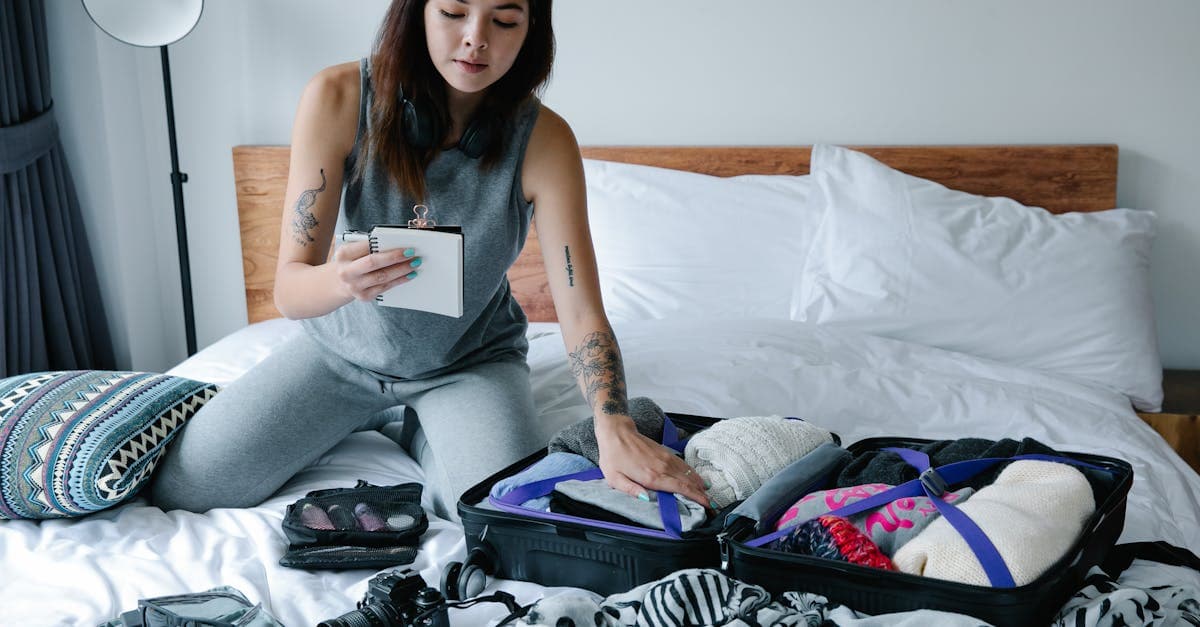
Pack a three-layer system for any Canadian season: a thermal base layer, an insulating mid-layer such as fleece or down, and a waterproof outer shell. The weight of each layer changes depending on your destination and travel month, but the layering system itself applies year-round. Cotton should be avoided past the trailhead as it retains moisture and loses insulating properties when wet.
For winter visits between December and March, pack waterproof insulated boots and add ice grips such as YakTrax, as city footpaths ice over after dark. Montreal averages around 209 centimetres of snow per year with wind chills regularly below -25 degrees Celsius. Toronto can see wind chills around -20 degrees Celsius in January.
Yes, if you plan to visit cottage country, go camping, or spend time near lakes or rivers. Insect repellent containing at least 30 percent DEET is essential, as mosquito and black fly season peaks from June through August. Anyone spending time near water or in the boreal forest will notice the need quickly.
Bring SPF 50 sunscreen for travel in the Rocky Mountains. UV exposure at Rocky Mountain elevations runs 20 to 30 percent higher than at sea level, and this applies even on overcast days. The same elevated UV exposure applies to Banff, Jasper, and other high-altitude destinations.
Confirm your phone is unlocked before travel, as an unlocked device lets you install a local SIM or an eSIM on arrival. Canadian regulations require carriers to unlock devices purchased after December 2017 at no charge, but foreign carriers follow different rules, so give your provider a week's notice before you fly. eSIM plans from providers like Hello Roam can be activated from home before departure, covering 190 or more destinations.
Your document kit should include your passport (valid for six months or more beyond your return date), your eTA confirmation saved offline, your return ticket, travel insurance certificate, accommodation booking reference, and a physical card with emergency contacts. Scan every document and save copies in at least two separate locations such as cloud storage and an encrypted offline backup.
Bear spray must be purchased after arrival as it cannot fly as checked or carry-on baggage. Hand warmers, aerosol products over 100 mL, and full-size toiletries are inexpensive and widely available at retailers such as Shoppers Drug Mart, Jean Coutu, or Walmart. Packing 100 mL travel sizes for your first 24 hours and resupplying locally is more practical than carrying full-size bottles internationally.
Retail across Canada accepts only Canadian dollars. Airport ATMs dispense CAD at decent exchange rates, while currency exchange kiosks in terminals charge higher spreads. Notify your bank before departure to prevent fraud blocks on international spending, and consider a travel card that waives foreign transaction fees.
Shoulder seasons are frequently underestimated. In the Rockies, conditions can shift from afternoon t-shirt weather to overnight frost within 24 hours, so pack all three layers regardless of the forecast. A warm mid-layer and waterproof shell are essential even if daytime temperatures look mild.
Sources
- The Ultimate Packing List — smartertravel.com
- The Ultimate Travel Packing List: How to Pack for Any Vacation — eaglecreek.com
- What to pack for Canada ? Printable travel checklist — authentikcanada.com
- Free Printable Packing List for Organized Travel and Vacation — justagirlandherblog.com
- How To Travel Light Long Term: 20 Tips + Packing Checklist — workaway.info
- Travel checklist — catsa-acsta.gc.ca