

Quick Answer: Lithuania in Europe at a Glance
Lithuania is in Northern Europe, a full EU and Schengen member since May 2004. Canadians enter visa-free for up to 90 days in any 180-day window. The capital, Vilnius, holds a UNESCO World Heritage Old Town, and the country runs on the Euro.
The quick facts:
- Location: Northern Europe, eastern Baltic Sea coast
- EU/Schengen: Full member since 2004; Eurozone since 2015
- Entry for Canadians: Visa-free, up to 90 days per 180-day period
- Capital: Vilnius (~580,000 city proper)
- Population: ~2.8 million
- Area: 65,300 km², roughly the size of Ireland
- UNESCO World Heritage sites: 5, including Vilnius Old Town (inscribed 1994)
Key fact: HelloRoam's Lithuania eSIM starts at ~C$3.45 per day on Telia and Tele2's 5G network, with 2GB of full-speed data included. That's well below most Big Three roaming day passes.
Activate the eSIM for Lithuania before you board and skip the SIM kiosk queue on arrival.
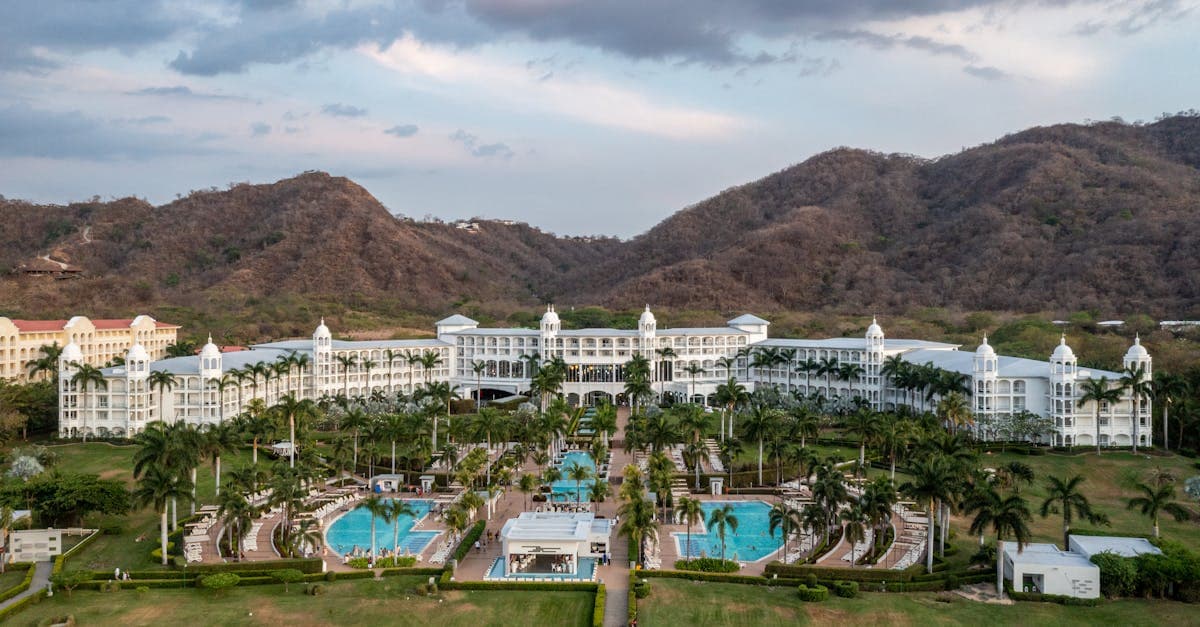
Lithuania is compact, affordable, and genuinely undervisited by Canadians. Here is exactly where Lithuania sits on the map.
Where Is Lithuania Located in Europe?
The eastern shore of the Baltic Sea marks Lithuania's western boundary, placing it firmly in Northern Europe. It borders Latvia to the north, Belarus to the east, Poland to the south, and Russia's Kaliningrad exclave to the southwest. Lithuania is one of three Baltic states, alongside Latvia and Estonia.
In size, the country matches Ireland fairly closely. For a North American reference: it's slightly larger than West Virginia. That's a compact footprint you can cover meaningfully in two weeks without feeling rushed.
Most travelers don't register how central Lithuania's position actually is on the European continent. A village called Purnuškės, a short drive north of Vilnius, holds a marker designating it as Europe's geographic centre, based on French cartographic calculations. For a country that feels like it sits on the northeastern fringe, that's a quietly surprising claim.
The southwest border is unusual.
Russia's Kaliningrad exclave sits wedged between Lithuania and Poland, making this corner of the EU unlike any other in the bloc. Kaliningrad isn't an EU member and isn't part of the Schengen zone, which explains some of the geopolitical complexity you'll encounter when researching the Baltic region.
Lithuania's western coast runs along the Baltic Sea, with beach resorts clustered near Palanga and the Curonian Spit reaching south. That spit is a UNESCO World Heritage Site: a narrow sand-dune peninsula Lithuania shares with Kaliningrad territory. Heading east, the terrain shifts to lake districts and dense pine forest. Vilnius sits in the country's southeastern corner, closer to the Belarusian border than to any shoreline.
Baltic itineraries often bundle all three states in sequence. Train and bus routes connect Vilnius to Riga and Tallinn directly, making a combined circuit straightforward to plan.
Geography settled, the next practical question is entry rules.
Can Canadians Travel to Lithuania Without a Visa?
Yes, Canadians don't need a visa to visit Lithuania. As a full Schengen Area member, Lithuania allows Canadian passport holders to stay for up to 90 days in any 180-day period without a traditional visa application.
The step that changed in 2025 is ETIAS (European Travel Information and Authorization System, an online pre-entry registration similar in concept to Canada's own eTA that foreign visitors use to enter Canada). Before heading to any Schengen country, Canadians now register through ETIAS online, pay a small processing fee, and receive an authorization valid for multiple trips over three years.
ETIAS is not a visa.
No consulate appointment, no weeks of waiting. The registration typically processes within minutes to a few days, and a single authorization covers your next several European trips.
The 90-day allowance draws from a shared pool across all 27 Schengen countries. If you spent three weeks in Spain and two in Germany before flying to Vilnius, those five weeks count against your 90. Canadians doing longer European circuits should track their Schengen days before booking onward connections.
Your passport should remain valid past your planned departure date from Lithuania. The practical guideline is to carry at least three months of remaining validity when entering the Schengen zone.
No internal border checks run between Lithuania and other Schengen countries. A bus from Warsaw or a train from Riga crosses into Lithuania without a document inspection at the border. The checkpoint is at the external Schengen frontier, which for most Canadians means passport control at Vilnius Airport on arrival.
Entry sorted, the question becomes what to do once you arrive.
What Makes Lithuania Worth Visiting?
Lithuania packs four UNESCO-designated sites, a walled medieval capital, a 14th-century island fortress, and daily travel costs of €60 to €120 for a mid-range visitor, all within a country smaller than Ireland. Most Canadians who make the trip say they should have come sooner. It's that honest gap between expectation and the reality on the ground that makes a destination worth seeking out over another week in France or Italy.
Vilnius Old Town is the anchor. Inscribed on the UNESCO World Heritage List in 1994, it ranks among Northern Europe's largest surviving medieval urban districts. Unlike Prague or Tallinn, it hasn't reached the stage where souvenir shops have crowded out what makes the neighbourhood interesting. Baroque churches, Gothic towers, and a coffee scene that punches well above the city's size all sit within easy walking distance.
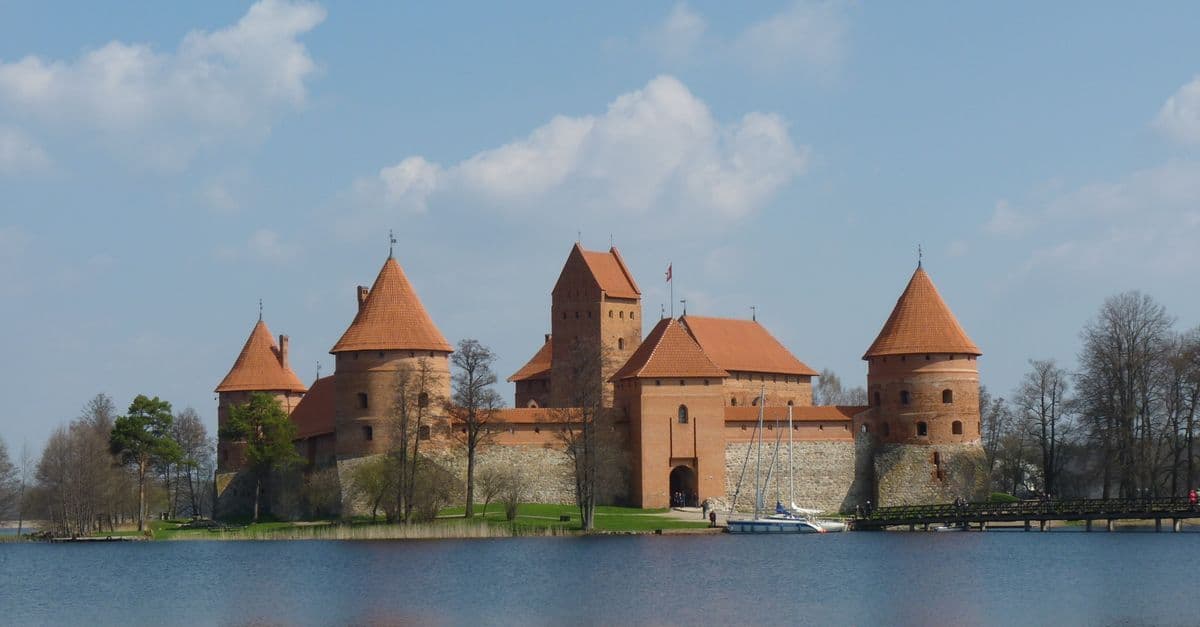
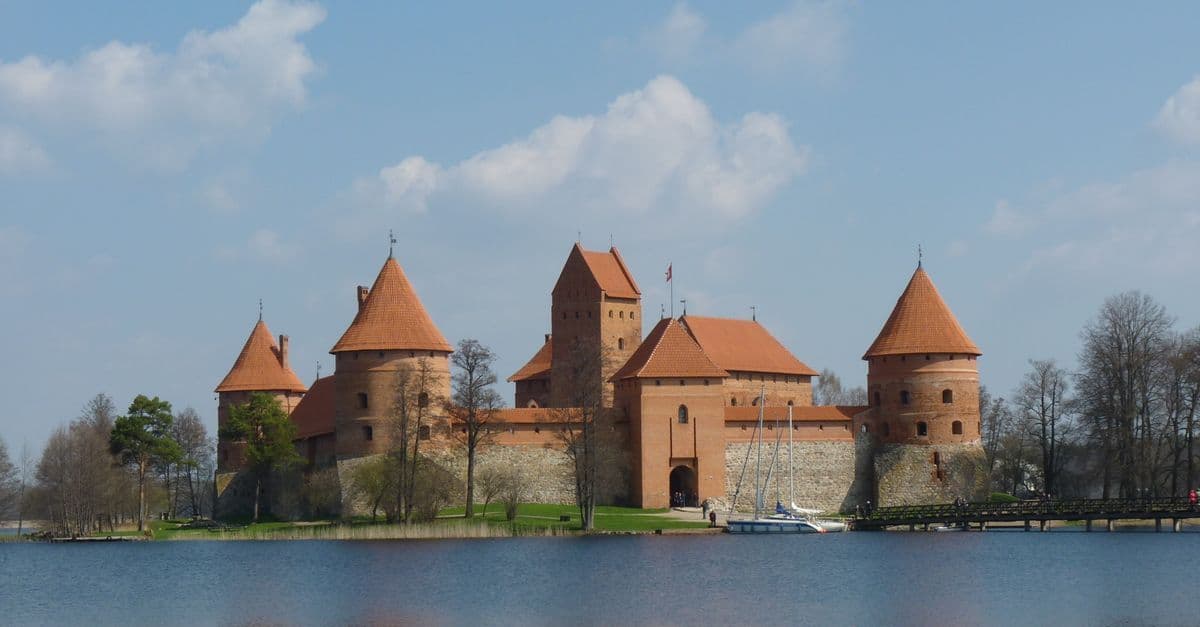
Trakai Island Castle is 28 km west of Vilnius and earns a half-day on its own merits. The 14th-century red-brick fortress rises straight from Lake Galvė, connected to shore by wooden footbridges.
It looks staged. It isn't.
The Hill of Crosses near Šiauliai resists easy categorization. Hundreds of thousands of crosses, medallions, and religious figures cover a low hillside, accumulated over centuries of pilgrimage. The effect is striking and genuinely strange, which puts it among the most memorable stops in the Baltics. It's roughly three hours from Vilnius, a natural addition to a road trip toward the coast.
The Curonian Spit rounds out the list and consistently surprises. This UNESCO-listed sand dune peninsula runs roughly 100 km along the Baltic, with dunes giving way to pine forest and the village of Nida at the southern tip. Nothing about it looks like the Europe most Canadians have seen before.
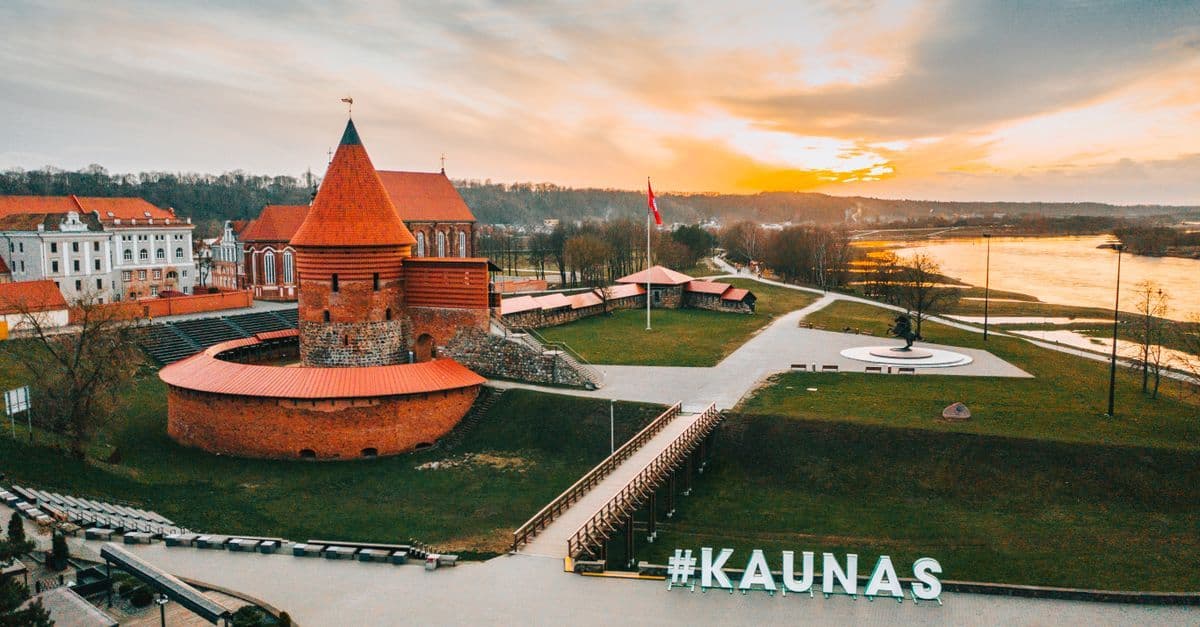
Kaunas held the European Capital of Culture designation in 2022 and made good use of it. Its interwar modernist architecture has earned serious international attention, and the food and bar scene has developed a sharp, confident identity.
That budget range puts Lithuania comfortably below comparable stays in Paris, Amsterdam, or Vienna. The itinerary depth is real.
Before you book, safety is the next practical question Canadians tend to ask.
Is Lithuania Safe for Canadian Travellers?
Global Affairs Canada rates Lithuania at Level 1: exercise normal precautions. That's the same designation the department gives to Germany, France, and Japan. Vilnius records low violent crime by European capital standards, and Lithuania's membership in both the EU and NATO reflects an institutional stability that translates into a predictable, dependable environment for travellers.
The practical cautions are narrower than most Canadians expect:
- Petty theft in tourist areas: standard pocket-watching in Old Town squares and on public transit
- Social conservatism outside Vilnius: the capital is considerably more cosmopolitan than smaller cities and towns
- Travel insurance: EU healthcare coverage doesn't extend to Canadians, so a policy covering medical evacuation is the sensible call before departure
That's the full list. No active security advisories, no restricted zones, no unusual requirements beyond standard Schengen entry rules.
Lithuania's eastern border adjoins Belarus, worth understanding as background rather than routing around. Tourist itineraries don't come anywhere near that corridor, and the Global Affairs Canada advisory doesn't flag any restricted areas inside Lithuania. The political situation in Belarus and the tourist experience in Lithuania are geographically and practically separate.
Vilnius is considerably more cosmopolitan than the country's smaller cities. Since that's where most Canadian visitors base themselves, the social conservatism point rarely affects the day-to-day trip. Naming it plainly is more useful than papering over it.
Safety confirmed, connectivity is the last practical variable to sort.
Staying Connected in Lithuania: eSIM, SIM Card, and Wi-Fi Options
Lithuania has reliable 4G LTE coverage nationally, with 5G rolling out across Vilnius and Kaunas through Telia and Tele2. Signal holds well in the capital, along the road to Trakai, throughout Kaunas, and in the main villages on the Curonian Spit. Three operators run the national network: Tele2, Bite, and Telia Lithuania.
Canadian carrier roaming in Lithuania is technically available through Rogers, Bell, and Telus. The issue is cost. Per-day international roaming fees from any of the Big Three accumulate fast over a week-long trip, and the math rarely favours the convenience over a purpose-built travel data plan.
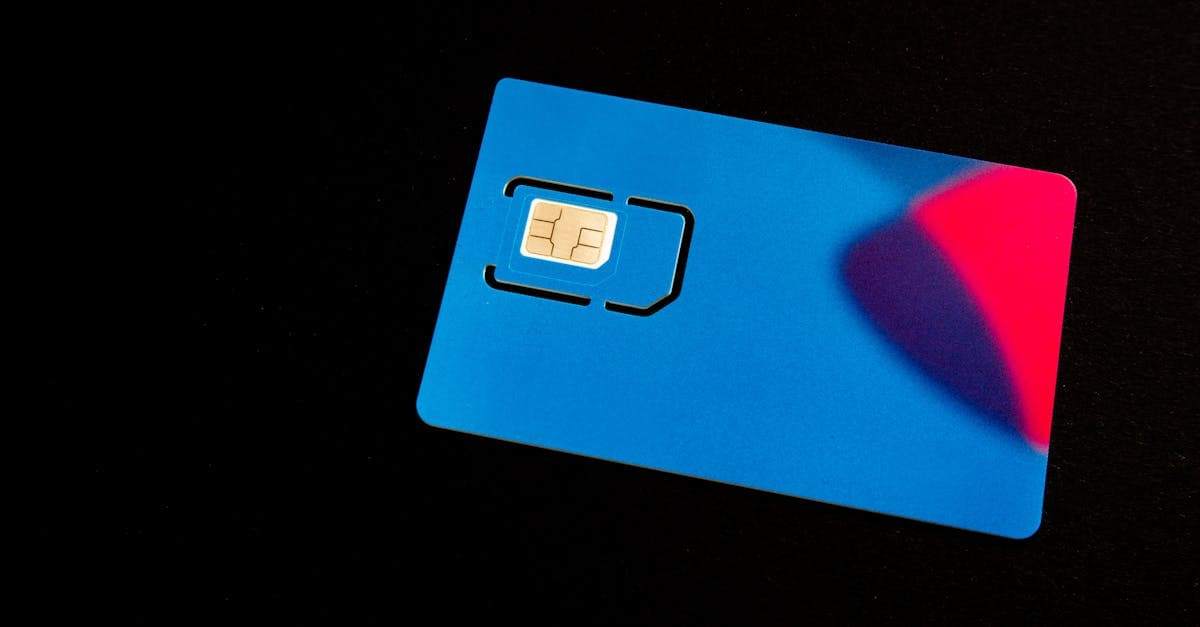
A travel eSIM is the cleaner option for most itineraries. Install the profile via QR code before you leave Canada, and the connection is live the moment you land in Vilnius. No queue, no SIM tray to pry open, no store to locate on arrival. Most travel eSIM plans include tethering, so your laptop and tablet run off the same connection without a separate plan.
Key fact: HelloRoam Lithuania plans run on Telia and Tele2, covering 4G LTE and 5G in Vilnius, Kaunas, and major touring corridors.
Here's how the main options compare:
For a week in Lithuania, the 5GB plan handles typical navigation, messaging, and social use without stress. The 10GB plan at ~C$10.55 costs marginally more and removes any guesswork if you're tethering a laptop or running heavy Maps use on a long road trip to Šiauliai or Nida.
Local SIMs win on cost-per-gigabyte for longer stays with high data demands. The trade-off is picking one up at a shop or kiosk after you clear arrivals, which adds a step that an eSIM skips entirely.
eSIM for Lithuania and you'll have a working connection from the arrivals hall to your first stop in Vilnius Old Town.
What Is the Best Time to Visit Lithuania?
June through August is when you find Lithuania at its best: long days, warm temperatures, the Baltic beach season at Palanga, and outdoor festivals running through the summer. The Old Town café terraces in Vilnius stay active well past sunset. August is the busiest month, and room rates in the capital reflect that.
Here's how the seasons stack up:
- June to August: Peak season. Best for beach days on the Curonian Spit, outdoor festivals, and exploring Vilnius on foot. Book accommodation at least six weeks out.
- May and September: Shoulder season delivers comfortable temperatures, thinner crowds, and hotel rates that run lower than summer peaks. Flights out of YYZ are typically more available too.
- December: Vilnius Old Town hosts a Christmas market worth building a trip around. The medieval setting is genuine, not a themed backdrop, and it shows.
- January to March: Lowest prices of the year, fewest tourists, and regularly sub-zero temperatures. Some attractions run shortened hours.
Flights from Toronto connect through Helsinki on Finnair or Frankfurt on Lufthansa, with total journey time running 12 to 15 hours. Helsinki is the tighter layover; Frankfurt suits families who'd rather not rush a connection.
One honest counter-note for beach-focused trips: shoulder season doesn't cut it.
Palanga's proper beach season runs late June through August. Outside that window, the water is cold and beach infrastructure scales back significantly.
For most Canadians, May or September is the practical call: reasonable prices, decent weather, and a Vilnius that doesn't require advance reservations just to enjoy the Old Town.
Reviewed by HelloRoam's editorial team. Last updated: 16 July 2026.
Get Connected Before You Go


Frequently Asked Questions
Yes, Lithuania has been a full EU and Schengen member since May 2004 and joined the Eurozone in 2015. The Euro is the official currency and there are no internal border checks from other Schengen countries.
No. Canadian passport holders can enter Lithuania visa-free for up to 90 days in any 180-day period under Schengen rules. Since 2025, ETIAS online pre-entry registration is also required before any Schengen trip.
ETIAS is an online pre-entry authorization for the Schengen Area, not a visa. Canadians register online before travel, pay a small fee, and receive an authorization valid for multiple trips over three years.
Lithuania is in Northern Europe on the eastern shore of the Baltic Sea. It borders Latvia to the north, Belarus to the east, Poland to the south, and Russia's Kaliningrad exclave to the southwest.
Global Affairs Canada rates Lithuania at Level 1: exercise normal precautions, the same level as Germany and France. Violent crime in Vilnius is low by European capital standards, with no restricted zones inside the country.
June through August is peak season with warm weather and Baltic beach access. May and September offer comfortable temperatures, fewer tourists, and lower hotel rates than summer peaks.
Mid-range travellers typically spend €60 to €120 per day in Lithuania, covering accommodation, meals, and activities. This is significantly lower than comparable stays in Paris, Amsterdam, or Vienna.
Lithuania uses the Euro, having joined the Eurozone in 2015. Canadian travellers do not need to exchange currency at the border or deal with a separate national currency during their stay.
Lithuania has reliable 4G LTE nationally and 5G in Vilnius and Kaunas. Options include a travel eSIM installed before departure, a local SIM card purchased on arrival, or Canadian carrier international roaming.
Budget travel eSIM plans for Lithuania typically start around C$3.49 for 1GB over 7 days, with larger plans around C$10 for 5GB over 30 days. Prices vary by provider and data allowance.
A travel eSIM installs before departure and activates on landing with no store visit or SIM swap needed. Local SIM cards offer lower cost per gigabyte for longer stays with heavier data demands.
Yes, 5G is available in Vilnius and Kaunas through Telia and Tele2. National 4G LTE coverage is reliable across the country and along major touring corridors.
Most travel eSIM plans for Lithuania include tethering, letting you share your mobile data with a laptop or tablet on the same plan without purchasing a separate data subscription.
Top sites include Vilnius Old Town (UNESCO-listed), Trakai Island Castle, the Hill of Crosses near Siauliai, and the Curonian Spit, a UNESCO sand-dune peninsula along the Baltic coast.
Lithuania has five UNESCO World Heritage sites, including Vilnius Old Town, inscribed in 1994, and the Curonian Spit, a 100 km sand-dune peninsula shared with Russia's Kaliningrad territory.
Flights from Toronto to Vilnius connect through Helsinki or Frankfurt, with total journey times of 12 to 15 hours. Helsinki offers a tighter layover; Frankfurt suits travellers who prefer more connection time.
Two weeks covers Lithuania meaningfully without feeling rushed. That allows time for Vilnius, Trakai, Kaunas, the Hill of Crosses, and the Curonian Spit, given the country is roughly the size of Ireland.
Yes. Vilnius connects to Riga and Tallinn by direct train and bus routes, making a combined circuit of all three Baltic states straightforward to plan as a single itinerary.
Sources
- en.wikipedia.org — en.wikipedia.org
- Lithuania — european-union.europa.eu
- Lithuania — britannica.com
- What Is Lithuania Known For? Facts & Highlights — lawhill.lt