

Florida Weather at a Glance for Canadian Travellers
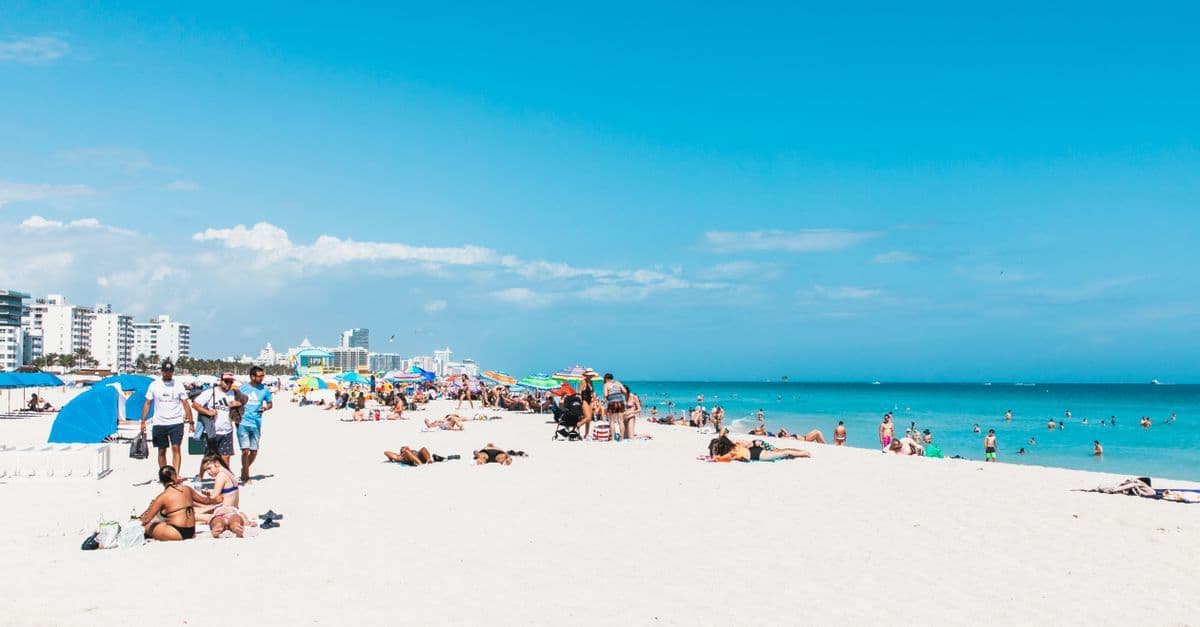
Florida has two seasons: a dry season from November through April and a rainy season from May through October. The snowbird window runs November through March, when average highs across central and south Florida hover around 21°C. Midsummer peaks at 33°C, and the humidity ensures that number doesn't tell the full story.
Roughly 3.5 to 4 million Canadians make the trip to Florida each year. The timing isn't coincidental: the dry season lines up almost exactly with the coldest months at home, making Florida Canada's top outbound winter destination by a considerable margin.
Sort out connectivity before you leave.
HelloRoam's eSIM for United States plans start at ~C$3.93 for 1GB over 7 days, running on AT&T and Verizon 5G networks. Snowbirds staying a full month have a sharper option: the 5GB plan at ~C$13.71 for 30 days. Scan the QR code at home on your own Wi-Fi and you'll have data before the plane touches down in Tampa or Fort Lauderdale. Rogers, Bell, and Telus all charge daily roaming fees that compound quickly on a multi-week snowbird stay.
Key fact: HelloRoam US eSIM plans start at ~C$3.93 for 1GB valid 7 days, on AT&T and Verizon 5G networks.
Key fact: HelloRoam's 30-day 5GB US plan costs ~C$13.71 on AT&T and Verizon 5G networks.
Averages only tell part of the story: the seasonal split changes everything.
What Is Florida's Climate, and Why Does It Shape Your Travel Dates?

A subtropical climate gives Florida its year-round warmth and produces two sharply distinct seasonal patterns. The dry season (November through April) brings low rainfall, reduced humidity, and stable sunshine from winter through spring. The rainy season (May through October) delivers the reverse: daily afternoon thunderstorms, thick humidity, and temperatures at their seasonal peak.
During dry season, monthly rainfall sits below 75mm through most of the season, and that drop in humidity turns evenings into the part of the trip worth looking forward to. Come rainy season, the shift is abrupt. Afternoon thunderstorms build with near-clockwork reliability between 3 and 5 p.m., rising from clear skies into heavy downpours in under an hour. Mornings are often clear and workable; the heat accumulates through the day and releases as storms.
Here's the figure most guides skip past.
The July heat index pushes that 33°C ceiling (from the section above) to feel closer to 40°C. That's not an anomaly. It's a standard Florida Tuesday in August too, and Canadians from Saskatchewan or Alberta often underestimate how draining sustained humidity feels across several days in a row.
That seasonal alignment is exactly why Florida consistently tops Canada's outbound winter destination list. A snowbird landing at Fort Lauderdale-Hollywood International in late November is leaving behind a Canadian autumn already tracking below zero across most of the country, arriving into conditions that feel entirely different from what they left at home.
With that framework in place, the month-by-month numbers tell a more precise story.
Florida Weather Month by Month: Dry Season vs Rainy Season
Florida's calendar splits into two distinct weather phases: a dry season from November through April, where monthly rainfall stays low and temperatures sit in the comfortable 20°C range, and a rainy season from May through October, where afternoon storms arrive daily and heat index readings make official temperature numbers look optimistic.
Full monthly breakdown using Central and South Florida baselines. North Florida (Jacksonville, Tallahassee) runs roughly 3 to 6°C cooler through the winter months.
September surprises most Canadians.
It holds the highest statistical hurricane risk of any month, not August. August earns its reputation for storm frequency, but September is when Atlantic and Gulf of Mexico sea surface temperatures peak, fuelling the most powerful systems. Hurricane Ian (2022), Idalia (2023), Debby (2024), and Milton (2024) all demonstrated how active Florida's coastlines can be once summer tips toward autumn.
The October row is underrated for snowbirds considering an early arrival. Hurricane risk fades meaningfully after mid-October, and the 29°C average high represents a genuine comfort shift from the summer block. Snowbirds landing in Naples or Fort Myers in the third week of October often find settled conditions without the November competition for rentals.
The November and December data is where the contrast snaps into focus for Canadian travellers. A 25°C afternoon in Fort Lauderdale in late November is warmer than a July afternoon across much of Alberta's interior. That temperature gap is the entire engine of the snowbird migration, and the monthly breakdown makes it tangible in a way that seasonal generalisations can't.
Those summer months carry a risk beyond rain: here is what the hurricane calendar actually looks like.
Does Hurricane Season Affect Your Florida Travel Plans?
Hurricane season officially runs June 1 through November 30, and the real risk concentrates inside a narrower band: August 15 through October 15, with September carrying the highest storm probability of any single month in the Atlantic calendar.
That's the actual window. Here's the part most travel guides skip.
Most days within hurricane season are clear. Hurricanes are infrequent events spread across a long window, not a constant threat. Florida sees a direct landfalling hurricane roughly once every three to five years on average. The odds in any given year favour unremarkable skies, but the consequences when they don't are serious enough to plan around.
Recent storms have been instructive. Hurricane Ian struck southwest Florida in 2022 as a Category 4, leaving Fort Myers and Cape Coral with some of the worst destruction in the region's modern history. Idalia crossed the Big Bend coast in 2023. Milton battered the Gulf Coast in 2024 at near-Category 5 intensity before landfall. Each arrived years apart; each left a lasting mark.
One clause in travel insurance catches Canadians off guard: most policies exclude hurricane-related cancellations if the storm is already named at the time of booking. Buy coverage before the system forms and you're protected. Purchase after it has a name, and that specific storm falls outside the policy.
For snowbirds arriving in November, the peak risk window has already closed for that season. For Canadians targeting September along the Gulf Coast, the equation involves honest trade-offs: lower prices, thinner crowds, and the highest storm exposure of the year falling in the same calendar month.
The risk picture also shifts considerably depending on which part of Florida you're visiting.
How Florida Weather Varies from the Panhandle to the Keys
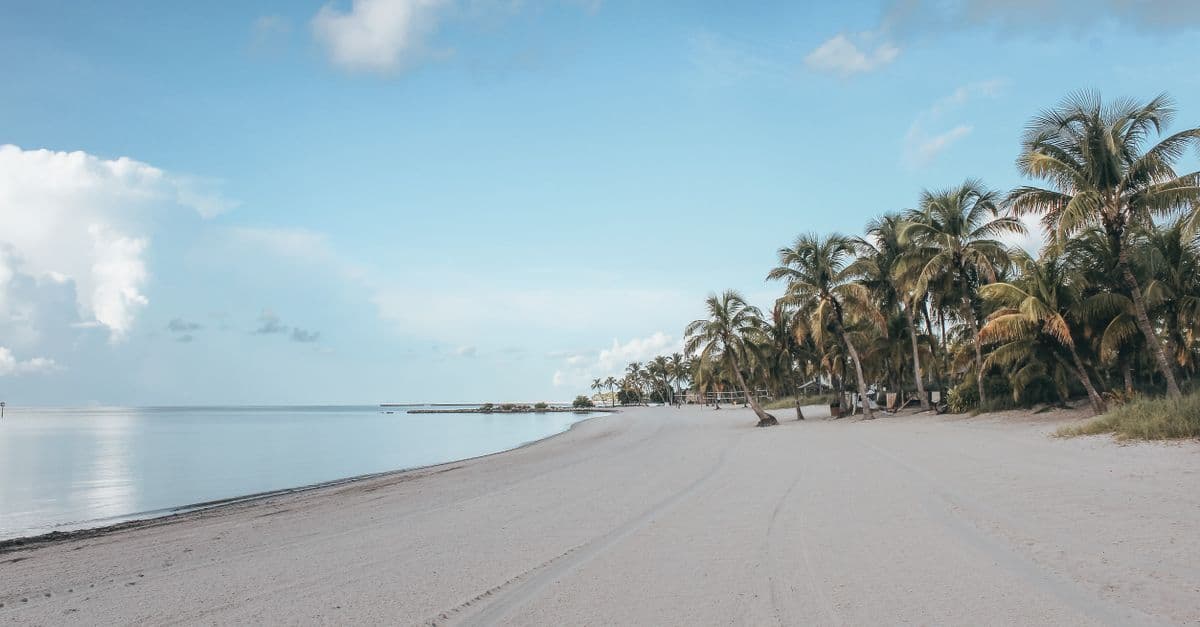
Florida's climate isn't one climate. North Florida runs 5 to 10 degrees Celsius cooler than Miami on a January afternoon. Southeast Florida stays 3 to 5 degrees warmer year-round than the northern half of the state. The Keys rarely drop below 15 degrees Celsius even in the coldest weeks. Book "Florida" without specifying which Florida, and you might pack for the wrong season entirely.
North Florida
Jacksonville and Tallahassee, sitting 5 to 10 degrees Celsius cooler than Miami in January, carry a winter chill that catches visitors off guard. January frost is possible in Tallahassee. Canadians heading to the Panhandle in December expecting South Florida warmth will be underdressed for what they find.
Central Florida
Orlando sits inland, concentrating summer heat without the coastal breeze that moderates temperatures near the water. Afternoon thunderstorms track through reliably from June through September, typically arriving around 3 p.m. and clearing before dinner. Theme park visitors adapt fast: mornings outside, covered attractions during the afternoon storm window.
Southwest Florida
Naples and Fort Myers hold some of the mildest, most consistent winter weather in the state, which explains the heavy concentration of Canadian snowbirds along the Gulf Coast. The trade-off is geographic: Gulf-facing coastlines carry higher direct hurricane exposure. Ian's 2022 track ran straight through this corridor.
Southeast Florida
Miami and Fort Lauderdale stay warmer year-round than anywhere north of Palm Beach County. Wet-season downpours arrive fast, briefly flood intersections, and clear before dinner.
The Florida Keys
Temperature stability is the Keys' defining characteristic. Readings rarely dip below 15 degrees Celsius, even in January. There's no land buffer to the west or south, which affects storm exposure, but for consistent warmth throughout the year, nothing else in Florida comes close.
Mobile connectivity varies across these regions much as the weather does. Getting data sorted before departure sidesteps the question entirely.
Staying Connected in Florida: eSIM and Mobile Data for Canadians
An eSIM (a built-in digital SIM activated by QR code, no physical card required) lets you load a US data plan before leaving Canada, often in under two minutes. The connection is ready before your luggage reaches the carousel.
For Canadian travellers, the carrier roaming calculation is the starting point. Rogers, Bell, and Telus charge roughly C$14 per day for US roaming on standard travel add-ons. Across a 14-day Florida trip, that works out to around C$196 in data fees alone, before fair-use speed throttling applies on extended stays.
Travel eSIM plans for the US start significantly lower per gigabyte.
Key fact: HelloRoam's 10GB US plan, valid for 30 days and running on AT&T and Verizon networks across Florida, costs ~C$22.48.
For a shorter stay, a 3GB 30-day plan at ~C$9.41 covers navigation, messaging, and occasional video calls without watching a daily roaming counter. The snowbird calculation runs differently. A four-to-five month Florida season can't be covered by a single plan period; stacking 30-day renewals keeps the per-GB rate flat and removes the per-day unpredictability that carrier roaming carries over a full winter.
Under the 2017 CRTC wireless code, Canadian carriers are required to sell handsets unlocked. Any phone purchased in Canada since that ruling is almost certainly network-unlocked, and devices released from 2019 onward typically support eSIM natively. No SIM tray, no plastic card, no kiosk queue on arrival. The Canadian SIM stays active for calls and texts while the eSIM handles data separately, running in parallel on the same device.
AT&T and Verizon coverage reaches Florida's urban centres, resort corridors, and the main road networks connecting them. Florida is not a coverage concern for travellers who arrive with a pre-installed eSIM profile.
For any trip beyond a few days, the numbers settle the decision quickly. Browse eSIM for United States plans on HelloRoam before you board, and the profile arrives in your inbox ready to scan at the gate.
What Should Canadian Travellers Pack and Plan for Florida's Weather?
Florida pulls in roughly 3.5 to 4 million Canadians annually, more than any other international destination they choose. The packing mistakes Canadians make for Florida's weather are consistent: not enough warmth for winter evenings, not enough sun protection for winter afternoons. Here is what to sort out before you leave.
Your Florida pre-departure checklist
- Pack at least one light layer for December through February. Northern Florida evenings in Jacksonville and Tallahassee can hit 10C. Miami stays warmer, but a long-sleeve for outdoor dinners earns its carry-on space.
- Bring SPF 50 sunscreen, regardless of the month. Florida's UV index stays high through winter. A cloudless January afternoon in Fort Lauderdale burns faster than a July afternoon in Toronto. Skip the resort shop markup and pack it from home.
- Don't cancel rainy-season plans over a grey afternoon forecast. Florida afternoon thunderstorms from June through September are typically brief, clearing in 30 to 90 minutes. Plan beach time in the mornings; let the 3 pm downpour handle itself.
- Buy travel insurance before any storm gets a name. Once a hurricane is officially named, most policies stop covering cancellations tied to that storm. Buy coverage the same day you book flights. Not the week before departure.
- Verify eSIM compatibility at home, on your own Wi-Fi. Settings > Cellular > Add eSIM takes under a minute. Finding out your handset isn't eSIM-ready at the YYZ departure gate is a problem with no quick fix.
- Download offline maps before takeoff. Afternoon storms and rural stretches of the Panhandle can drop signal. Offline maps are insurance against both.
Three and a half million Canadians make this trip every year. The ones who sort out these six details at home arrive with one less thing to fix.
Reviewed by HelloRoam's editorial team. Last updated: 14 July 2026.
Get Connected Before You Go


Frequently Asked Questions
Florida has a dry season from November through April with low rainfall and comfortable temperatures, and a rainy season from May through October with daily afternoon thunderstorms and high humidity.
November through April is ideal for Canadians, coinciding with Canada's coldest months. Average highs hover around 21-27C with low rainfall and reduced humidity throughout the season.
Central and South Florida average highs of around 21C in January, with monthly rainfall of about 50mm. North Florida runs 3-6C cooler and can see frost near Tallahassee.
Hurricane season officially runs June 1 through November 30, but peak risk concentrates between August 15 and October 15, with September carrying the highest storm probability of any month.
September has the highest statistical hurricane risk in Florida, as Atlantic and Gulf sea surface temperatures peak then, fuelling the most powerful storm systems of the season.
Florida averages 33C in June, July, and August, but the heat index can make it feel closer to 40C due to humidity — a significant factor for Canadians unaccustomed to sustained heat.
Most days during hurricane season are clear, as hurricanes are infrequent events. Florida sees a direct landfalling hurricane roughly once every three to five years on average.
Buy travel insurance before any storm is officially named. Most policies exclude hurricane-related cancellations if the storm is already named at the time of purchase.
North Florida runs 5-10C cooler than Miami in January. The Florida Keys rarely drop below 15C even in winter. Southeast Florida stays 3-5C warmer year-round than the northern half of the state.
During rainy season, afternoon thunderstorms build reliably between 3 and 5 p.m., rising from clear skies into heavy downpours in under an hour. Mornings are typically clear and workable.
Major Canadian carriers charge roughly C$14 per day for US roaming. Across a 14-day Florida trip, that totals around C$196 in data fees before any speed throttling applies on extended stays.
Yes, Florida has strong 4G and 5G coverage across urban centres, resort corridors, and main road networks. A travel eSIM can be activated at home before departure using a QR code on Wi-Fi.
Under a 2017 CRTC ruling, Canadian carriers must sell handsets unlocked. Devices released from 2019 onward typically support eSIM natively, requiring no physical SIM card swap.
Budget eSIM plans for the US start significantly lower per gigabyte than carrier roaming fees. A short-stay plan can cover navigation, messaging, and occasional video calls at a fraction of the cost.
October is underrated for early snowbirds. Hurricane risk fades after mid-October, and the 29C average high offers a comfortable shift from summer heat with fewer crowds and lower rental competition.
Roughly 3.5 to 4 million Canadians travel to Florida each year, making it Canada's top outbound winter destination by a considerable margin.
Pack at least one light layer for December through February, especially for North Florida evenings that can drop to 10C. Also bring SPF 50 sunscreen, as Florida's UV index stays high even in winter.
Yes, downloading offline maps before departure is recommended. Afternoon storms and rural stretches of the Panhandle can drop mobile signal unexpectedly during your trip.
For a four-to-five month Florida season, stacking 30-day eSIM renewals keeps the per-gigabyte rate flat and removes the per-day unpredictability of standard carrier roaming over a full winter.
The snowbird season runs November through March, when average highs across central and south Florida hover around 21-24C, coinciding with the coldest and darkest months across Canada.
Sources
- Orlando, FL Current Weather — theweathernetwork.com
- graphical.weather.gov — graphical.weather.gov
- weather.com — weather.com
- Orlando, FL Weather Forecast — accuweather.com
- Orlando Weather News – Central Florida Weather Updates — wesh.com