

HelloRoam is a global eSIM provider offering instant mobile data in 185+ countries. Buy prepaid travel eSIM plans with no extra fees, no contracts, and instant activation on any eSIM-compatible device.

Things to Do in Paris: the Essential 2026 Guide for Canadian Travellers

Meera Patel
Written by: Meera Patel
Published date
Updated:
Reading time

15 min read

Things to Do in Paris: the Essential 2026 Guide for Canadian Travellers

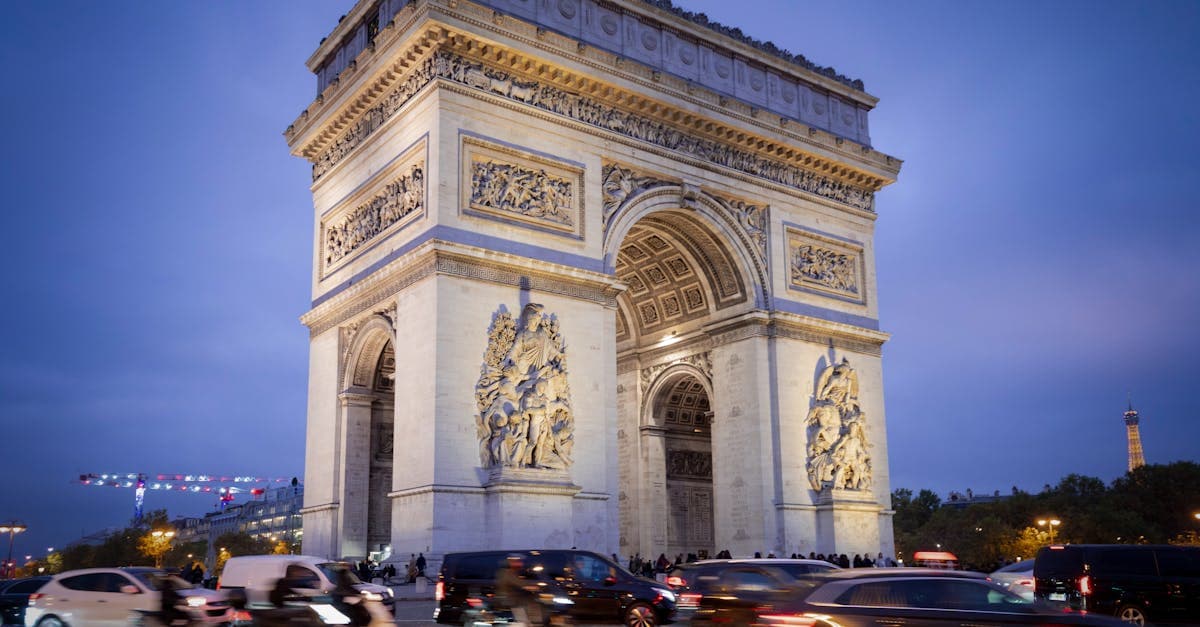
![Arc de Triomphe glowing under a vibrant evening sky, one of the top things to do in Paris.!Aerial Paris cityscape showcasing the Eiffel Tower, highlighting the best things to do in Paris.

Get your eSIM for France before you travel.

Paris concentrates more essential things to do within walking distance than almost any city in Europe: free galleries, the restored Notre-Dame Cathedral, landmark museums, and a street culture that rewards unhurried afternoons.

April is a good month to arrive. Shoulder season means shorter queues at the Louvre and Eiffel Tower, cooler temperatures comfortable for long walks between arrondissements, and hotel prices noticeably below their summer ceiling.

One logistical item worth solving before departure: European roaming. Rogers, Bell, and Telus each charge C$12 per day for international data, adding C$120 to a ten-day trip before you've ordered a coffee. An eSIM for France-france) from HelloRoam starts at ~C$4.50 for 1 GB over seven days, a small fraction of the carrier daily rate. Activate the QR code before boarding at YYZ or YVR. Your phone connects at Charles de Gaulle before the luggage belt starts moving.

![Eiffel Tower framed by bare tree branches and a classical statue in the heart of Paris.!Eiffel Tower framed by bare tree branches and a classical statue in the heart of Paris.

The top things to do in Paris span three categories: world-class museums with competitive pricing, a medieval cathedral that only just reopened after a five-year closure, and walkable neighbourhoods that cost nothing to explore beyond transit fares. April through May is the practical window, with stable weather and lines that haven't peaked.

Data costs deserve a mention before the attraction list. Rogers, Bell, and Telus charge the daily roaming rate noted above for data in France. HelloRoam's France eSIM compares favourably for any trip of three days or more; entry-level pricing is in the quick answer above.

Here is what to budget for the major paid sites:

  • Eiffel Tower summit: €35 to €40 per adult; book at least a week ahead in spring
  • Paris Museum Pass: €62 for two days, covering 50-plus sites with skip-the-line access at most
  • Musée d'Orsay: €16, free on the first Sunday of every month
  • Notre-Dame Cathedral: free to enter; tower climb €13, book online

The Museum Pass math is straightforward: two Louvre visits alone nearly recover the two-day cost. For any itinerary covering three or more paid sites, it earns its price before lunch.

Full attraction breakdowns follow, sorted by category.

![Louvre Pyramid and palace facade under clear blue skies, a centrepiece of things to do in Paris.![Louvre Pyramid and palace facade under clear blue skies, a centrepiece of things to do in Paris.

Five Paris attractions consistently justify the time investment: the Louvre, Musée d'Orsay, Notre-Dame, the Eiffel Tower, and Sainte-Chapelle tripadvisor.ca. Ranked by the combination of value, queue management, and the distinctiveness of each experience, they follow a clear sequence.

Notre-Dame belongs first.

It reopened in December 2024 after five years of restoration work, and the interior looks nothing like the smoke-darkened stone most visitors photographed before 2019.

Notre-Dame Cathedral: Fully Restored and Worth the Visit

![Notre-Dame Cathedral in Paris with renovation scaffolding, now fully restored and open to visitors.!Notre-Dame Cathedral in Paris with renovation scaffolding, now fully restored and open to visitors.

Notre-Dame Cathedral reopened in December 2024 after a five-year restoration, and main cathedral entry remains free. Before the April 2019 fire, it drew 12 to 14 million visitors annually. Tower tickets for spring dates book out weeks ahead.

The interior is the main surprise.

Paris has no shortage of churches, but Notre-Dame after restoration looks unlike anything most visitors remember from photographs taken before 2019. The stonework has been cleaned to a pale finish that pre-fire visitors never saw. The carved details in the nave read sharper against that lighter background, a contrast most visitors notice within the first hundred metres inside.

Book tower tickets online before your trip. The admission price is in the overview above. Walk-up slots in spring are limited, and the main cathedral doors clear fastest before 10 a.m., before tour groups arrive.

Location adds practical value. The cathedral sits on Île de la Cité, about ten minutes on foot from the Louvre along the Seine. Build the morning around both: Louvre from opening, then a short walk east to the island by mid-morning.

The museum row running from the Louvre toward the Marais rewards the same half-day block, with no backtracking required.

Musée du Louvre, Musée d'Orsay, and Musée de l'Orangerie

![Louvre Pyramid illuminated against the Paris night sky, a highlight of the city's world-class museums.![Louvre Pyramid illuminated against the Paris night sky, a highlight of the city's world-class museums.

The Louvre (€22), Musée d'Orsay (€16), and Musée de l'Orangerie (€12.50) are Paris's three major ticketed art museums. Petit Palais and Musée Carnavalet are free year-round. Both ticketed and free institutions offer periodic no-cost entry windows worth timing around.

The Louvre waives admission on the first Friday evening of each month and on the first Sunday from November through March. Timing around those windows is the most practical budget move available in Paris [dangerous-business.com. The Musée de l'Orangerie exists largely for one experience: Monet's Water Lilies panels fill two oval rooms the artist designed before his death in 1926, with proportions calculated around the paintings themselves. Musée d'Orsay's free Sunday policy is covered in the overview above.

Petit Palais and Musée Carnavalet are free, year-round, no exceptions. Carnavalet traces Paris history across 100 rooms in a Marais mansion; Petit Palais spans antiquity to the early 20th century, with a courtyard that functions as one of the quieter open spaces in the 8th arrondissement.

MuseumLouvre
Adult Admission€22
Free EntryFirst Fri evening; first Sun (Nov-Mar)
MuseumMusée d'Orsay
Adult Admission€16
Free EntryFirst Sunday monthly
MuseumMusée de l'Orangerie
Adult Admission€12.50
Free EntryNo
MuseumPetit Palais
Adult AdmissionFree
Free EntryAlways
MuseumMusée Carnavalet
Adult AdmissionFree
Free EntryAlways

The Museum Pass (2-day rate noted earlier) covers all three ticketed museums plus 50-plus sites with skip-the-line access. Four-day and six-day versions run €84 and €112 respectively. For more than four paid attractions, the math favours the pass.

Outdoor landmarks demand a different kind of planning.

Eiffel Tower, Arc de Triomphe, Sainte-Chapelle, and Palais Garnier

![Arc de Triomphe under a clear blue sky, an iconic landmark among things to do in Paris.!Arc de Triomphe under a clear blue sky, an iconic landmark among things to do in Paris.

Paris's four major architectural landmarks each require ticketed entry or advance planning. The Eiffel Tower summit costs €35 to €40 per adult and requires booking weeks ahead in spring. Palais Garnier guided tours start from €15. Both Sainte-Chapelle and the Arc de Triomphe are ticketed. A practical assessment of each experience:

Eiffel Tower: The summit view at dusk is genuinely worth the price noted above. Book timed entry weeks ahead during spring and summer; same-day availability in peak season is unreliable. The free alternative: walk beneath the iron lattice before 9 a.m. Quiet, structural, and a perspective most visitors never get [dangerous-business.com.

Sainte-Chapelle: The upper chapel holds 1,113 stained glass panels across 15 metres of wall. A clear morning is when the light works in your favour. Afternoon visits attract tour groups and the quality of the experience shifts noticeably. Arrive at opening [bloggeratlarge.com.

Arc de Triomphe: The rooftop delivers an unobstructed panorama from the Champs-Élysées corridor to the Seine. The honest trade-off: any traveller who spends a morning on Montmartre gets a comparable city-wide perspective at no cost. Still worth visiting if you're focused on central Paris and haven't made the climb.

Palais Garnier: Guided tours from €15 cover the grand foyer, the Chagall-painted auditorium ceiling, and the subterranean lake. Performance tickets run significantly higher; the tour delivers the architecture without that commitment. A useful option if the opera schedule doesn't align with your dates.

The real Paris lives in its neighbourhoods, not just postcards.

Paris Neighbourhoods to Explore Beyond the Tourist Trail

![Sweeping panoramic view of Paris rooftops from Montmartre, one of the best neighbourhoods to explore.!Sweeping panoramic view of Paris rooftops from Montmartre, one of the best neighbourhoods to explore.

Paris's top neighbourhoods for free independent exploration are Le Marais, Montmartre, Saint-Germain-des-Prés, Belleville, and Buttes-Chaumont. All require no admission fees or advance booking, making them the most accessible category of things to do in Paris for any budget.

The myth: Paris works best as a series of timed-entry sites. The reality: Le Marais, Montmartre, and Belleville operate on foot at your own pace, with no reservations required and no queues worth mentioning.

Le Marais preserves a medieval street plan that Haussmann's 19th-century reconstruction left largely intact. Place des Vosges anchors its eastern edge; a cluster of free commercial galleries runs through the neighbourhood toward the Pompidou. Five minutes away in the 2nd arrondissement, the Galeries Vivienne and Colbert are 19th-century covered arcades with original mosaic floors, glass-and-iron rooflines, and no admission fee. Few Paris itineraries direct people there, which is part of their appeal [dangerous-business.com.

Montmartre earns its "tourist trap" label in midsummer, less so in April. The hilltop at Sacré-Coeur is free; the city view reads differently from this elevation than from anywhere on flat central Paris. The artist quarter west of the basilica is quieter and noticeably cheaper for coffee than its reputation suggests [bloggeratlarge.com.

Saint-Germain-des-Prés has absorbed more literary mythology than it can comfortably support. The Jardin du Luxembourg is the genuine reason to visit in spring, with a carousel, pony rides, and one of the better playgrounds in the city [travelbabbo.com. Skip the most-photographed cafes if you'd rather pay for the coffee than the association.

Belleville and Oberkampf are where a meaningful portion of the city's actual dining scene operates at prices noticeably below the tourist-facing arrondissements. Street art covers building sides throughout Belleville; the blocks shift in character frequently, which keeps the walk interesting.

Buttes-Chaumont, in the 19th arrondissement, is the direct answer when someone asks where Parisians actually picnic. Hilly, lake-adjacent, and rarely in any tourist guide.

A train ride adds a second Paris entirely.

Day Trips from Paris Worth Adding to Your Itinerary

![Sunlit Luxembourg Palace in Paris, a classic starting point for day trips beyond the city.!Sunlit Luxembourg Palace in Paris, a classic starting point for day trips beyond the city.

Four destinations reward a full day outside the city. The right choice depends on your interests, the season, and how early you're prepared to leave.

Versailles (40 minutes by RER C from central Paris): Palace admission runs €21 to €27 depending on access level; the gardens are free on non-show days. Book palace entry in advance. Queuing without a reservation on a spring or summer morning is a reliable way to lose half a day [dangerous-business.com.

Giverny (75 minutes by train to Vernon, plus a bus connection): Monet's house and gardens open April through November. Mid-April is close to ideal timing for the water lilies. The site is least crowded early in the season. Confirm bus connections from Vernon station before you go; schedules shift depending on the month [journeyofdoing.com.

Reims (45 minutes from Paris Gare de l'Est by TGV): The UNESCO-listed cathedral is free to enter. Most Champagne cellars require advance booking, but options exist across a range of price points. A half-day visit leaves time for lunch and an evening return train.

Chartres (1 hour by train from Gare Montparnasse): The Gothic cathedral carries stained glass that many architectural historians rate among the finest in Europe. No advance booking needed. Chartres draws considerably fewer visitors than Versailles or Reims and is a more manageable choice for travellers who've found central Paris tiring.

All four trips rely on real-time timetables that change seasonally. A data connection on your phone isn't incidental when you're navigating a bus connection between Vernon and Giverny on a rural road.

Every day trip depends on your phone working reliably.

Staying Connected in Paris Without Paying CAD $12 a Day

Rogers, Bell, and Telus each charge C$12 per day for data in France. The detail that catches people off guard: the Big Three count travel days by calendar day in the local time zone, not by 24-hour periods. A flight landing at 11:15 pm Paris time burns a full day's charge before midnight. That arithmetic is buried in the terms and conditions.

Budget MVNOs including Fizz and Public Mobile offer no international day pass at all. Their pay-per-use rates abroad can reach CAD $3 to $7 per megabyte, which turns a single Google Maps session into a costly mistake.

Travel eSIM plans for France work differently. Plans covering 10GB typically run ~CAD $10 to $26; scan a QR code before boarding at YYZ or YVR, and data is live when the plane lands — no kiosk stop at Aéroport Charles de Gaulle required. One gigabyte covers roughly three to four days of light Citymapper and Google Maps use, so a 10GB plan handles most week-long itineraries with room for video calls home. The pool doesn't reset at midnight; you use what you need, when you need it.

Plan typeBig Three day pass
ActivationAutomatic
Data structureCapped at home plan limits
Midnight reset?Yes, by local calendar day
Plan typeBudget MVNO (Fizz, Public Mobile)
ActivationNo day pass available
Data structurePay-per-use per MB
Midnight reset?N/A
Plan typeTravel eSIM (10GB)
ActivationQR code, pre-departure
Data structureFixed 10GB pool
Midnight reset?No

Most Canadian phones sold after 2019 are unlocked by CRTC regulation, making eSIM setup straightforward: scan, confirm, and the data line is live. Coverage across Paris's twenty arrondissements is reliable on 4G LTE; the RER routes toward Versailles and the TGV corridor to Reims are well-served, though smaller villages between train stops can be patchy. Running a travel eSIM alongside your Rogers or Bell number means Interac e-Transfer alerts and banking notifications arrive throughout the trip without any plan-switching.

With connectivity sorted, the priority question shifts to what to see first.

What Should I Not Miss in Paris?

![Louvre Museum's iconic glass pyramid in the historic courtyard, a centrepiece of things to do in Paris.![Louvre Museum's iconic glass pyramid in the historic courtyard, a centrepiece of things to do in Paris.

Five experiences form the non-negotiable core of any Paris trip: Notre-Dame Cathedral, Sainte-Chapelle, a Seine cruise, one full day in a major museum, and at least one neighbourhood walk off the standard tourist circuit. The logic behind each choice matters as much as the list itself.

  1. Notre-Dame Cathedral: Free entry. The five-year restoration changed the interior more than most visitors expect — lighter stonework, sharper carved detail, a different reading of the nave entirely. Worth the visit regardless of whether you've been before. Arrive before 9 am on weekdays.
  2. Sainte-Chapelle: The upper chapel's stained glass works on morning light. Afternoon visits are technically the same room; the experience isn't. Ticketed at the rate in the outdoor landmarks section above.
  3. Seine cruise: Evening departures show the city at its most composed, with monuments lit and riverbanks quieter. Bateaux Parisiens and Vedettes du Pont Neuf both cover the central stretch between the Eiffel Tower and Notre-Dame [bloggeratlarge.com.
  4. One museum, fully: The Louvre or Musée d'Orsay, not both on the same calendar day. Neither can be properly absorbed in under three hours; pick one, and let the other wait for a return visit.
  5. One neighbourhood walk: Le Marais delivers medieval street patterns, free galleries, and Place des Vosges without a single paid admission. Montmartre and Belleville work equally well depending on which direction the day is heading.

Add Versailles if the trip is five days or longer; a shorter visit leaves too little time for both the palace and the gardens to feel measured rather than rushed. Budget at least one covered galerie stop — Galerie Vivienne is central and unhurried — and one proper sit-down lunch. Paris is built for two-hour meals.

Three-day travellers need sharper priorities still.

Three days in Paris covers the city's core landmarks if tickets are pre-booked and daily routes follow geography rather than an attraction checklist. Pre-booking is the difference between seeing the Louvre's main galleries and standing outside them.

Day 1: Île de la Cité and the river

Start at Notre-Dame Cathedral by 9 am (free entry), then walk five minutes to Sainte-Chapelle. An evening Seine cruise from Pont de l'Alma completes the day without crossing to a different quartier. Medieval cathedral, Gothic chapel, the river at dusk. One compact circuit.

Day 2: Louvre and Musée d'Orsay

Book Louvre tickets online before departure. The morning collections plus Tuileries garden carry you to midday. Musée d'Orsay sits a twenty-minute walk along the Seine, keeping the afternoon on the Left Bank. Both museums in one day is a lot; the Orsay's Impressionist floors reward a slower pace, so prioritise one floor if energy is flagging by late afternoon.

Day 3: Eiffel Tower and Montmartre

Summit tickets for the Eiffel Tower sell out weeks ahead in April; buy them before leaving Canada. Morning at the tower and Champ de Mars, then Métro north to Montmartre, Sacré-Coeur, and the hilltop views across the city.

The Paris Visite card covers Métro, RER, and suburban rail at a flat multi-day rate, which simplifies movement between these three geographic clusters without calculating individual fares.

The top-five question earns a direct answer.

[eSIM for France — Check current plans and pricing.

What Are the Top 5 Attractions in Paris?

Paris's five essential attractions are Notre-Dame Cathedral, the Eiffel Tower, Musée du Louvre, Sainte-Chapelle, and Musée d'Orsay tripadvisor.ca. Each is covered in detail in the sections above; what follows is the reasoning for why these five specifically, rather than the many others that come close.

Notre-Dame earns its place because free entry and the five-year restoration together make it the most visibly changed landmark in the city, and the one where the gap between pre-2019 photographs and the current interior is widest. The Eiffel Tower because no other single structure delivers the same combination of engineering scale and city-wide orientation; even the Champ de Mars base, which costs nothing, recalibrates how you read the city around it. The Louvre because its floor space and collection depth separate it from every other museum in Paris. Sainte-Chapelle because the upper chapel's stained glass, thirteen centuries old and covering nearly every wall surface, is singular in a way that resists easy comparison. Musée d'Orsay because the Impressionist collection follows a clear narrative arc from early experiments to fully recognizable paintings, housed in a converted railway station that is as compelling as what hangs inside it.

Others come close. Musée de l'Orangerie, Palais Garnier, and the covered arcades of the 2nd arrondissement belong on any list that runs past five. None of the five above requires more than half a day; the right order is a question of geography, not priority.

Paris rewards time spent on its streets just as much as inside its paid attractions, and that balance is what makes the full range of things to do in Paris work equally well for a three-day visit or a ten-day one.

Reviewed by HelloRoam's editorial team. Last updated: 18 April 2026.

  • Esim Cape Town
  • Esim Atlanta
  • Esim Hawaii

Get Connected Before You Go

Meera Patel, Travel Writer at HelloRoam
Meera Patel is a travel writer at HelloRoam covering mobile data and travel connectivity for international visitors. She writes practical eSIM setup guides for visitors arriving at major airports and covers data plans for scenic drives, tourist routes, and urban stays. Meera's guides serve families, solo travelers, and business visitors who all need reliable internet on the road.

Frequently Asked Questions

The must-see attractions in Paris are Notre-Dame Cathedral (fully restored and reopened in December 2024), the Louvre, Musée d'Orsay, the Eiffel Tower, and Sainte-Chapelle. Beyond ticketed sites, the neighbourhoods of Le Marais, Montmartre, and Saint-Germain-des-Prés reward free, unhurried exploration. The Musée de l'Orangerie is also essential for Monet's Water Lilies panels.

On day one, visit Notre-Dame Cathedral early (entry is free) and walk along the Seine to the Louvre. On day two, spend the morning at Sainte-Chapelle (arrive at opening for the best light), then explore Le Marais and the covered arcades Galeries Vivienne and Colbert. On day three, visit the Musée d'Orsay, walk through Montmartre to Sacré-Coeur, and end with the Eiffel Tower at dusk. A Paris Museum Pass helps skip queues across all three days.

The top five Paris attractions are the Louvre (€22 admission), Musée d'Orsay (€16, free the first Sunday of each month), Notre-Dame Cathedral (free entry, tower climb €13), the Eiffel Tower summit (€35 to €40, book weeks ahead in spring), and Sainte-Chapelle (ticketed, best visited on a clear morning). Each offers a distinct experience, from world-class art collections to restored Gothic architecture.

Yes, there are no restrictions or cultural sensitivities around wearing red in Paris. The city's street culture is relaxed and cosmopolitan, and visitors are free to dress as they choose across all neighbourhoods and attractions.

The two-day Paris Museum Pass costs €62 and covers over 50 sites including the Louvre (€22) and Musée d'Orsay (€16), with skip-the-line access at most venues. Two Louvre visits alone nearly recover the two-day cost. For any itinerary covering three or more paid attractions, the pass is a clear value. Four-day and six-day versions cost €84 and €112 respectively.

Eiffel Tower summit tickets cost €35 to €40 per adult. In spring and summer, same-day availability is unreliable, so booking timed entry weeks in advance is strongly recommended. A free alternative is walking beneath the iron lattice before 9 a.m., which offers a structural perspective most visitors never experience.

Entry to the main cathedral is free. Notre-Dame reopened in December 2024 after a five-year restoration following the April 2019 fire, and the interior stonework has been cleaned to a pale finish that visitors before 2019 never saw. Tower climb tickets cost €13 and must be booked online in advance, as walk-up slots in spring are very limited.

April through May is considered the practical window for visiting Paris. Shoulder season means shorter queues at major attractions like the Louvre and Eiffel Tower, temperatures comfortable for walking between arrondissements, and hotel prices noticeably below their summer peak. Mid-April is also close to ideal timing for day trips to Giverny to see Monet's water lilies.

Canadian carriers such as Rogers, Bell, and Telus charge around C$12 per day for international data in France, which adds up to C$120 on a ten-day trip. Travel eSIM plans for France offer significantly lower rates, with entry-level options starting around C$4.50 for 1 GB over seven days. The eSIM QR code can be activated before departure and the device connects automatically upon arrival.

Paris offers a strong range of free experiences. Petit Palais and Musée Carnavalet are free year-round. The Louvre waives admission on the first Friday evening each month and on the first Sunday from November through March. Musée d'Orsay is free on the first Sunday of every month. Neighbourhoods including Le Marais, Montmartre, Belleville, and Buttes-Chaumont require no admission and reward independent exploration on foot.

Four destinations stand out: Versailles (40 minutes by RER C, palace admission €21 to €27, book ahead), Giverny (75 minutes to Vernon plus a bus connection, open April through November), Reims (45 minutes by TGV, free cathedral entry and Champagne cellar visits), and Chartres (1 hour from Gare Montparnasse, with Gothic stained glass rated among the finest in Europe and no advance booking needed). All require reliable mobile data for real-time transit navigation.

Book Eiffel Tower summit tickets at least a week ahead when travelling in spring, and further in advance for summer dates. Same-day availability in peak season is unreliable. Timed entry is required for the summit, and the free alternative of walking beneath the tower is best experienced before 9 a.m. when it is quietest.

Sainte-Chapelle is best visited first thing in the morning on a clear day. Its upper chapel contains 1,113 stained glass panels across 15 metres of wall, and morning light maximises the effect. Afternoon visits attract tour groups, which noticeably changes the experience. Arriving at opening is the recommended approach.

Le Marais preserves a medieval street plan with free galleries and Place des Vosges at its eastern edge. Montmartre offers a hilltop city view from Sacré-Coeur at no cost and a quieter artist quarter west of the basilica. Belleville and Oberkampf have a lively street art scene and dining at prices below the tourist-facing arrondissements. Buttes-Chaumont in the 19th arrondissement is a hilly, lake-adjacent park popular with Parisians for picnics.

The Musée de l'Orangerie in Paris is known primarily for Monet's Water Lilies panels, which fill two oval rooms the artist designed before his death in 1926, with proportions calculated around the paintings themselves. Admission is €12.50. There is no free entry day, unlike the Louvre and Musée d'Orsay.

Guided tours of Palais Garnier start from €15 and cover the grand foyer, the auditorium ceiling painted by Chagall, and the subterranean lake. The tour delivers the full architectural experience without requiring a performance ticket, which runs significantly higher. It is a practical option when the opera or ballet schedule does not align with your travel dates.

Sources

  1. 11 Touristy Things Worth Doing in Paris (and 5 You Can Skip) dangerous-business.com
  2. bloggeratlarge.com bloggeratlarge.com
  3. journeyofdoing.com journeyofdoing.com
  4. THE 15 BEST Things to Do in Paris (2026) tripadvisor.ca
  5. The Best Things To Do in Paris with Kids travelbabbo.com

Related Articles

Stay Connected with Travel Data
View all destinations
United States travel destination
United States flag
United States
United Kingdom travel destination
United Kingdom flag
United Kingdom
United Arab Emirates travel destination
United Arab Emirates flag
United Arab Emirates