

Quick Answer: lithuania in europe
Lithuania is a member of the European Union, the Schengen Area, and NATO, located in northeastern Europe along the southeastern Baltic coast. It's the southernmost of the three Baltic states britannica.com, borders Poland and Latvia, and has used the Euro since 2015. For Canadian travellers, HelloRoam's eSIM for Lithuania starts at ~C$3.45 for unlimited data (2GB at full speed daily) on Telia and Tele2's 5G networks.
Rogers and Bell charge roughly C$14-16 per day for international roaming in Europe. A week in Vilnius on carrier roaming adds up fast. A local eSIM plan sidesteps that entirely.
Lithuania in Europe: A Quick Overview
Lithuania sits in northeastern Europe as the EU's southernmost Baltic state, bordered by Latvia to the north, Belarus to the east, Poland to the south, Russia's Kaliningrad exclave to the southwest, and a short Baltic Sea coastline to the west. It joined the EU on May 1, 2004, became part of the Schengen Area in December 2007, and adopted the Euro in January 2015 european-union.europa.eu.
The numbers are more interesting than the textbook summary suggests. The country covers 65,300 square kilometres (slightly larger than the Republic of Ireland) and holds a population of around 2.89 million en.wikipedia.org. Vilnius, the capital, sits near the calculated geographic centre of the European continent. That's not a tourism slogan; France's Institut Géographique National placed the precise midpoint roughly 26 km north of the city en.wikipedia.org.
Lithuania became a NATO member in March 2004, the same year it joined the EU. Its economy has grown sharply since accession, and Vilnius now hosts Revolut's EU headquarters, reflecting the country's strong fintech and digital infrastructure push.
Key fact: HelloRoam Lithuania plans run from ~C$3.49 for 1GB over 7 days up to ~C$20.82 for 20GB over 30 days, all on Telia and Tele2's 5G networks.
The map fills in that picture, and Lithuania's geography turns out to be more surprising than most travellers expect.
Where in Europe Is Lithuania Located?
Lithuania occupies the southeastern corner of the Baltic coast in northeastern Europe, tucked south of Latvia, west of Belarus, north of Poland, and east of the Kaliningrad exclave. The Baltic Sea forms a roughly 100-kilometre western edge, including the Curonian Spit, a UNESCO-listed strip of sand dunes shared with Kaliningrad.
Size-wise, the country is comparable to Ireland: 65,300 square kilometres of glacially shaped terrain, flat in the west, rolling and lake-dotted in the east. The latitude bands from roughly 53 to 57 degrees north. That's similar to Calgary. Winters are cold and dark; summers are genuinely mild and long-daylit, with June evenings staying bright past 10 pm.
Here's the detail that surprises most visitors: Europe's geographic centre, calculated by the Institut Géographique National, falls just 26 kilometres north of Vilnius en.wikipedia.org. The capital isn't on Europe's edge. It's nearly at its heart.
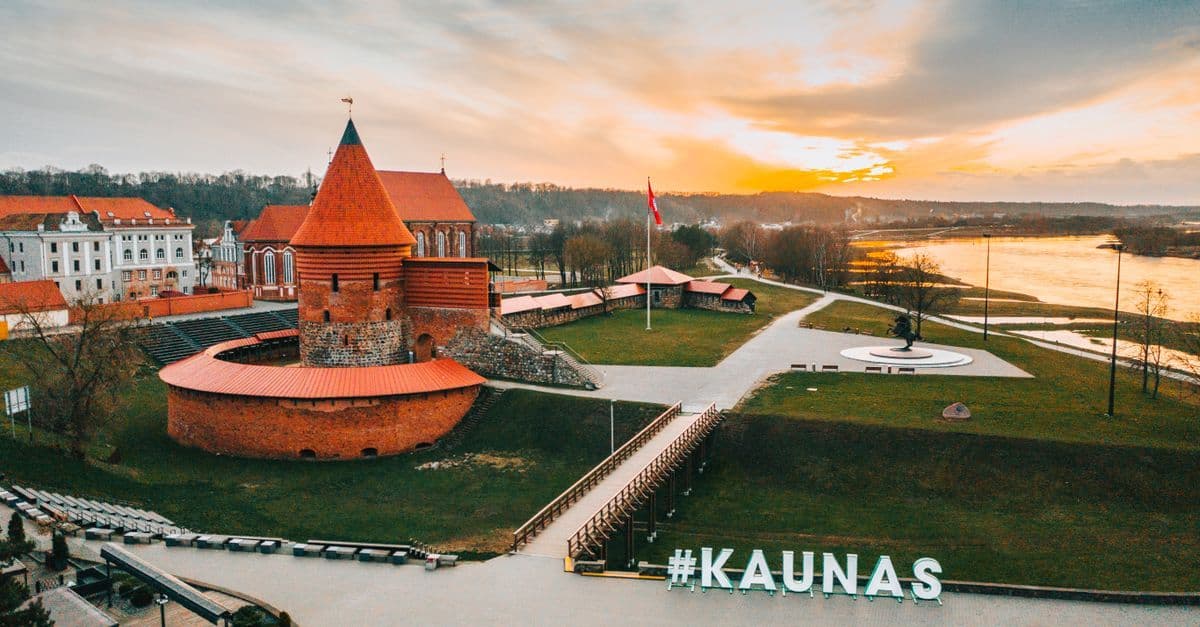
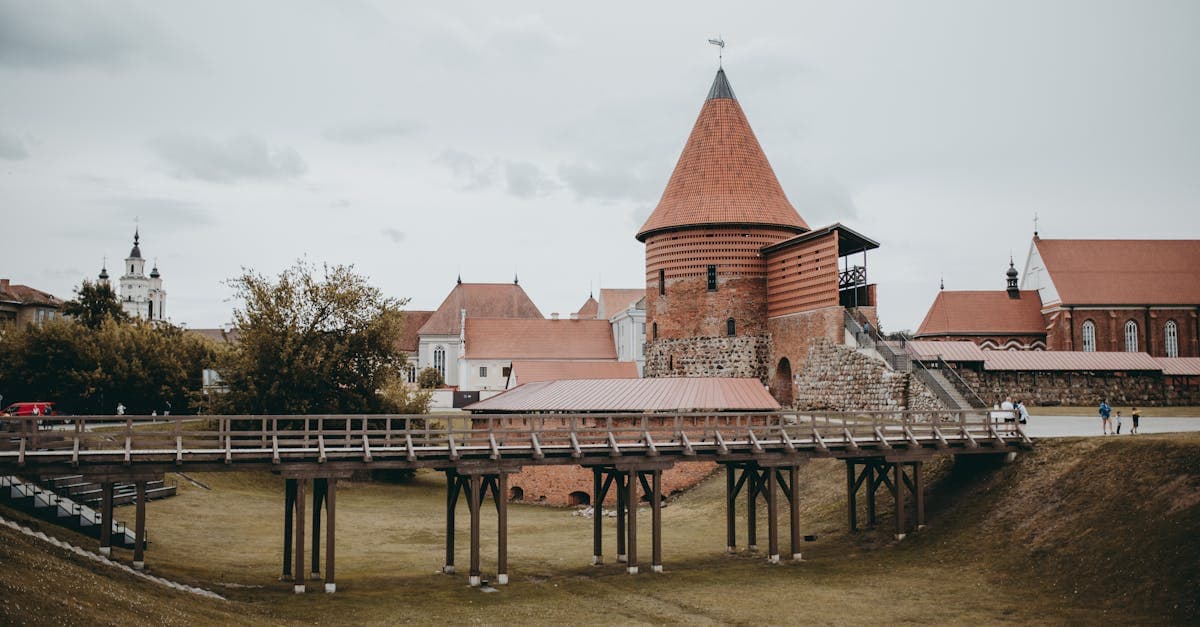
Three cities anchor Lithuanian travel. Vilnius, the baroque capital, holds a UNESCO-listed Old Town and a fast-growing startup scene lawhill.lt. Kaunas, the second city, carries a distinct interwar modernist character that feels less polished and more local. Klaipėda, on the coast, is the main port and the jumping-off point for ferries to the Curonian Spit.
Worth knowing for connectivity planning: Telia and Tele2 both operate 5G networks across Lithuania's urban centres, and coverage in Vilnius and Kaunas is crisp. Rural signal in Aukštaitija National Park or the eastern lake districts can thin out, so downloading offline maps before you leave Vilnius is a straightforward precaution.
Geography is the frame; history is the canvas, and Lithuania's runs deeper and stranger than most of its neighbours'.
Lithuania's History: From Grand Duchy to Modern Republic
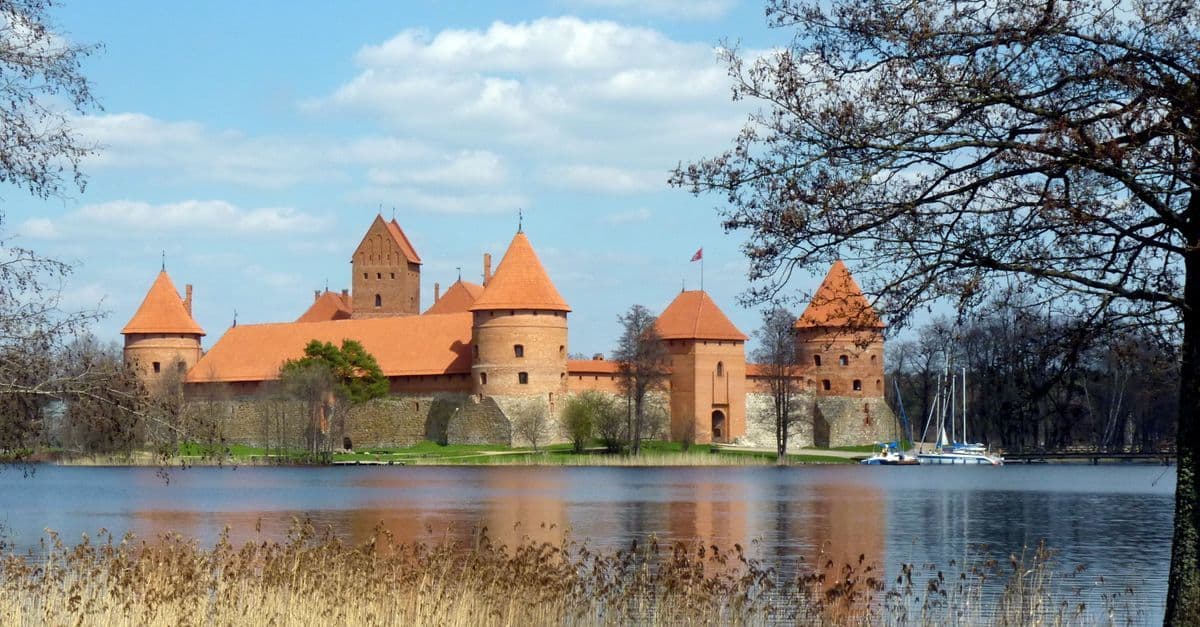
The name Lithuania enters written record in 1009 AD, noted in the Quedlinburg Chronicle as "Lituae," borrowed from a Baltic hydronym en.wikipedia.org. From that single Latin entry, a country built medieval Europe's largest state by territory, endured three foreign occupations in fifty years, and became the first Soviet republic to declare independence. Understanding that arc helps explain why Lithuania's position inside NATO and the EU carries weight that's largely absent in most Western European capitals.
Here's the comparison that reframes the scale: at its 14th and 15th century peak, the Grand Duchy of Lithuania stretched from the Baltic Sea to the Black Sea, absorbing territory that now forms modern Ukraine, Belarus, and large parts of western Russia britannica.com. The Grand Duchy covered more area than France and England combined at that moment in history.
Not a marginal power. A continental heavyweight.
The Polish-Lithuanian Commonwealth, formalized in 1569, extended that influence for two more centuries. It developed governance structures that included elected kings and legislative chambers with real authority over the monarchy, unusual for the Renaissance period. The Commonwealth was a genuine peer to the Habsburg and Ottoman empires, and it's routinely passed over in standard Western history education.
Then the reversals came fast.
Late 18th-century partitions divided the Commonwealth among Russia, Prussia, and Austria. Lithuania disappeared as a political entity for well over a century. Brief independence followed World War I, then Soviet occupation in 1940, Nazi occupation in 1941, and Soviet control again from 1944 through 1990.
March 11, 1990 is the date Lithuanians know precisely. Parliament voted to restore independence, making Lithuania the first Soviet republic to formally break with the USSR. Moscow responded with tanks and an economic blockade. Lithuania did not reverse course. Soviet forces withdrew in 1993.
NATO membership arrived March 29, 2004. EU accession came May 1, 2004. The euro replaced the litas on January 1, 2015. Three transformative commitments completed in eleven years.
Since 2016, a NATO Enhanced Forward Presence battlegroup has rotated through the Rukla base, drawing troops from Germany and other allied nations. Lithuania's defence spending sits well above NATO's standard benchmark. The country that spent decades simply fighting for the right to exist treats alliance obligations with corresponding seriousness.
That history shaped a country now firmly inside the EU.
Is Lithuania a Member of the EU?
Full membership, no asterisks. Lithuania joined the EU on May 1, 2004, as part of the largest single enlargement in the bloc's history, when ten countries acceded simultaneously european-union.europa.eu. It has been fully integrated for over two decades, with complete participation in EU institutions, the single market, and EU legal and consumer frameworks.
Three memberships Canadian travellers should keep straight before booking:
- EU member (since May 1, 2004): Single market access, EU consumer protections, and full regulatory integration. Not a candidate country. Not an associate. Full member.
- Schengen Area (joined December 2007): No internal passport controls at borders with neighbouring EU states. Cross from Poland into Lithuania or from Latvia into Lithuania without stopping at a checkpoint. Your 90-day Schengen visa-free allowance covers Lithuania as part of the zone, not as a separate per-country limit.
- Eurozone (since January 1, 2015): The euro is the official currency. No currency exchange required when arriving from France, Germany, or anywhere else in the eurozone, which simplifies multi-country European trips considerably.
Compare eSIM plans for Lithuania — See 2026 pricing →
NATO membership also arrived in 2004, on March 29, a few weeks before EU accession.
The confusion worth clearing up: because Lithuania shares a border with Russia's Kaliningrad exclave and Belarus, some travellers assume it might sit outside the EU's core framework or carry separate entry requirements. It doesn't. Lithuania is fully embedded in every major European institution, at the level of daily regulatory and legal life.
ETIAS, the EU's travel pre-authorisation system for non-EU visitors, now applies across the Schengen zone. Canadian passport holders should verify current requirements before departure. It's an online process, not a visa, but it's now part of the pre-trip checklist for any Schengen travel, Lithuania included.
Membership confirms access. Landmarks confirm the appeal.
What Is Lithuania Famous For?
Lithuania is best known internationally for three things: Vilnius Old Town (a UNESCO World Heritage Site since 1994), the Hill of Crosses near Siauliai (a pilgrimage site carrying over 200,000 crosses) lawhill.lt, and the Curonian Spit (a UNESCO-listed sand dune peninsula on the Baltic coast, shared with Russia's Kaliningrad Oblast) en.wikipedia.org. The fourth is less expected: an elite basketball tradition that produces results at the Olympics and EuroBasket that consistently outsize the country's population.
Start at the Hill of Crosses, roughly two hours north of Vilnius near Siauliai. The crosses have accumulated there since the 14th century. Soviet authorities demolished the site twice during the occupation years. Both times, Lithuanians rebuilt it, sometimes overnight. The crosses kept coming. It's now one of the more affecting pilgrimage sites in Europe, and it catches most first-time visitors completely off guard. Nothing quite prepares you for the scale of it.
Vilnius Old Town delivers what you'd expect: baroque churches, a medieval street grid, the Gediminas Tower overlooking the Neris River. Less expected is the same city hosting Revolut's EU headquarters, one of Europe's largest fintech companies. The medieval and the modern exist about two blocks apart, which tells you something useful about how Lithuania positions itself within the EU economy.
The Curonian Spit runs along the Baltic coast, a narrow sand dune peninsula separating the Curonian Lagoon from the open sea. Lithuania administers the northern half. The dune formations are legitimately unusual by European standards, and the area warrants a day trip from the coastal city of Klaipeda.
One final fact that tends to land differently in person: Lithuanian is one of the oldest surviving Indo-European languages, preserving features linguists trace directly to Sanskrit britannica.com. The language itself is a kind of living archive.
Knowing what to see is half the plan. Cost is the rest.
Is Lithuania Cheap or Expensive for Canadian Travellers?
For Canadian travellers, dedicated mobile data in Lithuania costs a fraction of Big Three carrier roaming rates, which compound quickly on longer stays. Setting up a working data plan before departure takes less than ten minutes. Here's how.
Step 1: Confirm eSIM support on your device
iPhones from the XS model onward and most Android flagships released after 2019 support eSIM. Check Settings > Cellular > Add eSIM on iPhone. If the option is there, skip the airport SIM kiosk entirely and activate a Lithuanian data plan from home before you board.
Step 2: Activate an eSIM before you leave Canada
eSIM plans for Lithuania run on Telia and Tele2 networks, covering 3G, 4G, and 5G across the country. Buy a plan online, scan a QR code, and the profile installs in a few taps.
Data works from the moment you land.
When you clear arrivals at Vilnius Airport, the eSIM connects automatically. No queue, no kiosk, no exchange-rate guessing at a prepaid counter. Lithuania's EU membership means some eSIM plans extend data coverage into Latvia and Estonia under EU roaming frameworks. If your Baltic itinerary covers all three countries, confirm whether a single plan handles the whole route before buying separately.
Activate an eSIM for Lithuania before your flight boards.
Step 3: Pick up a local SIM on arrival
Tele2, Telia, and Bite each run retail outlets in Vilnius, Kaunas, and at the international airport. Prepaid cards are competitive and widely available. You'll need your passport and a local payment method. The trade-off: setup takes time in arrivals, and managing two active numbers adds friction if keeping your Canadian line reachable matters.
Step 4: Weigh Big Three roaming against a dedicated plan
Rogers, Bell, and Telus all extend international roaming to Lithuania, but the daily rate compounds quickly on longer stays. For a two-night stop in Vilnius with hotel Wi-Fi doing most of the heavy lifting, carrier roaming is a defensible call. Stretch that to eight or ten days of active navigation through Vilnius, Kaunas, and the Curonian Spit, and a prepaid eSIM or local SIM costs a fraction of the Big Three equivalent.
Short visit with reliable hotel Wi-Fi: roaming works. Anything beyond five days with regular map use: a dedicated data plan is the obvious call.
Staying Connected in Lithuania: Mobile Data and eSIM Options
Lithuania's mobile network delivers 4G across every major city, with 5G rolling out in Vilnius and Kaunas. Mobile download speeds average 80 to 100 Mbps, which puts Lithuania ahead of Canada's national mobile average by a solid margin. For a country of just under three million people, that's a competitive benchmark.
Walk out of Vilnius Airport arrivals and the network is already there. An eSIM activated before departure connects to Telia or Tele2 the moment you clear customs: no kiosk queue, no cash transaction, no waiting for a clerk to locate the right SIM tray. That first signal can arrive before your bag hits the carousel.
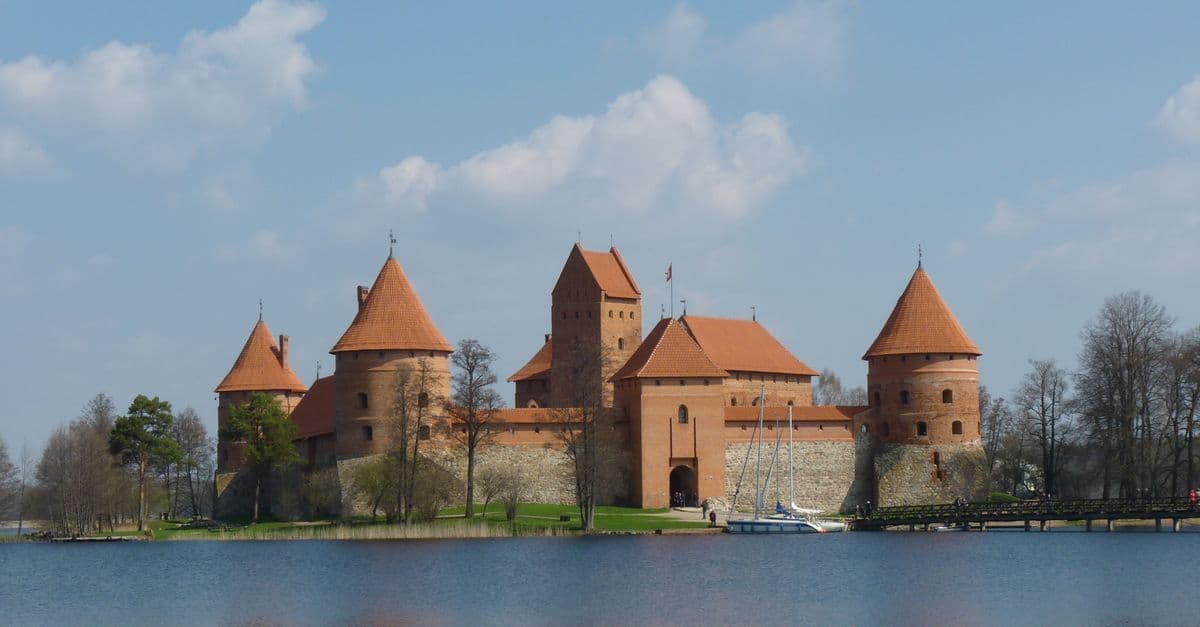
Rural stretches and quieter forest roads may dip to 3G. Vilnius, Kaunas, Klaipeda, and the main highway corridors stay reliably in 4G. Coverage at Trakai Castle and the coastal towns along the Curonian Spit is consistent enough for navigation and messaging throughout.
eSIM, Local SIM, or Roaming: What Works
Three practical options exist for Canadian travellers, and the right one depends on trip length and whether your itinerary crosses into neighbouring Baltic states.
Local SIM cards from Tele2, Telia, or Bite are available at Vilnius Airport arrivals and city-centre shops throughout Lithuania. A passport is required. Most counters prefer cash. Prices are competitive for longer stays, but activation takes time you may not want to spend straight off a transatlantic flight.
eSIM is the cleaner option for most visits from Canada. HelloRoam offers Lithuania plans on Telia and Tele2 networks, with a 10GB 30-day plan at ~C$10.55 and a 3GB plan at ~C$6.66. Activate before boarding at YYZ or YVR; the QR code installs the profile in about two minutes. Your Canadian number stays active in parallel on the same device.
Big Three roaming adds up fast on longer trips. At the daily rate mentioned earlier in this guide, ten days in Lithuania costs significantly more than any eSIM option.
The math doesn't favour roaming past a long weekend.
One angle most travellers overlook: because Lithuania is an EU member, roaming rules may extend a Lithuanian eSIM into Latvia and Estonia at no additional charge. One activation could cover a full Baltic circuit. Check your specific plan's terms before departure to confirm cross-border inclusion.
eSIM for Lithuania and the Baltics become a single, connected trip.
Reviewed by HelloRoam's editorial team. Last updated: 06 June 2026.
Get Connected Before You Go


Frequently Asked Questions
Lithuania joined the EU on May 1, 2004, as part of the largest single enlargement in the bloc's history. It is also a Schengen Area member since 2007 and adopted the euro in January 2015.
Lithuania offers solid value by EU standards. For Canadian travellers, eSIM data plans start around C$3.49 for 1GB, compared to roughly C$14-16 per day for Big Three carrier roaming in Europe.
Lithuania is famous for Vilnius Old Town (UNESCO World Heritage Site since 1994), the Hill of Crosses near Siauliai with over 200,000 crosses, the Curonian Spit UNESCO dune peninsula, and elite basketball.
Lithuanian is the official language. It is one of the oldest surviving Indo-European languages, preserving features linguists trace directly to Sanskrit, making it a remarkable linguistic archive.
Lithuania is in northeastern Europe on the southeastern Baltic coast. It is the southernmost Baltic state, bordered by Latvia, Belarus, Poland, and Russia's Kaliningrad exclave, with a Baltic Sea coastline.
Yes, Lithuania joined the Schengen Area in December 2007. Canadian travellers can cross from Latvia or Poland without passport checks, and the 90-day visa-free allowance covers Lithuania as part of the zone.
Lithuania uses the euro, adopted on January 1, 2015. No currency exchange is needed when arriving from other eurozone countries, which simplifies multi-country European itineraries considerably.
The three main travel destinations are Vilnius (the baroque capital with a UNESCO Old Town), Kaunas (known for interwar modernist architecture), and Klaipeda (the coastal port city near the Curonian Spit).
Yes, Telia and Tele2 operate 5G networks across Lithuania's urban centres, with strong coverage in Vilnius and Kaunas. Rural areas and national parks may have thinner signal, so downloading offline maps is recommended.
The Hill of Crosses near Siauliai is a pilgrimage site with over 200,000 crosses accumulated since the 14th century. Soviet authorities demolished it twice during occupation; Lithuanians rebuilt it each time.
Lithuania declared independence on March 11, 1990, becoming the first Soviet republic to formally break with the USSR. Soviet forces withdrew in 1993, and Lithuania joined NATO and the EU in 2004.
The Curonian Spit is a UNESCO-listed sand dune peninsula on the Baltic coast, accessible as a day trip from Klaipeda. Lithuania administers the northern half; it is shared with Russia's Kaliningrad Oblast.
eSIM plans for Lithuania start around C$3.49 for 1GB over 7 days, up to about C$20.82 for 20GB over 30 days. Canadian carrier roaming rates typically run C$14-16 per day in Europe by comparison.
Yes, most iPhones from the XS onward and Android flagships from 2019 onward support eSIM. Plans run on Telia and Tele2 networks covering 3G, 4G, and 5G, and can be activated before leaving Canada.
Yes. France's Institut Geographique National calculated Europe's geographic centre as roughly 26 kilometres north of Vilnius, making Lithuania's capital nearly at the heart of the European continent.
Lithuania has a population of around 2.89 million and covers 65,300 square kilometres, comparable in size to Ireland. Vilnius is the capital and largest city, with Kaunas as the second city.
Sources
- en.wikipedia.org — en.wikipedia.org
- Lithuania — european-union.europa.eu
- Lithuania — britannica.com
- What Is Lithuania Known For? Facts & Highlights — lawhill.lt