
Quick Answer: US Travel Advisories at a Glance
Once you enroll in the State Department's free STEP service (covered below), advisory changes and embassy alerts reach you by email, so they only help if your phone can get online abroad. A HelloRoam travel eSIM keeps your phone online from the moment you land, in any of 185+ destinations.
Embassy alerts are a separate product. US embassies and consulates send them about specific safety news in their area, such as protests, crime, dangerous weather or a terrorist threat. The advisory level is the country's overall rating, while an alert covers one event or threat.
The 4 US Travel Advisory Levels Explained
The State Department launched this four-level system on January 10, 2018, and its fact sheet from that day says it replaced the old Travel Warnings and Travel Alerts. Every country gets one overall level. Level 2, 3 and 4 advisories also show risk indicators that give the reason: crime, terrorism, civil unrest, health, natural disaster, time-limited event, kidnapping or hostage-taking, wrongful detention, and other, according to the State Department's Foreign Affairs Manual. Every level and country list in this guide is as of September 30, 2026.
| Level | Official Name | Examples | What the State Department Says |
|---|---|---|---|
| 1 | Exercise Normal Precautions | Japan, Canada, Thailand, Portugal | Lowest level. Some risk exists in any international travel |
| 2 | Exercise Increased Caution | Mexico, France, Italy, United Kingdom | Be aware of heightened risks to safety and security |
| 3 | Reconsider Travel | Colombia, Israel, Saudi Arabia, Venezuela | Reconsider travel due to serious risks to safety and security |
| 4 | Do Not Travel | Russia, Haiti, Iran, Ukraine | Highest level. Greater likelihood of life-threatening risks, and US help may be very limited or unavailable |
Level 1 is the lowest level, not a guarantee of safety. The State Department's own definition notes there is some risk in any international travel. A Level 1 advisory can still flag riskier areas: Thailand's advisory is Level 1 overall but asks Americans to exercise increased caution near the Thai-Cambodian border. Japan, South Korea, Canada, Portugal and Ireland are all Level 1. Aruba is Level 1 too, and our Aruba safety guide shows what that rating still asks of visitors.
Level 2 asks you to be aware of heightened risks to safety and security. Mexico, France, Italy, Spain, Germany and the United Kingdom all sit here, along with Turkey and South Africa. It doesn't mean stay home. It means read the specific risks the advisory lists and plan around them. Our Jamaica safety guide shows how that works in a Level 2 country with 32 named places at Level 3.
Level 3 is where the advice turns serious. The State Department cautions Americans to reconsider travel due to serious risks to safety and security. Reconsider doesn't mean don't go, but it's a signal to weigh the trip's purpose against the conditions on the ground. One detail worth knowing: the department's internal rules require a Level 3 or 4 whenever a US embassy or consulate in the country is on authorized or ordered departure of its staff.
Level 4 is the highest level, set when there's a greater likelihood of life-threatening risks. The State Department advises Americans not to go, or to leave as soon as it's safe to do so, and warns that the US government may have very limited or no ability to help, even in an emergency. Iran, Syria and Yemen are all Level 4.
Every Country Has a Travel Advisory, and Levels Change
Levels don't sit still. The State Department reviews a country's level whenever new safety information comes in, and at least every 12 months for Levels 1 and 2 and every 6 months for Levels 3 and 4. A destination you researched three months ago may carry a different rating today, so check the State Department's travel advisory map again before you fly.
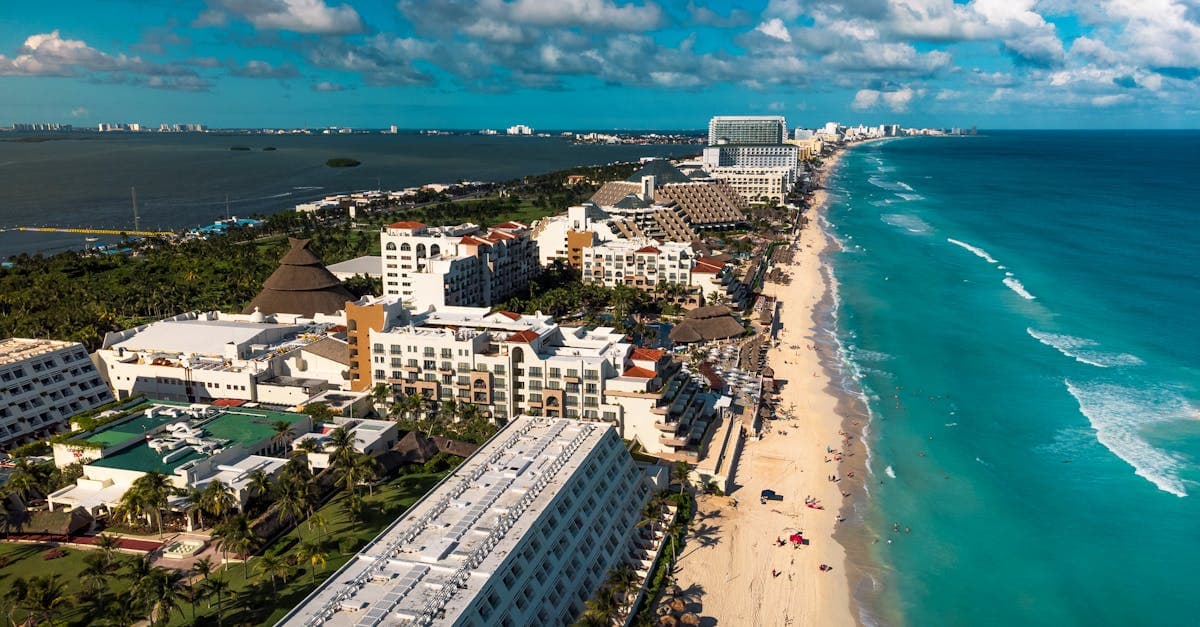
Mexico illustrates why granularity matters. Its overall level is Level 2, but the Mexico advisory rates each state on its own, from Level 1 in Campeche and Yucatan to Level 4 in Colima, Guerrero, Michoacan, Sinaloa, Tamaulipas and Zacatecas. Seven states, including Jalisco and Guanajuato, are Level 3. Coahuila is listed with the Level 2 states, but its own entry says to reconsider travel there. Travelers heading to Mexico City or to Quintana Roo, home to Cancun, see Level 2, a sharply different picture from anyone planning a trip to Tamaulipas or Colima.
Haiti is Level 4: Do Not Travel, due to crime, kidnapping, terrorism, unrest and limited health care. The State Department's Haiti advisory says violent crime is rampant, especially in Port-au-Prince. The country has been under a national state of emergency since March 2024, and US commercial flights to and from Port-au-Prince are not operating.
The Sahel region of West and Central Africa is another Level 4 cluster. Mali, Niger, Burkina Faso and Chad all carry Do Not Travel advisories, and neighboring Mauritania is Level 3.
One critical detail: the overall level covers the whole country, but an advisory can also name defined areas with a higher risk than that level. Under the Foreign Affairs Manual, those areas must cover less than half of a country's land. If riskier areas cover more than half, the overall level should reflect the higher risk. So read past the headline number, because the places on your itinerary may carry a different level.
If you haven't used an eSIM before, What Is an eSIM? explains how a digital SIM gets your phone online abroad without swapping cards.
How to Monitor Travel Advisory Changes and Enroll in STEP
STEP (Smart Traveler Enrollment Program) is a free State Department service, run through the STEP enrollment portal. Once you register a trip, you get emails with news, alerts and travel advisories about that destination. It also gives the local US embassy your contact details before an emergency develops, not during one, so staff can send you instructions and help family reach you, according to USAGov.
Here's how to set it up:
- Go to the STEP portal and select "Create account." No subscription, no fee.
- Enter your personal details, which USAGov lists as your name, date of birth and passport number. US citizens living abroad can enroll too, not just short-term visitors.
- Add an emergency contact at home: someone the embassy or consulate can contact in an emergency.
- Select your destination country. You can change it later to customize the news and alerts you receive.
Once you're enrolled, updates come to you. Every new Travel Advisory must go out through STEP, so a level change for your destination lands in your inbox, whether it's a move from Level 1 to Level 2 or a sudden Level 4 during a crisis. Embassy alerts about protests, severe weather and other local safety news arrive the same way.
STEP covers US citizens traveling and living abroad, and the State Department says it helps embassies locate US citizens in an emergency. Getting enrolled before you travel puts you on the embassy's list before anyone needs to find you.
STEP sends the alerts. Your phone still needs to receive them.
Staying Connected During a Travel Advisory: eSIM and Backup Plans
AT&T and Verizon both sell day passes for using your phone abroad. As of October 2026, AT&T's International Day Pass costs $12 a day on land, plus $6 for each additional line used that day. Verizon TravelPass costs $12 a day in most countries and $6 a day in Mexico and Canada, though Verizon's Unlimited plans already include Mexico and Canada at no extra cost. A travel eSIM (a digital SIM profile you install by scanning a QR code, with no physical card to swap) and portable Wi-Fi hotspots are the main alternatives.
Use your phone every day of a 10-day trip outside Mexico and Canada, and either pass adds $120 to that line's bill.
The dual-SIM setup adds a safety advantage.
Apple says the iPhone XS, XR and later models support Dual SIM, and both numbers can make and receive calls and texts. Keep your US number on for banking two-factor codes while your data runs through a local eSIM plan, and check your carrier's rules for texts abroad. That combination prevents a specific frustration: missing a security code from your bank because your home number went dormant the moment you crossed the border.
Three practical steps worth building into your plan for Level 2 and Level 3 destinations:
- Pre-departure activation: Install your eSIM before you board. Your maps and State Department alert emails can then load as soon as you land, without a hunt for a SIM kiosk in arrivals.
- Offline maps: Save the area you'll visit in Google Maps before departure. Google says offline maps guide you only when the whole route is inside the saved area. Walking, transit and cycling directions don't work offline, and some countries or regions can't be downloaded at all.
- Tethering support: A tethering-ready plan lets your phone serve as an emergency hotspot for your entire group if anyone loses signal in a patchy area.
HelloRoam has 24/7 support if your plan gives you trouble mid-trip, and a regional plan keeps one eSIM working across the borders it covers. If you still travel to a Level 3 country such as Saudi Arabia, set up a Saudi Arabia eSIM before you fly, so alerts and maps work when you land.
One honest counter: for a 48-hour stay in a Level 1 country with reliable hotel Wi-Fi, a carrier day pass may be enough. Two days at $12 is $24. For longer trips, Verizon itself pitches its $100 International Monthly Plan at trips of 9 days or more. Check your carrier's current rates before you fly.
Where US Citizens Should Not Travel Right Now
The State Department's Level 4 "Do Not Travel" list covers 24 countries and territories. Its advisories put these at Level 4: Afghanistan, Belarus, Burkina Faso, Burma, the Central African Republic, Chad, the Democratic Republic of the Congo, Gaza, Haiti, Iran, Iraq, Lebanon, Libya, Mali, Niger, North Korea, Russia, Somalia, South Sudan, Sudan, Syria, Uganda, Ukraine and Yemen.
Two common assumptions about that list don't hold up.
Myth: Level 4 only applies where there's active warfare.
Not quite. Level 4 is set for a greater likelihood of life-threatening risks, and the reasons vary. Haiti's advisory cites crime, kidnapping, terrorism, unrest and limited health care, not a war between states. North Korea's cites the risk of arrest, long-term detention and wrongful detention of US nationals.
Myth: A Level 4 advisory is a legal travel ban.
It isn't. The State Department calls its four levels "levels of advice." North Korea adds a legal barrier on top of the advisory: the North Korea advisory says US passports can't be used to travel to, in or through the country unless the Secretary of State specially validates them, and those validations are granted only in very limited circumstances. Treating that rule like advice you can choose to override is a legal misreading, not a personal risk calculation.
Russia and Belarus are both Level 4. The Russia advisory says the US Embassy in Moscow has reduced its staff, all US consulates in Russia have suspended operations, and US citizens in Russia should leave immediately. In Belarus, the State Department ordered US government employees to leave on February 28, 2022, and suspended operations at Embassy Minsk, so there are no US consular services there, routine or emergency, until further notice.
Levels also move with events. Natural disasters, disease outbreaks and political events can change a level, either ahead of time or in response. The standing list is the baseline. STEP enrollment, covered above, is how you catch those shifts before they catch you.
If you're already inside a Level 4 country, the State Department's advice is to leave as soon as it's safe. Contact the nearest US embassy or consulate without delay, and keep your STEP enrollment current so staff can reach you.
Countries on High Alert: The Level 3 List
Level 3 "Reconsider Travel" is the State Department's high-alert level below Do Not Travel, covering serious risks to safety and security. The State Department lists 28 Level 3 advisories:
- Americas: Colombia, Guatemala, Guyana, Honduras, Nicaragua, Trinidad and Tobago, and Venezuela
- Middle East: Bahrain, Israel, Jordan, Kuwait, Oman, Qatar, Saudi Arabia, the United Arab Emirates, and the West Bank
- Africa: Burundi, Ethiopia, Guinea-Bissau, Mauritania, Nigeria, Rwanda, and Tanzania
- Asia and the Pacific: Azerbaijan, Bangladesh, Macau, Pakistan, and Papua New Guinea
Colombia shows how to read a Level 3. The Colombia advisory puts the whole country at Level 3 for crime, terrorism, civil unrest, kidnapping and natural disasters. It then adds Level 4 Do Not Travel zones: the Arauca, Cauca (excluding Popayán), Valle del Cauca (excluding Cali) and Norte de Santander departments, plus anywhere within 5 miles (10 km) of the Colombia-Venezuela border. Medellín and Cartagena aren't in those zones, but they still sit under the national Level 3, so read the full advisory before you book.
A few practical habits apply to any Level 2 or higher destination. Enroll in STEP (covered earlier in this guide) before departure. Review the advisory's risk indicators carefully, since crime-driven advisories warrant different precautions than terrorism or civil unrest designations. The State Department spells out the reason alongside the level number, and that detail is worth reading. And check the advisory again before you fly, because a destination rated Level 2 when you book can be Level 3 by the time you leave.
The advisory level is a starting point, not a verdict. How you use that information determines whether it protects the trip or cancels it unnecessarily.
Reviewed by HelloRoam's editorial team.
Sources
- Travel Advisories (U.S. Department of State)travel.state.gov
- Travel Advisories Map (U.S. Department of State)travelmaps.state.gov
- 7 FAM 000 Appendix A: Consular Information Program (Foreign Affairs Manual)fam.state.gov
- New Travel Advisories for U.S. Travelers, fact sheet, January 10, 2018 (U.S. Department of State)2017-2021.state.gov
- See travel advisories and register in STEP (USAGov)usa.gov
- US State Department: Mexico Travel Advisory (Level 2, issued May 29, 2026)travel.state.gov
- Colombia Travel Advisory (U.S. Department of State)travel.state.gov
- US State Department: Haiti Travel Advisory (Level 4, issued July 10, 2026)travel.state.gov
- US State Department: Thailand Travel Advisory (Level 1, issued July 7, 2026)travel.state.gov
- US State Department: North Korea Travel Advisory (Level 4, issued April 29, 2025)travel.state.gov
- US State Department: Russia Travel Advisory (Level 4, issued December 29, 2025)travel.state.gov
- US State Department: Belarus Travel Advisory (Level 4, issued December 29, 2025)travel.state.gov
- International Day Pass (AT&T)att.com
- TravelPass FAQs (Verizon)verizon.com
- International travel plans (Verizon)verizon.com
- Using Dual SIM with an eSIM (Apple Support)support.apple.com
- Download areas and navigate offline in Google Maps (Google Maps Help)support.google.com
Written by
HelloRoam Team
The HelloRoam Team writes our guides on trip planning, visas and eSIMs. For every new or updated guide, we check each fact at its source. Sources include government, park and weather service pages. We note the date we read each one. A second review then checks every fact against its source before the guide goes live. If we cannot confirm a fact, we leave it out. We link those sources inside the guide, so you can check them.

 Brazil

 Mexico