
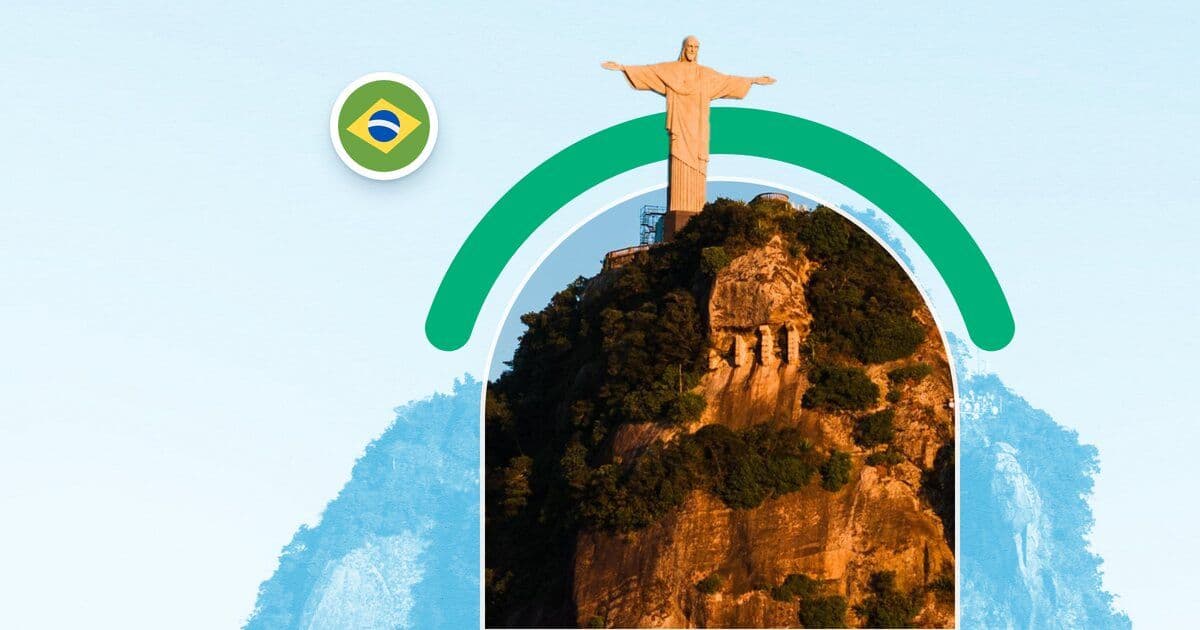
Brazil counted 759,637 arrivals from the United States in 2025, behind only Argentina and Chile, according to Ministry of Tourism data. Plan your first ride before you fly. With a HelloRoam Brazil eSIM, you can book your ride in the app at the airport and message your guide or host on WhatsApp.
Brazil's Level 2 advisory names three places to stay out of
The State Department issued the current Brazil advisory on August 31, 2026. It says violent crime, including murder, armed robbery and carjacking, happens in urban areas day and night. It also lists three areas under "Do not travel":
 Get your Brazil eSIM before you flyInstall it at home, then turn on data roaming for it when you land. From $2.31.See Brazil plans
- International land borders. This means anywhere within 100 miles (160 km) of Brazil's borders with Bolivia, Colombia, Guyana, French Guiana, Paraguay, Peru, Suriname and Venezuela. The State Department's country information for Brazil says this warning does not apply to Iguaçu National Park or Pantanal National Park. US government staff need special approval to enter the border zone.
- Favelas and other informal housing. The advisory says not to go "even on guided tours," because tour companies and police can't guarantee your safety there. Gang fights and police clashes sometimes spill past their edges.
- Brasília's satellite cities. The State Department's country information says not to go to Ceilândia, Santa Maria, São Sebastião or Paranoá at night. US government staff need approval to visit them between 6 PM and 6 AM.
The advisory gives no beach town or tourist city its own warning, so places like Paraty and Santos fall under the national Level 2 advice. Rio de Janeiro comes up only in its warning about drugged drinks. If you're new to the scale, see how US travel advisory levels work. Levels change, so read the State Department's Brazil page again in the week you fly.
Tourists in Brazil face drugged drinks, ATM robberies and card scams
Guard your drink first. The advisory says assaults with sedatives or drugs in drinks are common, especially in Rio de Janeiro. Criminals also find foreigners on dating apps or at bars, then drug and rob them. If you think you were drugged, the State Department says to get medical help right away. Then report it to the police and the nearest US embassy or consulate.
ATMs are the second risk. In an express kidnapping, criminals force a victim at gunpoint to take cash from several ATMs. Some force a transfer through a banking app instead, often Pix. The State Department says to use ATMs in secure places such as shopping malls or major hotels, and to carry fewer bank and credit cards.
City buses are the third. The State Department's country information says to avoid municipal buses at any time of day, and especially at night. Passengers face a higher risk of robbery or assault on them, and US government staff are told not to use them.
In Rio, the Civil Police have a special police station for tourists, the Deat, that runs operations against crimes aimed at visitors. On February 12, 2025, it went after Copacabana beach vendors who key an inflated amount into the card machine without the buyer noticing. Read the screen before you tap or type your PIN. A week later it worked the Corcovado train station in Cosme Velho and the Sugarloaf cable car entrance, against extortion, fraud, overcharging and unlicensed transport.
These habits from the advisory lower your risk in Brazil
The advisory ends with a list for anyone who decides to go. In short:
- Don't resist a robbery.
- Leave expensive watches and jewelry at home.
- Stay alert at banks and ATMs.
- Avoid walking on beaches after dark.
- Don't go to bars or nightclubs alone. Watch your drink, and don't accept food or drinks from strangers.
- Be careful with people you meet on dating apps.
- Take care at major transportation hubs and on public transport, especially at night.
- Use extra caution when hiking in isolated areas.
- Give your itinerary to a family member or friend.
- Enroll in the Smart Traveler Enrollment Program (STEP) for embassy alerts.
The US Embassy and consulates also send alerts to US citizens in Brazil through a WhatsApp channel.
Mobile data handles rides, maps and embassy alerts in Brazil
Ride apps need data from the moment you land. Most US visitors start in the southeast: in 2025, 646,273 of them entered Brazil through the states of São Paulo and Rio de Janeiro. At São Paulo's Guarulhos airport, passengers who land at Terminal 2 meet ride-app drivers at the Praça Pick-Up outside arrivals. The airport names Uber, 99 and Rhino as its partner apps, and the app tells you which pickup sector to walk to.
The State Department's country information encourages US government staff in Brazil to use Uber, for its rider safety features. It also says to avoid drivers with few or low ratings and to wait for your ride in a secure area. The same page says not to display your cell phone openly or join unknown open Wi-Fi.
You can get a local prepaid SIM card without a Brazilian tax number (CPF), but at Claro and TIM it means a store visit. Claro activates prepaid lines for foreigners without a CPF only in its own stores, using a passport. TIM's visitor page sends you to a TIM store for the SIM. You then dial *144 to activate it, with your passport and lodging address in Brazil at hand.
An eSIM skips the store and keeps maps, ride apps and WhatsApp working on arrival, so the embassy's WhatsApp alerts reach you too. Check that your phone supports eSIM, then install the eSIM before you fly. A HelloRoam Brazil plan's days start at its first connection to a supported network in Brazil. When you land, switch the line on, turn on data roaming for that line and pick it for mobile data.
Keep your US line on for calls and texts, so bank codes can still reach you. An iPhone can keep both numbers active for calls and texts while it uses one line for data. Ask your carrier what it charges for texts abroad.
Planning a longer trip through Argentina, Chile or Peru? A HelloRoam South America eSIM covers Brazil and each of them, so one eSIM keeps working across those borders. HelloRoam support is open 24/7 by email at help@helloroam.com and on WhatsApp.
Brazil's e-Visa and yellow fever rules to check before you book
US citizens have needed a visa for Brazil since April 10, 2025. For tourism or business stays of up to 90 days, that means an e-Visa, which you apply for online before you travel. As of October 2026, Brazil's consulates in San Francisco and Miami list a fee of US$80.90. The official e-Visa portal advises applying two months before your trip, and not buying airline tickets or non-refundable bookings until the visa is issued. Check the consulate's page and the portal before you apply.
In October 2026, the CDC's Brazil page says the country does not require a yellow fever vaccine for entry. The CDC does recommend it for travelers 9 months and older going to most Brazilian states. That includes the cities of Rio de Janeiro, São Paulo and Brasília, plus Iguaçu Falls. It is not recommended for trips limited to other areas, such as Fortaleza and Recife. Ask a travel clinic what your route needs, and check the CDC's Brazil page for updates.
Nights out need a plan when you travel solo in Brazil
For solo trips, the nightlife habits above come first. Before an app date, the State Department says to tell a loved one who you're meeting, where you're going and their dating-app profile. If your route passes through high-risk areas, the advisory also suggests a communication plan with family, your employer or your host. Agree how you'll confirm you're safe (text or call), how often, and who you'll contact first.
Brazil's 180 line is the national helpline for women, listed by the telecom regulator Anatel as the Central de Atendimento à Mulher. For more general advice, see these safety tips for traveling alone.
Emergency numbers to save before you land in Brazil
- 190: Military Police. Dialing 112 or 911 from a mobile phone also reaches them.
- 192: SAMU ambulance service.
- 193: Fire department (Corpo de Bombeiros).
- 180: Helpline for women.
Calls to these emergency services are free, according to Anatel. The State Department says you can usually report a crime to the tourist or civil police. To reach the US Embassy in Brasília, call +55 (61) 3312-7000 on weekdays during business hours. For a US citizen's emergency after hours, call +55 (61) 3312-7400.
Questions travelers ask
Do tourists get kidnapped in Brazil?
Kidnapping for ransom involving US citizens is rare but occasionally happens, the State Department says. Brazilians are targeted most often, but foreigners remain vulnerable. To lower the risk, the advisory says to vary your routes and travel times and to park in well-lit, guarded garages, because criminals often confront victims at their vehicles.
What is the website for the Brazil eVisa portal?
Brazil's consulates send US citizens to brazil.vfsevisa.com, the only place to file an e-Visa request. The Miami and San Francisco consulates both name it on their e-Visa pages.
Do you have to have $2,000 to go to Brazil?
For the e-Visa, the Brazilian consulate in San Francisco asks for a printed bank statement that covers your last 30 days of transactions and shows at least US$2,000 for travel (page updated December 2025). The Miami consulate's list does not include it. Check the e-Visa portal's current requirements before you apply.
Sources
- Brazil Travel Advisory, Level 2, August 31, 2026 (US Department of State)travel.state.gov
- Travel Advisory: Brazil August 2026, with embassy contacts and WhatsApp alerts (U.S. Embassy & Consulates in Brazil)br.usembassy.gov
- US State Department: France Travel Advisory, Level 2: Exercise Increased Caution (updated October 20, 2026, 8:00 PM ET)travel.state.gov
- Chegadas de Turistas Internacionais, 2025 data (Brazil Ministry of Tourism)dados.turismo.gov.br
- Deat operation against card-machine scams on Copacabana beach, February 2025 (Rio de Janeiro Civil Police)policiacivil.rj.gov.br
- Deat operation at Corcovado and Sugarloaf, February 2025 (Rio de Janeiro Civil Police)policiacivil.rj.gov.br
- Praça Pick-Up, Terminal 2 ride-app pickups (GRU Airport)gru.com.br
- Cadastro pré-pago: foreigners without a CPF (Claro)claro.com.br
- International visitors: prepaid SIM card (TIM)tim.com.br
- Use Dual SIM with an eSIM (Apple Support)support.apple.com
- Electronic Visitor Visa (e-Visa), Consulate General of Brazil in San Franciscogov.br
- Electronic Visitor Visa (e-Visa), Consulate General of Brazil in Miamigov.br
- Brazil: Traveler View, yellow fever and vaccines (CDC)wwwnc.cdc.gov
- Serviços de Utilidade Pública e de Emergência: 180, 190, 192, 193, 112/911 (Anatel)gov.br
- US State Department: Brazil Travel Advisory and travel guidance: safety and security, transportation, Do Not Travel areas (Level 2, updated August 30, 2026, 8:00 PM ET; country information updated August 6, 2026)travel.state.gov
- Brazil eVisa official portal: when to apply and booking advicebrazil.vfsevisa.com
- US State Department: United Kingdom Travel Advisory, Level 2: Exercise Increased Caution (updated September 8, 2026, 8:00 PM ET)travel.state.gov
- US State Department: Germany Travel Advisory, Level 2: Exercise Increased Caution (updated May 12, 2025, 8:00 PM ET)travel.state.gov
Written by
HelloRoam Team
The HelloRoam Team writes our guides on trip planning, visas and eSIMs. For every new or updated guide, we check each fact at its source. Sources include government, park and weather service pages. We note the date we read each one. A second review then checks every fact against its source before the guide goes live. If we cannot confirm a fact, we leave it out. We link those sources inside the guide, so you can check them.
 Mexico