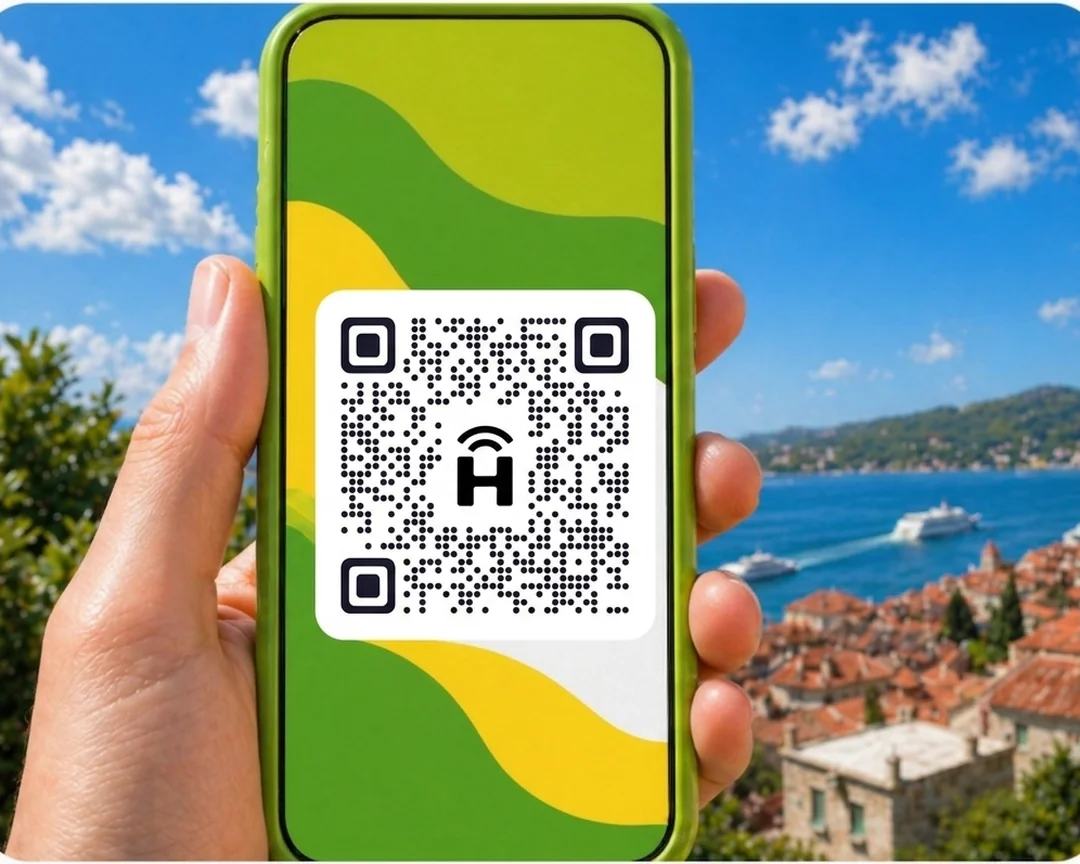

HelloRoam sells prepaid eSIM data plans for Middle East starting at $12.60 per day. Your e SIM connects to local 4G/5G networks the moment you land. Activate by QR code in under two minutes. Keep your AT&T, T-Mobile, or Verizon number on dual SIM while your e-sim handles data.
- networks
 212+
212+- 5G support
 4G LTE with 5G in Gulf cities
- activation
 under 2 minutes
Updated
Your cheapest eSIM for Middle East Plan Across All Middle East Countries
The cheapest eSIM for Middle East starts from $12.60. Local 4G/5G data on top carrier networks in Middle East. Works on all eSIM compatible phones. Airport SIM counters charge tourist rates and waste your first hour after landing. The cheapest eSIM for Middle East plan from HelloRoam starts at $12.60 on Local network provider 4G/5G networks across Middle East. Scan a QR code at home and land already online. Every plan is fully prepaid with no contract, no credit check, and no roaming fees. Coverage works from the moment you scan the code.
Middle East eSIM with fast 4G LTE with 5G in Gulf cities coverage
HelloRoam Middle East eSIM covers 18 countries including the UAE, Saudi Arabia, Jordan, Israel, and Qatar. One plan keeps you connected as you travel across the region. Plans start at $1.07 per day with instant activation.
- Plans start at $12.60 with 4G LTE with 5G in Gulf cities speeds
- Coverage from local networks
- Instant activation in under 2 minutes
- 180-day money-back guarantee
- Middle East coverage across major cities
- Network
- 4G LTE with 5G in Gulf cities
- Plans From
- $12.60
- Activation
- Under 2 min
- Guarantee
- 180 days

How to Set Up an eSIM in Middle East
Follow these steps to set up your eSIM card on iPhone or Android. Works for any eSIM for international travel, no replacement sim, no store visit.
Set up an eSIM on your iPhone with the HelloRoam app
Set up an eSIM on your Android with the HelloRoam app
- 1
Choose your plan & checkout online
Select a data plan for your destination and complete checkout.
 2
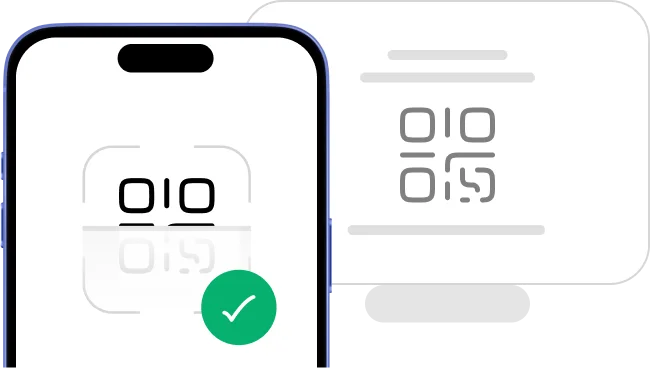
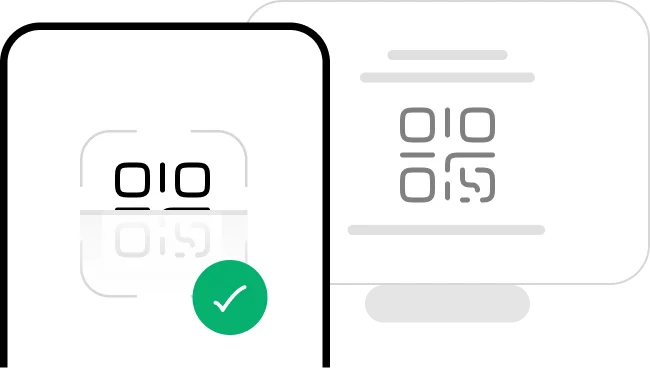
2Scan the QR code
Scan the QR code on Wi-Fi to install your eSIM. If it says not valid or already added, check your phone's list of lines first.
- 3
Activate in minutes: ready on arrival
Install your eSIM before you fly. Your plan's days start at the eSIM's first connection to a supported network in your destination. When you land, switch the line on, turn on data roaming for that line and pick it for mobile data.
 4
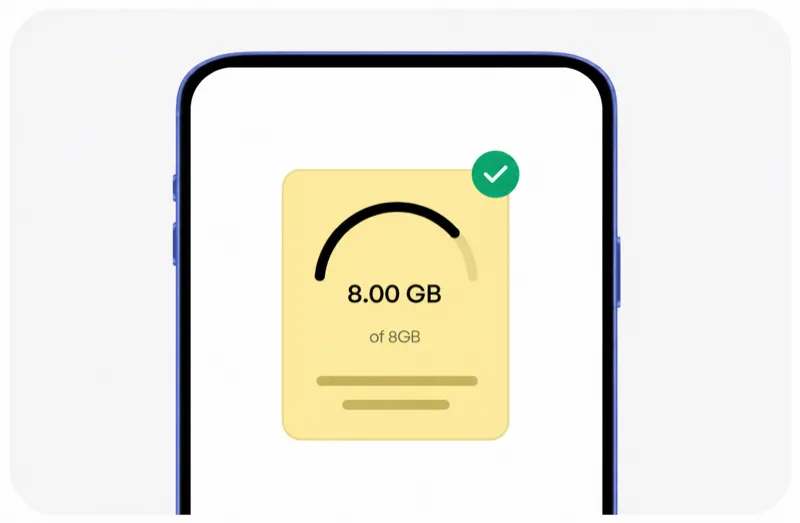
4Manage it all from our mobile app
Track usage, top up data in the app, and manage all your eSIMs in one place.




Trip changed? Don't worry, we've got you!
Plans can change anytime, and that's okay. With HelloRoam, unactivated and unscanned eSIMs qualify for a full refund within 180 days of purchase.
Learn more about our refund policyHelloRoam Middle East eSIM vs AT&T, T-Mobile and Verizon roaming
When comparing an eSIM vs a travel SIM card for Middle East, HelloRoam wins on price. It costs less than Verizon TravelPass ($10/day), T-Mobile international add-ons, and AT&T International Day Pass ($12/day). Skip the airport SIM shop and get a prepaid eSIM for Middle East from $12.60 with a 180-day refund on unactivated eSIMs.
| Feature comparison | HelloRoam | Local provider | Limited data eSIM |
|---|---|---|---|
| 180-day refund policy |  Feature available Feature available |  Feature not available Feature not available | Feature not available |
| 24/7 live chat support | Feature available |  Feature available Feature available | Feature available |
| $0 activation fees | Feature available | Feature not available | Feature available |
| Free hotspot and data sharing | Feature available | Feature not available | Feature not available |
| No data overage charges | Feature available | Feature not available | Feature not available |
| Instant QR code delivery | Feature available | Feature not available | Feature available |
| Premium Middle East carrier networks | Feature available | Feature not available | Feature not available |
Why Travelers Choose an e SIM for Middle East

24/7 live chat support
Need help at 2 AM in Tokyo or midnight in Paris? HelloRoam support is available 24/7. Message us and a real person responds in under 2 minutes. No bots, no wait queue. Mobile data problems don't wait for business hours, and neither do we.

Best Travel eSIM for Middle East
Get unlimited data at 4G/5G speeds the moment you land in Middle East. Skip roaming fees from AT&T, T-Mobile, and Verizon. HelloRoam connects you to local carrier networks in minutes, whether you are traveling or working. Wireless connectivity starts before you clear customs.

Keep your AT&T, T-Mobile, or Verizon number
Keep your AT&T, T-Mobile, or Verizon number active for calls and texts. HelloRoam runs as a second eSIM line on any dual SIM compatible phone, so you never miss a call from home. Your cellular coverage for calls stays on your home carrier while HelloRoam handles data abroad.

212+ partner networks worldwide
HelloRoam eSIMs connect to 212+ carrier networks across 185+ countries. Your phone switches to the strongest available 4G/5G signal automatically. Network access is instant, with no manual carrier selection needed.

Data alerts before you run out
HelloRoam alerts you at 80% data usage so you never hit a surprise cap mid-trip. Top up instantly from the app without reinstalling your eSIM or visiting a store. Adding a fresh prepaid data package takes under a minute from your account dashboard.

Local 4G/5G speeds
Your Middle East e-sim card connects to trusted local 4G/5G networks. HelloRoam picks the strongest available signal for navigation, streaming, and video calls. Internet abroad at local carrier speeds means maps load fast and video calls stay clear.

Regional and global eSIM plans
Heading to multiple countries? HelloRoam regional eSIM plans cover Europe, Asia, the Americas, and 185+ destinations in one purchase. Tourist eSIM or long-stay: choose fixed data or unlimited data plans. One account, no SIM swaps. Digital connectivity follows you across borders on a single prepaid plan.

Free hotspot and data sharing in Middle East
Share your Middle East eSIM data with a laptop or tablet using your phone's built-in hotspot. No extra fees, no setup required. Works on all eSIM compatible phones. One data plan covers your whole travel kit, making the most of every gigabyte you buy.
Compare eSIM Providers for Middle East
American travelers rate HelloRoam eSIM for its 180-day refund policy, zero activation fees, and 24/7 live support. See how HelloRoam compares to Airalo, Holafly, Saily, and other eSIM providers for Middle East on the things that matter most.
| Feature comparison | HelloRoam | Airalo | Holafly | Nomad | Saily | Ubigi |
|---|---|---|---|---|---|---|
| 180-day refund policy | Feature available | Feature not available | Feature not available | Feature not available | Feature not available | Feature not available |
| 24/7 live chat support | Feature available | Feature available | Feature available | Feature not available | Feature available | Feature available |
| $0 activation fees | Feature available | Feature not available | Feature available | Feature not available | Feature not available | Feature not available |
| Free hotspot and data sharing | Feature available | Feature not available | Feature not available | Feature not available | Feature not available | Feature not available |
| No data overage charges | Feature available | Feature not available | Feature available | Feature not available | Feature not available | Feature not available |
| Instant QR code delivery | Feature available | Feature available | Feature available | Feature available | Feature available | Feature available |
| Premium Middle East carrier networks | Feature available | Feature not available | Feature not available | Feature not available | Feature not available | Feature not available |
| Own branded carrier identity (SPN) | Feature available | Feature not available | Feature not available | Feature not available | Feature not available | Feature available |
What Is an e SIM? How eSIM Works in Middle East
An eSIM card is a digital SIM built directly into your phone. There is no plastic chip and no SIM tray to deal with. Scan a QR code to activate your e SIM in under 2 minutes on any eSIM compatible iPhone or Android. An eSIM for Middle East works as a prepaid data plan with no airport SIM shop, no replacement SIM card, and no carrier contract. Follow the step-by-step setup guide to get connected before your flight. guide


eSIM Coverage Guide for Middle East Travel
The Middle East spans some of the world's most technologically advanced cities alongside vast deserts with no coverage at all. Dubai's 5G network rivals anything in Europe or Asia. Saudi Arabia's smart cities are rolling out dense 5G.
And between them lie empty desert highways with no signal for hundreds of kilometers.
A HelloRoam Middle East regional eSIM keeps you connected in urban areas across the region without buying a SIM card at each border. Gulf states (UAE, Saudi Arabia, Qatar, Kuwait, Bahrain, Oman) have the region's best networks, all government-licensed duopolies with strong urban coverage.
Etisalat (e&) and du both offer strong 5G in cities across the UAE. Dubai International Airport is one of the world's most-connected airports. Saudi Arabia's STC, Mobily, and Zain run dense 4G and 5G in Riyadh, Jeddah, and Mecca.
Qatar's Ooredoo and Vodafone Qatar are competitive and cover Doha well.
Israel and the Palestinian territories have an unusual arrangement. Israeli carriers (Cellcom, Partner, and Hot Mobile) cover Israel with strong 4G and 5G. Coverage in the West Bank is primarily through Israeli carriers. Gaza has separate, limited infrastructure.
Jordan's Zain, Orange, and Umniah cover Amman, Petra, Wadi Rum, and the Dead Sea well. The desert highway from Amman to Aqaba has reasonable 4G with some rural gaps. Iraq has improving urban coverage in Baghdad, Erbil, and Sulaymaniyah but limited rural reach.
Important: Some Middle Eastern countries have VoIP restrictions (UAE, Oman). Some have content filtering. Check country-specific rules before you rely on calling apps.
- Gulf states (UAE, Qatar, Saudi Arabia) have world-class 5G in cities
- One plan crosses 18 countries with automatic carrier switching
- Desert regions and rural highways can have long stretches with no signal
- Some countries restrict VoIP calling apps (check UAE and Oman rules)
- Israel's 4G is among the region's most reliable
- Jordan is a well-covered multi-destination travel hub
- GSMA Mobile Economy MENA 2025;
- Ookla Speedtest Middle East 2025
eSIM Travel Tips for Middle East
Gulf States Restrict VoIP Calling
The UAE and Oman restrict some VoIP calling services including FaceTime Audio and certain Skype configurations. WhatsApp voice calls have had partial restrictions. Text messaging, video streaming, and data apps work normally. If you rely on internet calling, use your home SIM's international call minutes as a backup in these countries.
Desert Highways Have Long Signal Gaps
Saudi Arabia's highway from Riyadh to the Empty Quarter, Oman's road to Dhofar, and Jordan's desert highway to Wadi Rum all have long stretches with no 4G coverage. Download offline maps with full route details before leaving any Gulf city for a desert road trip. GPS hardware works without data.
Israel to Jordan Border Has Specific SIM Implications
Crossing between Israel and Jordan at the Allenby Bridge or Aqaba-Eilat crossing means your eSIM needs to switch to Jordanian carriers. The switch happens automatically if your plan covers both countries. Border areas can have slow switching due to overlapping signals. Toggle airplane mode to force a fresh connection.
Mecca and Medina Are Restricted to Muslims
Non-Muslims are not permitted to enter Mecca or Medina in Saudi Arabia. Coverage in and around these cities is excellent for Muslim pilgrims who do visit. If your itinerary includes Saudi Arabia and you are Muslim, be aware network congestion during Hajj and Umrah seasons can slow speeds in Mecca considerably.
Ramadan Affects Network Hours Indirectly
During Ramadan, Middle Eastern cities change their daily rhythm significantly. Iftar times (evening meal after sunset) see huge increases in restaurant and public space activity, which can cause brief network congestion in popular areas. Suhoor (pre-dawn meal) hours are also active. Plan video calls and large downloads outside peak gathering times.
Lebanon and Iraq Have Unstable Infrastructure
Lebanon's mobile network has been severely impacted by economic collapse and infrastructure underinvestment. Power cuts are frequent and affect towers. Coverage in Beirut exists but is inconsistent. Iraq's coverage has improved in Baghdad, Erbil, and Sulaymaniyah but remains unreliable in rural areas. Verify your plan's status for these countries before relying on them.
Emergency Numbers Vary by Country
Emergency numbers in the Middle East are not uniform. UAE: 999. Saudi Arabia: 999. Jordan: 911. Israel: 100 (police), 101 (fire), 102 (ambulance). Qatar: 999. Oman: 9999 (police), 9998 (ambulance). Save the correct numbers for each country on your itinerary.
Network Coverage Across the Middle East
The Middle East has a split between world-class Gulf networks and more challenged infrastructure in conflict-affected states.
Gulf Cooperation Council countries (UAE, Saudi Arabia, Qatar, Kuwait, Bahrain, Oman) all have strong government investment in mobile infrastructure. The UAE's Etisalat (e&) and du have deployed dense 5G networks across all seven emirates. Dubai consistently ranks among the world's top cities for 5G availability and average speeds. Saudi Arabia's STC has the region's widest national coverage. Qatar's Ooredoo completed a major 5G buildout ahead of the 2022 FIFA World Cup.
Cellcom, Partner, and Hot Mobile cover Israel with excellent coverage in Tel Aviv, Jerusalem, Haifa, and along the main highway corridors. Israel's network quality rivals Western Europe.
Jordan's Zain, Orange, and Umniah cover main cities and tourist routes. Petra and Wadi Rum have reasonable coverage at main visitor points. The Dead Sea resort areas have solid 4G.
Lebanon and Iraq are the most challenged networks in the region. Lebanon's infrastructure has deteriorated significantly with economic and political instability. Baghdad and Iraqi Kurdistan have improved 4G, but much of rural Iraq remains limited.
Yemen and Syria have severely disrupted mobile infrastructure due to ongoing conflict. Do not expect reliable connectivity in conflict-affected areas.
- Etisalat (e&)

- Zain

- STC

- Ooredoo

- du

- Orange Jordan
Regional eSIM vs Country-by-Country Plans
For multi-country Middle East trips from Israel to Jordan to the UAE, a regional eSIM provides consistent connectivity without the complexity of local SIM registration in each country.
| Category | HelloRoam Regional Middle East eSIM Recommended | Individual country SIMs | Home carrier international billing |
|---|---|---|---|
| Typical cost | — | — | — |
| Details | One plan covers 18 countries. Buy before you leave. Automatic switching at borders. No passport registration at UAE or Saudi airport kiosks. Consistent pricing across the region. | Gulf states require passport registration for local SIMs. Each country needs a separate purchase and registration. Losing your number at each border is inconvenient. Total cost across 4-5 countries adds up quickly. | US and European carriers charge $1.07 per day for Middle East data. A 10-day trip across UAE, Jordan, and Israel costs significant data fees alone. Most plans throttle speeds after a small daily cap. |
Prices approximate as of . Actual savings vary.
Best Times for Middle East Travel Data
The Middle East's ideal travel season is October to April when temperatures drop to comfortable levels across most of the region. Gulf cities like Dubai, Doha, and Riyadh see pleasant weather from November to March. Network demand at tourist attractions peaks during these months.
Summer (May to September) is extreme in Gulf states with temperatures above 45°C (113°F). Tourism drops significantly except in cultural destinations like Jordan's Petra and Israel's cities. Network performance in air-conditioned malls and indoor venues remains strong year-round.
Ramadan (which shifts earlier each year on the lunar calendar) changes the daily rhythm across the region. Pilgrimage season in Saudi Arabia (Hajj and Umrah) creates enormous network congestion around Mecca.

Explore Countries in Middle East


Turkey
From $3
HelloRoam keeps you connected in Turkey, from Istanbul to Antalya. Get data plans that work on landing.

Türk Telekom 5G covers Istanbul and Ankara. Activate before your flight to use maps at IST.


UAE
From $3
HelloRoam provides eSIM data plans for the UAE, covering Dubai and Abu Dhabi with fast connections.
Etisalat 5G covers Dubai and Abu Dhabi airports. Activate before landing to skip SIM kiosks.


Saudi Arabia
From $3
Get HelloRoam eSIM data in Saudi Arabia, covering Riyadh, Jeddah, and Mecca with local networks.
STC and Zain 5G cover Riyadh and Jeddah. Activate before King Abdulaziz Airport landing.


Armenia
From $4
Stay online in Armenia with HelloRoam eSIM plans for Yerevan, Gyumri, and surrounding regions.
Vivacell 5G covers Yerevan. Signal drops in mountain regions. Activate before landing at ZVA.


Azerbaijan
From $4
HelloRoam gives you mobile data in Azerbaijan, covering Baku and cities across the country.
Bakcell 5G covers Baku. Azercell handles rural 4G. Activate before landing at HYD Airport.


Bahrain
From $3
HelloRoam offers eSIM data in Bahrain, keeping you online in Manama and across the kingdom.
STC and Zain run 5G in Bahrain. Coverage is reliable nationwide. Activate before landing at BAH.


Israel
From $2
HelloRoam keeps you connected in Israel with eSIM data for Tel Aviv, Jerusalem, and Haifa.
Cellcom and Pelephone run 5G in Israel. Tel Aviv and Jerusalem are well covered.


Jordan
From $3
HelloRoam offers Jordan eSIM data for Amman, Petra, and the Dead Sea. Connect right away.
Zain 4G covers Jordan. Amman and the Dead Sea coast have solid signal. Wadi Rum has no coverage.


Oman
From $3
Stay online in Oman with HelloRoam eSIM data covering Muscat, Salalah, and desert regions.
Vodafone Oman 5G covers Muscat and Salalah. Wahiba Sands desert has limited signal.


Qatar
From $3
Stay connected in Qatar with HelloRoam eSIM data covering Doha and the Pearl Island area.
Ooredoo and Vodafone run 5G across Qatar. Doha Metro has excellent underground coverage.
Showing slide 1 of 10
Reviews
What Our Customers Say
Real reviews from Trustpilot and the App Store, quoted as written.
40k+ travelers have used HelloRoam
Cat
On a trip to Europe, my hotel Wi-Fi was so slow and outside Wi-Fi was unreliable. I couldn’t take it anymore so I got helloroam for a few days. It was tricky to set up correctly because of the primary settings (with my original number). But I reached out to their customer service via WhatsApp. Super responsive and helpful, with specific and clear steps to troubleshoot. Appreciate having 4G roaming instead of being stuck with in and out Wi-Fi during my trip!!
Rated 5 out of 5 by this reviewer

Very good experience! The eSIM was easy to set up and worked great in London. It was much cheaper than it would have been to use my own operator there.
Ilona
Rated 5 out of 5 by this reviewer
metulker
Hard to set up but help was good
Rated 5 out of 5 by this reviewer
Reuben
Really happy with HelloRoam. Everything worked as expected, from messaging and Google Maps through to streaming without any issues. Easy to use, reliable and affordable. Would happily use them again when travelling.
Rated 5 out of 5 by this reviewer

Angeline
Reliable connection. Reasonable pricing.
Rated 4 out of 5 by this reviewer
HelloRoam Middle East eSIM Questions Answered
Is there a single eSIM plan that covers Dubai, Doha, and Riyadh together?
A HelloRoam SIM card for Middle East travel runs on Local network provider 4G/5G networks from Dubai to Doha and Riyadh to Amman starting at $12.60. HelloRoam delivers the QR code to your inbox with data ready on landing. Scan once and cross borders without buying a new SIM.
What data speeds does the cheapest eSIM Middle East plan offer?
The cheapest eSIM Middle East plan connects at local 4G/5G speeds on Local network provider networks from $12.60 across Dubai, Abu Dhabi, Doha, and Muscat. HelloRoam sends one QR code that works in all listed countries with no card swap at any border. No contract, no roaming charges, and a refund on unactivated eSIMs within 180 days.
Does a HelloRoam Middle East plan cover multiple countries in a single purchase?
HelloRoam's regional Middle East plans connect across participating countries through Local network provider 4G/5G networks so you stay connected from Dubai's Burj Khalifa to Amman's citadel without buying separate plans. Coverage spans major urban and transit corridors across the region. Check specific country coverage at checkout from $12.60.
Which HelloRoam Middle East plan size works for a two-week multi-country itinerary?
Two weeks across the Gulf states and Jordan with maps, messaging, and some streaming often uses 5GB or more. HelloRoam Middle East plans come in 1GB, 3GB, and 5GB sizes on Local network provider 4G/5G networks. Start with 5GB and add another plan from your phone if you run low. Activate by QR before your first Middle East flight.
Does a Middle East eSIM work in the UAE?
The UAE is covered by HelloRoam Middle East plans. Dubai, Abu Dhabi, Sharjah, and all seven emirates connect to Etisalat (e&) 5G and du networks. Some VoIP calling services face UAE restrictions. Standard WhatsApp messaging, video streaming, and data apps work normally.
Does a Middle East eSIM work in Saudi Arabia?
Saudi Arabia is covered by HelloRoam Middle East plans. Riyadh, Jeddah, AlUla, and NEOM area connect to STC, Mobily, and Zain Saudi Arabia networks. Mecca is available for Muslim travelers. Desert areas on the Empty Quarter route and remote highways have limited coverage.
Does a Middle East eSIM work in Jordan?
Jordan is covered by HelloRoam Middle East plans. Amman, Petra, Wadi Rum, and Aqaba connect to Zain Jordan, Orange Jordan, and Umniah networks. The desert highway between Amman and Aqaba has reasonable coverage with some rural gaps.
Does a Middle East eSIM work in Israel?
Israel is covered by HelloRoam Middle East plans. Tel Aviv, Jerusalem, Haifa, and Eilat connect to Cellcom, Partner, and Hot Mobile networks. Network quality in Israel rivals Western Europe.
Does a Middle East eSIM work in Qatar?
Qatar is covered by HelloRoam Middle East plans. Doha and the Pearl area connect to Ooredoo Qatar and Vodafone Qatar networks. Qatar's network infrastructure was upgraded significantly ahead of the 2022 FIFA World Cup.
Does a Middle East eSIM work in Kuwait?
Kuwait is covered by HelloRoam Middle East plans. Kuwait City and main urban areas connect to Zain Kuwait, STC Kuwait, and Ooredoo Kuwait networks. Desert areas near the Iraq and Saudi borders have very limited coverage.