
Before you pack: why UK weather demands a different approach
Compare eSIM plans by destination before you travel.
UK weather changes fast, so pack for rain and a cool evening even on a summer trip.
Met Office 1991-2020 averages for Heathrow show about 615mm of rain a year, with 1mm or more on around 112 days. A waterproof belongs in your bag whatever the morning forecast says. Pair that waterproof with a quick look at the rain radar before you head out. A HelloRoam UK eSIM puts the radar, maps and live train times on your phone from the moment you land.
In July, London averages highs of about 24°C and lows of about 14°C. Sunscreen still earns its place: the NHS warns you can burn in the UK even when it's cloudy, and the sun is strongest between 11am and 3pm from March to October.
Winter needs warmer kit. From December to February, London averages about 3°C at night and 9°C by day. In Aviemore, in the Highlands, frost is common from November, with around 15 days of air frost in both December and January. Pack for the colder end of that range.
Shoulder season is the hardest period to dress for correctly. In spring and autumn, a mild morning can turn cold by late afternoon, and Met Office averages still give Heathrow about 3 days of air frost in both March and November. A layering strategy is the only sensible response. Build around a thin base layer, a mid-weight fleece or jumper for insulation, and a packable waterproof outer shell that compresses small enough to drop into a day bag. Those three pieces cover the majority of UK conditions across all months.
Regional packing differences: London, Scotland and Wales
Where you go changes what you pack: grippy shoes for cities, an extra layer for Scotland and a good waterproof for Wales.
City breaks in London mean long days on hard pavements and the odd stretch of cobbles. A shoe that looks smart but lacks support will have your feet in a poor state by day three. Comfort beats style here; make peace with that early.
Scotland runs cooler. In July, Met Office averages put daytime highs at about 19°C in Edinburgh and Aviemore, against about 24°C in London. Midges are the other Highland surprise. VisitScotland says they are active from May to October, worst on calm, overcast mornings and evenings, mainly in the west Highlands and islands. Pack a repellent made for midges and, for walks, a head net.
Proper walking boots or waterproof trail shoes are the only sensible choice for Highlands and Cairngorms walking. Trainers are inadequate on wet hillside paths, and discovering that several kilometres from the car park is not a pleasant experience.
Wales is wetter again. Cardiff averages about 1,200mm of rain a year, roughly double London's, though its winters are mild. Pack the same waterproof you would for Scotland, with slightly lighter warm layers. Cobbled streets in Bath, York and Edinburgh need shoes with real grip; smooth soles slip the moment the rain arrives.
Documents, money and admin for UK travel
Most visitors now need an ETA or a visa before travelling to the UK.
As of October 2026, GOV.UK says EU citizens, except Irish citizens, need an ETA for holidays. It costs £20 through the UK ETA app or online. Decisions usually take a day but can take 3 working days, and you must have one before you travel.
Most EU visitors also need a passport, since national ID cards are accepted only in some cases, such as EU Settlement Scheme status. For health cover, EU visitors use their EHIC; the UK GHIC is for UK residents travelling abroad. The NHS says the EHIC covers treatment that becomes medically necessary in England, but not private care, flights home or lost property, so bring travel insurance too. Check GOV.UK for your nationality before you book.
Sorting mobile data is part of pre-trip admin too. If eSIMs are new to you, our guide explains how an eSIM works.
Bring a contactless card or phone wallet for everyday spending, and check your bank's fees for using it abroad. Carry a little cash for rural markets, small guesthouses and pubs that may not take cards.
In London, tap the same contactless card or an Oyster card on TfL: TfL says pay as you go is cheaper than paper singles or returns, and daily and weekly caps limit what you pay. Save copies of your passport, insurance and bookings in a secure cloud folder. Planning to drive? Use GOV.UK's licence checker before you hire a car.
What to pack for UK travel: clothing, footwear and layering
Pack around one rule: a packable waterproof first, then layers that all match each other.
The packable waterproof jacket is the single highest-priority clothing item on any UK packing list, at any time of year. Build the rest of the wardrobe around neutral tones that mix and match freely rather than single-use statement pieces. That is a capsule wardrobe: a small set of clothes that all work together.
For summer, the working list is manageable: five or six lightweight tops, two pairs of trousers or jeans, one smart-casual outfit for an evening restaurant or theatre visit, a light jumper or cardigan for cooler evenings, and sunscreen. Pack it from home rather than hunting for it on day one.
Winter requires a few additions but the underlying structure is identical. A thermal base layer under a mid-weight fleece or chunky knit, the waterproof outer on top, and a warm hat, gloves and scarf for outdoor sightseeing. Scotland in January without gloves is not a theoretical inconvenience.
Limit footwear to two pairs: one comfortable, waterproof walking shoe suitable for pavements, cobblestones and uneven terrain, and one smart-casual option for evenings. That covers the vast majority of UK itineraries without burning bag space.
Toiletries should travel in travel-sized containers if you fly with hand luggage only. Boots and Superdrug stock the mainstream personal care brands, so running short is rarely a problem.
Keep prescription medicines in their original packaging. If yours contain a controlled drug, GOV.UK says to carry them in your hand luggage with a letter from your prescriber, and visitors can bring up to 3 months' supply. A light daypack earns its place on long sightseeing days, carrying water, a spare layer and a charger. Swimwear is easy to forget and easy to regret when the Cotswolds hotel turns out to have a spa pool.
Tech, adapters and staying connected in the UK
Pack a Type G adapter, a power bank and a plan for mobile data.
UK sockets take Type G plugs on a 230V supply. Buy an adapter before you leave home rather than hunting for one after landing.
A power bank of at least 10,000mAh belongs on the list, as maps, tickets and payments all run through your phone. The Civil Aviation Authority (CAA) says power banks must go in the cabin, never in checked luggage, and allows two per person.
Many UK hotels supply a hair dryer. Check your booking's room facilities first; leaving yours at home frees useful bag space.
Scotland justifies camera-specific additions. A spare SD card, a compact travel tripod and a polarising lens filter are worth packing for Highlands landscape photography, where the light shifts quickly and without warning.
The roaming question gets its own section below. Roaming charges vary by provider, so treat connectivity as a packing decision, not an afterthought. A pocket Wi-Fi router suits groups sharing data, but it adds weight and needs its own SIM; our guide to portable Wi-Fi in the UK compares the options.
Roaming day passes, UK SIMs and eSIMs compared
Roaming day passes add up quickly, so compare them with a UK SIM or an eSIM.
The EU's roam-like-at-home rules cover EU countries plus Iceland, Liechtenstein, Norway, Moldova and Ukraine, but not the UK, so your provider can charge extra for UK data. Check its UK rate before you go.
Visitors from further away pay daily fees. When we checked in October 2026, AT&T's International Day Pass cost US$12 a day on land and Verizon's TravelPass US$12 a day outside Canada and Mexico. Telstra's International Day Pass cost A$10 a day in the UK, with 2GB of data. Ten days on a day pass comes to US$120 or A$100, though Verizon also sells a US$100 monthly plan.
A UK SIM costs less but adds steps. At the same check, giffgaff's monthly rolling plan gave 20GB for £10, and SMARTY also sells rolling one-month plans. You need an unlocked phone, and a physical SIM means finding a shop after landing.
An eSIM removes the shop visit. You install HelloRoam's UK eSIM at home, keep your home SIM active alongside it, and connect when you land. First, check your phone supports eSIM and is unlocked.
How to pack carry-on only for a UK trip
Ten days in carry-on works if you pack a capsule wardrobe and check your airline's sizes.
If you fly Ryanair or easyJet, their bag sizes set the limits, and the two airlines differ.
easyJet's free small cabin bag is up to 45 x 36 x 20cm and must fit under the seat in front; its paid large cabin bag is up to 56 x 45 x 25cm. Ryanair's sizes differ, so check its website before you pack, not at the gate.
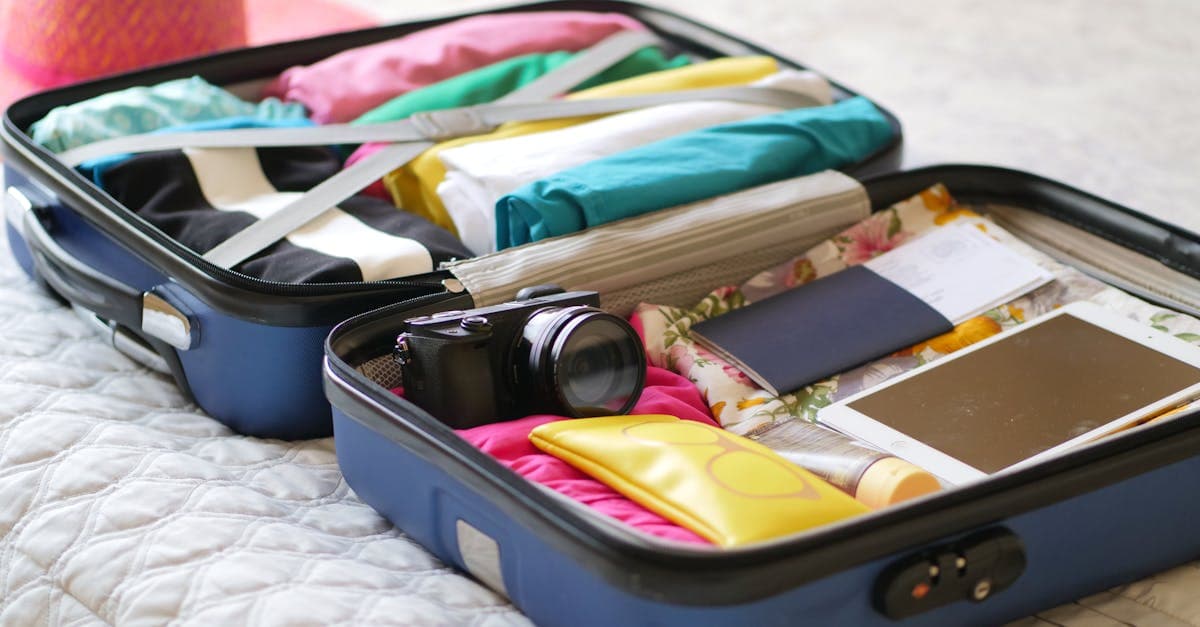
Follow the capsule approach above: neutral colours, mix-and-match items and two pairs of shoes at most. To pack clothes in a suitcase, roll soft items such as T-shirts and fold stiffer ones like shirts. Packing cubes keep things sorted by category. Put shoes and heavier items at the wheel end and fill gaps with socks.
Shoes take disproportionate space. Wear the bulkier pair on travel day and pack the second. That's the entire footwear allowance.
Plan one mid-trip wash for longer stays. For liquids, GOV.UK says most UK airports limit containers to 100ml. Where an airport asks for a liquids bag, it must be one clear, resealable bag of up to a litre. Some airports now allow containers of up to 2 litres, so check the rules for every airport on your trip, including the flight home.
The practical move: buy full-size toiletries on arrival at Boots or Superdrug and shift them into a checked bag on the return leg.
Five categories every packing list needs
Heading abroad rather than around the UK? Our guide to packing for a holiday abroad fits that trip better.
Packing lists fail when they're too long to use or too vague to act on. The most practical structure divides everything into five categories: travel documents, clothing and footwear, toiletries and health, technology and adapters, and comfort items.
Documents: valid passport, ETA or visa, travel insurance details (policy number and 24-hour emergency line), an EHIC for EU visitors, payment cards, a little cash in pounds, and a written emergency contact list kept separate from your phone.
Clothing: a minimum of five mix-and-match outfits with layering capability, one smart-casual option, a packable waterproof outer layer, and two pairs of appropriate footwear.
Toiletries and health: prescription medications in original packaging, a compact first aid kit covering plasters, paracetamol and antihistamine tablets, and travel-sized personal care items in compliance with the liquids restrictions noted above.
Technology: phone charger cable, a Type G power adapter, a power bank, and a confirmed mobile data arrangement in place before departure.
Comfort items: eye mask and earplugs for long-haul flights or overnight train journeys, a lightweight travel pillow, and an offline map downloaded before boarding.
Three small extras earn their place too: a compact umbrella, given the rainfall covered above; a small padlock for hostel lockers or left-luggage facilities; and a reusable water bottle, since mains tap water is safe to drink. VisitScotland says so for Scotland, and the Drinking Water Inspectorate's chief inspector rates drinking water in England and Wales among the highest quality in the world.
The 5-4-3-2-1 packing rule, adapted for UK weather
The 5-4-3-2-1 rule means packing five tops, four bottoms, three pairs of shoes, two accessories and one jacket.
Versions differ, so treat it as a framework, not a law. It squeezes outfit variety from a carry-on for trips of five to ten days, which covers most UK itineraries.
The five tops should include at least one smart-casual option for an evening out. Four bottoms work well as two pairs of trousers, one smarter alternative, and a casual short or skirt for summer trips only. The neutral colour approach covered in an earlier section does most of the structural work: every top should pair with every bottom without advance planning. Five tops and four bottoms can produce twenty distinct combinations if the palette is consistent.
The shoe count attracts the most criticism. Three pairs (walking, smart-casual, and a trainer or sandal) are genuinely difficult to fit within standard carry-on dimensions, and many UK-bound travellers quietly reduce this to two pairs in practice, wearing the bulkier pair on travel day. Nobody gets stopped at the gate for boarding in walking boots.
For any UK trip, interpret the single jacket as a packable waterproof. Scotland or winter travel warrants an additional mid-layer, fleece or jumper, as a sensible extension of the formula rather than a departure from it.
The two accessories typically cover a scarf, which doubles as a layer on changeable days, and a day bag or tote. Both earn their place easily on any UK packing list.
The 3-5-7 rule and when it works better
The 3-5-7 rule means packing three bottoms, five tops and seven accessories.
Shoe arithmetic is where the 5-4-3-2-1 formula tends to lose people. The 3-5-7 rule sidesteps it by leaving shoes out of the count. The seven accessories are deliberately elastic, which is why many travellers find this framework easier to apply.
For UK travel, those seven slots do genuine work. Socks and underwear, a scarf, a compact umbrella, a portable charger, and a Type G adapter can all sit within the seven. That leaves one or two slots for a personal item, which is a more honest reflection of what actually ends up in a bag before departure.
Both frameworks share the same underlying principle: pack for the trip you are taking, not for every possible eventuality. The 3-5-7 is not inherently superior. It suits travellers who find accessory flexibility more useful than advance shoe planning.
A neutral palette of navy, grey, white, and one accent colour makes either rule more effective. All items mix freely, and the specific rule applied becomes largely irrelevant once colour discipline is in place.
Sports and outdoor kit sit outside both frameworks entirely. Walkers heading to the Highlands, or anyone planning activities requiring technical clothing, should treat that gear as a separate category and apply the chosen rule only to everyday items.
Items that are easy to forget
Five items are easy to forget and awkward to replace on arrival: a Type G power adapter, a mobile data plan, your travel insurance details, midge repellent for Scotland from May to October, and prescription medicines in their original packaging.
A Type G adapter is cheap to buy before you leave and a nuisance to hunt for after a long flight. Pack it with your phone charger so the two travel together.
Mobile data belongs in the same bracket. The daily roaming fees above add up fast, so sort data before you leave. Our guide on how to set up an eSIM covers iPhone and Android.
Travel insurance documentation requires only a digital copy saved to email. The policy number and 24-hour emergency line are the two critical details; everything else can be retrieved if needed.
Well-worn walking shoes matter too: new shoes on a long London sightseeing day reliably produce blisters before mid-afternoon.
Questions travellers ask
Do I need an ETA to visit the UK?
It depends on your passport. GOV.UK says visitors from Europe, the USA, Australia, Canada and some other countries usually need an ETA rather than a visa, while British and Irish citizens and people with permission to live, work or study in the UK do not. Use GOV.UK's visa and ETA checker for your nationality before you book.
Do I need a doctor's letter to bring medicine into the UK?
If it contains a controlled drug, yes. GOV.UK says visitors need a letter showing your name, your travel dates, each medicine with the amount, dose and strength, and the prescriber's signature. Your doctor or pharmacist can tell you whether a medicine contains a controlled drug, and GOV.UK's page on taking medicine into the UK has the full rules.
Can I take more than 100ml of liquid through UK airport security?
Yes, in some cases. GOV.UK says liquids for essential medical purposes, special diets, and baby food or baby milk can go through security in containers of up to 2 litres at every UK airport. Liquids bought at the airport or on the plane, such as duty free, also pass if they stay sealed in the security bag with the receipt inside.
Sources
- GOV.UK: Electronic travel authorisation (ETA)gov.uk
- GOV.UK: Apply for an electronic travel authorisation (ETA)gov.uk
- GOV.UK: Visiting the UK as an EU, EEA or Swiss citizengov.uk
- NHS: Visitors from EU countries, Norway, Iceland, Liechtenstein or Switzerlandnhs.uk
- NHS: Apply for a free UK Global Health Insurance Card (GHIC)nhs.uk
- GOV.UK: Take medicine in or out of the UKgov.uk
- Met Office: Heathrow climate averages, 1991-2020metoffice.gov.uk
- Met Office: Aviemore climate averages, 1991-2020metoffice.gov.uk
- Met Office: Edinburgh, Royal Botanic Garden climate averages, 1991-2020metoffice.gov.uk
- Met Office: Cardiff, Bute Park climate averages, 1991-2020metoffice.gov.uk
- NHS: Sunscreen and sun safetynhs.uk
- VisitScotland: Midges and ticks in Scotlandvisitscotland.com
- VisitScotland: Scotland FAQsvisitscotland.com
- Drinking Water Inspectorate: Chief Inspector's annual report 2025 (England)dwi.gov.uk
- TfL: Pay as you gotfl.gov.uk
- GOV.UK: Driving in Great Britain on a non-GB licencegov.uk
- GOV.UK: Hand luggage restrictions, liquidsgov.uk
- easyJet: Cabin bagseasyjet.com
- Civil Aviation Authority: Pack right for a safe flightcaa.co.uk
- Your Europe: Mobile roaming costseuropa.eu
- AT&T: International Day Passatt.com
- Verizon: TravelPass and international travelverizon.com
- Telstra: International roaming and Day Passtelstra.com.au
- giffgaff: SIM only dealsgiffgaff.com
- SMARTY: SIM only planssmarty.co.uk
- Dictionary.com: capsule wardrobedictionary.com
Written by
HelloRoam Team
The HelloRoam Team writes our guides on trip planning, visas and eSIMs. For every new or updated guide, we check each fact at its source. Sources include government, park and weather service pages. We note the date we read each one. A second review then checks every fact against its source before the guide goes live. If we cannot confirm a fact, we leave it out. We link those sources inside the guide, so you can check them.

 Turkey

 Egypt