Arrival day brings a few quick jobs: booking the airport transfer, finding your hotel on a map and checking the latest FCDO advice. A HelloRoam Turkey eSIM gives you mobile data as soon as you land, so you can get them done before you leave arrivals.
Six points from the FCDO's Turkey travel advice
- Where not to go: the FCDO advises against all travel within 10 km of the border with Syria.
- Terrorism: the FCDO's safety and security advice says terrorists are likely to try to carry out attacks in Turkey. Most attacks have happened in the south-east, Ankara and Istanbul.
- Emergencies: dial 112 for an ambulance, the fire service or the police.
- Health cover: the GHIC and EHIC are not valid in Turkey, so check that your travel insurance covers local treatment and medical evacuation.
- Passport and visa: a British citizen passport needs an expiry date at least 150 days after you arrive and one blank page. It lets you stay up to 90 days in any 180 for tourism or business without a visa; other British passports need one.
- ID: carry your passport. Not carrying photo ID is illegal, and the authorities may stop you for ID checks in busy areas, especially Istanbul.
FCDO advice can change quickly, so read its Turkey travel advice again in the week you fly.
 Get your Turkey eSIM before you flyInstall it at home, then switch on data roaming for it when you land. From £2.60.See Turkey plans
Istanbul, Cappadocia and the coast lie outside the FCDO's no-travel zone
The FCDO's regional advice for Turkey covers three places, all in the south-east and east. This is where each holiday area stands on its pages.
| Area | FCDO advice | What the FCDO flags there |
|---|---|---|
| Istanbul | No advice against travel | Street robbery and pickpocketing in the main tourist areas, regular protests and ID checks |
| Ankara | No advice against travel | One of the three places where most terror attacks have happened, with Istanbul and the south-east |
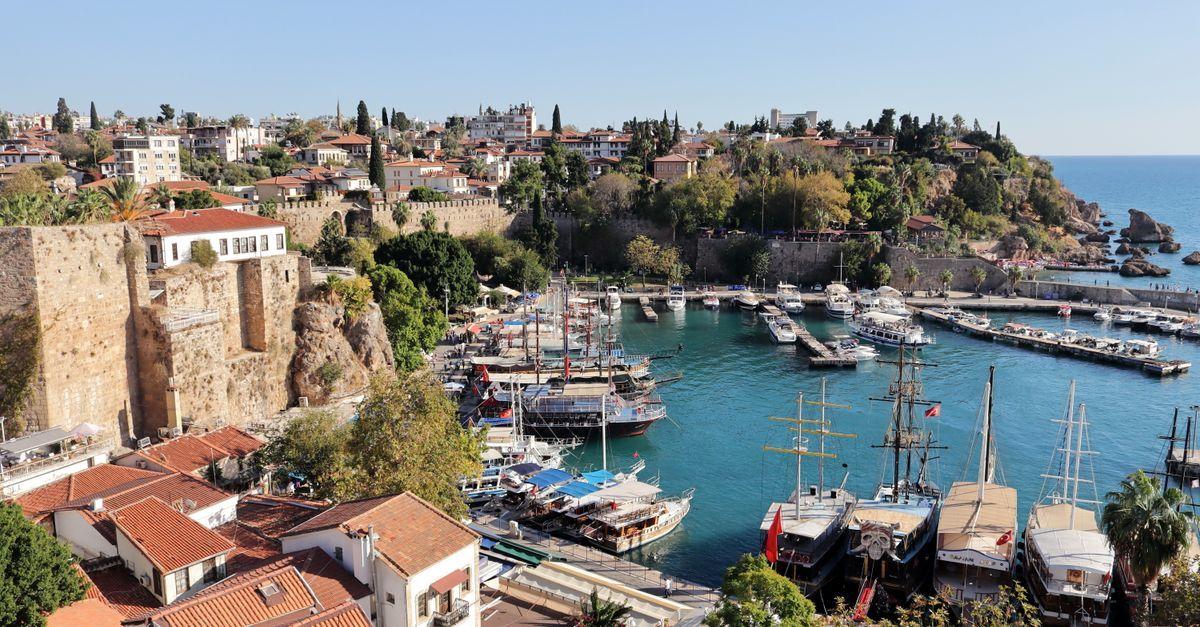
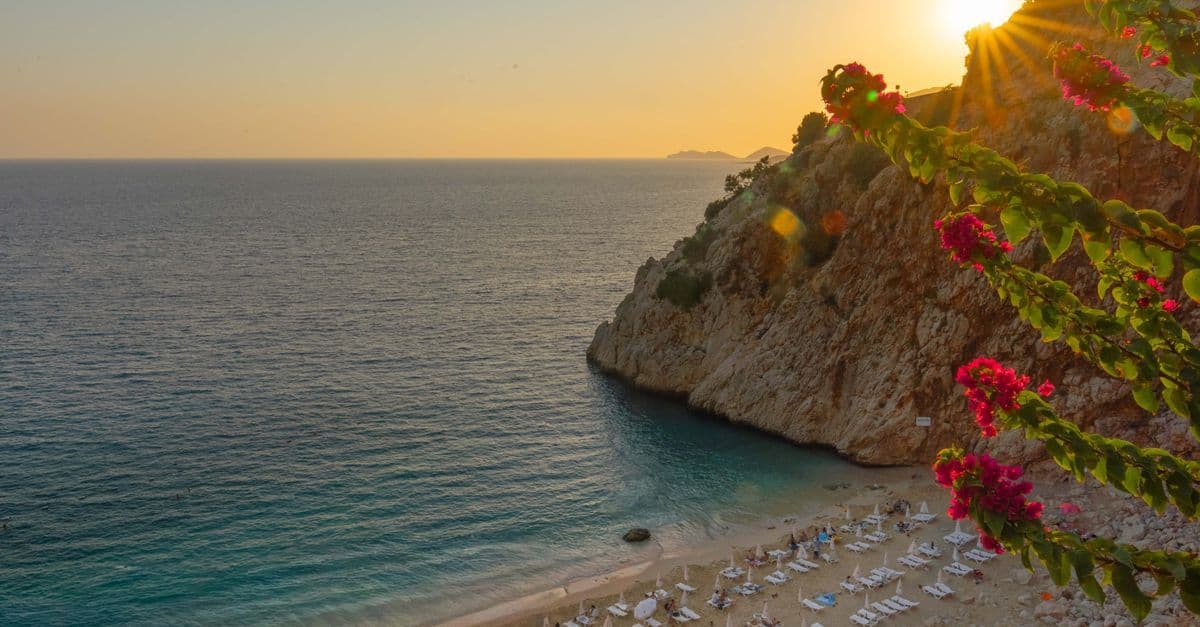
| Coastal resorts: Bodrum, Marmaris, Dalaman, Fethiye, Antalya, Belek, Side and Alanya | No advice against travel | Most sexual assaults reported to British consular staff took place in coastal resorts in the tourist season |
| Cappadocia | No advice against travel | No area-specific warning: the country-wide advice applies |
| Hakkari province, near the Iraq and Iran borders | Permission needed | You need permission from the local Governor's Office to visit these border areas |
| Mount Ararat, Ağrı province | Permission needed | A special military zone: you need permission from the Doğubayazıt government office and must pay a fee |
| Within 10 km of the Syrian border | Advises against all travel | Fighting in Syria near the border and a higher risk of terrorism; roads in Hatay province towards the border may close at short notice |
The FCDO names no individual resort in its advice, so the advice on crime, drinks and excursions below applies in Bodrum as much as in Alanya. Older guides may still tell you to avoid Şırnak and Hakkari: in October 2024 the FCDO stopped advising against all but essential travel to Şırnak city and Hakkari province.
From the resorts, a day trip to a Greek island takes you into the Schengen area, where the EU's Entry/Exit System can add a few minutes at the border.
Travelling against FCDO advice, such as into the Syrian border strip, could invalidate your travel insurance.
Recent terror attacks have hit Istanbul, Ankara and Izmir
The FCDO says attacks could be indiscriminate, including at public buildings, places of worship, airports and large public gatherings such as major events, public holidays and religious occasions. Its recent examples are:
- April 2026: two police officers were injured when three gunmen opened fire near a building housing the Israeli Consulate in Istanbul.
- September 2025: a lone gunman attacked a police station in Izmir, killing three police officers and injuring three people.
- October 2024: an attack on the Turkish Aerospace Industries site, 40 km north-west of central Ankara, killed five people and injured 22.
- February 2024: one person was killed in an armed attack by the terrorist group DHKP/C on the Çağlayan courthouse in Istanbul.
- January 2024: two gunmen killed one person at the Santa Maria Catholic Church in Istanbul's Sarıyer district, in an attack claimed by Daesh.
- 2022: an explosion in central Istanbul killed six people.
The FCDO's advice is to stay aware of your surroundings, keep up with local media and follow what the local authorities tell you.
Protests in Istanbul and other cities can turn violent
The FCDO says regular demonstrations and protests are taking place in Istanbul and other cities, and police have used tear gas and water cannon. Protests linked to the conflict in Israel and Palestine also gather outside diplomatic missions, particularly Israeli missions in Ankara and Istanbul.
Avoid all demonstrations, and leave the area if one starts. Local transport routes may be disrupted.
Tensions with Iran mean planning for flight disruption
The FCDO's Turkey page carries a warning about the wider region. It says the Middle East remains deeply unpredictable and the risk of sudden escalation is high. Since the conflict began in early 2026, Iran has said it intends to target places linked to the US and Israel, and Iran and others have carried out strikes and retaliatory attacks across the region against civilian and US military infrastructure.
This warning adds no part of Turkey to the FCDO's advice against travel. For British nationals in the region, it advises being ready for flight cancellations and airspace closures at short notice, keeping departure plans under review and staying away from security or military sites.
Pickpockets, spiked drinks and fake spirits are the everyday risks
Street robbery and pickpocketing are common in Istanbul's main tourist areas, the FCDO says, so keep your belongings secure.
Be wary of strangers who offer to change money or take you to a restaurant or nightclub. Food or drinks they offer could be spiked, so buy your own drinks and keep them in sight.
Fake spirits can kill. People have died or fallen seriously ill in Turkey, including in Ankara and Istanbul, after drinking illegally made local spirits and fake bottles of branded alcohol. You cannot taste or smell methanol, so get urgent medical help if anyone shows the signs of methanol poisoning after drinking.
Taxis: avoid lifts from unofficial drivers. Use a registered taxi, note its registration number before you get in and make sure the fare is metered. App-based and pre-booked taxis are widely available.
Cash: banks and money exchanges may refuse 50 and 100 US dollar notes after a reported surge in fakes, so avoid accepting them.
Sexual assault: among the 4.27 million British travellers who visited Turkey in 2025, 29 cases of sexual assault, including rape, were reported to British consular staff. Most took place in coastal resorts during the tourist season. The attacker was often someone the victim may have met that day, and in a significant number of cases a member of hotel or spa staff. There have also been sexual attacks on children using toilets alone.
The FCDO advises keeping children with people you know and trust, never alone with hotel or excursion staff, using reputable providers for trips and not sharing your hotel or contact details needlessly. Report an assault to the hotel and to the police on 112.
Turkish laws on insults, drugs and antiques carry prison terms
- Insults and online posts: insulting the Turkish nation, the flag, the President or Atatürk is a crime, with 6 months to 3 years in prison. The law can cover posts and images online, wherever and whenever you posted them. Defacing banknotes is illegal too.
- Drugs: expect 4 to 24 years in prison and heavy fines for possessing, using or smuggling illegal drugs, cannabis included, even when you are only changing planes.
- Antiques: buying or exporting antiquities is illegal, with a fine and 5 to 12 years in prison. Some old items sold in markets and antique shops are legal to buy but illegal to take home, so check before you pay.
- Photos: do not photograph military or official sites, and ask before you photograph people.
- Smoking: it is illegal on public transport and in indoor public places and workplaces.
- Ramadan: the FCDO expects the next Ramadan to start between early February and early March 2027. Eating, drinking or smoking in public in the daytime may cause offence then.
- Mosques: dress modestly when you visit a mosque or religious shrine.
- Children: there are reports of hotels refusing to check in children aged 17 and under without a parent or guardian, unless they have written parental consent, in some cases notarised. Check with the hotel first. Leaving Turkey with a dual British-Turkish child aged 18 or under may need the Turkish parent's permission.
- LGBT+ travellers: same-sex activity is legal, but same-sex relationships are not legally recognised, and the authorities have banned or dispersed Pride events since 2015. Some parts of Turkey are socially conservative, and public displays of affection may attract unwanted attention.
Resort excursions need a reputable operator and the right insurance
British nationals have been injured and killed doing extreme sports in Turkey, paragliding among them, the FCDO says. Use reputable operators, get full instructions first and check that your policy covers every activity you book.
- Quad bikes: you need specific insurance. Cover sold by the hire firm is usually third party only, so you are likely to be charged for any damage and may face arrest if you do not pay.
- Mopeds: you need a driving licence with at least category A1, and riders and passengers must wear helmets.
- Jeep safaris: there have been a number of reported accidents in recent years, so pick a company with proper safety procedures and equipment.
- The sea: people drown in the sea and in pools in Turkey every year. A red flag means you must not enter the water, and children need watching even where there is a lifeguard.
- Driving: you need a 1968 international driving permit or a UK licence notarised in Turkish, plus a green card to show third party insurance. You cannot buy the permit outside the UK.
- Fires and earthquakes: wildfires happen often in summer, and lighting a fire or dropping a cigarette in a risk area can bring a fine or prison. Earthquakes are common, and AFAD, Turkey's disaster agency, lists the latest.
- Stray dogs: most towns have them, and packs can be aggressive. If you are bitten, get medical advice straight away, as rabies is present in Turkey.
Your GHIC does not work in Turkey, so insurance has to cover medical care
If you are referred to a hospital or clinic, contact your insurer or medical assistance company promptly. The FCDO also keeps a list of medical providers in Turkey where some staff speak English.
British prescriptions are not accepted in Turkish pharmacies, and some common medicines are controlled in Turkey, so check the rules before you pack them. See TravelHealthPro's Turkey page for vaccine advice at least 8 weeks before you go.
Going for surgery or dental work? The FCDO knows of 7 British nationals who died in Turkey in 2025 after medical procedures. It advises talking to your UK doctor or dentist first and doing your own research beyond the clinic's own material. Turkey's Ministry of Health lists its approved providers on the HealthTurkiye website.
Install your eSIM before you fly, as the FCDO flags eSIM limits in Turkey
The FCDO's Turkey page notes that access to some eSIM services is restricted in Turkey, and tells you to check with your provider before you travel. HelloRoam's Turkey plans connect to Vodafone Türkiye, and we ask you to install the eSIM at home, because eSIM app access may be limited once you are in Turkey.
See which phones support eSIM, then follow our steps to install your eSIM at home before you leave. When you land, choose the eSIM for mobile data and switch on data roaming for it.
A dual SIM phone keeps your UK number working. Apple says both lines on an iPhone can make and receive calls and texts while one handles mobile data, so texts to your UK number, such as bank security codes, can still reach you. Our guide to whether UK phones work in Turkey covers the unlock check and what UK networks charge there.
Going on from Turkey to Jordan or the UAE? A HelloRoam data plan for the Middle East covers Turkey and both of those countries on one eSIM.
If the eSIM will not connect, HelloRoam's support team answers 24/7 by email at help@helloroam.com and on WhatsApp.
Turkey is not in the EU, so check what your UK network charges there before you rely on roaming. Our guide to UK data roaming charges covers spend limits and phone settings. If you are weighing up a Turkish SIM card instead, our eSIM versus SIM card comparison sets out the differences.
Five checks before you fly to Turkey
- Get FCDO email alerts by signing up for Turkey updates, so a change to the advice reaches you before and during the trip.
- Check your insurance covers every activity you plan, such as paragliding, quad bikes or a jeep safari.
- Check your passport meets the entry rules above, and renew it if it falls short.
- Save the numbers: 112 for emergencies and the British Embassy in Ankara on +90 312 455 33 44. Family at home can call the FCDO in London on 020 7008 5000, 24 hours a day.
- Install your eSIM at home, on Wi-Fi, so your data works when you land.
Questions travellers ask
Should I cancel my holiday to Turkey?
That decision is yours and your travel company's: the FCDO says it does not decide when travel can take place. On a package holiday, UK law lets you cancel for a full refund when unavoidable and extraordinary circumstances at or near your destination significantly affect the trip. Otherwise, the company can charge you a cancellation fee. Some insurance policies may let you claim if you cancel because FCDO advice changes, so read yours. To cancel or change a booking, contact your travel company first, as insurers usually expect that before a claim.
What threat level is Turkey at?
The FCDO does not give Turkey a numbered threat level. It says there is a high threat of terrorist attack globally affecting British nationals, and that terrorists are likely to try to carry out attacks in Turkey.
Sources
- FCDO: Turkey travel advicegov.uk
- FCDO: Turkey travel advice, warnings and insurancegov.uk
- FCDO: Turkey travel advice, safety and securitygov.uk
- FCDO: Turkey travel advice, regional risksgov.uk
- FCDO: Turkey travel advice, entry requirementsgov.uk
- FCDO: Turkey travel advice, healthgov.uk
- FCDO: Turkey travel advice, getting helpgov.uk
- FCDO: Turkey travel advice email alertsgov.uk
- FCDO: about FCDO travel advice (cancelling and insurance)gov.uk
- GOV.UK: British Embassy Ankaragov.uk
- Travel Aware (FCDO): spiking and methanol poisoningtravelaware.campaign.gov.uk
- AFAD: latest earthquakes in Turkeyafad.gov.tr
- TravelHealthPro: Turkeytravelhealthpro.org.uk
- Turkish Ministry of Health: HealthTurkiyehealthturkiye.gov.tr
- GOV.UK: international driving permitsgov.uk
- GOV.UK: the EU Entry/Exit Systemgov.uk
- Apple Support: using Dual SIM with an eSIMsupport.apple.com
- The Package Travel and Linked Travel Arrangements Regulations 2018, regulation 12legislation.gov.uk
Written by
HelloRoam Team
The HelloRoam Team writes our guides on trip planning, visas and eSIMs. For every new or updated guide, we check each fact at its source. Sources include government, park and weather service pages. We note the date we read each one. A second review then checks every fact against its source before the guide goes live. If we cannot confirm a fact, we leave it out. We link those sources inside the guide, so you can check them.