
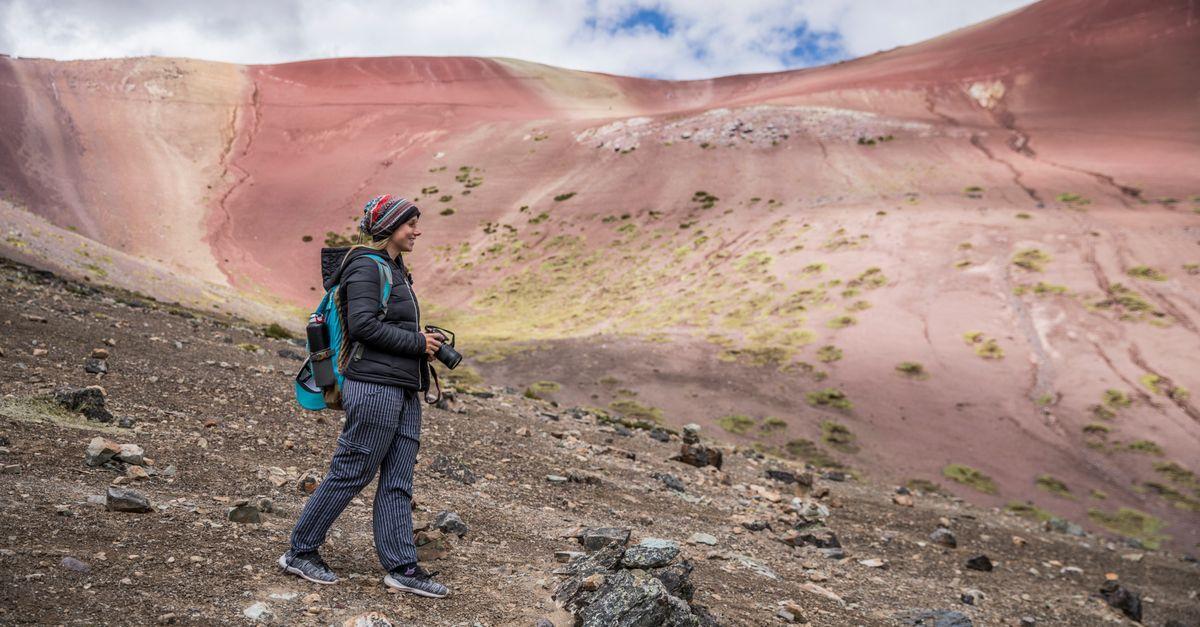
That ticket, your maps and the messages from your airport transfer all sit on your phone, and a HelloRoam eSIM for Peru gets them working over mobile data once you land in Lima.
Documents and money: pack the passport you booked Machu Picchu with
As of October 2026, the UK Foreign Office's entry rules for Peru are written for a full British citizen passport. On that passport, the expiry date must be at least 6 months after the date you arrive, and you do not need a visa for tourism. On another passport, check your rules with the Peruvian Consulate General in the UK. The same advice tells you to carry ID at all times, because Peruvian police may ask to see it.
 Get your Peru eSIM before you flyInstall it at home, then switch on data roaming for it when you land. From £2.80.See Peru plans
Machu Picchu has its own ID rule. Under a Ministry of Culture resolution signed on 11 September 2026, every ticket carries the visitor's name and passport number. You enter the number when you buy, then show the original passport to get in. The ticket is valid only for its date, entry time, circuit and named holder. You cannot change the date or the name on it, so book the right day with the passport you will travel on. If that passport is lost or stolen, the rule accepts a police report instead.
The Inca Trail works the same way. Registered travel agencies buy trail tickets for their clients, and a second resolution signed the same day requires your passport both for the purchase and at the trail entry.
Pack your insurance details too. The Foreign Office says a policy should cover your itinerary, your planned activities and emergency costs, including unexpected medical evacuation, so check that it names any trek you plan.
Peru's currency is the sol (S/). PromPerú, the national tourism board, says notes come in 10, 20, 50, 100 and 200 soles. Many shops, restaurants, hotels and petrol stations also take US dollars, it adds, and most cash machines work with Visa's Plus and Mastercard's Cirrus networks. The Foreign Office adds two cautions: use cash machines inside banks, supermarkets or large buildings during business hours, and look out for counterfeit US and Peruvian notes. In the rainy season it also advises carrying enough cash in soles, as roads and railways can be disrupted.
Clothes for Peru's coast, Andes and Amazon, season by season
PromPerú splits Peru's weather into three zones: the coast, the Andes and the Amazon. SENAMHI, Peru's national weather service, publishes monthly averages for cities in all three through the World Meteorological Organization, and the table below uses its figures for Lima, Cusco and Iquitos.
| Where and when | What the averages show | What to pack |
|---|---|---|
| Lima, December to April | Highs of 23.9°C to 26.5°C and under 5 mm of rain a month | Light, breathable clothes, a sun hat and sun cream |
| Lima, June to October | Highs of 18.4°C to 19.9°C and lows of 14.6°C to 15.3°C | Long sleeves, trousers and a light jumper or jacket |
| Cusco, May to September | Highs of 19.1°C to 19.8°C, lows of 0.1°C to 3.9°C and 1.5 mm to 21.8 mm of rain a month | A thermal base layer, a fleece or down jacket, a warm hat, gloves and sunglasses |
| Cusco, November to March | Highs of 18.8°C to 20.7°C, lows of 6.1°C to 6.6°C and 71.9 mm to 145.3 mm of rain a month | A waterproof jacket and over-trousers, quick-dry layers and waterproof boots |
| Iquitos (Amazon), all year | Highs of 29.9°C to 31.7°C and 173.8 mm to 316.6 mm of rain every month | Loose long sleeves and long trousers, a rain jacket and one fleece |
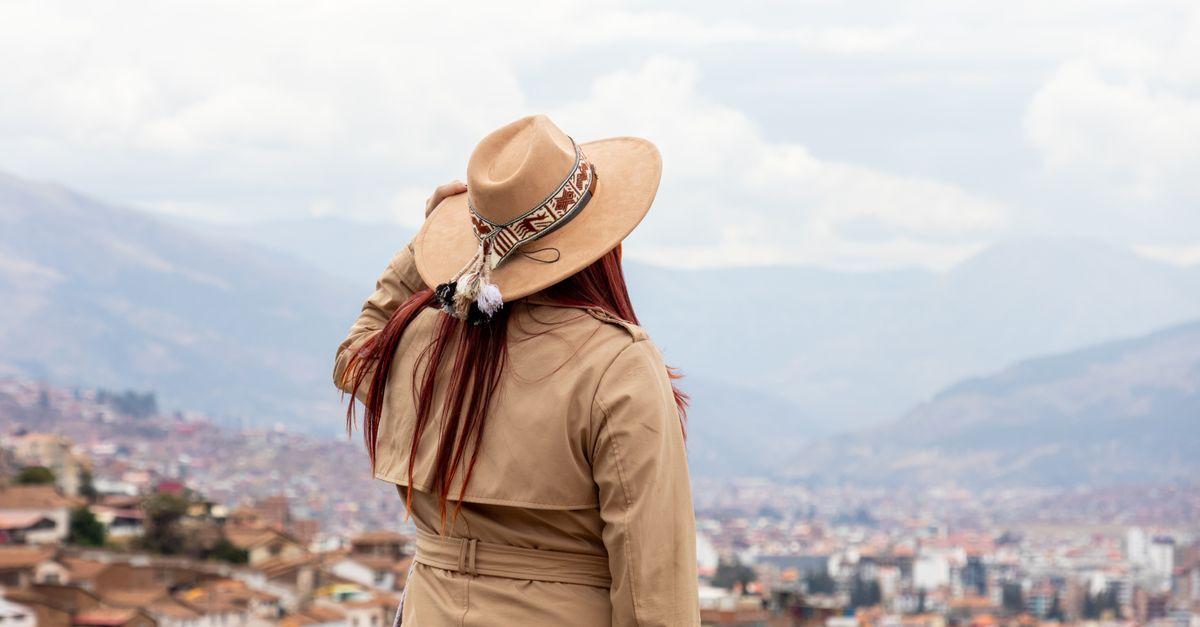
April and October sit in between. Cusco averages 43.2 mm of rain in April and 39.4 mm in October, so pack a waterproof alongside the warm layers.
Going in December? You need both ends of the table: summer clothes for Lima and full rain gear for Cusco, which averages 122.7 mm of rain that month.
The Amazon has one surprise. PromPerú notes that between May and August, temperatures there can occasionally drop to between 8°C and 12°C (46.4°F to 53.6°F), which is why the fleece earns its place.
This season the coast needs a waterproof too. The Foreign Office expects El Niño to bring heavy rain, possible flooding and landslides from late 2026 to April 2027, especially on the northern and central coast.
Whatever the month, Machu Picchu bans heels and hard-soled shoes, so bring soft-soled walking shoes or trainers for the visit.
Machu Picchu and the Inca Trail ban different things
Both sites publish their own lists. The citadel's rules sit in the Ministry of Culture's Machu Picchu code of conduct, and the trail's sit in Article 27 of the Inca Trail regulation, Ministerial Resolution 069-2017-MC. Inca Trail hikers finish inside the citadel, so both lists apply to them.
| Item | Machu Picchu citadel | Inca Trail |
|---|---|---|
| Original passport | Needed to buy the ticket and to enter | Needed to buy the ticket and to enter |
| Walking poles | Not allowed | Metal tips need rubber covers; no sticks made from native wood |
| Umbrellas | Not allowed | Not on its list |
| Aerosol sprays | Not allowed | Not on its list |
| Bags | Nothing larger than 40 x 35 x 20 cm | Not on its list |
| Food | Not allowed, nor plates, cutlery or flasks | Not on its list |
| Glass bottles | Not on its list | Not allowed |
| Knives | No knives or weapons of any kind | No knives with blades over 7 cm, machetes or axes |
| Alcohol | Not allowed | Not allowed |
| Tripods and selfie sticks | Not allowed | Not on its list |
| Drones | Not allowed | Not allowed for unauthorised use |
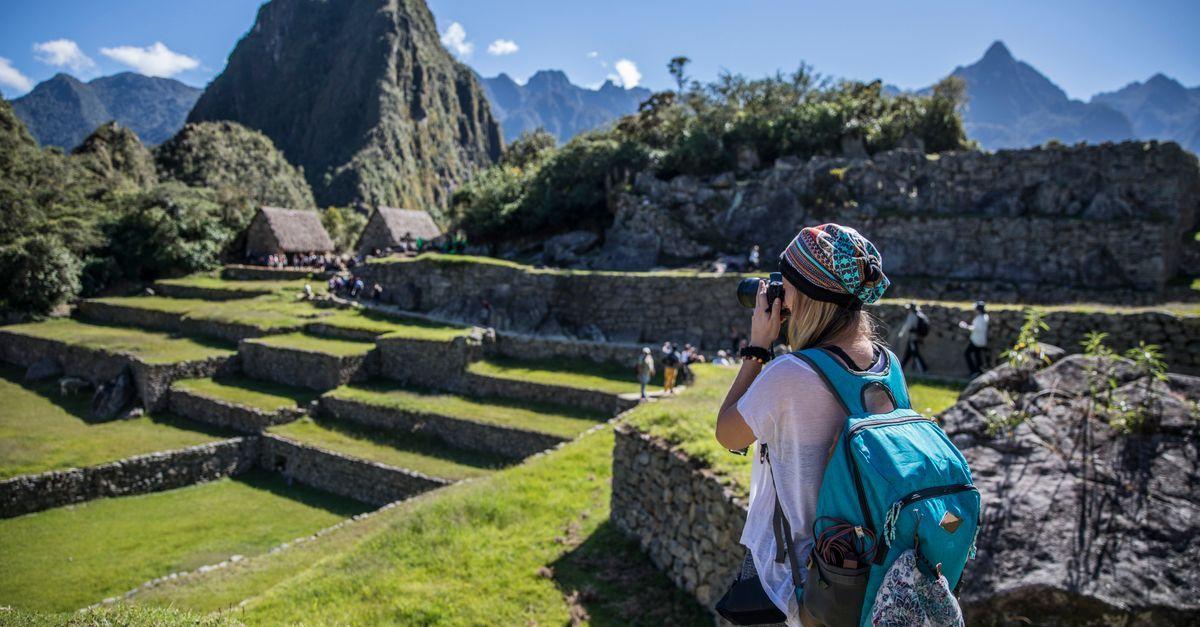
Bringing a banned item into the citadel means removal on the spot with no refund, the code of conduct warns. A few swaps keep you clear:
- a rain jacket or poncho instead of an umbrella;
- sun cream and insect repellent in pump bottles, roll-ons or lotions, not aerosol cans;
- a daypack no bigger than 40 x 35 x 20 cm;
- a meal before you go in, since food stays outside;
- rubber tips for your walking poles on the trail, and a quick question to your agency about what happens to the poles at the citadel gate.
The same trail regulation closes the Inca Trail for the whole of February each year, for maintenance and to let the ecosystem recover.
Your Peru health kit needs altitude, sun and mosquito cover
Start with altitude. The Foreign Office's health advice for Peru calls altitude sickness a serious risk in parts of the country, including Cusco, Puno, the Colca Canyon and Kuelap. The NHS says it usually affects people above 2,500 metres and is more likely if you go up quickly, so it advises climbing slowly and spending a few days below 2,500 metres before going higher. Ask your GP or a travel clinic about it before you fly, especially if you plan to trek.
Then the sun. The NHS advises sunscreen with an SPF of at least 30 and at least 4-star UVA protection, put on generously and often, plus sunglasses, suitable clothing and a wide-brimmed hat, which it rates above sunscreen for your head. Its sun safety advice also suggests shade between 11am and 3pm.
Mosquitoes come third, and they are not only an Amazon problem. The Foreign Office reports a major dengue outbreak in Peru following floods, and the NHS says the mosquitoes that carry dengue bite during the day. The Foreign Office also lists Oropouche virus disease, yellow fever, malaria and Zika among Peru's health risks.
For protection, the NHS advice on dengue is to use insect repellent on your skin, ideally one that contains DEET, and to sleep under a mosquito net treated with insecticide, including during the day. The loose long sleeves and long trousers in the clothes table above also leave less skin to bite.
Vaccines take time to arrange. The Foreign Office says to check the latest recommendations at least 8 weeks before your trip. The NHS says the vaccines you need depend on the country and on where in it you go, so give the travel clinic your full route, Amazon stops included. It adds that the yellow fever vaccine is only available at certain vaccination centres.
Medicines need a check too. The Foreign Office warns that some medicines prescribed or bought in the UK have a different legal status abroad, and says many are sold over the counter in Peru while some need a local prescription.
Plugs, power banks and mobile data for Peru
Peru's mains supply runs at 220 V and 60 Hz, according to INACAL, Peru's national quality institute. It advises replacing 'universal' sockets with Schuko or 'three-in-line' types, so you may meet all three on one trip. Pack a travel adapter for your UK plugs, and check that each charger's label covers 220 V.
INACAL also estimates that 7 in 10 electrical products in the country fall short of minimum quality requirements, and it warns against informal adapters and plugging too much into one socket. That is a good reason to buy a decent adapter before you leave the UK.
Power banks travel in the cabin, never in checked luggage. The Civil Aviation Authority limits you to two per person, says never to recharge them on board, and says batteries of 100 Wh to 160 Wh need your airline's approval. If your cabin bag is taken for the hold at the gate, take the power bank out first. Check each airline's own limits too, including on domestic flights inside Peru.
On 29 October 2026, HelloRoam's Peru plans connected to the Claro and Movistar 5G networks. Each plan is data only. You install it at home by scanning a QR code, and it activates when you land. Your UK SIM can stay in the phone as a second line: Apple's Dual SIM guide shows how to keep a home number for calls and texts, such as codes from your bank, while a travel line handles mobile data. Only one number can use mobile data at a time.
Crossing into Bolivia, or flying on to Chile or Ecuador? Our eSIM plan for South America covers all four countries on one eSIM, and in Peru it can use Claro or Movistar. For stops outside South America, our list of every eSIM destination runs from A to Z.
Maps, ride apps and photo uploads add up over a fortnight, so estimate how much data you need before you pick a plan size.
One last phone habit for the cities: the Foreign Office warns that motorbike riders may snatch phones from people using them at the roadside, so check your map away from the kerb.
What to leave at home, and what not to bring back
A few things cause more trouble than they are worth in Peru:
- a drone: Machu Picchu bans them outright, and the Inca Trail regulation bans them for any unauthorised use;
- glass bottles and knives with blades longer than 7 cm, if you are hiking the Inca Trail;
- a third phone or a second laptop: the Foreign Office says you can bring one laptop and 2 mobile phones into Peru without paying tax, and you must declare anything that may be taxed;
- expensive jewellery, watches and other valuables, which the Foreign Office advises against wearing or displaying.
Some souvenirs should not come home with you:
- coca leaves and coca tea, which the Foreign Office says are illegal to import into the UK;
- crafts made from wild animal parts, such as condor feathers, turtle shell or preserved butterflies: selling them is illegal in Peru, and you may be stopped and prosecuted for carrying them when you leave;
- archaeological artefacts, which cannot leave Peru without authorisation.
Rules like these change. Read the Foreign Office's Peru advice and the Machu Picchu code of conduct again in the week before you fly. For the basics that go on every trip, see our general holiday packing list.
Sources
- FCDO, Peru travel advice: Entry requirements (updated 9 October 2026)www.gov.uk
- FCDO, Peru travel advice: Safety and securitywww.gov.uk
- FCDO, Peru travel advice: Healthwww.gov.uk
- FCDO, Peru travel advice: Warnings and insurancewww.gov.uk
- Ministerio de Cultura, Resolución Ministerial N.° 334-2026-MC (Llaqta de Machupicchu tickets and entry, 11 September 2026)www.gob.pe
- Ministerio de Cultura, Resolución Ministerial N.° 333-2026-MC (Red de Caminos Inka tickets, 11 September 2026)www.gob.pe
- Ministerio de Cultura, Resolución Ministerial N.° 069-2017-MC (Reglamento de Uso Turístico Sostenible de la Red de Caminos Inka)www.gob.pe
- Dirección Desconcentrada de Cultura Cusco, Machupicchu: Code of conductwww.machupicchu.gob.pe
- World Meteorological Organization, World Weather Information Service: Cusco (data from SENAMHI)worldweather.wmo.int
- World Meteorological Organization, World Weather Information Service: Lima (data from SENAMHI)worldweather.wmo.int
- World Meteorological Organization, World Weather Information Service: Iquitos (data from SENAMHI)worldweather.wmo.int
- PromPerú, Useful information: Climatewww.peru.travel
- PromPerú, Useful information: Currencywww.peru.travel
- INACAL, Inacal advierte sobre riesgos de tomacorrientes inseguros (7 May 2026)www.gob.pe
- UK Civil Aviation Authority, Pack right, safe flightwww.caa.co.uk
- Apple Support, Use Dual SIM on your iPhonesupport.apple.com
- NHS: Altitude sicknesswww.nhs.uk
- NHS: Sunscreen and sun safetywww.nhs.uk
- NHS: Denguewww.nhs.uk
- NHS: Travel vaccinationswww.nhs.uk
Written by
HelloRoam Team
The HelloRoam Team writes our guides on trip planning, visas and eSIMs. For every new or updated guide, we check each fact at its source. Sources include government, park and weather service pages. We note the date we read each one. A second review then checks every fact against its source before the guide goes live. If we cannot confirm a fact, we leave it out. We link those sources inside the guide, so you can check them.
 Turkey

 Egypt