Machu Picchu entry is sold online in each visitor's name, so you will want your ticket, train times and maps on your phone. With a HelloRoam eSIM for Peru on that phone, they open over mobile data from Jorge Chávez airport onwards.
Lima, Cusco and one more region make a well-paced first trip
Peru covers more than 1.2 million square kilometres, and road journeys between regions are long. PromPerú, the national tourism board, puts Lima to Cusco at about 21 hours by road against about 1 hour 15 minutes by air, and notes that most flights to Cusco connect through Lima. Its route guides give these journey times, and PeruRail gives the train times.
 Get your Peru eSIM before you flyInstall it at home, then switch on data roaming for it when you land. From £2.80.See Peru plans
| Region | Best for | Getting there from Lima |
|---|---|---|
| Lima | Food, museums, the historic centre, your first and last nights | About 50 minutes by road from Jorge Chávez airport to the city |
| Cusco and the Sacred Valley | Inca sites, markets and the base for Machu Picchu | About 1 hour 15 minutes by air to Cusco, then about 1 hour 30 minutes by road to Ollantaytambo |
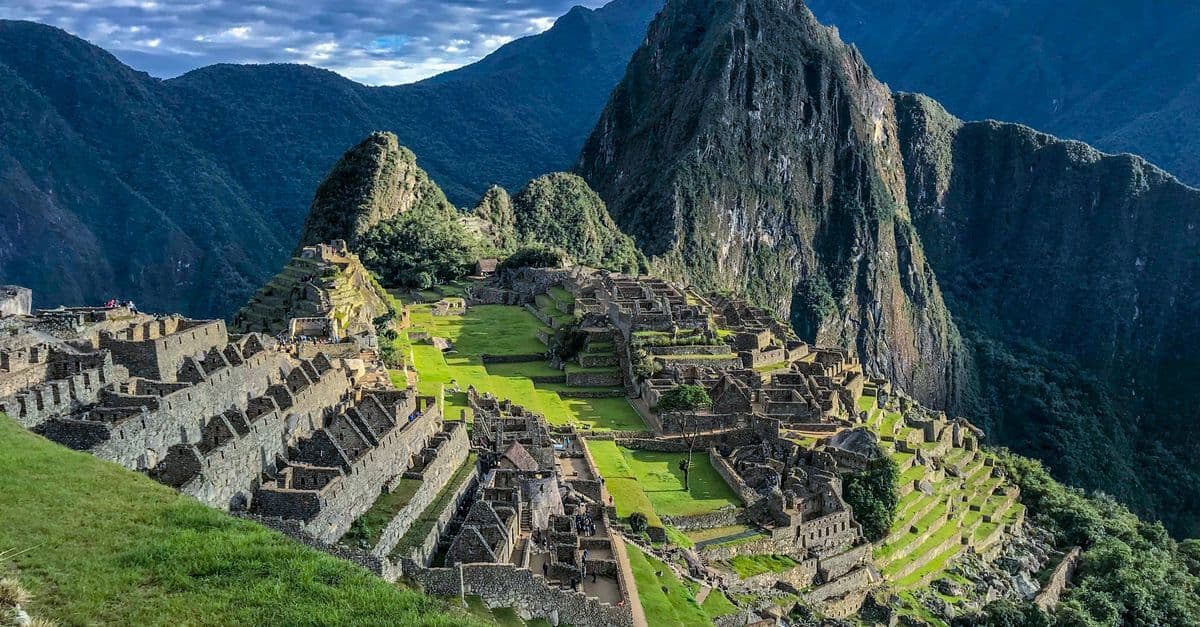
| Machu Picchu | The Inca citadel and Huayna Picchu | Train to Machu Picchu Pueblo: about 1 hour 45 minutes from Ollantaytambo or 3 hours 30 minutes from Poroy, near Cusco |
| Lake Titicaca (Puno) | The Uros reed islands and Taquile Island | About 1 hour 40 minutes by air to Juliaca, then about 40 minutes by road to Puno |
| Arequipa and the Colca Canyon | The colonial centre and Andean condors | About 1 hour 15 minutes by air to Arequipa, then 151 km (about 3 hours) by road to Chivay |
| The Amazon (Tambopata) | Rainforest wildlife and clay licks | About 1 hour 40 minutes by air to Puerto Maldonado, then about 2 hours by boat |
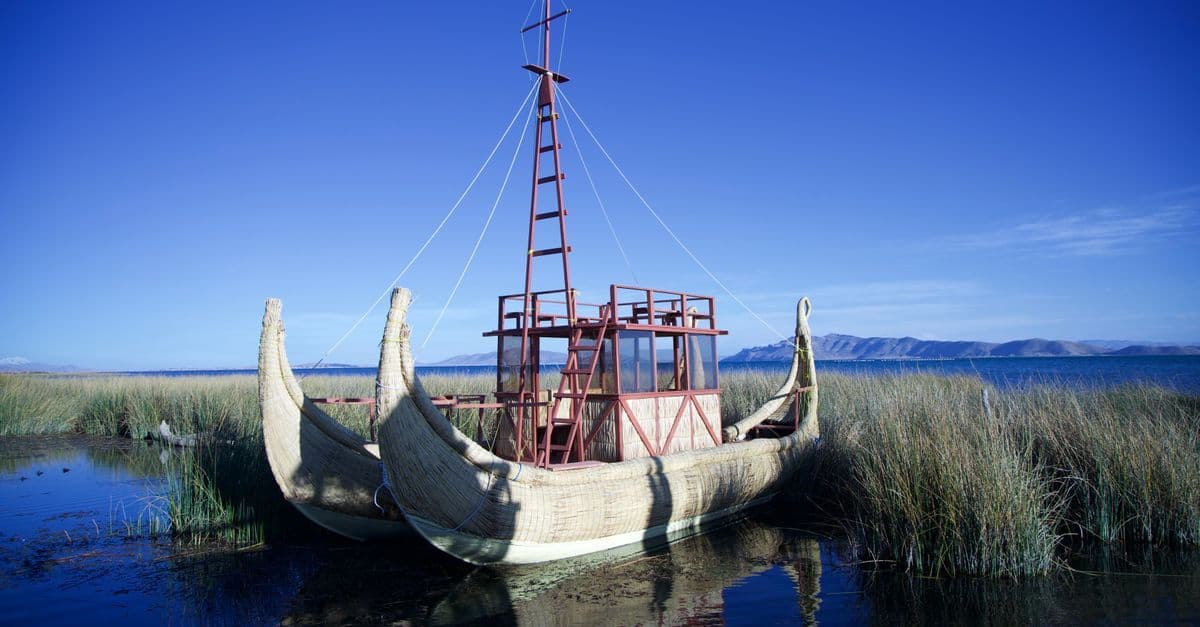
Lake Titicaca fits straight after Cusco without a trip back to Lima, because PeruRail's Titicaca train links Cusco and Puno. The Tambopata National Reserve, in the Madre de Dios region, sits at just 218 m above sea level, a sharp contrast with the highlands.
May to September is the dry season in the Andes
The FCDO says Peru's rainy season runs from November to May, with heavy rain and snow in the Andes, including Cusco. In its safety advice it warns that rockslides, mudslides and snow can disrupt roads, rail and walking routes in the Cusco region, including the routes to Machu Picchu. In Cusco itself, about four fifths of the year's rain falls from November to March, and May is already dry, as the table below shows.
The averages below come from SENAMHI, Peru's national weather service, as published by the World Meteorological Organization. Rain is the monthly total.
| Month | Cusco rain | Cusco night low | Lima daytime high | Iquitos rain |
|---|---|---|---|---|
| January | 145 mm | 6.6°C | 25.8°C | 266 mm |
| February | 134 mm | 6.5°C | 26.5°C | 210 mm |
| March | 107 mm | 6.2°C | 26.0°C | 317 mm |
| April | 43 mm | 4.9°C | 24.3°C | 292 mm |
| May | 9 mm | 2.5°C | 21.7°C | 292 mm |
| June | 2 mm | 0.3°C | 19.7°C | 190 mm |
| July | 4 mm | 0.1°C | 18.7°C | 187 mm |
| August | 9 mm | 1.6°C | 18.4°C | 174 mm |
| September | 22 mm | 3.9°C | 18.7°C | 210 mm |
| October | 39 mm | 5.5°C | 19.9°C | 254 mm |
| November | 72 mm | 6.1°C | 21.9°C | 287 mm |
| December | 123 mm | 6.4°C | 23.9°C | 301 mm |
Cusco's afternoons stay mild all year, at about 19°C to 21°C, but June and July nights average close to 0°C. Early starts and evenings in Cusco need warm layers.
April and October are shoulder months. Some tour operators recommend April to October as the drier season, but Cusco averages 43 mm of rain in April and 39 mm in October, several times the May to August figures.
Lima is the reverse of the mountains. It barely gets rain in any month, and its warmest weather runs from January to March, with highs around 26°C. The Amazon is wet all year: Iquitos, the capital of the Loreto region, averages more than 170 mm of rain in every month.
Keep a closer eye on the north coast in the 2026 to 2027 rainy season. On 23 September 2026, SENAMHI said it expects El Niño Costero rains in Tumbes, on the far north coast, from November 2026, possibly moderate to strong. It also expects above-average rain on parts of the north coast through Peru's summer of 2027.
PeruRail advises booking Machu Picchu trains at least 2 to 4 weeks ahead in its high season, which runs from June to August and from December to January. Cusco also hosts Inti Raymi, the Inca festival of the sun, on 24 June each year, according to PromPerú.
Machu Picchu tickets are timed, capped and sold in your name
Peru's Ministry of Culture sells entry to Machu Picchu through its Tu Boleto platform. On 22 September 2026 it switched the site to direct sale with confirmed payment. The ticket is issued in the visitor's name once payment goes through, and buyers started with 15 minutes to pay during a 30-day trial that could change that window.
The Ministry caps daily entry at 5,600 visitors in the high season and 4,500 in the low season. The Inca Trail network takes 750 people a day, and travel agencies remain part of the Inca Trail booking process.
Every ticket is for one circuit and one route. Since 1 June 2024 there have been 3 circuits with 10 routes between them, so choose your route before your date.
- Huayna Picchu (Waynapicchu) is Route 3-A, on Circuit 3.
- Machu Picchu Mountain is Route 1-A, on Circuit 1.
- The Intipunku and Inca Bridge routes on Circuit 1, and the Great Cavern and Huchuypicchu routes on Circuit 3, run only in the high season.
Each ticket also carries an entry hour, on the hour from 6am to 3pm. The Ministry's entry times give you 30 minutes' grace at the main gate, or 45 minutes from 1 June to 15 October and on 30 and 31 December. The gates for Machu Picchu Mountain, Huayna Picchu and Huchuypicchu allow no grace at all.
If online tickets for your date have gone, the Ministry sells 1,000 tickets a day in person at its office in Machu Picchu Pueblo. Those tickets are for entry the next day.
Your train ticket does not include entry to the site. PeruRail says it is one of two authorised train operators on the route to Machu Picchu Pueblo, also known as Aguas Calientes. Inca Rail also runs trains from Ollantaytambo, plus a bus and train service from Cusco.
Altitude should decide the order of your route
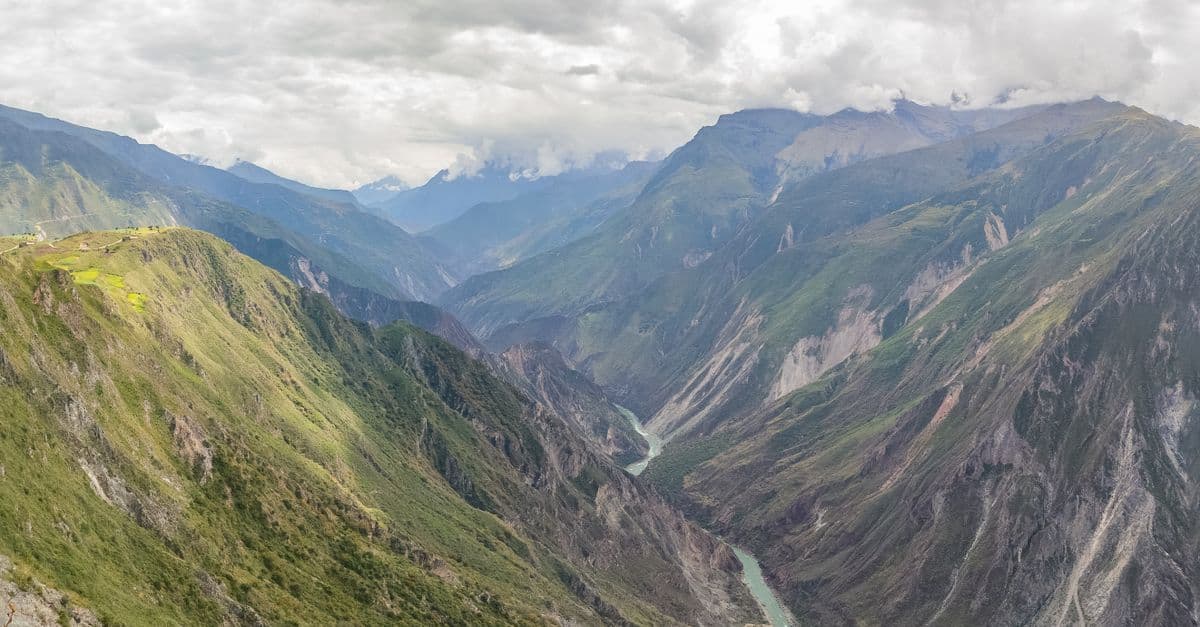
Cusco sits at 3,399 m. TravelHealthPro's Peru guidance, from the UK's National Travel Health Network and Centre (NaTHNaC), says altitude illness becomes a risk from 2,500 m. The FCDO calls altitude sickness a serious risk in parts of Peru, including Cusco, Puno, the Colca Canyon and Kuelap.
| Place | Height above sea level | Source |
|---|---|---|
| Tambopata National Reserve | 218 m | PromPerú |
| Machu Picchu | 2,430 m | TravelHealthPro |
| Pisac, Sacred Valley | 2,972 m | TravelHealthPro |
| Cusco | 3,399 m | TravelHealthPro |
| Lake Titicaca | 3,810 m | PromPerú |
| Puno | 3,827 m | TravelHealthPro |
| Inca Trail high point | About 4,200 m | TravelHealthPro |
| La Raya, on the Cusco to Puno train | 4,335 m | PeruRail |
TravelHealthPro advises spending a few days below 3,000 m first and, where possible, not going from under 1,200 m to over 3,500 m in a single day. It also advises climbing gradually above 3,000 m and not raising the height you sleep at by more than 500 m a day.
Machu Picchu and Pisac both sit below Cusco, so a route can start low in the Sacred Valley and reach Cusco afterwards. Flying from coastal Lima to Juliaca and sleeping in Puno, at 3,827 m, on the same day is the kind of jump the guidance warns against.
This is general guidance, not a plan for you. The FCDO advises checking vaccine recommendations at least 8 weeks before your trip, and a GP or travel clinic can also advise you on altitude. Ask about diseases spread by insect bites too: the FCDO reports a major dengue outbreak in Peru, and TravelHealthPro reports an ongoing outbreak of Oropouche virus disease.
UK passport holders can visit Peru for up to 90 days without a visa
As of October 2026, the FCDO's entry rules for Peru say you can travel to Peru without a visa for tourism or short visits on a full British citizen passport.
- You normally get permission to stay for up to 90 days in a 180-day period, counted from your first entry. Officers can grant up to 183 days in a 365-day period as a visitor.
- Your passport must have an expiry date at least 6 months after the day you arrive.
- At international airports, your entry is recorded digitally on a virtual Andean Migration Card (TAM). You can check your permitted stay on the Migraciones website.
- If you cross a land border, for example from Bolivia, get an entry stamp in your passport. The FCDO says you cannot leave Peru without one.
- You can bring one laptop and 2 mobile phones into Peru without paying tax.
These rules can change. Read the FCDO page before you book and again before you travel, and contact the Peruvian Consulate General in the UK if your trip is not a standard holiday.
Lima Airport charges a connection fee in one case. Since 7 December 2025, passengers who arrive on an international flight and fly on to another country pay US$11.86, which can be paid online before arrival. Lima Airport says the fee for domestic connections, such as Lima to Cusco, is not being charged for now.
The FCDO advises against all but essential travel to two areas of Peru
The FCDO's Peru warnings, read in October 2026, advise against all but essential travel to two areas. One is the Valley of the Apurímac, Ene and Mantaro rivers (VRAEM). The other is land within 20 km south of the Putumayo River and the Colombian border in the Loreto region, apart from the Amazon River itself and the triple border area from Caballococha to Santa Rosa de Yavari. It does not advise against travel to the rest of Peru.
Protests can disrupt plans with little notice. The FCDO says they can block roads, that trains in the south, including services to and from Machu Picchu, are sometimes suspended, and that taking part in political activity is illegal for foreigners.
Street crime, including mugging and theft, is a significant problem in Lima, Cusco, Arequipa and other major cities, according to the FCDO. It advises using licensed phone or app-based taxis rather than hailing one in the street, and not using your phone at the roadside, where motorbike riders may snatch it. At Jorge Chávez airport, Lima Airport's authorised taxi counters sit in both the national and international arrivals halls.
If you plan a flight over the Nazca Lines, the FCDO says to check that the airline is licensed and has a good safety record before you book. For advice on tour operators and routes, it points travellers to iPerú, the tourism board's information service.
Mobile data in Peru is easiest to set up before you fly
A HelloRoam Peru plan runs on Claro's network in Peru. Your plan starts when your phone first connects to a local network after you land, so you can install it at home days before you fly. If you are still weighing it up against your UK network's roaming, we compare eSIM and roaming for UK travellers side by side.
First, confirm your phone can use eSIM. Then follow our guide on how to install an eSIM, which covers iPhone and Android.
If your trip crosses into Bolivia at Lake Titicaca, or carries on to Chile or Ecuador, a HelloRoam regional plan for South America covers those countries as well as Peru, so one eSIM works across the borders. In Peru that plan uses Claro and Movistar, and in Bolivia it uses Tigo.
Before a trek or a stay at a rainforest lodge, check your route on Checa tu señal, the coverage map run by OSIPTEL, Peru's telecoms regulator. You pick a place, an operator and a technology from 2G to 5G, and the map shows the area that operator says it covers. Operators report the data every quarter, and the map shows the date of its latest upload.
On an escorted tour with hotel Wi-Fi, your guide handles transfers and you may need little mobile data. Travelling on your own, you will use your phone for taxis, train tickets and maps every day. To size a plan, estimate how much data you need.
Peru's national holidays include Fiestas Patrias in late July
Peru's government publishes its national public holidays (feriados) on its official holiday list. These were the 2026 dates. Easter falls on different dates each year, so check the list for the year you travel.
| Date in 2026 | Holiday |
|---|---|
| 1 January | New Year's Day |
| 2 and 3 April | Holy Thursday and Good Friday (Semana Santa) |
| 1 May | Labour Day |
| 7 June | Battle of Arica and Flag Day |
| 29 June | St Peter and St Paul |
| 23 July | Peruvian Air Force Day |
| 28 and 29 July | Independence holidays (Fiestas Patrias) |
| 6 August | Battle of Junín |
| 30 August | Santa Rosa de Lima |
| 8 October | Battle of Angamos |
| 1 November | All Saints' Day |
| 8 December | Immaculate Conception |
| 9 December | Battle of Ayacucho |
| 25 December | Christmas Day |
Fiestas Patrias, on 28 and 29 July, falls inside PeruRail's June to August high season. If you travel that week, book trains and Machu Picchu entry early.
Questions travellers ask
Do I need a yellow fever vaccine for Peru?
TravelHealthPro says Peru has no yellow fever certificate requirement. It recommends the vaccine from 9 months of age for areas below 2,300 m in listed regions, including Madre de Dios and Loreto, but not for trips limited to Lima, Cusco city, Puno city, Machu Picchu and the Inca Trail. Ask a travel clinic at least 8 weeks before you go.
What is the time difference between the UK and Peru?
Peru is 5 hours behind the UK from late October to late March, while the UK is on GMT, and 6 hours behind during British Summer Time. Peru itself never moves its clocks: its official time is UTC minus 5, with no summer time.
What number do I call in an emergency in Peru?
The FCDO lists 105 for the police, 106 for an ambulance and 116 for the fire service. It also advises contacting your travel insurer quickly if you are referred to a hospital or clinic, and carrying ID, because Peruvian police may ask to see it.
Sources
- FCDO: Peru travel advice, entry requirementsgov.uk
- FCDO: Peru travel advice, warnings and insurancegov.uk
- FCDO: Peru travel advice, safety and securitygov.uk
- FCDO: Peru travel advice, healthgov.uk
- FCDO: Peru travel advice, getting helpgov.uk
- TravelHealthPro (NaTHNaC): Perutravelhealthpro.org.uk
- World Meteorological Organization: Cuzco climate (SENAMHI data)worldweather.wmo.int
- World Meteorological Organization: Lima climate (SENAMHI data)worldweather.wmo.int
- World Meteorological Organization: Iquitos climate (SENAMHI data)worldweather.wmo.int
- SENAMHI: preparation for the 2026-2027 rainy season in Tumbes in the context of El Niño (23 September 2026)gob.pe
- Ministerio de Cultura: direct ticket sales for Machupicchu and the Inca Trail network (22 September 2026)gob.pe
- Ministerio de Cultura: Tu Boleto, Llaqta de Machupicchutuboleto.cultura.pe
- Machupicchu official site: circuits and routesmachupicchu.gob.pe
- Machupicchu official site: purchase of tickets in personmachupicchu.gob.pe
- PeruRail: trains to Machu Picchu, FAQperurail.com
- PeruRail: PeruRail Titicacaperurail.com
- Inca Railincarail.com
- PromPerú: Cuscoperu.travel
- PromPerú: Limaperu.travel
- PromPerú: Punoperu.travel
- PromPerú: Lake Titicacaperu.travel
- PromPerú: Colca Canyonperu.travel
- PromPerú: Tambopata National Reserveperu.travel
- PromPerú: Machu Picchuperu.travel
- PromPerú: Inti Raymiperu.travel
- Lima Airport: airport fees (TUUA)lima-airport.com
- Lima Airport: authorised taxislima-airport.com
- Migraciones: check your virtual TAMmigraciones.gob.pe
- OSIPTEL: Checa tu señal mobile coverage maposiptel.gob.pe
- gob.pe: national holidays 2026 (upcoming)gob.pe
- gob.pe: national holidays 2026 (past)gob.pe
- PromPerú: About Peruperu.travel
- GOV.UK: when do the clocks changegov.uk
- Machupicchu official site (DDC Cusco): entry times (Horarios de ingreso)machupicchu.gob.pe
- INACAL: official time of Peru (Hora Oficial del Perú, UTC -5)inacal.gob.pe
Written by
HelloRoam Team
The HelloRoam Team writes our guides on trip planning, visas and eSIMs. For every new or updated guide, we check each fact at its source. Sources include government, park and weather service pages. We note the date we read each one. A second review then checks every fact against its source before the guide goes live. If we cannot confirm a fact, we leave it out. We link those sources inside the guide, so you can check them.