For tourists, the risk Canada describes is mostly crime: phones and bags snatched in cities, express kidnappings that often start in a taxi, and drinks spiked to rob or assault. Several countries also have regions Canada says to avoid, and those matter more to your route than the national level.
Levels can change quickly. Check each country's page in Canada's official travel advice and advisories when you book and again before you fly. The "Latest updates" line at the top of each page shows what changed. Updates can come mid-trip, too. A HelloRoam South America eSIM gets you online as soon as you arrive, so you can recheck those pages, open maps and message home while you're away.
Canada rates most of the continent at a high degree of caution
Global Affairs Canada uses four levels. The lower two are advice. "Take normal security precautions" means the care you'd take at home in Canada. "Exercise a high degree of caution" means there are real security concerns or the situation could change quickly. The upper two, "avoid non-essential travel" and "avoid all travel", are formal travel advisories, and they can cover one region of a country rather than all of it.
| Country | Canada's national level | Regions with a different level |
|---|---|---|
| Argentina | Take normal security precautions | High degree of caution in Greater Buenos Aires and Rosario |
| Bolivia | Exercise a high degree of caution | Avoid all travel to the Chapare Region, including Villa Tunari |
| Brazil | Exercise a high degree of caution | Avoid all travel to Complexo da Maré and Complexo da Penha in Rio de Janeiro; avoid non-essential travel within 20 km of most land borders and 50 km of Venezuela's (not the borders with Argentina and Uruguay, and not Pantanal National Park) |
| Chile | Exercise a high degree of caution | None |
| Colombia | Exercise a high degree of caution | Avoid all travel to several departments and border strips; avoid non-essential travel to others, including the cities of Cúcuta and Popayán; normal precautions on Providencia and in the town of San Andrés |
| Ecuador | Exercise a high degree of caution | Avoid all travel within 20 km of the Colombian border (except the Pan-American Highway to the Tulcán crossing) and near minefields on the Peruvian border; avoid non-essential travel to Esmeraldas province, Machala, Durán and parts of Guayaquil, among others; normal precautions in the Galápagos |
| Guyana | Exercise a high degree of caution | None |
| Paraguay | Exercise a high degree of caution | None |
| Peru | Exercise a high degree of caution | Avoid all travel to the VRAEM valleys; avoid non-essential travel to the Upper Huallaga Valley and within 20 km of the Colombian and Ecuadorian borders (the Tumbes crossing and Pan-American Highway excepted) |
| Suriname | Take normal security precautions | None |
| Uruguay | Take normal security precautions | High degree of caution in Montevideo |
| Venezuela | Avoid all travel | Applies to the whole country |
| French Guiana (France) | Take normal security precautions | None |
| Falkland Islands | Take normal security precautions | None |
Regional warnings matter more than the national level
Two favela complexes in Rio de Janeiro, Complexo da Maré and Complexo da Penha, are the only places in Brazil under Canada's "avoid all travel" advice. The reasons given are very high rates of violent crime, frequent large-scale police operations and difficulty getting emergency help. The rest of Rio sits at the national level, but Canada's advice for Brazil says favelas are not safe for outsiders, even with a local guide. Tourists have been killed after wandering into one on foot or by following GPS directions while driving. It also warns of "arrastões", mass robberies in which groups swarm beaches, traffic jams, shopping centres and restaurants.
Colombia's regional list is long. Canada advises against all travel to Arauca and to most of Caquetá, Cauca and Chocó. The same advice covers the Port of Tumaco, the city of Buenaventura and strips along the borders with Venezuela, Ecuador and Panama. The regional lists don't name Bogotá, Medellín or Cartagena, so the national level applies there. Canada does name those three cities among the places where dating-app and scopolamine crimes happen most, and it says to avoid vulnerable neighbourhoods known as "comunas", even on a guided tour. Where the Colombia advisory carves a city out of a riskier department, such as Cali in Valle del Cauca, it tells you to get there by air.
Ecuador's warnings reach into Guayaquil. Canada advises against non-essential travel to named neighbourhoods in northern and southern Guayaquil, and to Durán in the same province of Guayas. The Galápagos Islands, by contrast, sit at the lowest level.
In Peru, the "avoid all travel" zone is the VRAEM, the valleys of the Apurímac, Ene and Mantaro rivers. Canada's Peru page lists the provinces and districts it covers, including the provinces of Abancay and Andahuaylas in Apurímac and three districts of Cusco's La Convención province, so check any overland route against that list. In Bolivia, Canada advises against all travel to the Chapare Region, including Villa Tunari and the major highway routes that cross it.
Two of the three lowest-rated countries still have city exceptions. Canada asks for a high degree of caution in Greater Buenos Aires because of petty crime and muggings, and in Rosario because of a rise in homicides linked to drug-related organized crime. In Buenos Aires's La Boca, the advice is to stay on Caminito Street and avoid the area after dark. In Uruguay, Montevideo carries the higher level, and from December to March criminals tend to move to summer spots such as Punta del Este, Rocha and Colonia del Sacramento.
Argentina, Uruguay and Suriname carry Canada's lowest level
By Canada's measure, the safest country in South America is a three-way tie. Argentina, Uruguay and Suriname are the only independent countries at "take normal security precautions". Suriname is the only one of the three with no regional exception, though its page notes that police presence outside Paramaribo is scarce. French Guiana, part of France, and the Falkland Islands also sit at the lowest level.
Chile often appears beside Argentina and Uruguay on "safest" lists, but Canada rates all of Chile one level higher, citing ongoing demonstrations, civil unrest and crime. Its page also notes that small explosive devices occasionally go off in Santiago. Ecuador is the other surprise. Some travel blogs still describe it as low-crime, while Canada's Ecuador page says express kidnappings have increased significantly since 2022 and that the country is in a state of "internal armed conflict".
Common comparisons look different on Canada's scale
Brazil and Colombia share a level, not the same risks
Neither is safer on paper, since both sit at "exercise a high degree of caution". The difference is where the risk sits. Colombia's formal advisories cover whole departments, border strips and several cities, while Brazil's "avoid all travel" advice covers two Rio neighbourhoods. In Brazil's cities, Canada describes regular robberies, often with guns or knives, and a rise in spiked food and drinks, particularly in Rio de Janeiro. In Colombia, it says express kidnappings are frequent and that criminals use dating apps to lure foreigners.
Argentina sits one level below Mexico
Mexico isn't in South America, but people often weigh the two. Canada rates Mexico at "exercise a high degree of caution" because of high levels of criminal activity and kidnapping. It also advises against non-essential travel to parts of more than a dozen Mexican states. Argentina sits at "take normal security precautions", with the higher level only in Greater Buenos Aires and Rosario.
If Central America is on your list too, Canada rates Costa Rica at "exercise a high degree of caution" due to crime, the same national level as most of South America.
The scams Canada warns about follow a few scripts
Each scam below appears on at least one of Canada's country pages, and most appear on several. One instruction repeats on the pages for Argentina, Bolivia, Brazil, Chile, Colombia, Ecuador and Peru: if you're robbed or threatened, don't resist.
| Scam | Where Canada reports it | What Canada advises |
|---|---|---|
| Stain or distraction theft: someone sprays or spills a substance on you, then robs you while helping clean it | Argentina, Bolivia, Chile, Peru | Be suspicious of strangers who approach you; keep your bag in front of you |
| Motorcycle snatch: thieves on motorbikes grab phones and bags, sometimes from a taxi | Argentina, Brazil, Chile, Colombia, Peru, Uruguay | Don't use your phone while walking on the street; keep car windows closed |
| Express kidnapping: you're held for hours and forced to withdraw cash or send bank transfers | Argentina, Bolivia, Brazil (Rio area), Chile, Colombia, Ecuador, Peru | Use reputable taxi companies or ride-sharing apps; the pages for Bolivia, Chile, Colombia, Ecuador and Peru also say not to hail taxis on the street |
| Spiked food, drinks, gum or cigarettes, sometimes with scopolamine | Argentina, Bolivia, Brazil, Chile, Colombia, Ecuador, Paraguay, Peru | Never leave food or drinks unattended; don't accept snacks, drinks, gum or cigarettes from new acquaintances |
| Dating-app lure: a match builds trust, then drugs and robs the victim | Argentina, Brazil, Colombia | Avoid isolated meeting places; don't bring new acquaintances to your accommodation |
| Fake police: people posing as officers ask to check your documents, cash or bags | Bolivia, Colombia, Peru | Ask to see official ID; offer to show documents at a police station or your hotel |
| Virtual kidnapping: a caller claims to have kidnapped a family member or friend, sometimes using a stolen phone, and demands money | Paraguay, Peru | Lock your phone with a password and never leave it unattended |
| Phone and text scams asking for personal or financial details | Chile | Never share those details by phone; don't click links in texts from unknown numbers |
| Card tricks: inflated bills, and taxi card readers with no readable display | Chile, Colombia | Ask for a printed price list; at airports, prepay your taxi at an official stand inside the terminal |
| Counterfeit soles and U.S. dollars | Peru | Avoid street moneychangers |
| Package favour: someone you met asks you to carry a bag or package out of the country | Brazil | Be wary of anyone who asks you to carry a package for them |
Your phone is both a target and a safety tool
Canada's advice keeps coming back to the phone in your hand. Thieves target it. Chile's page says not to use it while walking on the street, and Peru's warns that motorists snatch phones at the roadside and through open car windows. In Peru, stolen phones are also used for virtual kidnapping calls to the owner's family, so lock yours with a password.
The same phone is how Canada expects you to get around more safely. Its pages for Brazil, Chile, Colombia and Peru point you to reputable taxi companies or ride-sharing apps, and the Chile, Colombia and Peru pages also say not to hail taxis on the street. The Brazil and Bolivia pages add a step: confirm the driver's identity and licence plate before you get in. Ecuador's page goes further, telling you to find a signal in a remote area and call 911 so authorities can locate your phone.
Two limits are worth knowing. Coverage thins out in the countryside, and Canada's pages for Brazil and Paraguay both say mobile service may be limited in remote or rural areas. App rides aren't everywhere either: in Bolivia, ride-sharing services are not available in many cities, and Canada points instead to registered radio taxis you can call from a hotel or a landline.
Public Wi-Fi carries its own risk. Canada's Brazil page warns that criminals can compromise public Wi-Fi networks to steal personal data or card details. Global Affairs Canada's advice for travelling with electronic devices says not to log into banking or other sensitive accounts on public Wi-Fi, and to use a VPN if you have to connect.
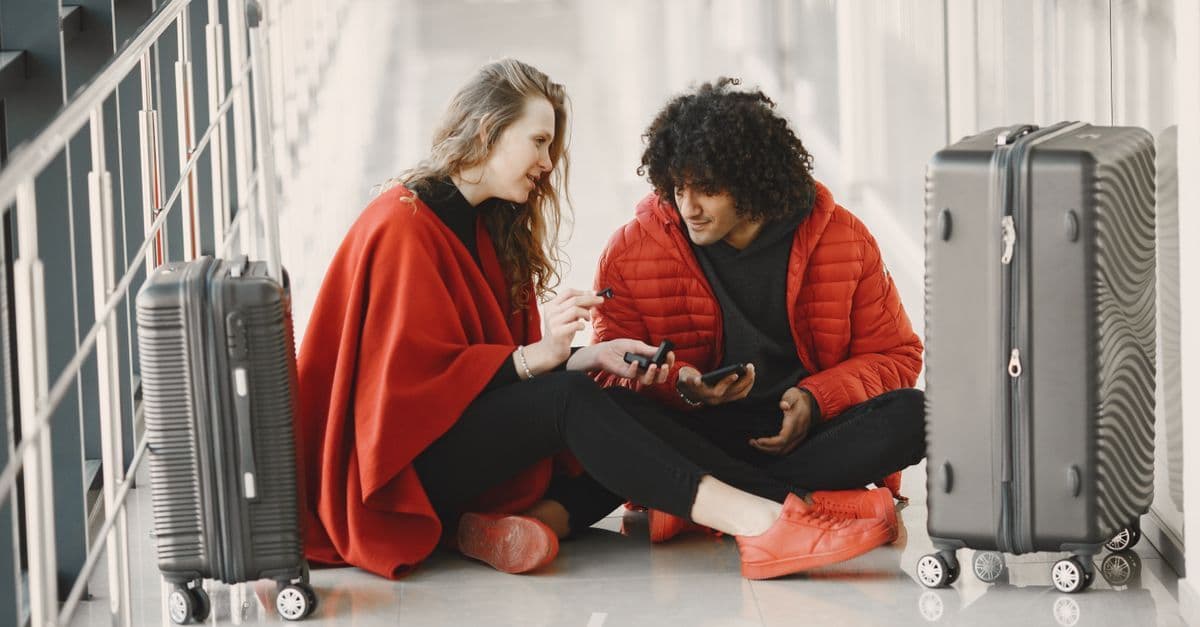
Set up mobile data before you land
All of this works best if your phone is online the moment you clear customs, before you need a ride or a map. Install the eSIM in Canada while you're on Wi-Fi, then switch it on when you land. With HelloRoam, one eSIM keeps working across the borders of every country in a regional plan, and our support team answers 24/7.
A route from Lima to La Paz to Buenos Aires, for example, stays on one plan. Before you buy, check that every stop on your own trip appears in the country list of our South America data plans.
You don't have to give up your Canadian number. Apple's Dual SIM guide says an iPhone XS, XS Max, XR or later can run two lines at once: your home number for calls and texts, and a travel line for data. Using two carriers needs an unlocked phone. Family can still reach your usual number; ask your carrier what incoming calls and texts cost while you're away.
Emergency numbers and the nearest Canadian office
| Country | Emergency numbers | Nearest Canadian office |
|---|---|---|
| Argentina | 911 for police and fire; ambulance 107 in Buenos Aires, 911 elsewhere | Embassy in Buenos Aires |
| Bolivia | Police 110, fire 119, ambulance in La Paz 165 | Embassy in La Paz |
| Brazil | 911, or police 190, ambulance 192, fire 193 | Embassy in Brasília; consulates general in Rio de Janeiro and São Paulo |
| Chile | Police 133, ambulance 131, fire 132 | Embassy in Santiago |
| Colombia | 123 | Embassy in Bogotá; consulate in Cartagena |
| Ecuador | 911 | Embassy in Quito |
| Guyana | Police 911, ambulance 913, fire 912 | High Commission in Georgetown |
| Paraguay | 911 | Honorary consul in Asunción; embassy in Buenos Aires |
| Peru | Police 105, ambulance and fire 116, tourist police on WhatsApp +51 980 122 335 | Embassy in Lima |
| Suriname | Police 115, ambulance 113, fire 110 | Honorary consul in Paramaribo; High Commission in Georgetown |
| Uruguay | Police 911, ambulance 105, fire 104 | Embassy in Montevideo |
| Venezuela | 911 | No office in the country; the embassy in Bogotá covers it |
| French Guiana | 112 | Embassy in Paris |
| Falkland Islands | 999 | High Commission in London |
Canadian citizens can reach the Emergency Watch and Response Centre in Ottawa at any hour. Call +1-613-996-8885 (collect where available), email sos@international.gc.ca, text +1-613-686-3658, or send a message on WhatsApp to +1-613-909-8881 or on Signal to +1-613-909-8087. Canada also lists toll-free lines to the centre from Brazil (0-800-891-6614) and Peru (001-800-387-3124).
Women travelling alone face risks Canada spells out
Canada's country pages are direct about this. Ecuador's reports attacks and sexual assault against foreign women, including rape and murder, particularly in tourist areas, and notes that women travelling in pairs have also been targeted. Bolivia's reports sexual assaults on women travellers, including on guided tours, and Argentina's says women hiking and cycling alone have been assaulted. Peru's says sexual assaults, including rape, occur throughout the country, and that tour guides have been implicated in some cases. In Colombia, Canada links a rise in deaths to criminals who use dating apps to find foreigners travelling alone.
Global Affairs Canada's advice for women travellers adds practical steps. Share your plans with family or friends, and avoid posting your exact location on social media. Carry a fully charged phone with the Emergency Watch and Response Centre and the nearest Canadian office saved in it. Ecuador's page also advises against couch-surfing and similar hospitality exchanges.
Elections and unrest can change the advice quickly
A few warnings on Canada's pages are about current events rather than everyday crime. Canada's Brazil page flags the general elections of October 4, 2026, and a possible second round on October 25, with political gatherings, demonstrations and extra security expected before, during and after the vote.
Ecuador is in a state of "internal armed conflict", with a state of exception in provinces that include Guayas and Pichincha, home to Guayaquil and Quito. Under it, security forces can search homes and read private mail and phone records, so carry your ID at all times. Peru has states of emergency in Lima, Callao and several other provinces to curb a rise in violent crime.
In Bolivia, demonstrations often start with little or no notice, and strikes bring roadblocks that can complicate overland plans. Chile declared a state of emergency in parts of Araucanía and Biobío in 2022 and reviews it every 30 days. Venezuela stays at "avoid all travel": Canada's embassy there has not been open since 2019, and its ability to help Canadians in the country is severely limited.
Questions travellers ask
Is the Galápagos safer than mainland Ecuador?
On Canada's scale, yes. Global Affairs Canada rates the Galápagos Islands at "take normal security precautions", one level below mainland Ecuador. Its Ecuador page also warns that a serious medical problem on the islands may need an evacuation that can take up to 48 hours, because no air ambulance is based there.
Does Canada's advice for Peru cover Cusco and Machu Picchu?
Neither Cusco city nor Machu Picchu is on Canada's regional advisory lists for Peru, so the national "exercise a high degree of caution" level applies. Canada does name Cusco among the cities where petty crime is frequent, and three districts of Cusco's La Convención province fall inside the VRAEM "avoid all travel" zone. It also reports assaults on the Inca Trail, where it says to hike in groups, and warns that strikes can disrupt travel to and from isolated sites such as Machu Picchu.
Should I register my South America trip with the Government of Canada?
Registration of Canadians Abroad is free and optional. It lets the Government of Canada contact you about an emergency where you are, such as a natural disaster or civil unrest, or about a personal emergency at home. Canada encourages it for holidays as well as longer stays, and one account can include your co-travellers.
Sources
- Global Affairs Canada: Travel advice and advisoriestravel.gc.ca
- Global Affairs Canada: Argentina travel advicetravel.gc.ca
- Global Affairs Canada: Bolivia travel advicetravel.gc.ca
- Global Affairs Canada: Brazil travel advicetravel.gc.ca
- Global Affairs Canada: Chile travel advicetravel.gc.ca
- Global Affairs Canada: Colombia travel advicetravel.gc.ca
- Global Affairs Canada: Ecuador travel advicetravel.gc.ca
- Global Affairs Canada: Guyana travel advicetravel.gc.ca
- Global Affairs Canada: Paraguay travel advicetravel.gc.ca
- Global Affairs Canada: Peru travel advicetravel.gc.ca
- Global Affairs Canada: Suriname travel advicetravel.gc.ca
- Global Affairs Canada: Uruguay travel advicetravel.gc.ca
- Global Affairs Canada: Venezuela travel advicetravel.gc.ca
- Global Affairs Canada: French Guiana travel advicetravel.gc.ca
- Global Affairs Canada: Falkland Islands travel advicetravel.gc.ca
- Global Affairs Canada: Mexico travel advicetravel.gc.ca
- Global Affairs Canada: Costa Rica travel advicetravel.gc.ca
- Global Affairs Canada: Request emergency assistance outside Canadatravel.gc.ca
- Global Affairs Canada: Registration of Canadians Abroadtravel.gc.ca
- Global Affairs Canada: Advice for women travellerstravel.gc.ca
- Apple Support: Using Dual SIM with an eSIMsupport.apple.com
- Global Affairs Canada: Cyber security while travellingtravel.gc.ca
Written by
HelloRoam Team
The HelloRoam editorial team writes about eSIM technology, travel connectivity, and mobile data tips for international travelers.