

Mobile data is the easiest job to tick off at home: set up a HelloRoam travel eSIM for your destination before you leave, and switch it on when you land.
We checked every rule in this list in October 2026, on Smartraveller, the Australian Passport Office, Home Affairs, CASA and the other pages named below. Rules change, so check each official page again before you fly.
Your international travel checklist, in order
Here's every job with the timing its official source gives. If you'd rather tick boxes on paper, Smartraveller publishes a free printable Before you go checklist (PDF, February 2026).
| Job | When | Who says so |
|---|---|---|
| Subscribe to Smartraveller travel advice for each destination | As soon as you're thinking about heading overseas | Smartraveller |
| Check your passport is valid for at least 6 months beyond the end of your trip | Before you book; allow at least 6 weeks for a new passport | Smartraveller; Australian Passport Office |
| Get the right visa or travel authorisation for every country, transits included | As soon as you start planning your route | Smartraveller; US Customs and Border Protection (ESTA) |
| Get a basic health check and the recommended vaccinations | At least 8 weeks before you go | Smartraveller |
| Buy travel insurance, read the PDS and check what your credit card still covers | Before you travel | Smartraveller |
| Tell your bank, check your cards work and carry more than one way to pay | Before you go | Smartraveller |
| Copy key documents, print your bookings and write down emergency contacts | Before you go | Smartraveller |
| Check dangerous goods rules and your airline's baggage rules | Before you pack | Smartraveller; CASA |
| Install your travel eSIM over Wi-Fi | Before you fly | Our install guide |
Passport: six months left after your trip, and six weeks to renew
Smartraveller's checklist asks you to confirm your passport is valid for at least six months beyond the end of your trip. Smartraveller's passport advice adds that some countries refuse entry unless your passport is valid for six months after you leave them, some airlines apply the same rule, and it can apply when you're only transiting.
Need a new one? The Australian Passport Office says to allow at least six weeks from when you lodge your application, and a 10-year adult passport costs $422. Faster processing costs extra on top of that fee: $107 for Fast Track (5 business days) or $308 for Priority (2 business days), with fees as of 1 January 2026. Those times don't include postage and not every application qualifies, so check the Passport Office's urgent travel options before you book flights.
Every traveller needs their own passport, children included.
Visas and travel authorisations for every country on your route

Get the right visa for every country you visit or transit through. Visa conditions often change, so Smartraveller's essentials checklist tells you to check with each country's embassy or consulate before every trip.
Some popular trips need an online authorisation before you fly, and Europe has one planned:
- UK: Australians usually need an electronic travel authorisation (ETA) rather than a visa, and every traveller needs one, babies and children included. Apply on the official GOV.UK ETA page, since other websites may charge more. Our guide to the UK ETA for Australians walks through the steps.
- US: Australia is in the Visa Waiver Program, which needs an approved ESTA before you board a plane or ship to the US. US Customs and Border Protection recommends you apply for an ESTA as soon as you start planning, ideally before you buy flights. You need an ePassport, and every Australian passport is one except an emergency passport.
- Europe: the EU's ETIAS travel authorisation isn't in operation yet, and no applications are being collected. The EU says it will announce the start date several months ahead, so check the official ETIAS website before a Europe trip. The EU's Entry/Exit System is already running. The first time you cross a border that uses it, officers take a photo of your face, scan your fingerprints or both, and your passport isn't stamped.
- Bali and Vietnam: our Bali visa options for Australians and Vietnam e-visa guide for Australians go through each step.
Travel insurance and health checks to finish early

Smartraveller says the right travel insurance is as essential as a passport for travel overseas. Medical care is usually the biggest unexpected cost for Australians abroad, and most countries won't give you free or subsidised treatment.
Read the Product Disclosure Statement (PDS) before you buy. Check your activities are covered, since skiing, scuba diving, hiking and riding a motorcycle often need extra cover, and tell your insurer about every pre-existing health condition.
Don't lean on your credit card. On 1 October 2026 Smartraveller warned that several major Australian banks are reducing or removing complimentary credit card travel insurance, existing cards included, so check your card's current PDS before you rely on it.
Book a basic health check at least eight weeks before you go and get the recommended vaccinations. Check your medicine is legal and available at your destination, take enough for the whole trip, and carry copies of your prescription and a letter from your doctor. Pack a travel first aid kit, plus insect repellent if you're going somewhere with insect-borne diseases.
At airport security, Home Affairs lets you carry a reasonable amount of medicine for the flight, but you may need to show proof such as a doctor's letter, and the name on a prescription label must match your boarding pass. Smartraveller suggests splitting essential medicine between your carry-on and checked bags in case one goes missing.
Money, copies and contacts to sort before you leave
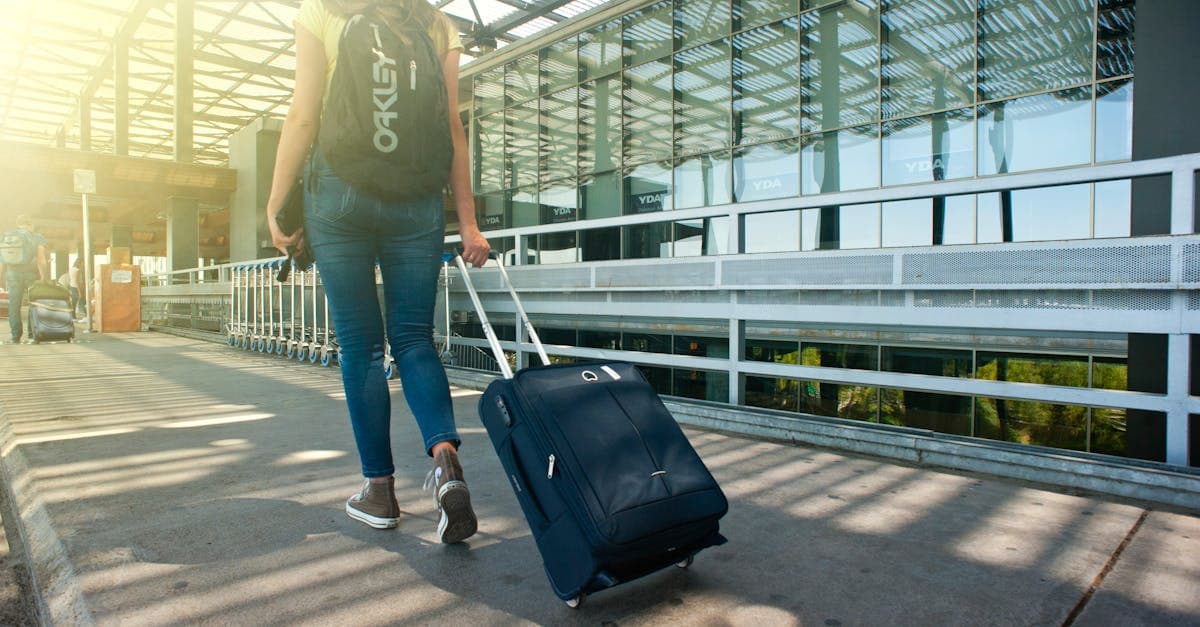
Smartraveller no longer asks you to register your trip. Instead, subscribe to Smartraveller updates for each destination and you'll get an email whenever its travel advice changes.
- Tell your bank you're travelling, check your cards will work, and carry more than one way to pay.
- Check how much local and foreign currency you can bring into your destination.
- Photocopy your passport ID page, visa, prescriptions and insurance policy. Take one set and leave one with someone you trust.
- Keep hard copies of flight, accommodation and event bookings in case you lose your phone.
- Share your itinerary with family or friends, and tell them when you might be out of contact.
- Write your emergency contacts on paper, including DFAT's 24-hour Consular Emergency Centre: +61 2 6261 3305 from overseas.
Carry-on rules at Australian airports: liquids, power banks and medicine
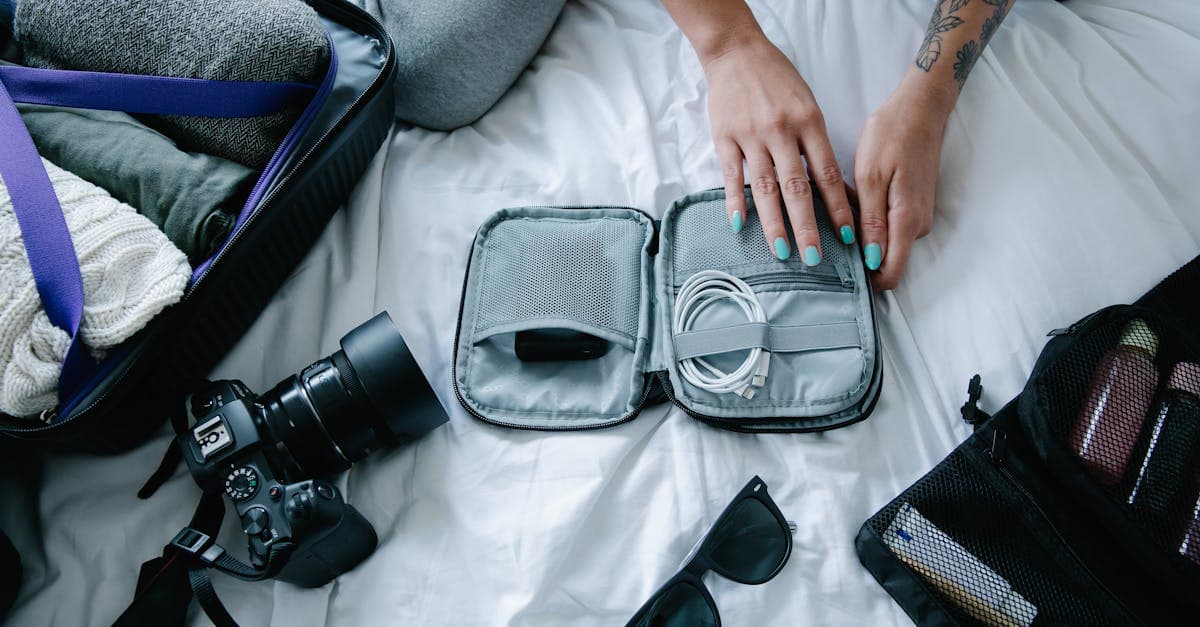
On international flights from Australia, Home Affairs' liquids rules limit each liquid, aerosol or gel in your carry-on to 100 mL or 100 g. Everything must fit in one clear, resealable bag whose four sides add up to 80 cm or less, such as a 20 x 20 cm snap-lock bag, and you get one bag each. The same rules apply on a domestic leg that leaves from an international terminal.
The list is wider than drinks. Creams, toothpaste, sunscreen spray, honey and Vegemite all count, and a half-empty 200 g tube still isn't allowed. Inorganic powders, such as salt scrub and some talcum powders, are capped at 350 mL or 350 g in total per person. Organic ones, such as coffee and baby formula, have no limit. Duty free stays in its sealed bag with the receipt.
CASA's lithium battery rules say spare batteries and power banks go in the cabin, never in checked luggage. Batteries from 100 Wh to 160 Wh need airline approval, and anything over 160 Wh can't go in passenger bags, mobility aids aside. A phone or laptop can travel in a checked bag only if it's fully switched off, not asleep, and protected from damage.
Airlines add their own limits. Qantas and Jetstar allow up to two power banks per person and don't let you use or charge them during the flight, and the Qantas power bank rules cap each one at 160 Wh. No Wh rating on yours? CASA's formula is volts x mAh / 1000, so a 3.7 V, 20,000 mAh power bank works out at 74 Wh.
| Item | Carry-on | Checked bag |
|---|---|---|
| Power banks and spare batteries | Yes, and your airline may cap the number | No |
| Phones, laptops and cameras | Yes | Only if fully switched off and protected |
| Liquids, aerosols and gels over 100 mL or 100 g | No | Yes, unless they're dangerous goods |
| Medicine | A reasonable amount for the flight, with proof if asked | Yes; Smartraveller suggests splitting essential medicine across both bags |
| Lithium batteries over 160 Wh (mobility aids aside) | No | No |
Not sure about something? The Australian Border Force's advice on liquids is simple: if in doubt, pack it in your checked bag. For anything else, check your airline's baggage rules before you pack.
Packing clothes: the 5-4-3-2-1 rule as a starting point

Smartraveller's packing advice is short: pack for the weather and your planned activities, take any protective gear you need, and check for cultural expectations around clothing, especially at religious sites.
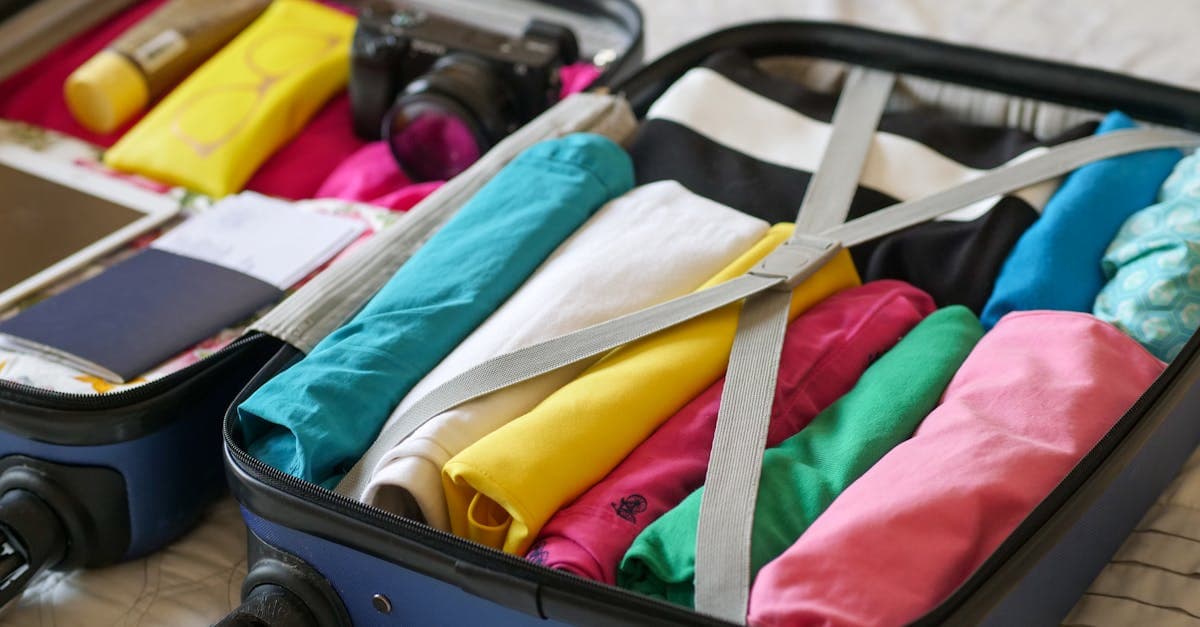
For the clothes themselves, the 5-4-3-2-1 rule is a handy cap. Stylist magazine credits blogger Geneva Vanderzeil, who came up with it in 2015, with this version: five tops, four bottoms, three dresses, three pairs of shoes, two swimwear items, two bags, one hat, one watch or accessory, and one pair of sunglasses.
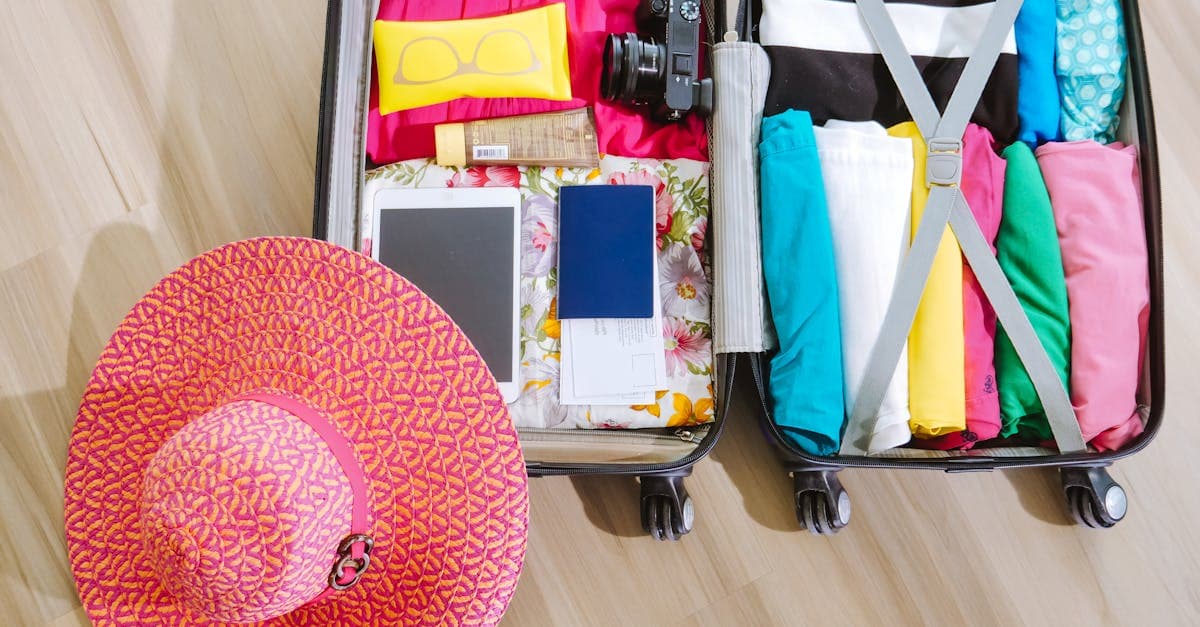
Treat it as a starting point, not a rule. Stylist notes that the five tops include any outerwear, such as a light jacket, and the bottoms can mix shorts, skirts and trousers. Five tops and four bottoms already make 20 outfits.
What to keep in your carry-on bag
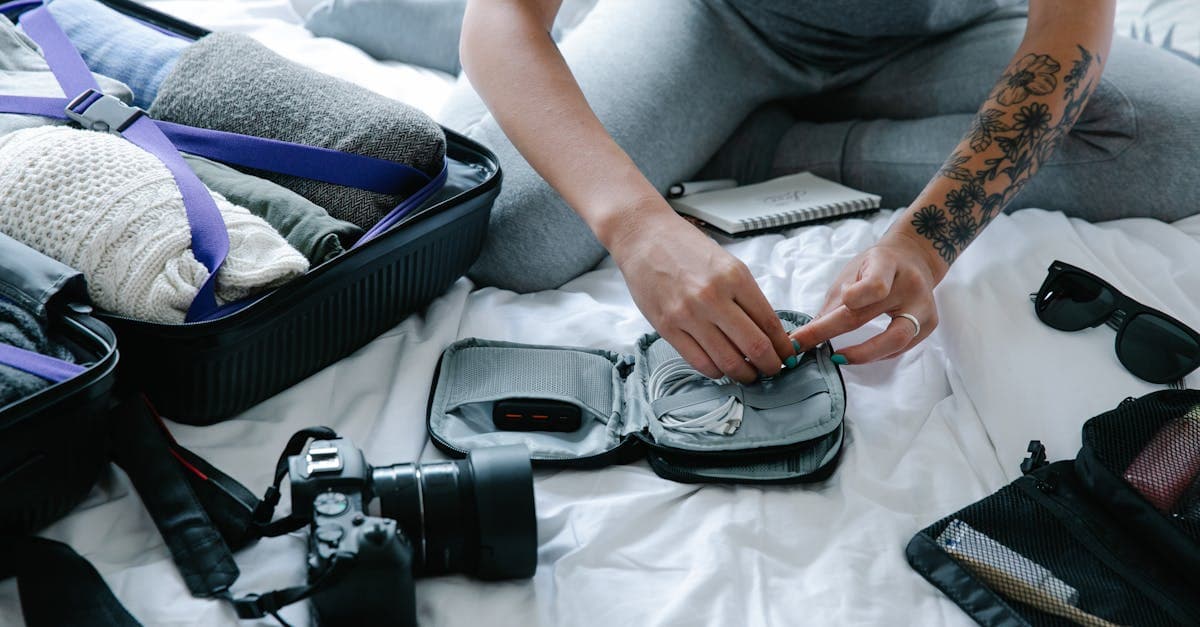
Keep these within reach, in case your checked bag goes missing or your phone goes flat:
- Passport, plus your visa or travel authorisation details
- Phone and charging cable
- Power banks, which can only travel in the cabin
- Medicine for the flight, with prescription copies and your doctor's letter
- Your liquids bag, with every container 100 mL or 100 g or less
- Copies of your key documents and your insurance policy details
- Hard copies of your bookings
- A paper list of emergency contacts
- Cards and some local currency
Phone and mobile data: set it up before you leave home
You have three main ways to stay online overseas: roaming with your Australian carrier, a travel eSIM, or a portable Wi-Fi device for a group with several gadgets.
Roaming needs the least setup, but it's often charged by the day. Telstra's International Roaming Day Pass, for example, charges for each day your service makes or receives a call, sends a text or uses data overseas, background data included, though receiving a text doesn't trigger it. Read how Australian carriers charge for roaming before you pick.
A travel eSIM adds a separate data line to your phone. On an iPhone XS, XS Max, XR or later you can keep your home number on for calls and texts, at your carrier's roaming rates, and use the travel line for data, as long as the phone is unlocked. Check your phone supports eSIM before you buy.
Set it up at home: install the eSIM over Wi-Fi by scanning the QR code from your email, then turn on data roaming for that line when you land. On an iPhone, pick the travel line for Mobile Data and leave Allow Mobile Data Switching off. Telstra warns that a device with an eSIM and a physical SIM can switch data SIMs while roaming, which triggers charges. Our step-by-step install guide covers iPhone and Android, and you can estimate how much data you'll need for your trip first.
A regional HelloRoam plan, such as the Europe data plan, works across every country it covers on one eSIM, so a multi-country trip needs only one install.
Compare eSIM plans by destination, or weigh up a travel eSIM vs carrier roaming side by side.
Questions travellers ask
What are the three documents required to travel internationally?
The documents section of Smartraveller's checklist starts with three: a passport valid for at least six months beyond the end of your trip, the right visa for every country you visit or transit through, and comprehensive travel insurance. For the UK and the US, Australians usually need an online travel authorisation (an ETA or an ESTA) instead of a visa. You may also need extra documents for children, or an International Driving Permit if you plan to drive.
Is there a free printable travel checklist for Australians?
Yes. Smartraveller, run by the Department of Foreign Affairs and Trade, publishes a free two-page Before you go checklist as a PDF. It covers your destination, documents and insurance, health, packing, telling people where you're going, and planning for things going wrong.
Sources
- Smartraveller (DFAT): The essentials checklistsmartraveller.gov.au
- Smartraveller (DFAT): Before you go checklist, printable PDF, February 2026smartraveller.gov.au
- Smartraveller (DFAT): Passport servicessmartraveller.gov.au
- Australian Passport Office: Urgent travelpassports.gov.au
- Australian Passport Office: Feespassports.gov.au
- Smartraveller (DFAT): Smartraveller subscriptionsmartraveller.gov.au
- Smartraveller (DFAT): Travel insurancesmartraveller.gov.au
- Smartraveller (DFAT): Credit card travel insurance is changingsmartraveller.gov.au
- GOV.UK: Get an electronic travel authorisation (ETA) to visit the UKgov.uk
- US Department of Homeland Security: Visa Waiver Programdhs.gov
- US Customs and Border Protection: Electronic System for Travel Authorization (ESTA)cbp.gov
- European Union: Official ETIAS websiteeuropa.eu
- Department of Home Affairs (TravelSECURE): What you can and can't bringhomeaffairs.gov.au
- Australian Border Force: What can you bring on a plane?abf.gov.au
- CASA Pack Right. Safe Flight.: Lithium batteriescasa.gov.au
- Qantas: Spare batteries and power banksqantas.com
- Jetstar: Dangerous goodsjetstar.com
- Stylist: How to use the 5-4-3-2-1 packing method when travellingstylist.co.uk
- Telstra: International roaming on a plan (Day Pass)telstra.com.au
- Apple Support (AU): Using Dual SIM with an eSIMsupport.apple.com
- European Union: How does the EES work?europa.eu
Written by
HelloRoam Team
The HelloRoam Team writes our guides on trip planning, visas and eSIMs. For every new or updated guide, we check each fact at its source. Sources include government, park and weather service pages. We note the date we read each one. A second review then checks every fact against its source before the guide goes live. If we cannot confirm a fact, we leave it out. We link those sources inside the guide, so you can check them.

 Singapore
 Indonesia
 Japan