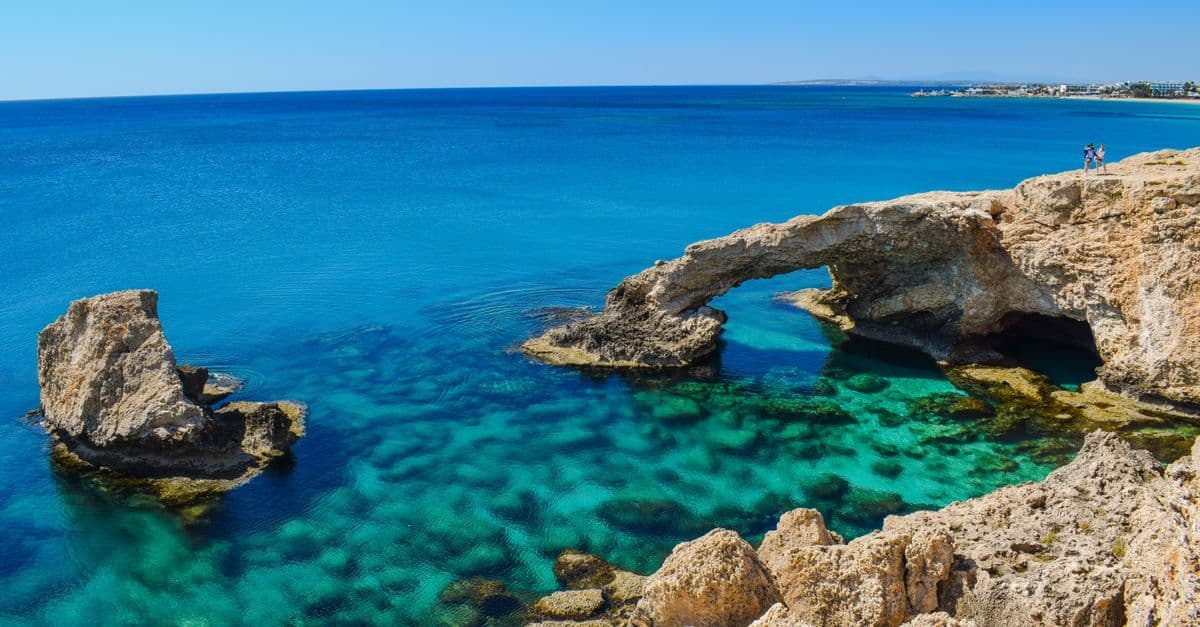
Cyprus at a Glance: Essential Facts for US Travelers
Tourist crossings are permitted at official checkpoints. Carry your passport, expect a brief inspection, and you can reach Kyrenia Castle and Bellapais Abbey in the north.
 Get your Cyprus eSIM before you flyInstall it at home, turn it on when you land. From $2.21.See Cyprus plans
Almost all international flights land at Larnaca or Paphos airports in the Republic, not in the north. Plan your entry accordingly.
EU membership adds practical benefits most travelers overlook.
eSIM for Cyprus: Check current plans and pricing.
What Kind of Country Is Cyprus?

EU membership delivers four direct advantages for US visitors to the Republic of Cyprus. The Euro covers every transaction in the south, from hotel check-outs to car rental returns, no currency exchange required. EU consumer protection law applies to those same businesses, giving you a clear regulatory framework if a billing dispute arises.
US citizens enter visa-free for stays up to 90 days. Food safety and healthcare standards throughout the Republic meet EU requirements, a grounded baseline many non-EU Mediterranean destinations can't match.
Timing shapes the experience considerably.
The divided island: Republic versus the North

Cyprus is a divided island. The Republic of Cyprus holds roughly 60% of the territory in the south; the Turkish Republic of Northern Cyprus (TRNC) controls the north and is recognized by Turkey alone. A UN buffer zone called the Green Line cuts through the middle of Nicosia.
Tourists can cross at official checkpoints on foot or by car, and the process is typically smooth. Stand at the Ledra Street crossing in downtown Nicosia and you'll see the checkpoint barriers, UN signage, and the abrupt shift from Greek to Turkish street names within fifty meters.
Nearly all international flights land in Larnaca or Paphos. Ercan airport in the north operates only through Turkey, so your entry point is almost certainly the Republic side regardless of your itinerary.
What EU membership means for your visit
The Republic of Cyprus's EU membership lets US visitors skip one common travel headache. The euro is the only currency you need. No hunting for exchange desks or mentally converting prices at every café.
At the car rental desk in Larnaca, EU consumer protection law means the quoted rate is the rate on your contract. Hotel bookings carry the same legal protections you'd expect in any EU member state.
US passport holders enter visa-free for stays up to 90 days. Food safety and healthcare standards answer to EU regulators. The legal framework is sound. Moving around the island, though, is where decisions start.
When Should Americans Visit Cyprus?
Shoulder season is the right call. April through June and September through October give you warm temperatures (mid-70s to low-80s Fahrenheit), accessible beaches, and lower accommodation rates. Skip July and August: temperatures hit 35 to 40°C (95 to 104°F) and British, German, and Russian tourists fill every stretch of sand.
326 sunny days a year sounds like every month works on paper. The summer heat changes that calculation fast.
December through February brings snow to the Troodos Mountains, and Cyprus has actual ski runs up there. That surprises most Americans who filed the island under "beach destination only." Coastal temperatures stay mild during winter, and Nicosia's old city turns genuinely walkable without peak crowds.
For US travelers integrating Cyprus into a longer Europe trip, May or October makes the most logistical sense. You'll catch stable weather, lighter tourist traffic, and lower airfares compared to peak summer. Europeans who make up the bulk of arrivals tend to stay 9 to 11 days. US visitors typically work with tighter windows, so picking the right season matters more when every day counts.
Two weeks lets you cover Paphos, the Troodos villages, and the east coast comfortably. One week is workable if you pick a single base city and day-trip from there.
July and August only make sense if extreme heat and high-season prices fit your travel plans.
Season set. Now figure out where to actually spend those days.
What to Do in Cyprus: Top Experiences for First-Time Visitors
Cyprus packs a striking range into a small footprint. Paphos holds a UNESCO World Heritage designation for Roman floor mosaics that visitors can't find in comparable condition anywhere else in the Mediterranean. Kourion rivals any amphitheater on the Italian peninsula, and Nicosia lets you walk across a live dividing line between two political systems.
The beaches around Ayia Napa are genuinely among Europe's cleanest, with Blue Flag certification across multiple stretches. The catch: July and August turn the area into a packed scene catering to young Europeans on package tours. In May or October, those same beaches are peaceful and open.
Aphrodite's Rock on the southwest coast works as a 30-minute stop en route between Paphos and Limassol. Kourion deserves a proper half-day with water and a hat. The Troodos Mountains need an overnight commitment to do them justice: Byzantine monasteries, pine forest trails, and village restaurants serving slow-cooked dishes that don't exist on the coast.
Nicosia's Green Line crossing takes roughly ten minutes at the checkpoint. You'll need your passport. The north side carries a completely different energy: Ottoman mosques, half-restored medieval streets, and none of the polished Republic-side EU infrastructure. Few experiences in Europe feel as geopolitically tangible.
One practical limitation: the island rewards a car. Public transport connects the main towns, but ruins and mountain villages sit well off bus routes.
Sites cluster by region. Your base city decides what's accessible.
Ancient ruins and UNESCO sites worth planning around

Two UNESCO-listed sites anchor Cyprus's south coast. Paphos Archaeological Park preserves Roman floor mosaics in remarkably intact condition, protected under low shelters rather than behind museum glass. You walk on elevated walkways above floors laid in the 2nd and 3rd centuries. Choirokoitia, a Neolithic settlement east of Limassol, dates to around 7000 BCE, predating the Egyptian pyramids by millennia.
Kourion sits west of Limassol: Greek and Roman ruins arranged on a headland directly above the sea. Aphrodite's Rock on the southwest coast pairs naturally with a Paphos morning. That three-site circuit fits a single well-planned day.
Paphos is the logical base for the western ruins loop. From Limassol, you can reach Kourion and Choirokoitia in the same afternoon.
Which city works best as your base?
Your itinerary decides this. Compare the four options by priority: Limassol for dining and a central coastal position, Paphos for a quieter pace and direct access to the archaeological park, Larnaca for airport convenience and affordable accommodation rates, Ayia Napa for beaches and summer nightlife.
Limassol is the default for most first-time visitors: cosmopolitan, central, and within an hour of most major sites.
Ayia Napa makes more sense as a two-night side trip than a home base. Peak season turns it into a grind.
Cyprus drives on the left, British-style. Roundabouts catch most Americans off guard on day one.
Staying Connected in Cyprus: eSIM, SIM Cards, and Wi-Fi
Cyprus has nationwide 4G LTE coverage, with 5G expanding in Nicosia and Limassol as of mid-2026. Three local carriers operate here: Cyta, Epic, and MTN Cyprus. For US travelers, the choice comes down to three options: your home carrier's international day pass, a local SIM from the airport, or an eSIM activated before departure.
Hotel Wi-Fi outside large resort properties is unreliable. Boutique hotels in Limassol's old town and guesthouses near the Troodos foothills deliver patchy speeds at best. For navigation, translation apps, and real-time maps, cellular is the more grounded option.
| Option | Cost | Data | Validity | Activation |
|---|---|---|---|---|
| AT&T / T-Mobile / Verizon day pass | ~$10/day | Home plan tier | Per day used | Automatic on arrival |
| Local SIM (Cyta, Epic, MTN) | check carrier site | Varies by plan | Varies by plan | Larnaca or Paphos airport |
| HelloRoam eSIM (1 GB) | ~$2.21 | 1 GB | 7 days | QR code, before departure |
| HelloRoam eSIM (5 GB) | ~$5.94 | 5 GB | 30 days | QR code, before departure |
| HelloRoam eSIM (10 GB) | ~$9.82 | 10 GB | 30 days | QR code, before departure |
The eSIM path works best for unlocked iPhones and most flagship Android devices. Buy it in about 90 seconds via Apple Pay or Google Pay, scan the QR code before you board, and by the time you clear customs at Larnaca, your phone already has a live signal. No SIM kiosk queue, no ejector pin, no waiting at a counter.
Key fact: HelloRoam's Cyprus eSIM operates on PrimeTel and Epic networks, with 4G and 5G access where available.
Staying three days or under with reliable hotel Wi-Fi already confirmed? Your carrier's existing plan may cover it without added cost. For a week moving between Paphos, Limassol, and Nicosia, a dedicated data plan is the more practical call. Local SIM cards from Cyta, Epic, and MTN are available at Larnaca and Paphos airport terminals if your device is carrier-locked.
Connectivity settled, only entry requirements remain.
Is Cyprus Safe for American Travelers?
The US State Department rates the Republic of Cyprus at Level 1 (Exercise Normal Precautions), its lowest advisory tier. That places the island alongside most of Western Europe. Crime rates sit at the lower end of the European range, and violent crime targeting tourists is rare.
The island's divided political history makes some travelers assume more risk than actually exists. The Green Line cutting through Nicosia is an administrative boundary, not a danger zone. Official crossing points at Ledra Palace and Ledra Street handle regular pedestrian crossings every day. Staffed, well-marked, and straightforward.
Northern Cyprus operates under a separate US State Department advisory, distinct from the Republic's Level 1 status. The two designations aren't interchangeable. Check travel.state.gov for the current northern advisory before including a checkpoint crossing in your plans.
No vaccinations or health documents are required for US citizens entering Cyprus. The standard travel health checklist applies: current routine vaccines and insurance with international medical coverage. Most US health plans don't extend to treatment abroad, so coverage is worth confirming before departure. The summer heat is a more concrete concern than any health risk; temperatures during peak August weeks demand deliberate hydration.
The realistic threat for tourists is petty theft in crowded spots: beach bars in Ayia Napa, the market streets of Paphos old town, and packed resort zones during summer peaks. Standard precautions handle it. Keep valuables secured at busy venues and you're working within the same risk band as any Western European city.
Safety confirmed, the last question is the visa.
Do US Citizens Need a Visa for Cyprus?
No visa, no application, no fee. US citizens enter the Republic of Cyprus on a valid passport and can stay for the full visa-free allowance without any pre-travel paperwork. Cyprus sits outside the Schengen Area (the 27-country European zone sharing open-border and short-stay visa rules), so that allowance runs independently from any Schengen trips you've booked.
Here's how entry actually works:
1. Check passport validity before booking flights. Border control expects your passport to stay valid well past your planned return date. A practical guideline: aim for at least three months of remaining validity after your trip ends. This is the most common friction point for US travelers at the entry desk.
2. Carry proof of accommodation. Hotel confirmation, a villa booking, or an Airbnb receipt. Border officers rarely request this from US passport holders, but having it on your phone takes seconds to pull up and removes any ambiguity at the counter.
3. Bring a return or onward ticket. Standard documentation for any EU-adjacent country entry. It's rarely checked for American travelers, but it's tangible evidence your plans include leaving.
4. Don't route through Ercan airport. Ercan operates under Turkish recognition only. Entering Cyprus via Ercan can create complications with Republic of Cyprus entry records. Larnaca and Paphos handle all major international routes from the US and Europe.
5. Verify EES status before you fly. The EU Entry/Exit System (EES, a digital border-tracking system replacing manual passport stamps) is scheduled for phased rollout across EU-aligned states. Cyprus's implementation timeline may shift; the US Embassy in Nicosia website carries current entry information.
No forms, no appointment, no fee. Show up with a valid passport.
Visa cleared, planning can begin in earnest.
Reviewed by HelloRoam's editorial team. Last updated: 12 July 2026.
Questions travelers ask
Do US citizens need a visa to visit Cyprus?
No. US citizens can enter the Republic of Cyprus visa-free for up to 90 days with a valid passport. No application, appointment, or fee is required before travel.
Is Cyprus safe for American tourists?
Yes. The US State Department rates the Republic of Cyprus at Level 1 (Exercise Normal Precautions), its lowest advisory tier, placing it alongside most of Western Europe. Violent crime targeting tourists is rare.
What currency does Cyprus use?
The Republic of Cyprus uses the euro. No currency exchange is needed for any transaction in the south, from hotel check-outs to restaurant meals and car rentals.

Written by
David Chen
David Chen is a travel writer at HelloRoam who covers mobile connectivity and travel tech for international visitors. He compares data plan pricing for short trips and extended stays, and tests eSIM activation at major international airports. David also covers hotspot options for business travelers so readers can skip the SIM card counter and get online fast.

 Mexico

 USA
USA