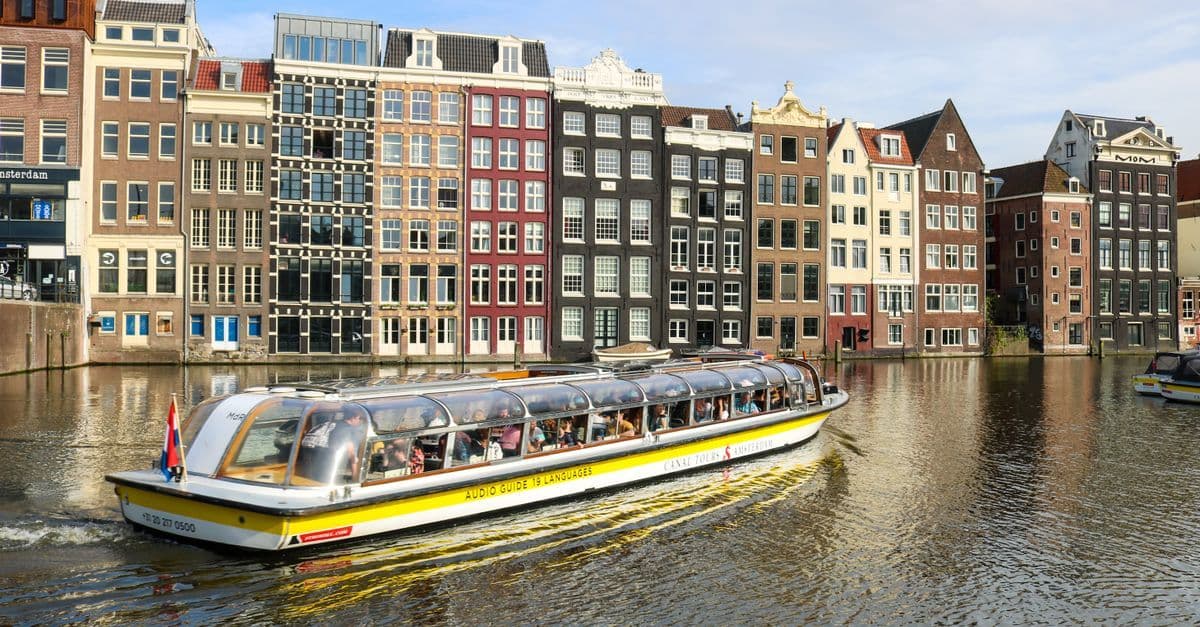
Amsterdam holidays at a glance
Two seasons work best. April to May brings tulip season: Keukenhof Gardens sees over a million visitors across its eight-week window and books up fast. September to October is the practical pick, with lower hotel rates and noticeably fewer crowds along the Singel.
 Get your Netherlands eSIM before you flyInstall it at home, turn it on when you land. From £1.83.See Netherlands plans
Post-Brexit EU roaming charges are an easy trap. EE, Vodafone, and O2 all reintroduced fees after 2021, and a weekend of navigation apps and WhatsApp calls adds up faster than expected. HelloRoam's eSIM for Netherlands runs on KPN's 5G network, with plans from ~£1.94 per day.
Key fact: HelloRoam Netherlands plans start from ~£1.94 on KPN's 5G network, with no surprise EU roaming charges.
Getting there is the natural starting point.
Getting to Amsterdam from the UK
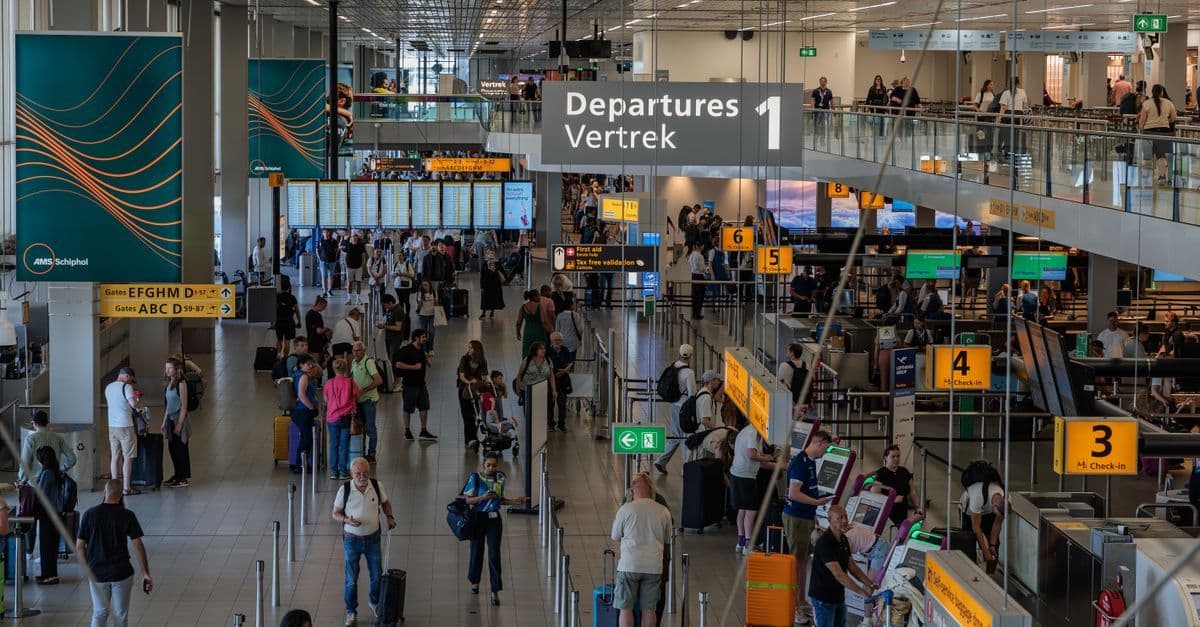
Two options serve British travellers: Eurostar from London St Pancras, or a short-haul flight from one of several UK airports. Both get you to central Amsterdam within half a day. The real question is whether you'd rather skip the airport entirely.
Flights depart from Heathrow, Gatwick, Manchester, Edinburgh, and Bristol. It's a short hop from any of them, with budget carriers covering most routes and fares that shift sharply depending on how far ahead you book.
Eurostar goes city centre to city centre. No luggage carousel at the destination, no airport shuttle, no repeat security check. You step off in Amsterdam.
The arrival experience is where the two routes diverge most clearly. A flight deposits you at Schiphol, a well-run airport but still a step outside the city. The train drops you at Amsterdam Centraal with the canal ring a few minutes' walk away. That difference sounds minor until it's 7pm and raining.
Each option sets your Amsterdam holiday off on its own terms. The train case deserves a closer look first.
By Eurostar from London St Pancras
The Eurostar runs direct from London St Pancras International to Amsterdam Centraal in around 3 hours 52 minutes. No changes, no transfers. One train, two city centres.
UK passport control is handled at St Pancras before you board. That matters post-Brexit: the EU's Entry/Exit System (biometric border registration for Schengen arrivals) is processed at a dedicated desk in London rather than in the crush of a busy arrival hall. Getting it done before departure is considerably less chaotic.
Advance fares start from around £35 one way. Book early and this route undercuts many budget flight combinations once airport transfers at both ends are factored in.
Luggage allowance is more generous than most budget airline policies, and there's no decanting toiletries into a 100ml bag for security.
Arrive at Amsterdam Centraal and you're already there. The Rijksmuseum is roughly 20 minutes on foot. The canal belt starts outside the station doors.
Prefer to fly? Schiphol Airport connects right across the UK.
Flying to Amsterdam from UK airports

Flying makes more practical sense the further north you start. Adding a train from Manchester or Edinburgh to London St Pancras before catching the Eurostar chips into any time advantage the train holds, sometimes eliminating it altogether.
Schiphol Airport (AMS) is Amsterdam's main international hub. From Heathrow or Gatwick, flights take around 55 minutes. Budget carriers serve Manchester, Bristol, and Edinburgh year-round, with fares that move considerably based on how early you book.
Allow 90 minutes at each end for airport transit. Check-in, security, boarding, and disembarkation all take time. That's standard for any short-haul route, not a particular quirk of flying to the Netherlands.
Schiphol to Amsterdam Centraal takes 15 to 20 minutes by direct rail from the airport's lower level. Trains run frequently, the connection is clearly signed, and first-time visitors rarely have trouble with it. It's one of the more reliable airport rail links in Western Europe.
Once you're in the city, the real decisions begin.
What to do in Amsterdam
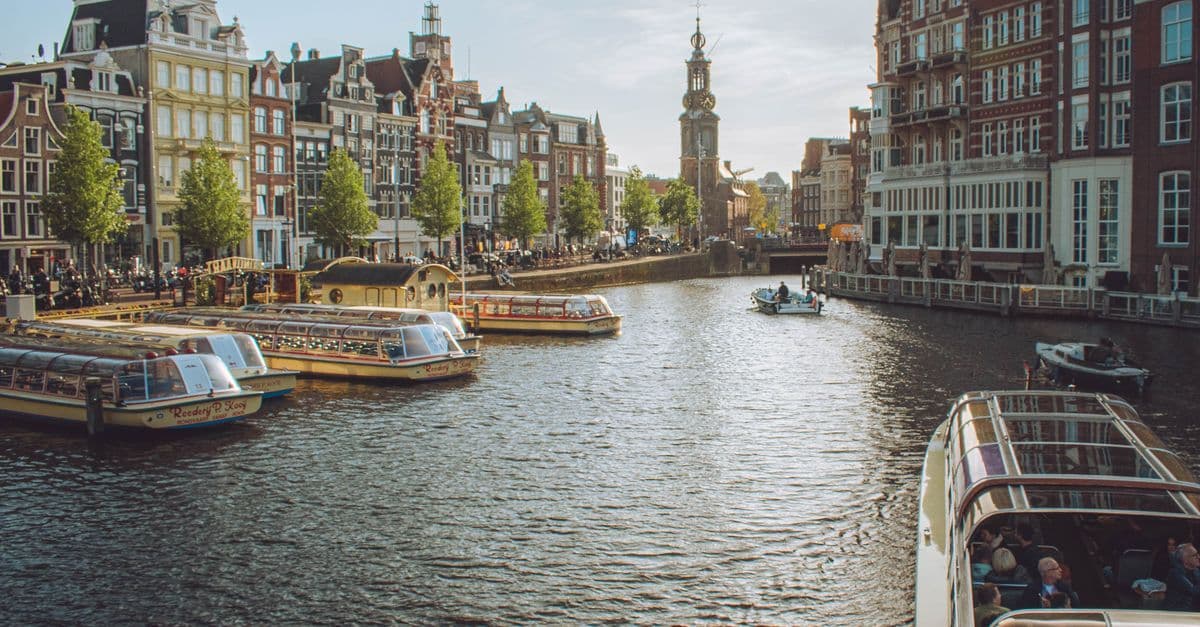
Amsterdam's headline attractions anchor every itinerary: the Anne Frank House, the Rijksmuseum, and the Van Gogh Museum. A long weekend covers all three comfortably. A full week lets the city reveal itself at a pace that rewards the extra days.
Start with the museums. Then let yourself get lost.
The Anne Frank House draws around 1.3 million visitors a year, which tells you everything about its timed entry slots. Book weeks ahead, not days. The Rijksmuseum and Van Gogh Museum are no less essential, but the booking pressure is more manageable provided you plan before you fly.
Canal boat tours earn their reputation. A shared open boat works through the Grachtengordel ring canals in under two hours and hands you a spatial understanding of the city that walking takes days to build. It's a practical orientation tool, not a tourist trap.
After that, head for Jordaan or De Pijp. Both reward an unhurried afternoon over a long lunch, a browse through independent galleries, or a slow coffee in a brown café. De Pijp carries a neighbourhood energy that central Amsterdam rarely manages.
The sights deliver. What sits beside them surprises you.
The museums every visitor should book in advance
None of Amsterdam's three flagship museums welcome walk-up visitors in peak season. The Anne Frank House is the most unforgiving: timed slots sell out weeks in advance, and there's no same-day option. Book before you leave home.
Here's what each museum requires:
- Anne Frank House - timed entry only; book at least two to three weeks ahead during spring and summer
- Rijksmuseum - advance tickets recommended; home to Rembrandt and Vermeer originals across multiple floors
- Van Gogh Museum - online booking required; holds the world's largest single collection of his work, arranged chronologically
Book direct through each museum's own website. Third-party booking platforms add fees without adding any value.
The I amsterdam City Card bundles museum entry with unlimited public transport across the network. It makes financial sense for visitors planning to hit four or more attractions over two days. For a focused trip anchored around one or two museums, check whether individual tickets work out cheaper first.
One thing most visitors skip: the Rijksmuseum garden is free to enter and makes a decent stop between museums.
Compare eSIM plans for Netherlands — See 2026 pricing →
Step outside the museums and Amsterdam changes entirely.
Amsterdam beyond the obvious: canals, markets and local neighbourhoods
The neighbourhoods west and south of the canal ring offer a version of Amsterdam that doesn't translate well to tourist maps. Jordaan, De Pijp, Waterlooplein, and Noord each carry a distinct character worth an afternoon.
Jordaan, tucked behind the Prinsengracht, runs on independent galleries, brown cafés (Amsterdam's traditional pubs, all dark wood and amber light), and hofjes: quiet courtyards hidden behind street-level doorways. There's no single highlight. The neighbourhood is the point.
De Pijp sits south of the museum quarter. The Albert Cuyp Market runs Monday to Saturday, covering several blocks of stalls selling street food, local produce, and cheese. Come hungry, skip the tourist restaurants on the surrounding streets.
Cycling is the default mode of transport here, not a leisure activity. Hire a bike near Centraal Station for a day and the city's geography clicks into place.
Cross the IJ river on the free ferry from behind Centraal Station and you reach Amsterdam-Noord in minutes. NDSM Wharf, a former shipyard turned creative district, hosts street art, studios, and pop-up food markets. It's the least-toured part of the city, and the more interesting for it.
Waterlooplein flea market, close to the Rembrandt House Museum, is worth a Sunday morning.
Timing shapes the whole experience.
When is the best time for Amsterdam holidays?
Spring, specifically April and May, is the peak season and the only window for Keukenhof, the tulip gardens that open late March and close mid-May. Conditions are comfortable, days are long, and the city is at its most photogenic.
Keukenhof draws around 1.4 million visitors in that roughly eight-week window, so pre-booking entry tickets matters. The gardens are around an hour from Amsterdam by public transport.
King's Day on 27 April turns the city into a street party. The canals fill with boats. Every park becomes a flea market. Book accommodation as soon as you fix the date.
Summer (June to August) brings larger crowds and higher hotel rates. The city is still worth it; the trade-off is cost and volume.
Autumn (September to October) is the underrated window. Crowds thin, rates drop, and the canal light in the afternoons is arguably better than spring for photography. The Rijksmuseum is noticeably quieter.
Winter suits a city break focused on the city itself rather than the parks. Christmas markets and fewer visitors balance out the grey weather.
Whatever season you visit, sort mobile data before you fly.
Staying connected in Amsterdam: eSIM, SIM and WiFi options
Post-Brexit, UK networks charge roaming fees in the Netherlands. You can skip carrier daily passes entirely with a Netherlands eSIM: plans on KPN and Vodafone's Dutch 5G network activate before you fly, covering everything from a long weekend to a full month. Free Wi-Fi runs through Schiphol, most Amsterdam hotels and the city's cafés.
| Option | Cost | Data | Networks | Activation |
|---|---|---|---|---|
| UK carrier daily pass | Check EE, Vodafone, O2 | UK allowance | NL roaming | Automatic |
| HelloRoam NL eSIM (1GB, 7 days) | ~£2.76 | 1GB | KPN, Vodafone | QR code, pre-departure |
| HelloRoam NL eSIM (5GB, 30 days) | ~£6.17 | 5GB | KPN, Vodafone | QR code, pre-departure |
| Physical SIM (Schiphol kiosk) | Check kiosk on arrival | Varies | KPN, T-Mobile NL | Queue on arrival |
Key fact: HelloRoam's Netherlands eSIM plans run on KPN and Vodafone's 5G networks, with options from one day up to 30 days and data from 1GB upward.
Two nights in one neighbourhood with solid hotel Wi-Fi? Three's Feel At Home, or a standard EE daily pass, may well cover it. Four days navigating between De Pijp, the Jordaan and the museum quarter on Google Maps is a different calculation.
eSIM for Netherlands suits anything from a city break to a longer stay; the 10GB plan at ~£10.79 covers a week of heavy Maps use and evening streaming. Physical SIM kiosks exist at Schiphol, but activating one while your bags circle the carousel isn't anyone's idea of a smooth arrival.
Entry requirements are the other pre-trip essential to confirm before you book.
Do UK travellers need a visa for Amsterdam?
UK passport holders skip the visa application entirely for Amsterdam. No form, no fee, no waiting.
The Netherlands sits within the Schengen Area (27 European countries sharing open-border travel rules), meaning UK nationals can enter for up to 90 days in any 180-day rolling period. That's the easy part. The newer entry requirements take a few minutes to understand.
Since Brexit, the EU's Entry/Exit System (EES) biometric border registration is active at Schengen crossings. On your first entry into the Schengen Area each trip, your fingerprints and photo are recorded at the border. Busy crossings have reported longer queues since the system launched.
ETIAS (the EU Travel Information and Authorisation System, roughly equivalent to the US ESTA) is a separate online pre-travel authorisation. As of mid-2026, check its current status before booking flights: if active for UK nationals, you'll need to register online and pay a small fee before departure.
Your passport must be valid for the full duration of your stay. The Netherlands doesn't enforce a six-months-beyond-travel rule, but travelling on a near-expired document is a gamble not worth taking at a Schengen border crossing.
Three things to confirm before booking: your passport expiry date, the current ETIAS status, and your remaining days in the 90-day Schengen window if you've made other EU trips in the past six months.
Paperwork covered. Now the honest question about costs.
Is Amsterdam expensive for British tourists?
Amsterdam holidays pitch between Eastern European budgets and Paris prices. Get the baseline right: a long weekend per person runs roughly £600 to £900 all-in, covering flights, accommodation, food and museum entry.
That range shifts considerably depending on where you book your hotel. City-centre hotels average around £120 to £200 per night. The Jordaan and De Pijp tend cheaper without sacrificing location: both neighbourhoods sit fifteen minutes by tram from the Rijksmuseum.
Restaurant mains run from around £12 at a traditional brown café to £25 at a canal-side spot. The cluster around Leidseplein is where tourist pricing concentrates. One street back, quality usually improves while the bill drops.
Pay in euros with a Monzo or Revolut card for the real exchange rate with no transaction fees on most plans. Every tram ticket, café stop and museum entry adds up across four days, and the exchange margin adds up quietly too.
The I amsterdam City Card covers dozens of museums and galleries alongside unlimited GVB tram and metro use. For two or three full sightseeing days, it cuts individual admission spending considerably.
Budget travel is entirely viable. The Vondelpark, the free ferry to Amsterdam-Noord and Albert Cuyp Market cost nothing. Three days without entering a single paid venue is achievable.
Reviewed by HelloRoam's editorial team. Last updated: 28 June 2026.
Questions travellers ask
How long does the Eurostar take from London to Amsterdam?
The Eurostar runs direct from London St Pancras to Amsterdam Centraal in around 3 hours 52 minutes, with no changes required. Advance fares start from around £35 one way.
Do UK travellers need a visa to visit Amsterdam?
No visa is required. UK passport holders can visit the Netherlands for up to 90 days in any 180-day Schengen period. Check ETIAS status before booking, as it may require online registration and a small fee.
How much does a long weekend in Amsterdam cost per person?
Budget roughly £600 to £900 per person for a long weekend, covering flights, accommodation, food and museum entry. City-centre hotels average £120 to £200 per night.

Written by
Emily Thornton
Emily Thornton is a travel writer at HelloRoam who covers travel connectivity and eSIM tips for international visitors. She writes about finding reliable data at outdoor events, during weekend city breaks, and on ferry and rail journeys. Emily keeps her tone friendly and jargon-free so any traveler can follow along.
 Spain
Spain

 Maldives