A second group of 17 countries, including Mexico, Brazil, the Philippines and Thailand, can swap the visa for an eTA only when they fly, and only if they have held a Canadian visa in the past 10 years or hold a valid US non-immigrant visa. That route matters to anyone from those countries who lives in the US on a work or student visa.
These lists follow Immigration, Refugees and Citizenship Canada (IRCC) as of October 2026. Canada changed them at least twice in the past year, so check IRCC's entry requirements by country before you book.
Once your paperwork is set, a HelloRoam Canada eSIM gets you online as soon as you land or cross the border, so you can open maps, book a ride and message home.
Every visitor to Canada falls into one of five groups
Your passport, and for some people your US status, decides which group you're in. The group decides the document you need and what it costs.
 Get your Canada eSIM before you flyInstall it at home, then turn on data roaming for it when you land. From $3.49.See Canada plans
| Your group | Flying in | Car, bus, train or cruise ship | Government fee |
|---|---|---|---|
| US citizen | No visa or eTA; a valid US passport is recommended | Passport, or ID showing full name, date of birth and citizenship | None |
| US green card holder | No eTA; passport from your country of nationality plus green card | Green card alone, coming directly from the US | None |
| Citizen of one of the 53 visa-exempt countries and territories | eTA plus passport | Passport only, no eTA | CAN$7 eTA |
| Citizen of one of the 17 eTA-eligible countries | eTA if you meet all 3 conditions, otherwise a visitor visa | Visitor visa | CAN$7 eTA, or CAN$100 visa plus CAN$85 biometrics (once every 10 years) |
| Everyone else | Visitor visa plus passport | Visitor visa | CAN$100 visa plus CAN$85 biometrics (once every 10 years) |
IRCC's immigration fee list sets the visitor visa at CAN$100 per person, or CAN$500 for a family of five or more applying together. IRCC's biometrics fee for fingerprints and a photo is CAN$85 per person, or at most CAN$170 for a family applying at the same time. Children under 14, applicants over 79 and travelers who only need an eTA don't give biometrics. Visa applicants give them only once every 10 years, so a repeat visitor may not need to give them again.
The 53 visa-exempt passports need an eTA only when they fly
IRCC's eTA-required list is mostly European, with the rest from Asia, the Middle East, the Pacific and the Americas. IRCC lists British passports five ways: British citizen, British national overseas, British overseas citizen (re-admissible to the United Kingdom), British subject with a right of abode in the United Kingdom, and British overseas territory citizen. That last group covers Anguilla, Bermuda, the British Virgin Islands, the Cayman Islands, the Falkland Islands, Gibraltar, Montserrat, Pitcairn, Saint Helena, and the Turks and Caicos Islands. The table counts all five as one United Kingdom entry.
| Region | Passports on IRCC's eTA-required list |
|---|---|
| Europe (36) | Andorra, Austria, Belgium, Bulgaria, Croatia, Cyprus, Czech Republic, Denmark, Estonia, Finland, France, Germany, Greece, Hungary, Iceland, Ireland, Italy, Latvia, Liechtenstein, Lithuania, Luxembourg, Malta, Monaco, Netherlands, Norway, Poland, Portugal, Romania, San Marino, Slovakia, Slovenia, Spain, Sweden, Switzerland, United Kingdom, Vatican City State |
| Asia and the Middle East (9) | Brunei Darussalam, Hong Kong SAR, Israel, Japan, Qatar, Singapore, South Korea, Taiwan, United Arab Emirates |
| Pacific (5) | Australia, New Zealand, Papua New Guinea, Samoa, Solomon Islands |
| Americas and Caribbean (3) | Bahamas, Barbados, Chile |
Five entries come with a passport condition. Romania counts only for electronic passports, and Israel only for national Israeli passports. Hong Kong needs a passport issued by the Hong Kong SAR, Taiwan needs an ordinary passport from its Ministry of Foreign Affairs that shows the personal identification number, and Vatican City needs a passport or travel document issued by the Vatican.
Qatar is the newest name here. Canada lifted the visa requirement for Qatari citizens on November 25, 2025, so lists published before then still show Qatar as visa-required. Mexico isn't on this list. It sits in the next group.
The eTA is an air-travel rule. Travelers from these 53 who arrive by car, bus, train or boat, including a cruise ship, need a valid passport but no eTA. IRCC makes one exception: a boat from Saint-Pierre-et-Miquelon that isn't a cruise ship still needs an eTA.
Seventeen visa-required countries can use an eTA instead, by air only
Citizens of 17 countries that normally need a visa can apply for an eTA instead if they meet all three of IRCC's conditions:
- You've held a Canadian visitor visa in the past 10 years, or you hold a valid US non-immigrant visa. The US visa must be valid on the day you apply for the eTA, not necessarily on the day you fly.
- You're coming for a temporary stay, normally up to 6 months.
- You're flying to or transiting through a Canadian airport on a passport from one of the 17 countries.
Miss any one of the three and you need a visitor visa.
| Region | Countries |
|---|---|
| Latin America (6) | Argentina, Brazil, Costa Rica, Mexico, Panama, Uruguay |
| Caribbean (5) | Antigua and Barbuda, St. Kitts and Nevis, St. Lucia, St. Vincent and the Grenadines, Trinidad and Tobago |
| Southeast Asia (4) | Indonesia, Malaysia, Philippines, Thailand |
| Africa and the Indian Ocean (2) | Morocco, Seychelles |
Older articles still describe 13 countries, the number Canada added to this route in June 2023, as Saint Lucia's government reported at the time. IRCC's list now holds 17, including Brazil and Mexico. Indonesia and Malaysia joined most recently, on May 26, 2026.
Is Canada visa-free for Filipinos? Not quite, and the answer turns on visa history. A Philippine passport holder with a valid US non-immigrant visa, such as an F-1 student or H-1B work visa, can apply for an eTA to fly to Canada for a short visit. A Philippine passport holder with no US visa and no Canadian visa in the past 10 years needs a visitor visa. A US visa opens the eTA route only for the 17 countries above. An Indian citizen on an H-1B in the US, for example, still needs a Canadian visitor visa, because India is on IRCC's visa-required list.
Citizens of the 17 eTA countries need a visa to drive in from the US
For travelers from the 17 countries who live in the US, how you cross decides what you need. IRCC's own travel scenarios lay it out:
| How you travel | What a citizen of the 17 countries needs |
|---|---|
| Flying to a Canadian airport and meeting all 3 conditions | eTA or visitor visa, your choice |
| Flying, but not meeting the conditions | Visitor visa |
| Driving from the US, or arriving by bus or train | Visitor visa |
| A cruise that stops in Canada, even if you stay on board | Visitor visa |
| A trip mixing flights and ground travel between Canada and the US | IRCC calls a visa the best option |
| Flying with family members who don't meet the conditions | eTA for you, visas for them |
One exception helps on the way back. If you're already in Canada, IRCC lets you travel directly to the US and return directly to Canada by air, car, bus, train or boat without a visitor visa, as long as you come back within your authorized stay. Stop anywhere else first and you need an eTA to fly back in, or a visa to drive back in.
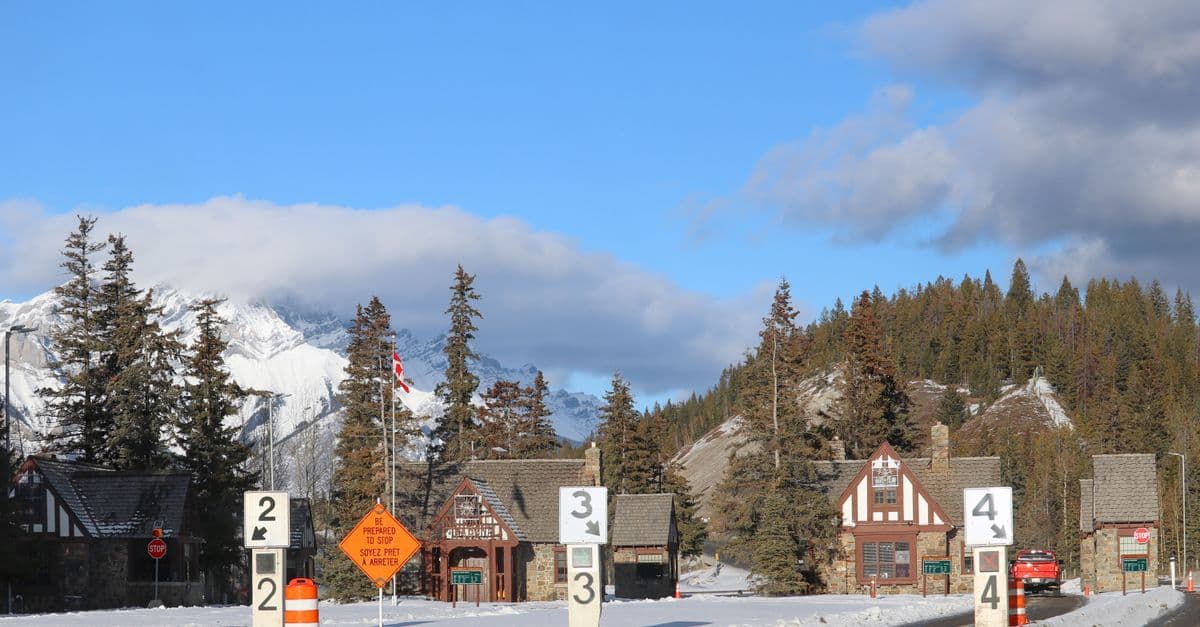
US citizens and green card holders skip both the visa and the eTA
US citizens need no visa and no eTA for Canada. IRCC recommends a valid US passport as the only reliable and universally accepted travel document. If you aren't flying, you can instead show ID that proves your full name, date of birth and citizenship.
Plan the trip home too. For US citizens flying back, US Customs and Border Protection accepts a US passport or a NEXUS, SENTRI or FAST card. At land and sea crossings, a passport card or an enhanced driver's license also works.
US lawful permanent residents are eTA-exempt as well. Flying in, they need a passport from their country of nationality and a valid green card. Driving or sailing in directly from the US, the green card alone is enough.
American-Canadian dual citizens can travel on either passport. On the US passport, carry ID that shows your Canadian citizenship.
The eTA costs CAN$7 on the Government of Canada's own site
IRCC's eTA guide tells travelers to apply only on the official Government of Canada website, where an eTA costs CAN$7. A site that charges more is not IRCC. You need a valid passport, a credit or debit card and an email address, and each application covers one person.
Most applicants get approval by email within minutes. Some take several days when IRCC asks for supporting documents, which is why IRCC suggests getting the eTA before you book your flight.
Your eTA is electronically linked to the passport you applied with. It's valid for up to five years or until that passport expires, whichever comes first, and you can use it for as many short trips as you like. At check-in, airline staff scan your passport to confirm the eTA. Check the passport number in your approval email right away, since a wrong number means applying again.
An eTA or a visa gets you on the plane, not across the border. IRCC says an eTA doesn't guarantee entry, and a border services officer will still check your passport and documents when you land.
Six kiosk steps clear you through a major Canadian airport
At 11 airports, the Canada Border Services Agency (CBSA) has you declare at a self-service kiosk instead of on a paper card: Vancouver (YVR), Calgary (YYC), Edmonton (YEG), Winnipeg (YWG), Toronto Pearson (YYZ, Terminals 1 and 3), Billy Bishop Toronto City (YTZ), Ottawa (YOW), Montreal-Trudeau (YUL), Quebec City (YQB), Halifax (YHZ) and Hamilton (YHM). CBSA's kiosk instructions list six steps:
- Choose English or French. Some kiosks offer more languages.
- Scan your passport.
- Take your photo.
- Verify your fingerprints if the kiosk asks. CBSA requires this only of select foreign nationals and permanent residents.
- Answer the questions to complete and certify your customs and immigration declaration.
- Take your receipt to a border services officer.
Up to 5 travelers can share one kiosk. Toronto Pearson's Terminal 1 also has eGates, which take one traveler at a time and can't be used by children under 14. Land at an airport without kiosks and you fill in a declaration card on the plane or in the terminal.
You can do most of the work before you leave. Advance Declaration in the ArriveCAN app takes your customs and immigration declaration up to 72 hours before your flight, at 10 of the 11 kiosk airports (Hamilton isn't on CBSA's list). It gives you access to Advance Declaration express lanes, and CBSA says confirming it at the kiosk is up to 50% faster.
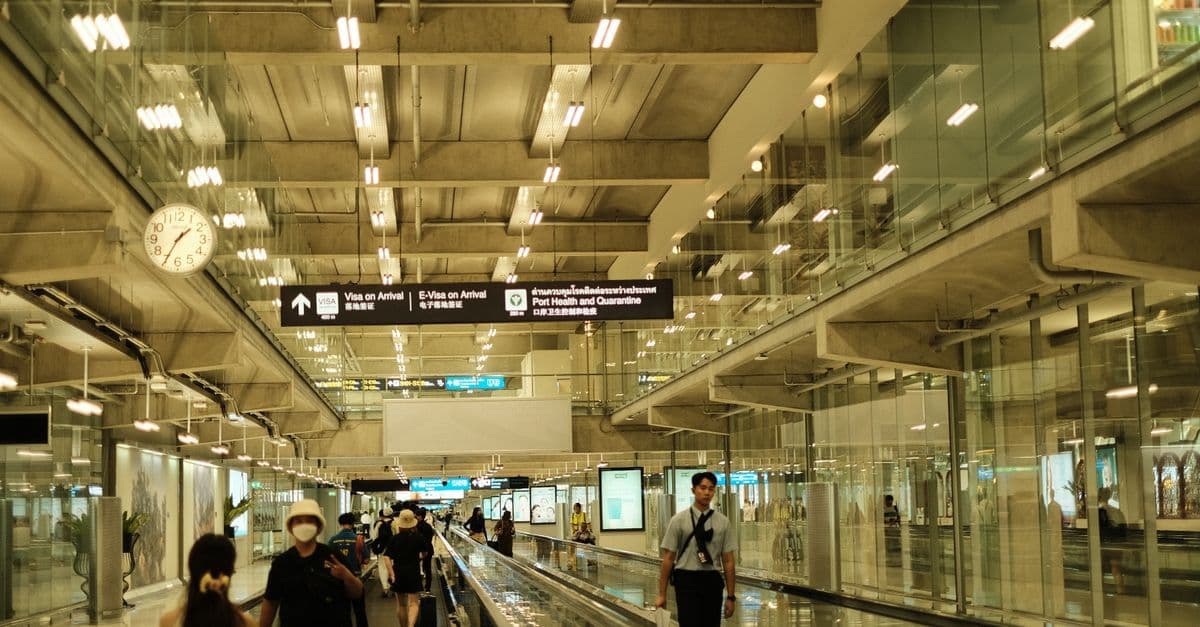
Canadian passports reach 183 destinations without a visa in advance
Searches for Canada's visa-free countries often run the other way, toward where a Canadian passport can go. The Henley Passport Index rankings from Henley & Partners count 183 destinations for Canadian passport holders in the 2026 data: 135 visa-free, 37 with a visa on arrival and 11 with an electronic travel authorization. The US passport scores 180. That puts Canada 7th and the United States 10th, so on this index the Canadian passport is the stronger of the two.
Set up Canadian data before you fly, unless your plan already covers it
Check whether your US phone plan already includes Canada before you buy anything. If it does, you're covered. You won't need data for Advance Declaration either, since you submit it before the flight. Data matters after the kiosk, when you need a map or a ride.
If your plan stops at the border, or your phone runs on a plan from outside the US, compare mobile data plans for Canada and install the eSIM at home so it connects when you land. HelloRoam's Canada plans run on the Rogers network, with 24/7 support if the line doesn't connect on arrival.
Questions travelers ask
How long can visitors stay in Canada?
Most visitors can stay up to 6 months, according to IRCC. If you used an airport kiosk and your passport wasn't stamped, you can stay up to 6 months from the day you entered or until your passport expires, whichever comes first. To stay longer, apply for a visitor record before your status expires.
Do I need a new eTA if I renew my passport?
Yes. An eTA is electronically linked to the passport you used to apply, so a new passport needs a new eTA. If you're from one of the 17 eTA-eligible countries, IRCC also recommends carrying your old passport when it holds the US visa or the expired Canadian visa that qualified you.
Do I need an eTA if I already have a Canadian visitor visa?
No. IRCC says travelers who already hold a valid Canadian visa don't need an eTA to fly to Canada and should keep traveling on the visa until it expires. Most people need a visa or an eTA, not both.
Sources
- Entry requirements by country or territory (IRCC)canada.ca
- Electronic travel authorization (eTA): Citizens from some visa-required countries (IRCC)canada.ca
- Find out about electronic travel authorization (eTA) (IRCC)canada.ca
- Fee list (IRCC)ircc.canada.ca
- Biometrics (IRCC)canada.ca
- Canada lifts the visa requirement for Qatari citizens (IRCC news release, November 25, 2025)canada.ca
- Canada strengthens Indo-Pacific ties through changes to visa requirements for eligible travellers from Indonesia and Malaysia (IRCC news release, May 25, 2026)canada.ca
- Eligible citizens from Saint Lucia now qualify for visa-free travel to Canada (Government of Saint Lucia, June 7, 2023)health.govt.lc
- Western Hemisphere Travel Initiative (US Customs and Border Protection)cbp.gov
- How to use the kiosks and eGates (CBSA)cbsa-asfc.gc.ca
- Declare your travel information at an airport kiosk or eGate (CBSA)cbsa-asfc.gc.ca
- Use Advance Declaration to save time at the border (CBSA)canada.ca
- Extend your stay in Canada: About the process (IRCC)canada.ca
- Henley Passport Index: Global ranking (Henley & Partners)henleyglobal.com
- When to give your biometrics (IRCC)canada.ca
Written by
HelloRoam Team
The HelloRoam Team writes our guides on trip planning, visas and eSIMs. For every new or updated guide, we check each fact at its source. Sources include government, park and weather service pages. We note the date we read each one. A second review then checks every fact against its source before the guide goes live. If we cannot confirm a fact, we leave it out. We link those sources inside the guide, so you can check them.