Rain falls in every month here, which makes a live forecast worth having on the road. With a HelloRoam Ireland eSIM set up at home, you can check Met Éireann's rain radar and reroute a drive from your first minutes in Dublin or Shannon.
How we checked: the station averages in this guide (Dublin Airport, Shannon Airport and Valentia) are Met Éireann figures for 1991 to 2020, and the visitor and price numbers come from the Central Statistics Office (CSO). We read event and opening dates on each organizer's own site, and AT&T's Day Pass terms on its support page, in October 2026. Dates and terms can change, so look again on those sites before you book.
What Each Month Brings in Dublin and on the Kerry Coast
Rain varies a lot across the country. Valentia, Met Éireann's station on the Kerry coast, gets 1,646.5 mm (about 65 inches) of rain in an average year, more than twice the 772.5 mm (about 30 inches) at Dublin Airport. In the table, a rainy day means at least 1 mm (0.04 inch) of rain, and daylight is sunrise to sunset from US Naval Observatory data.
 Get your Ireland eSIM before you flyInstall it at home, then turn on data roaming for it when you land. From $2.76.See Ireland plans
| Month | Dublin high / low | Rainy days, Dublin | Rainy days, Valentia (Kerry) | Sunshine a day, Dublin | Daylight on the 15th, Dublin |
|---|---|---|---|---|---|
| January | 46°F / 36°F | 12.5 | 20.8 | 1.9 hrs | 8 hrs 4 min |
| February | 47°F / 36°F | 11.0 | 17.8 | 2.9 hrs | 9 hrs 51 min |
| March | 50°F / 37°F | 10.7 | 16.4 | 3.7 hrs | 11 hrs 49 min |
| April | 54°F / 39°F | 11.1 | 14.1 | 5.4 hrs | 13 hrs 59 min |
| May | 59°F / 44°F | 10.5 | 13.5 | 6.4 hrs | 15 hrs 52 min |
| June | 64°F / 48°F | 9.8 | 12.8 | 6.0 hrs | 16 hrs 58 min |
| July | 67°F / 52°F | 11.6 | 16.0 | 5.0 hrs | 16 hrs 30 min |
| August | 66°F / 52°F | 11.8 | 15.6 | 5.0 hrs | 14 hrs 48 min |
| September | 62°F / 49°F | 10.7 | 16.5 | 4.4 hrs | 12 hrs 43 min |
| October | 56°F / 45°F | 11.6 | 18.2 | 3.4 hrs | 10 hrs 39 min |
| November | 51°F / 40°F | 12.5 | 21.0 | 2.4 hrs | 8 hrs 39 min |
| December | 47°F / 37°F | 13.3 | 20.4 | 1.7 hrs | 7 hrs 32 min |
No month is dry. Even June, Dublin's month with the fewest rainy days, has 9.8 of them. Rain doesn't fall most of the time, though: Met Éireann says only one in five hourly readings records measurable rain.

May and June Bring the Most Sun and the Fewest Rainy Days
Met Éireann names May and June as Ireland's sunniest months, with 5 to 6.5 hours of sunshine a day over most of the country. High pressure over the continent and Greenland makes February to June the months of least rainfall. Then, from late June or early July, westerly winds bring more cloud, humidity and rain in from the Atlantic.
That's why July is warmer but grayer. Dublin Airport averages a 67°F high in July against 59°F in May, yet gets 5 hours of sunshine a day in July and 6.4 in May.
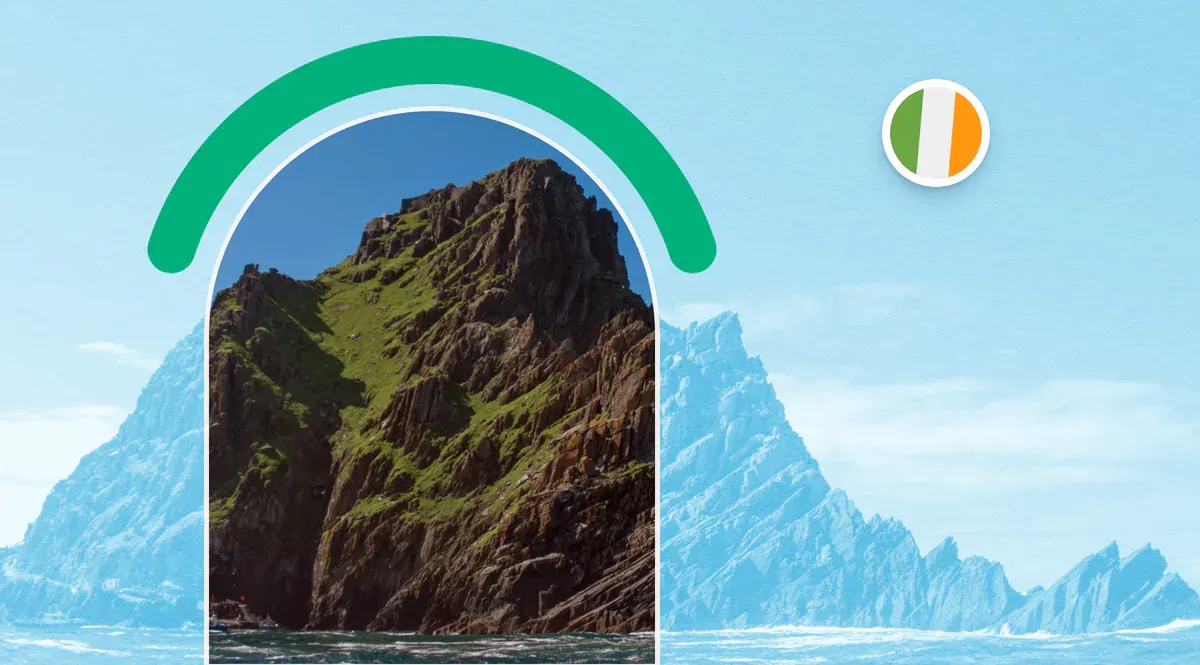
Pick May for smaller crowds and June for the longest evenings. Wait until mid-May if you want to see Skellig Michael (Sceilg Mhichíl), the island monastery off Kerry that UNESCO lists as World Heritage. The Office of Public Works (OPW) opened it from May 12 to September in 2026, weather permitting, and hasn't posted 2027 dates yet. Only permit-holding boat operators can land there, and children under 12 can't go.
Met Éireann Counts June, July and August as Summer
Met Éireann groups Ireland's seasons by temperature, so for forecasters summer runs from June 1 to August 31. Winter is December to February, spring is March to May and fall is September to November.
Irish summers are mild, not hot. On the Kerry coast, Valentia's average high tops out at 64°F in July and August. Recent summers have run warmer than those averages, though. Met Éireann says summer 2026 was provisionally the hottest since records began in 1900, with an average temperature of 16.28°C (about 61°F) across the country, beating a record set only in 2025.
August Brings the Biggest Crowds and the Highest Room Prices

August is Ireland's busiest month. The CSO counted 772,800 foreign visitors who finished a trip in August 2025, more than in any other month that year, and 788,700 in August 2026. In 2025, visitors from the US peaked from June to August, when they made up about a quarter of all foreign visitors.
Room prices follow the crowds. In the CSO's consumer price index for accommodation services, prices peaked in August 2025 and were about 23% lower in January. The table shows 2025, the latest full year (index: December 2023 = 100).
| Month (2025) | Foreign visitors | Visitors from the US | Accommodation price index |
|---|---|---|---|
| January | 338,900 | 42,900 | 92.7 |
| February | 304,300 | 31,200 | 95.2 |
| March | 441,200 | 82,900 | 102.1 |
| April | 528,100 | 93,200 | 105.5 |
| May | 560,500 | 139,200 | 115.3 |
| June | 654,500 | 166,300 | 116.5 |
| July | 646,400 | 164,400 | 117.3 |
| August | 772,800 | 178,600 | 119.7 |
| September | 604,500 | 149,600 | 116.5 |
| October | 568,900 | 127,500 | 108.4 |
| November | 460,300 | 79,500 | 102.7 |
| December | 524,100 | 74,300 | 102.4 |
If May doesn't work, try September or October. September 2025 drew 604,500 foreign visitors, fewer than any month from June to August, though room prices stayed at June's level. By October, the index sat about 9% below its August peak.
January Has the Lowest Room Prices and February Usually the Fewest Visitors
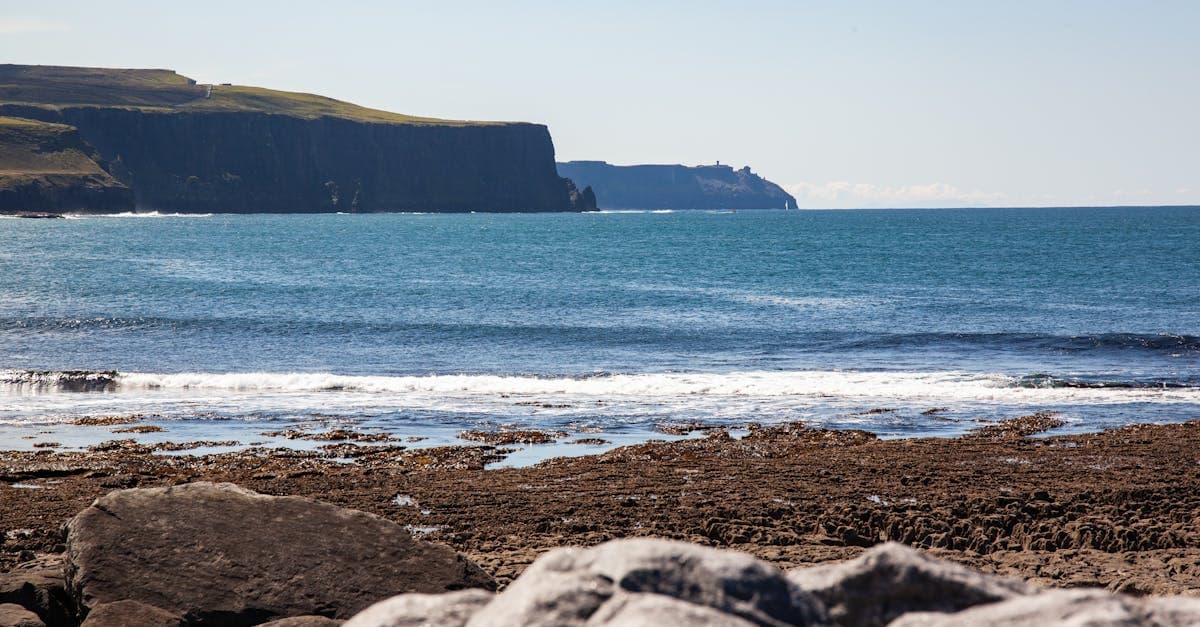
If cost matters most, go in winter. January had the lowest accommodation price index of the year in 2023, 2024 and 2025. February drew the fewest foreign visitors of any month in 2023 and 2025, with just 304,300 in February 2025.
Some big sights cut back in winter. At Brú na Bóinne, the OPW site that includes Newgrange, Knowth tours run only from March 1 to November 1, and the site closes December 24 to 27 and on January 1. It opens early on the winter solstice mornings of December 19 to 23, when regular tours are suspended. Newgrange and Knowth are open by guided tour only, and the OPW says pre-booking is essential. For tour dates from November 2 to March 1, tickets go online just 7 days ahead.
Ireland's Worst Months Are November to January for Weather and August for Crowds
No month is off-limits, but each one has a cost. November to January bring the most rainy days and the shortest days, and gales peak from December to February. Met Éireann calls December the dullest month, and on December 21 Dublin gets just 7 hours 30 minutes of daylight. January has the most gale days of the year at both Dublin Airport and Valentia.
August is the worst month for crowds and room prices, as the CSO figures above show. For a spring trip, April is the cheaper pick: its accommodation price index sat about 12% below August's in 2025.
Ireland's 2027 Public Holidays and Festival Dates
Dublin's St. Patrick's Festival runs March 13 to 17, 2027, and the Galway International Arts Festival runs July 12 to 25, 2027, its 50th edition.
Ireland's 2027 public holidays fall on January 1, February 1, March 17, March 29 (Easter Monday), May 3, June 7, August 2, October 25, and December 25 and 26. On these days most businesses and schools close, and public transport often runs reduced schedules, Citizens Information says.
Check Mobile Coverage Before You Drive Rural Ireland
Ireland has three mobile networks: Eir, Three and Vodafone. ComReg, the telecoms regulator, publishes an outdoor coverage map that shows each provider's predicted 2G to 5G signal at any address or Eircode, plus a free app that checks the spot where you're standing. ComReg notes that mountains and dense foliage can weaken outdoor signal, so look up a hill or coastal route before you set off.
HelloRoam plans need a carrier-unlocked, eSIM-compatible phone, so first see if your phone supports eSIM. Then follow how to install an eSIM at home. The plan's days start only when it first connects to a network in Ireland.
When you land, turn the line on, turn on data roaming for that line and choose it for mobile data. Before you buy, estimate the data you'll use on your trip.
Keeping your US plan instead? Check its day-pass rules first. AT&T, for example, charges a daily fee for each 24-hour period you use International Day Pass, and never more than 10 daily fees per line per bill period on land or air travel. You can also compare a travel eSIM with roaming before you decide.
Adding Britain or the mainland to the same trip? One HelloRoam eSIM on our Europe-wide data plan works in Ireland, the UK and the plan's other countries.
Pack a Rain Shell and a 3-Pin Adapter in Any Season
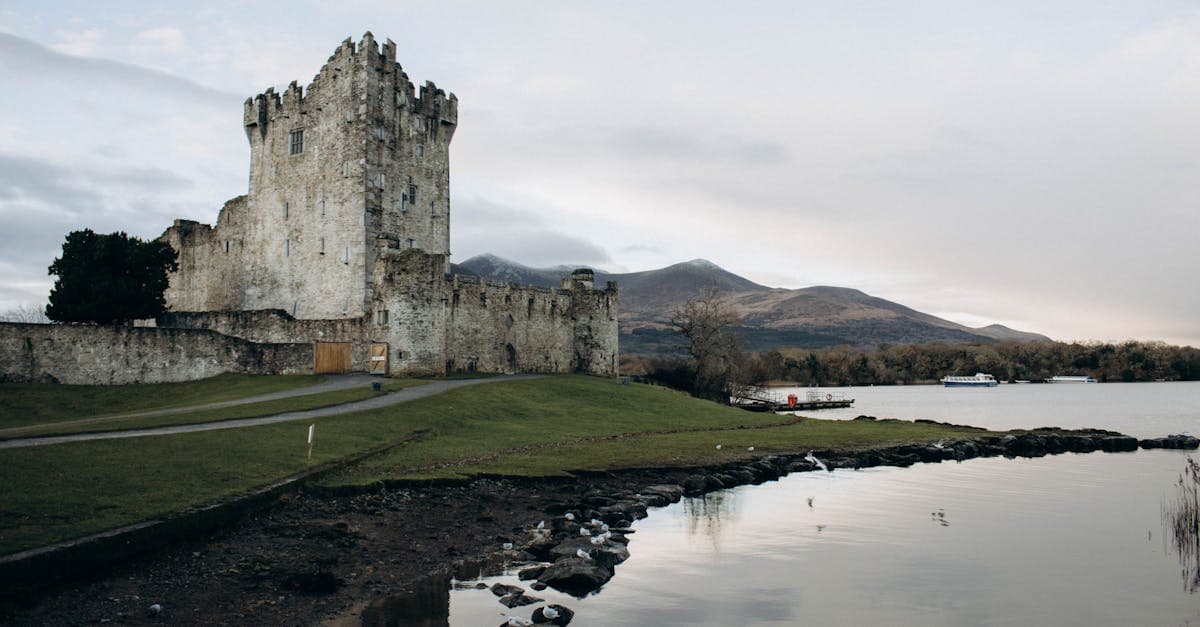
Pack rain gear even for a summer trip. Tourism Ireland's travel checklist says to wear several layers so you're ready for changes in the weather.
Bring a plug adapter too. Ireland's standard plug is the 3-pin IS 411 (BS 1363 type), and the supply is 230 V at 50 Hz. For everything else, use our travel packing list for any trip.
Questions travelers ask
What is the weather like in Ireland in April?
April is cool and showery. Met Éireann's 1991 to 2020 averages give Dublin Airport a high of 54°F and a low of 39°F, 5.4 hours of sunshine a day and 11.1 days with at least 1 mm of rain. April also has the most hail days of the year there, 2.0 on average. Daylight reaches about 14 hours by mid-April.
What month is the rainiest in Ireland?
December, across Ireland as a whole. Met Éireann's 1991 to 2020 rainfall maps give December an average of about 142 mm (about 5.6 inches), with October, November and January close behind. Single stations differ: November is wettest at Dublin Airport (82.7 mm, about 3.3 inches) and at Valentia on the Kerry coast (189.2 mm, about 7.4 inches), and December at Shannon Airport (115.4 mm, about 4.5 inches).
Sources
- Dublin Airport 1991-2020 climate averages (Met Éireann)met.ie
- Valentia 1991-2020 climate averages (Met Éireann)met.ie
- Shannon Airport 1991-2020 climate averages (Met Éireann)met.ie
- Sunshine and solar radiation (Met Éireann)met.ie
- Rainfall climate of Ireland (Met Éireann)met.ie
- Climate of Ireland: recurrent features and meteorological seasons (Met Éireann)met.ie
- Climate statement for summer 2026 (Met Éireann)met.ie
- Sun and Moon data for one day: Dublin (US Naval Observatory)aa.usno.navy.mil
- Sunrise and sunset, Dublin, December 21, 2026 (US Naval Observatory)aa.usno.navy.mil
- Sunrise and sunset, Dublin, June 21, 2027 (US Naval Observatory)aa.usno.navy.mil
- Inbound Tourism December 2025 (Central Statistics Office)cso.ie
- Inbound Tourism August 2026 (Central Statistics Office)cso.ie
- ITM02 trips by foreign resident overnight visitors, by month and residence (Central Statistics Office)ws.cso.ie
- CPM18 consumer price index by detailed sub-index: accommodation services (Central Statistics Office)ws.cso.ie
- Sceilg Mhichíl opening times and access (Office of Public Works)heritageireland.ie
- Brú na Bóinne: Newgrange, Knowth and Dowth tours and opening times (Office of Public Works)heritageireland.ie
- St. Patrick's Festival Dublin, 13-17 March 2027stpatricksfestival.ie
- Galway International Arts Festival, 12-25 July 2027giaf.ie
- Public holidays in Ireland, 2026 and 2027 (Citizens Information)citizensinformation.ie
- Outdoor mobile coverage map (ComReg)comreg.ie
- Check your mobile coverage (ComReg)comreg.ie
- AT&T International Day Pass details (AT&T support)att.com
- Ireland travel checklist (Tourism Ireland)ireland.com
- Product safety: the standard Irish plug (Citizens Information)citizensinformation.ie
- 12-hour rainfall radar (Met Éireann)met.ie
Written by
HelloRoam Team
The HelloRoam Team writes our guides on trip planning, visas and eSIMs. For every new or updated guide, we check each fact at its source. Sources include government, park and weather service pages. We note the date we read each one. A second review then checks every fact against its source before the guide goes live. If we cannot confirm a fact, we leave it out. We link those sources inside the guide, so you can check them.