Quick answer: the best time to visit Sri Lanka depends on the coast
Those two windows don't overlap, which gives you a simple rule: pick your coast first, then fit your dates around it. Whichever coast you pick, a HelloRoam Sri Lanka eSIM lets you check that coast's forecast, book train seats, and message your guesthouse before you leave the airport.
 Get your Sri Lanka eSIM before you flyInstall it at home, then switch on data roaming for it when you land. From £2.98.See Sri Lanka plans
South and west: December to March
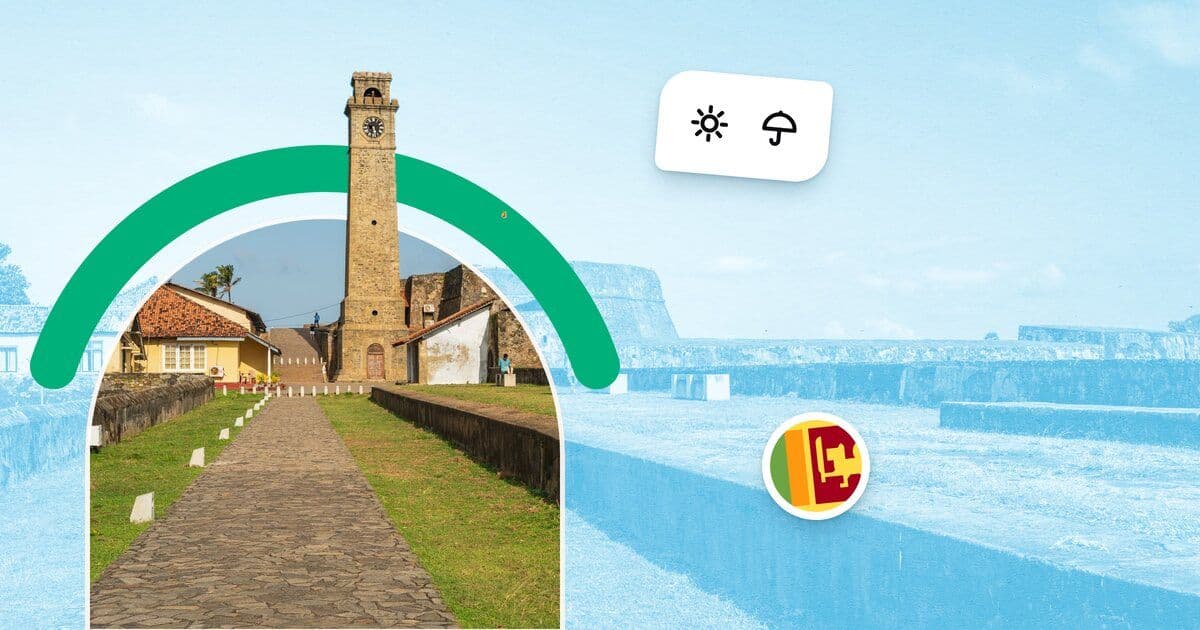
December to February is the north-east monsoon season, which Sri Lanka's Department of Meteorology describes as dry over many parts of the island, with cloud-free skies and days full of sunshine. That makes these months the surest bet for Galle's ramparts, Mirissa's beach and Unawatuna. March brings warmer days and more afternoon or evening thunderstorms, so plan beach time for the morning.
East coast: April to September
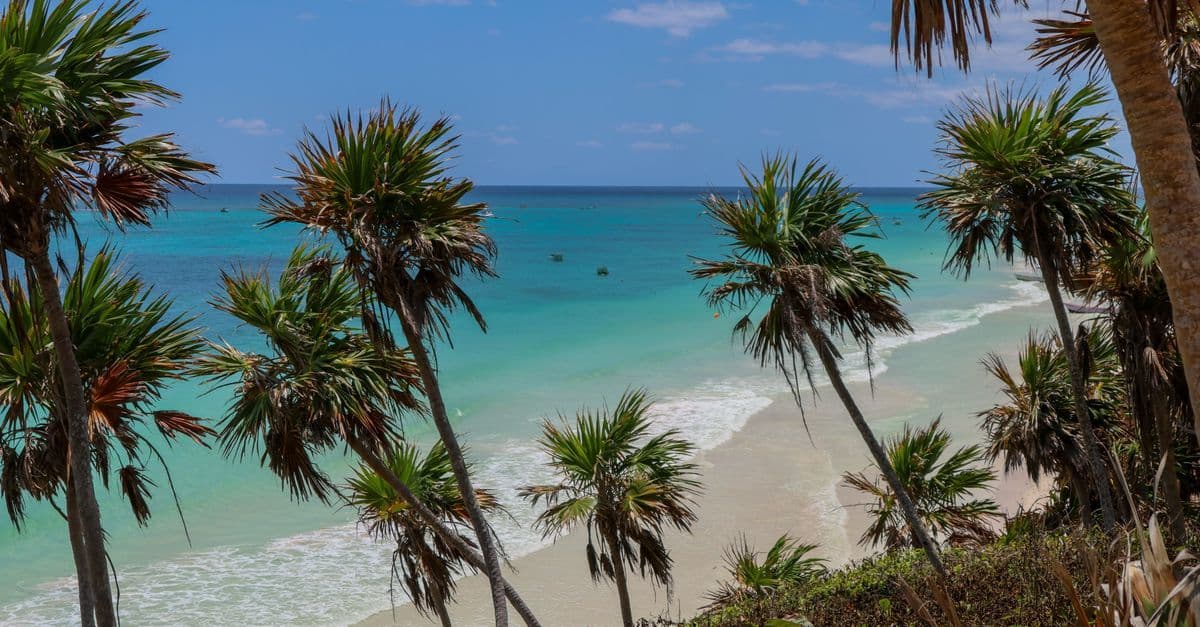
Trincomalee, with Nilaveli and Uppuveli beaches close by, and Arugam Bay in the south-east are the east coast's main beach bases. Lonely Planet names May to August, when the south-west monsoon is soaking the other side of the island, as the best time for east coast resorts such as Arugam Bay, known for its consistent point breaks.
Cultural Triangle: open all year, best December to April
Sigiriya, Anuradhapura, and Polonnaruwa are accessible all year. UK tour operator Kuoni puts the best time for the Cultural Triangle between December and April, and names June as a good month to pair the ancient sites with an east coast beach stay. They still suit July and August too, when the south-west monsoon's rain falls mainly on the south-west of the island.
Quick decision guide
- Christmas or February half-term? The south coast, around Galle and Mirissa, is in its dry season.
- Easter holidays? Late March is still dry season on the south and west coasts, and April starts the east coast's. Both months fall in the first inter-monsoon season, so expect some afternoon or evening thunderstorms, and packed buses and trains around Sinhala and Tamil New Year in mid-April.
- Summer school holidays (July to August)? The east coast, around Trincomalee and Arugam Bay, is the drier side of the island.
- October half-term? Rain is likely anywhere on the island in the second inter-monsoon season, so keep a few flexible days and check the Department of Meteorology forecast before each journey.
For most of the year, one side of the island is in its dry season. October and November are the exception, and the hardest months for a fixed beach week: the second inter-monsoon brings rain to almost the whole island, so keep your plans flexible.
Sri Lanka's rainy and dry seasons, month by month
Sri Lanka's Department of Meteorology splits the year into four climate seasons: two monsoons, each bringing most of its rain to a different side of the island, and two inter-monsoon seasons between them.
| Months | Met Department season | What it brings |
|---|---|---|
| December to February | North-east monsoon | Dry weather and cloud-free skies over many parts; most rain in the north and on the eastern slopes of the hill country |
| March to April | First inter-monsoon | Warm, uncomfortable days with thunderstorms, mostly in the afternoon or evening; the Jaffna Peninsula in the far north stays driest |
| May to September | South-west monsoon | Rain at any time of day or night, mainly in the south-west; least rain in the north and south-east |
| October to November | Second inter-monsoon | Rain across almost the whole island, with storms that can bring strong winds, floods and landslides |
The south-west monsoon runs from May to September. Its rain falls mainly on the south-west, from Colombo down to Galle and Mirissa, and is heaviest on the western slopes of the hill country. The north and south-east get the least rain in these months, so while Galle is grey in June, Arugam Bay is usually dry. That east-west flip is the most useful thing to understand. The monsoon's winds also whip up big waves, and Kuoni says swimming off the south and west coasts is usually discouraged then. GOV.UK warns of dangerous surf and rip tides at many beaches, so ask your hotel before you swim.
The north-east monsoon runs from December to February. Most of its rain falls on the north and the eastern slopes of the hill country, while the south and west coasts settle into their dry season.
October and November form the second inter-monsoon season. The Department of Meteorology says almost the entire island gets more than 400 mm of rain in these two months, and storms over the Bay of Bengal can bring strong winds, floods and landslides. GOV.UK's travel advice, updated on 21 September 2026, warns that heavy inter-monsoon rain has raised the risk of flooding and landslides across Sri Lanka. Check it, the Department of Meteorology and the Disaster Management Centre before you travel.
Temperatures change far less than rainfall. The Department of Meteorology gives a mean annual temperature of 26.5 to 28.5°C in the lowlands and 15.9°C at Nuwara Eliya, 1,800 metres up in the hill country, so pack a warm layer for evenings in the hills. Kuoni names April as one of the best months for the hill country around Kandy and Nuwara Eliya, when mornings and evenings are less chilly and rainfall is below average.
Sri Lanka beach season at a glance: when to visit each coast
| Coast | Best months | Notable draw |
|---|---|---|
| South and west (Galle, Mirissa, Unawatuna) | December to March | Dry weather and cloud-free skies on the beaches |
| East (Trincomalee, Arugam Bay, Nilaveli) | April to September | Beaches, and Arugam Bay surf from May to August |
| Cultural Triangle (Sigiriya, Anuradhapura) | Year-round (best December to April) | Ancient ruins, rock fortress |
Best time to visit Sri Lanka for festivals, wildlife and Poya days

Three events in Sri Lanka's festival calendar can shape when you go: the Kandy Esala Perahera in July or August, Vesak in May, and Sinhala and Tamil New Year in mid-April. Build your dates around one of these and the weather question becomes secondary.
The Esala Perahera is a series of ten evening processions through Kandy, with the Temple of the Tooth's sacred casket paraded through the streets. The temple publishes the official dates each year: in 2026 the evening processions ran from 18 to 27 August, with the day procession on 28 August. Check its page for the 2027 dates before you book.
The Perahera falls in the south-west monsoon season, when the north and south-east get the least rain, so pair Kandy with the east coast rather than Galle if you want beach days on the same trip.
Poya days are Sri Lanka's monthly full moon holidays. GOV.UK's safety advice for Sri Lanka notes that alcohol is not usually available on religious holidays, so check the date before you plan a restaurant evening around one. Vesak is known for its lanterns and illuminations after dark.
Wildlife runs on its own schedule. UK travel company Responsible Travel says Yala National Park's best season starts in February and calls July the last chance for the best viewings, and Kuoni runs its Yala safaris all year except September to mid-October. Kuoni's whale-watching cruise, for guests staying in Mirissa, Galle and nearby south coast towns, runs between October and March, while Responsible Travel says whale watching is in full swing off Trincomalee, on the east coast, in August.
February pairs that Yala window with the south coast's dry season, so one trip can take in a safari and a beach stay.
The best month for Sri Lanka: January for the south and west beaches
For a beach trip on the south or west coast, January is a strong pick: it sits in the north-east monsoon season, with dry weather over many parts of the island, and the Department of Meteorology names January as generally the coolest month.
Sri Lanka and Bali suit different trips. Bali concentrates its appeal around resorts, surf schools, and nightlife in a compact area. Sri Lanka spreads across culture, wildlife safaris, hill country train rides, and multiple coastlines. A best month for Bali means avoiding the wet season. For Sri Lanka, it means choosing your itinerary first. If one trip takes in both, one Asia eSIM plan covers Sri Lanka and Indonesia, Bali included.
Staying connected when you visit Sri Lanka: eSIM, SIM and data
Dialog, Mobitel and Hutch are among Sri Lanka's mobile networks, and the plan you buy decides which of them your phone can use.
Skip the airport SIM queue
Three lists Sri Lanka in its Go Roam Around the World zone. If your Three plan has no roaming built in and you joined or upgraded on or after 18 December 2025, the daily roaming charge there is £8 from 1 April 2026, and over a fortnight those charges add up. Check your own network's roaming page before you fly. The practical alternative: activate an eSIM before boarding in the UK, and your phone connects the moment you clear arrivals at Bandaranaike International (CMB), no kiosk queue required.
If your bank sends security codes by text, keep your UK line on for calls and texts and set the eSIM as the line for mobile data, so the codes still reach you at a payment terminal.
HelloRoam's Sri Lanka eSIM runs on Hutch, and our support team answers 24/7 if a setting needs checking. That plan connects over 4G, and the Asia plan also lists Dialog and Mobitel. Photo uploads and hotspot use push data needs up, so estimate how much data your trip needs before you choose a plan.
Planning your trip from the UK: flights and the ETA
SriLankan Airlines flies direct from London Heathrow to Colombo. British Airways also started direct flights from London Gatwick on 23 October 2026, three times a week, for the winter season only.
British citizens need an Electronic Travel Authorization (ETA), a form of visa, to enter Sri Lanka. GOV.UK's entry advice says to apply online before you travel. As of October 2026, ETAs for British citizens are free and valid for 30 days. Sri Lanka's Department of Immigration and Emigration lists the UK among the countries whose tourists get this free visa, with double entry within the 30 days, on its official ETA site. Your passport must be valid for at least 6 months from the day you arrive. Check both pages again before you book, as the rules can change.
Seven days in Sri Lanka works best in one region
Seven days is workable, but you'll need to pick one region and commit. Trying to cover both coasts and the Cultural Triangle in a week means spending more time in transit than at any actual destination.
The most satisfying seven-day itineraries focus on either the south coast (Galle, Mirissa, Unawatuna) or the Cultural Triangle (Sigiriya, Polonnaruwa, Kandy). Both hold enough for a full week without a single rushed morning.
Ten days lets you add the hill country: Ella, Nuwara Eliya and the tea estates. With two weeks, one route runs along the south coast first, then up to Kandy from Colombo, then east to Trincomalee or Arugam Bay for a couple of days. Check Sri Lanka Railways before you plan a rail day. Cyclone Ditwah badly damaged the hill country line in late 2025. Trains from Colombo reached Peradeniya and Gampola again in October 2026, but a landslide near Kadigamuwa stopped trains between Rambukkana and Peradeniya or Gampola from 25 October 2026 until further notice. Trains still do not run into Kandy, and there is no through service from Colombo to Badulla yet.
Sources
- The best time to visit Sri Lankalonelyplanet.com
- Best time to visit Sri Lankaresponsibletravel.com
- When is the best time to visit Sri Lankatui.co.uk
- Best Time To Visit Sri Lanka | Sri Lanka Weather By Monthkuoni.co.uk
- Climate of Sri Lanka (Department of Meteorology, archived capture)meteo.gov.lk
- Sri Lanka travel advice: warnings and insurancegov.uk
- Sri Lanka travel advice: safety and securitygov.uk
- Sri Lanka travel advice: entry requirementsgov.uk
- Sri Lanka Electronic Travel Authorization (ETA)eta.gov.lk
- Kandy Esala Perahera 2026 scheduled datessridaladamaligawa.lk
- Go Roam: daily chargesthree.co.uk
- Roaming destinationsthree.co.uk
- SriLankan Airlines: flights from the UKsrilankan.com
- British Airways announces major winter 2026 expansion (Colombo from 23 October 2026)britishairways.com
- Upcountry train services to Gampola resume from Oct. 2 (Sri Lanka Railways announcement)dailymirror.lk
- Train operations from Gampola to Nawalapitiya expected to resume in Decemberhirunews.lk
Written by
HelloRoam Team
The HelloRoam Team writes our guides on trip planning, visas and eSIMs. For every new or updated guide, we check each fact at its source. Sources include government, park and weather service pages. We note the date we read each one. A second review then checks every fact against its source before the guide goes live. If we cannot confirm a fact, we leave it out. We link those sources inside the guide, so you can check them.