

Quick Answer: Tokyo Skytree at a Glance
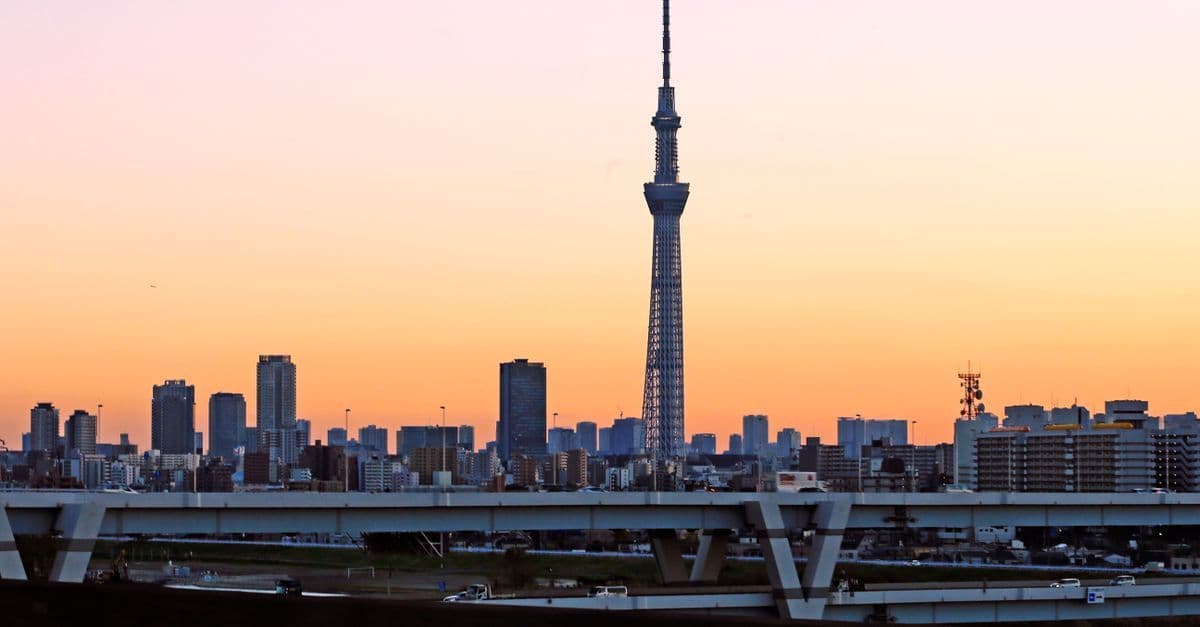
Tokyo Skytree's Tembo Galleria at 450 metres is the highest publicly accessible observation point in Japan, with the Tembo Deck at 350 metres below it. On a clear day, the view extends 100 kilometres to Mount Fuji's snow-capped peak. The advance combo ticket compares favourably against any major urban observation experience: Sydney Harbour Bridge Climb runs upwards of A$300 per adult, and Skytree's advance combo is roughly one-tenth that figure.
That last qualifier matters.
Tokyo's atmosphere carries enough haze year-round that visibility can drop well below 10 kilometres, flattening what should be an expansive panorama. The Japan Meteorological Agency publishes daily visibility forecasts for the Kanto region. Check before committing to a specific date. Visibility forecast under 10 km? Shift your timing or consider the Tembo Deck-only ticket at a lower entry price rather than the full combo.
Solamachi, the shopping and dining complex at the tower's base, is free to enter. Its 312 shops and restaurants span multiple floors and offer enough variety for a few worthwhile hours, which makes the overall visit worthwhile even when clouds settle in above.
Peak periods to factor in: weekends throughout the year, Golden Week from late April to early May, and cherry blossom season from late March to mid-April. Midweek visits in autumn combine the sharpest skies with the shortest waits.
The next step is locking in a ticket without paying the queue premium.
eSIM for Japan: Check current plans and pricing.
Is Tokyo Skytree Worth the Ticket Price?
Advance combo tickets cost approximately ¥3,000 per adult, around ¥400 less than the walk-up rate of ¥3,400. Book through the official Tokyo Skytree website, the only channel with guaranteed date-and-time slot reservation that accepts international credit cards with no Japanese bank account required.
The process, step by step:
- Select your date and entry window. Slots on the official booking page fill quickly on weekends and during school holiday periods.
- Choose Tembo Deck only or the full Deck plus Galleria combo. Advance combo tickets for adults cost approximately ¥3,000. Deck-only tickets are cheaper if the Galleria's spiralling walkway isn't on your list.
- Pay by international credit card. Visa and Mastercard work without issue. The booking system doesn't charge a conversion fee, though your Australian bank's overseas transaction charge may still apply.
- Show the QR code at the entry gate. It arrives by email after payment. No printing needed; the gate scanner reads directly from your phone screen.
Walk-up combo tickets run ¥3,400 per adult, a ¥400 premium over the advance price. That extra charge buys flexibility and a queue: anywhere from a few minutes to well over an hour on busy days.
Common pitfall: Counting on walk-up tickets during Golden Week or cherry blossom season. Availability at these peak periods exhausts before midday. Advance booking is the only reliable approach for high-demand dates.
The QR code needs a live data connection to display at the gate. Sorting a local SIM or eSIM before leaving Australia is a sensible step at this point in your planning.
Deciding between advance and walk-up is the last practical question before you go.
Tokyo Skytree Tickets: How to Book and What to Pay
Advance tickets eliminate the queue and cost less than walk-up. For most visitors with confirmed dates, that combination settles the decision before any other factor comes into play.
The trade-off is flexibility. An advance slot locks your date and entry window. If your plans are loose, walk-up keeps options open. The catch: queues at peak times reach 60 minutes.
Walk-up works on a quiet Tuesday in February. It's a different calculation in late March.
During Golden Week and cherry blossom season, advance tickets sell out days or weeks ahead. Attempting walk-up during these periods is possible, but it's not dependable planning. Tokyo weekends carry similar pressure year-round, in lower doses.
If Tokyo dates are confirmed more than a week out, book the advance slot. The saving covers itself quickly, and walking through the entry gate on arrival after a long-haul flight from Australia is a straightforwardly good outcome.
Advance Tickets vs Walk-Up: What to Know
Book the combined Tembo Deck and Tembo Galleria in advance and you save around ¥400 on the walk-up price. The advance slot locks a timed entry window: arrive in that window and you walk straight to the lifts, while walk-up queues stretch to 60 minutes at peak periods.
In practice, the real payoff isn't the money.
No queue, no scramble.
That's an hour in a ground-floor lobby while 450 metres of view sits above you.
Golden Week and cherry blossom season are the two periods to treat seriously. Advance slots sell out days ahead during both. If your trip lands in late March, April, or early May, book before you board the plane at home.
The timed entry window has some flex built in, so don't stress about arriving exactly on the dot. Miss it entirely, though, and you're joining the walk-up line as if the booking never happened. Which slot works best for the light over Tokyo is a separate question worth thinking through before you commit.
Tembo Deck vs Tembo Galleria: Which Level Is Better?
The Tembo Deck at 350 metres is the main platform: glass floor panels, cafes, restaurants, and space suited to families. The Tembo Galleria at 450 metres is a spiral glass-enclosed walkway with lighter foot traffic and a wider photographic range. The Galleria only comes with the combo ticket; base admission stops at the Deck.
What the table doesn't convey: the Galleria's spiral design shifts your perspective as you walk. The city doesn't just sit below you; it rotates slowly around the walkway's curve. Most visitors find this more affecting than they anticipated, which is worth knowing before you decide the combo price isn't warranted.
The photography case for the Galleria is strong.
Floor-to-ceiling glass and thinner crowds give a working photographer room to recompose without negotiating around other visitors. The Deck handles the practicalities well. Children engage with the glass floor panels. There's food if the visit runs past midday, and seating means you're not constantly moving. For families with young kids, that flexibility is considered value in itself.
At the advance rate noted earlier, the combo is measured value for what you get. The Galleria is worth accessing if the itinerary allows.
Deck chosen. Time to plan the journey there.
Getting to Tokyo Skytree from Central Tokyo
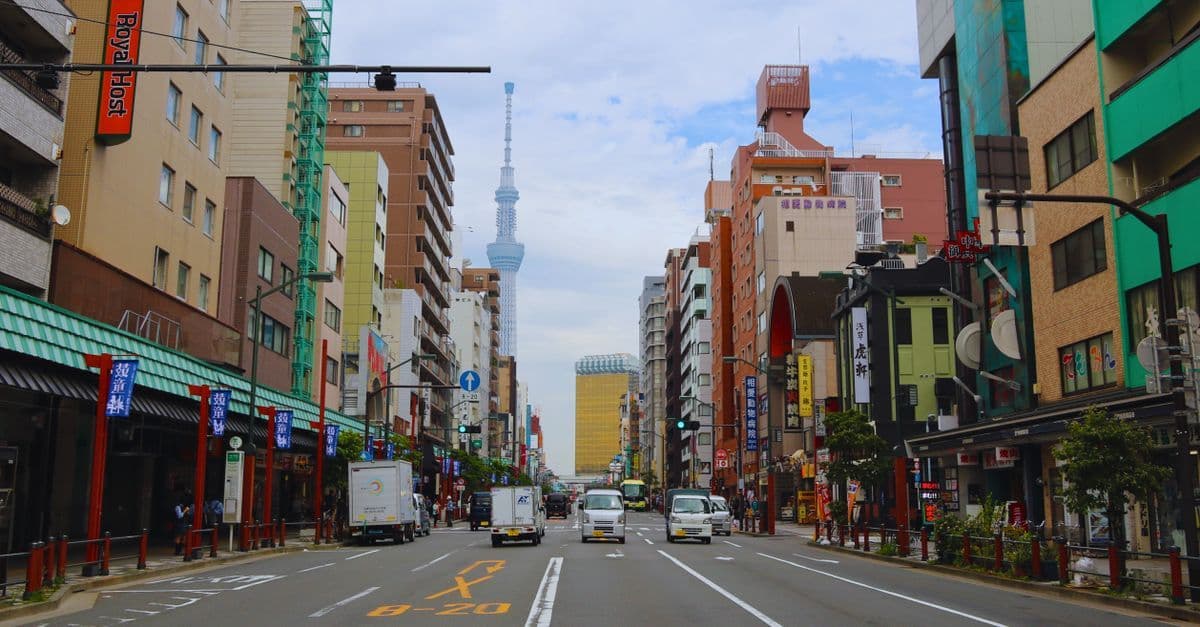
Oshiage station sits directly beneath the tower, served by both the Tobu Skytree Line and Tokyo Metro's Hanzomon Line. From Shinjuku, the trip runs around 30 minutes. From Shibuya, it's closer to 25 minutes. The walk from station exit to tower entrance takes about five minutes.
Tokyo's rail map looks intimidating at first glance.
In practice, reaching Oshiage is one of the more straightforward journeys in the city. The Hanzomon Line connects through Shibuya and several major interchange stations, so most visitors arrive without needing multiple transfers. The Tobu Skytree Line adds a second option from Asakusa and northern Tokyo.
A Suica or Pasmo IC card (a rechargeable contactless fare card) covers every train fare across the trip. Tap in, tap out. No hunting for the right ticket denomination at a machine, no cash required. Vending machines at most major stations dispense both cards in English, with top-up options in multiple languages.
Prefer a taxi? The fare from central Tokyo runs roughly 2,500 to 4,000 yen, depending on traffic. The route between Shinjuku or Shibuya and Oshiage crosses central districts where daytime congestion can stretch the journey considerably. The train is faster and cheaper on most days.
One practical note at the station: the "Skytree Exit" at Oshiage is signposted in English and leads directly to the tower entrance. Once you're on street level, the signs handle navigation on their own.
One thing still to sort before the visit: mobile data.
Staying Connected in Tokyo: Data Plans and eSIM Options
Japan's three main mobile networks, NTT Docomo, SoftBank, and KDDI's au, all run 4G and 5G infrastructure across Tokyo. An eSIM gives Australian travellers the cleanest setup: activate it at home before the 20-plus-hour flight, and the phone connects automatically on landing, no airport counter required.
Airport SIM counters at Narita and Haneda carry a markup worth avoiding. Tourist-oriented plans tend to cost more than comparable options booked in advance, and the queues add time you'd rather spend heading into the city. The markup is a layered problem: you're paying a premium for convenience at precisely the moment you're least likely to comparison shop.
Skip the counter entirely.
Pocket Wi-Fi devices are a functional alternative, running roughly A$8 to A$15 per day. They work, but they add a physical device to carry and return before departure. For a two-week trip, the daily cost compounds into a nuanced decision.
Key fact: HelloRoam's Japan eSIM plans start at ~A$5.41 for 1 GB over 7 days on KDDI's au network, rising to ~A$14.71 for 5 GB over 30 days.
Heavy data use in Tokyo is predictable: navigation apps for moving between districts, transit planning, messaging, and the occasional restaurant search around Solamachi or Asakusa. A 5 GB allocation handles a two-week trip comfortably for most travellers.
Telstra, Optus, and Vodafone Australia all offer international roaming add-ons for Japan. The daily fees make them expensive over anything longer than a few days; an eSIM sourced before departure is the more careful option for a proper trip.
Data sorted. A few common questions worth clearing up.
What Should I Know Before Visiting Tokyo Skytree?
Tokyo Skytree opens at 10 am and closes at 9 pm every day of the year, with last entry at 8 pm. Photography is permitted on both decks, though tripods aren't. The complex holds considerably more than the tower itself: Solamachi's shopping and dining floors, the Sumida Aquarium, and the Konica Minolta Planetarium Tenku, all in the same structure.
A few things people get wrong before showing up.
Is it closed some days? No. The tower runs 365 days a year. Occasional scheduled maintenance windows do occur, so checking the official Tokyo Skytree website in the week before arrival is sensible. Unplanned closures are uncommon.
Is photography restricted? Cameras and phones are welcome on both decks. Tripods aren't permitted, but handheld shots from the Galleria's glass walkway offer workable angles from multiple positions. Dedicated photographers tend to plan the Galleria visit specifically for this reason.
Is it just the tower? Solamachi's food floors open at 10 am alongside the observation decks. A visit extends naturally into lunch, souvenir shopping, or an afternoon at the aquarium. Families routinely spend longer in the complex than they planned.
Key fact: Solamachi houses 312 shops and restaurants across multiple floors, open daily from 10 am.
Visibility is worth thinking through before you commit to a time slot. Autumn and winter mornings deliver the sharpest sightlines across greater Tokyo. On the clearest days, Mount Fuji is visible to the southwest. Summer humidity builds afternoon haze that narrows the visible distance. A weekday morning between October and February gives the best conditions overall.
One timing question comes up more than any other.
What Is the Best Time of Day to Visit Tokyo Skytree?
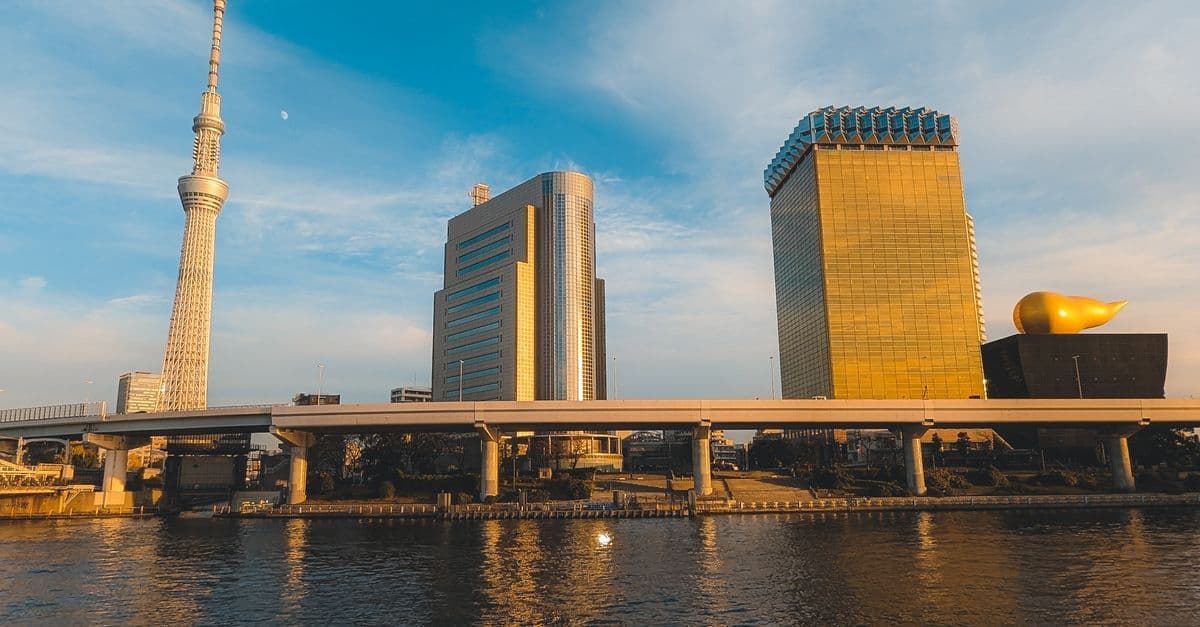
Midweek mornings between 10 am and noon offer the shortest queues and the sharpest visibility. Atmospheric conditions tend to be clearest before midday, particularly in autumn and winter when haze hasn't built yet. Golden hour, roughly 30 minutes before sunset, produces the most dramatic light across the city. Night visits from around 7 pm reveal illuminated Tokyo sprawling in every direction.
What's less obvious is how completely the tower changes character across a single day.
Morning (10 am to noon): The first hour after opening is the quietest on most weekdays. School groups and families tend to arrive mid-morning, so that early window is genuinely calm. Mount Fuji is visible on clear days, and the afternoon haze that gradually softens distant views hasn't set in yet.
Sunset (30 minutes before sundown): Tokyo Skytree faces north-west, so golden hour light falls across the city grid toward the horizon. That window is brief and worth timing carefully.
Night (from 7 pm): The city below shifts from grey to lit grid. The Sumida River and Tokyo Bay both catch the light on clear evenings. The tower itself is illuminated after dark, cycling through seasonal colour schemes.
Weekend afternoons are the one time slot that doesn't reward the visit. Queues run longer, decks fill, and the experience competes with the crowd.
Book a weekday morning slot, and leave the afternoon free for Solamachi and Asakusa.
Reviewed by HelloRoam's editorial team. Last updated: 15 June 2026.
Get Connected Before You Go


Frequently Asked Questions
Advance combo tickets cost approximately ¥3,000 per adult, around ¥400 less than the walk-up rate of ¥3,400. Book through the official Tokyo Skytree website to secure a timed entry slot.
The Tembo Deck at 350m offers cafes, restaurants, and glass floor panels, while the Tembo Galleria at 450m is a spiral glass-enclosed walkway with lighter crowds. The Galleria is only accessible with the combo ticket.
Advance booking is strongly recommended for weekends, Golden Week, and cherry blossom season, when walk-up tickets can sell out before midday. Advance tickets also cost ¥400 less and eliminate queuing.
Tokyo Skytree opens at 10am and closes at 9pm every day of the year, with last entry at 8pm. The Solamachi shopping and dining complex at the base also opens daily at 10am.
Weekday mornings between 10am and noon offer the shortest queues and clearest skies, especially in autumn and winter. Sunset 30 minutes before sundown and night visits from around 7pm also offer distinctive views.
On clear days, Mount Fuji is visible to the southwest from the observation decks, up to 100 kilometres away. Autumn and winter mornings offer the best conditions, as summer humidity creates afternoon haze.
Midweek visits in autumn combine the sharpest skies with the shortest queues. Avoid Golden Week in late April to early May and cherry blossom season in late March to mid-April, when advance tickets sell out days ahead.
Photography is permitted on both the Tembo Deck and Tembo Galleria. Tripods are not allowed, but handheld photography from the Galleria's glass walkway provides excellent angles with lighter foot traffic.
Take the Hanzomon Line or Tobu Skytree Line to Oshiage station, directly beneath the tower. The journey takes around 25-30 minutes from Shibuya or Shinjuku. English Skytree Exit signs lead to the entrance in about five minutes.
Yes. A Suica or Pasmo IC card covers all train fares across Tokyo's network with contactless tap-in and tap-out. Cards can be purchased in English at major station vending machines and top-up options are available in multiple languages.
A taxi from central Tokyo to Oshiage costs roughly ¥2,500 to ¥4,000 depending on traffic. Daytime congestion can make the journey considerably slower than the train, which is also cheaper.
Solamachi at the tower's base has 312 shops and restaurants across multiple floors and is free to enter. The Sumida Aquarium and Konica Minolta Planetarium Tenku are also located within the same complex.
Visa and Mastercard are accepted on the official booking website with no Japanese bank account required. Your Australian bank's overseas transaction fee may still apply, but the booking system itself does not charge a conversion fee.
The Japan Meteorological Agency publishes daily visibility forecasts for the Kanto region. If visibility is under 10km, consider shifting your date or booking the Tembo Deck-only ticket at a lower entry price.
The Tembo Galleria at 450m adds a spiral glass-enclosed walkway with lighter crowds and wider photographic range. At roughly ¥400 more than the Deck-only ticket, most visitors find the combo worthwhile if the itinerary allows.
An eSIM activated before departure connects automatically on landing without airport queues or counter markups. Budget eSIM plans for Japan typically start from around A$5-6 for 1GB over 7 days, with larger data allocations available for longer trips.
Pocket Wi-Fi devices work across Japan and cost roughly A$8-15 per day, but add a physical device to carry and must be returned before departure. For trips longer than a few days, an eSIM activated before travel is generally more practical.