

Flights to Bali from Australia: key facts at a glance
Five Australian cities have year-round non-stop flights to Denpasar's Ngurah Rai International Airport (DPS): Perth, Sydney, Melbourne, Brisbane, and Gold Coast webjet.com.au. Perth has the most competitive fares and the highest daily departure frequency of any Australian gateway. February is the cheapest month to book; July school holidays and the Christmas fortnight are the most expensive by a wide margin.
Key fact: HelloRoam's Indonesia eSIM (a built-in digital SIM activated by QR code) starts at ~A$5.41 per day for unlimited daily data via Telkomsel, XL, and Smartfren networks.
Sort your connectivity before you sort your seat. An eSIM for Indonesia activates in minutes on your phone, and you're online the moment you clear customs at DPS. No Telstra roaming alert, no dramas.
Timing and departure city shape everything that follows.
What is the cheapest month to fly to Bali?
February is the cheapest month to fly to Bali from Australia skyscanner.com.au. Return fares from Sydney and Melbourne reach their annual low during this window, sitting well below the A$800 to A$1,200 range that July school holidays and Christmas peaks command. May and September are the other two reliable value windows, combining dry-season conditions with noticeably softer pricing.
School holidays are the single biggest driver of fare inflation. A family of four shifting their trip from July to May can save somewhere between A$1,600 and A$2,400 on flights alone. July fares typically run 50 to 80 percent above off-peak levels across east coast departure cities. That's not a marginal difference; it's a decent chunk of the total holiday budget going purely on timing.
The wet season runs from November through to February flightcentre.com.au. Afternoon storms are a reliable daily feature, usually short and mostly done before mid-morning. Bali doesn't shut down in the wet season the way some destinations do, and the lower visitor numbers are a genuine secondary benefit that the bargain-hunting calendar rarely mentions. Repeat visitors often come back for it deliberately.
September is underrated.
The dry season is winding down but hasn't broken yet, school holiday pressure has eased, and fares from Sydney and Melbourne regularly sit below what July commands. Travellers who book Bali more than once tend to settle on September as their default window, for exactly these reasons.
The Christmas fortnight carries the highest fares of the calendar year. Shoulder dates either side, early to mid-December or the second week of January, offer a more workable middle ground for anyone who can't entirely sidestep the holiday period.
When you fly matters; where you fly from matters just as much.
Direct flights to Bali from every Australian city
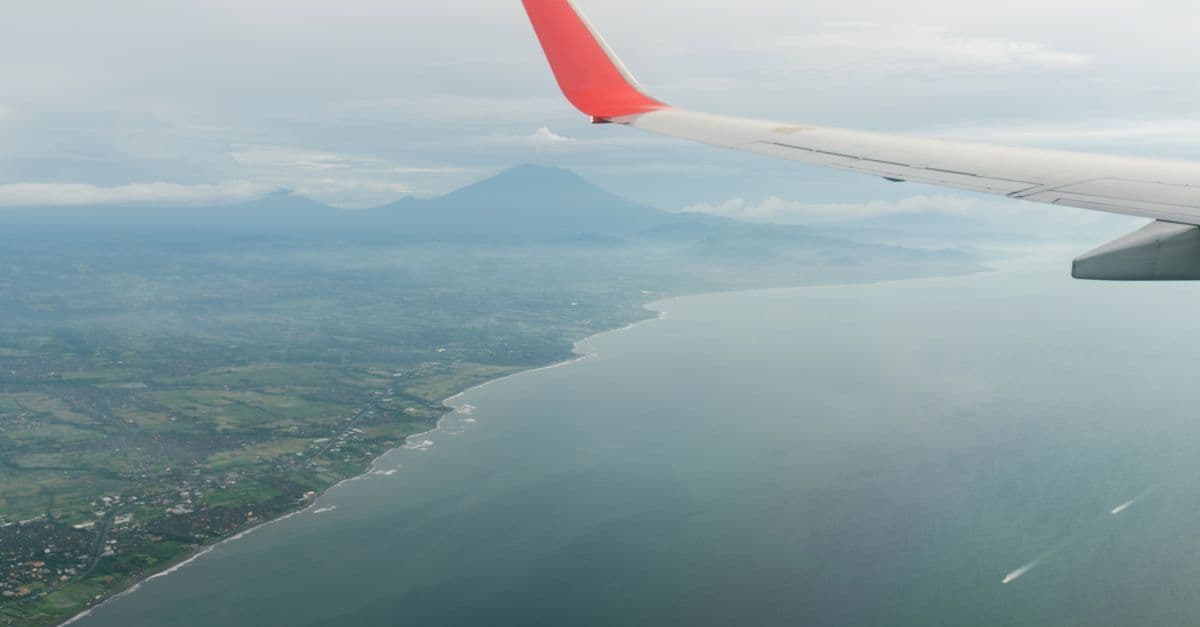
Non-stop flights to Bali operate year-round from five Australian cities: Perth, Sydney, Melbourne, Brisbane, and Gold Coast. Perth has the highest daily departure frequency and the shortest flying time at roughly 3.5 hours webjet.com.au, and consistently produces the most competitive fares of any Australian departure point. East coast cities clock in at around 6 hours from Sydney or Melbourne, and 6.5 hours from Brisbane.
Ngurah Rai International Airport (DPS) is Bali's only commercial airport. Every flight to the island lands there, with no secondary airports or alternative terminals to factor into your planning.
Perth's advantage is structural. More airlines compete on the Western Australian route than from any east coast city, which keeps pricing sharper and departure windows more varied. With five carriers operating direct Perth services, there's genuine competition on timing and price across the week.
Direct services by departure city: - Perth: Jetstar, Qantas, Garuda Indonesia, AirAsia X, Scoot - Sydney and Melbourne: Jetstar, Qantas, Garuda Indonesia - Brisbane and Gold Coast: Jetstar, AirAsia X
Adelaide and Darwin don't appear in year-round direct schedules as of mid-2026, though seasonal services do occasionally run.
The stopover question matters more for east coast travellers than Perth flyers. Routing via Kuala Lumpur on budget carriers can run A$100 to A$300 cheaper than a direct service from Sydney, Melbourne, or Brisbane. The catch is an extra four to six hours of travel time. On a 20-plus-hour travel day from the east coast, that trade-off is worth running the numbers on before you commit.
Route confirmed? Now pick the carrier that suits your budget.
Which is the best airline to travel to Bali?
No single airline is the best option for every Australian flying to Bali. The right choice turns on three things: whether you're checking bags, how much the in-flight experience matters across six hours, and whether Frequent Flyer earn factors into the calculation.
One detail most comparison sites skip: Qantas economy points redemptions to Denpasar rarely beat a Jetstar sale fare on total value. For economy class on this route, cash almost always wins.
Compare eSIM plans for Indonesia — See 2026 pricing →
Jetstar and AirAsia X advertise the sharpest headline fares. The add-on model means the booking total climbs once a checked bag and meal are factored in. Travelling carry-on only? Both carriers are hard to beat on price.
Garuda and Virgin hit the practical mid-range for travellers checking a bag. Both include bags and a meal in standard economy, and the pricing reflects those inclusions without pushing into Qantas territory.
Qantas earns the premium mainly for Frequent Flyer accrual and status credits qantas.com. Without those goals driving the booking, the extra cost is difficult to justify in economy class.
The carrier decision is made. The gap between a reasonable fare and a genuinely sharp one comes down entirely to when you book and a few habits worth developing.
How to find cheap flights to Bali: booking strategies that work
The most reliable timing for cheaper fares from east coast cities is 6-12 weeks before departure. Perth's deeper competition and daily frequency shortens that window to 4-8 weeks.
Five steps that consistently move the price:
1. Set a fare alert on Google Flights, using DPS as your destination Search Denpasar (DPS) from your home airport, select your travel date range, and enable price tracking. Google Flights sends email alerts when fares shift meaningfully. Set it once, check when notified, and stop monitoring manually every morning.
2. Track the Jetstar Tuesday sale schedule Jetstar runs Tuesday promotions consistently across the year jetstar.com. AirAsia runs Free Seats campaigns several times annually, typically in January and around mid-year. Checking both carriers on a Tuesday morning costs nothing and occasionally turns up something worth booking quickly.
Sales are unpredictable. Departure days are not.
3. Flex the departure day Tuesday and Wednesday flights to Bali typically cost A$30-A$80 less than Friday departures on the same week. Friday night flights fill with leisure travellers; mid-week seats stay quieter. For two people travelling together, that saving comfortably covers a dinner in Seminyak.
4. Calculate the real fare, not the headline On Jetstar and AirAsia, add checked baggage costs before comparing with mid-range carriers. The gap between budget and mid-range closes considerably once luggage fees are included.
5. Use points for business class, not economy Qantas and Velocity economy redemptions to Denpasar rarely outperform a sale fare. Business class is where the redemption value improves meaningfully on this route.
Get the fare sorted before peak season pricing kicks in. What catches most travellers off-guard is the cost waiting for them after landing.
Why is it so expensive to fly to Bali?
Bali's price spikes aren't about distance or a shortage of routes from Australia. Two structural forces drive fares up: Australian school holiday demand concentrating into predictably short windows, and hard capacity limits at Ngurah Rai Airport in Denpasar.
The airport constraint is the detail most travellers miss.
Ngurah Rai operates under a ceiling on daily aircraft movements. Airlines can't simply add seats when July school holidays peak. Supply is structurally capped; demand surges anyway. Fares respond accordingly.
Myth: Bali is always affordable to reach from Australia, so flights are cheap year-round. The reality: timing is the dominant price driver. Christmas fortnight fares from east coast cities reach A$900 at the low end and A$1,400-plus at peak. Off-peak months run considerably lower, as the seasonal data covered earlier in this guide shows.
Myth: Budget airlines are genuinely cheap once you've added everything. The reality: base fares to Bali can rise A$80 to A$200 once checked baggage and a meal are included. The headline price and the total price are reliably different numbers on this route.
Australian families with school-age children feel this most sharply. School holiday calendars are fixed, widely shared across millions of households, and entirely predictable. Airlines price accordingly.
The flight cost is now the predictable part of a Bali trip. What most Australians underestimate is what they'll pay for mobile data once they land.
Staying connected in Bali: eSIM, SIM card and WiFi options
Bali has three practical connectivity options for Australian travellers: an eSIM (a digital SIM embedded in your phone, activated by scanning a QR code with no physical card needed), a local SIM from Ngurah Rai on arrival, or hotel WiFi for very short stays where you won't venture far from your accommodation.
Sort your data before you leave the terminal. Grab and Gojek need a live connection to book a ride, and Ngurah Rai's free airport WiFi cuts out past the arrivals hall.
Coverage is reliable across the main tourist strip. Telkomsel and XL Axiata deliver solid 4G across Kuta, Seminyak and Ubud. The picture shifts heading north to Munduk or east to Amed, where signal becomes patchy in the hills and along the coast. Download offline Google Maps before you fly.
Airport SIM counters at Ngurah Rai sell plans for 50,000 to 100,000 IDR for 5GB to 10GB of data. That's a fair price, but queues run long after peak arrivals and plenty of Telstra, Optus, and Vodafone AU handsets are carrier-locked (restricted to a single network) and need unlocking before a foreign SIM works.
An eSIM sidesteps both problems. HelloRoam's Indonesia plans run on Telkomsel, XL Axiata, and Smartfren. A 5GB plan valid for 30 days costs ~A$19.36; a 10GB plan across the same period is ~A$30.21. Scan the QR code before you board, and the plan is live when the wheels touch DPS tarmac.
Key fact: HelloRoam's Indonesia eSIM starts at ~A$6.18 for 1GB valid over 7 days, operating on Telkomsel, XL Axiata, and Smartfren.
A quick two-night stay in Kuta with the Airbnb WiFi intact? You might skip the data plan entirely. Beyond three days, especially with day trips to north Bali or Amed on the cards, an eSIM earns its keep before the return journey.
eSIM for Indonesia and skip the queue at Ngurah Rai's SIM counter on arrival.
Reviewed by HelloRoam's editorial team. Last updated: 10 June 2026.
Get Connected Before You Go


Frequently Asked Questions
February is the cheapest month to fly to Bali from Australia. May and September are also reliable value windows with softer pricing. July school holidays and the Christmas fortnight consistently produce the highest fares of the year.
No single airline suits every traveller. Budget carriers offer the lowest headline fares but charge separately for bags and meals. Mid-range and full-service airlines include these in standard economy and better suit travellers checking luggage.
Two structural factors drive up fares: concentrated Australian school holiday demand and a hard cap on daily aircraft movements at Ngurah Rai Airport. Airlines cannot add capacity when demand peaks, so fares spike during July and the Christmas fortnight.
Tuesday and Wednesday departures typically cost A$30–A$80 less than Friday flights on the same week. Budget carriers also run Tuesday promotional sales, making Tuesday morning a consistent time to check for discounted fares to Bali.
Perth consistently produces the most competitive fares to Bali of any Australian city. Five airlines compete on the Perth route, keeping prices sharper and departure windows more varied than east coast alternatives.
Flight time depends on your departure city. Perth is approximately 3.5 hours, Sydney and Melbourne around 6 hours, and Brisbane or Gold Coast roughly 6.5 hours. All services land at Ngurah Rai International Airport (DPS).
Direct flights operate year-round from Perth, Sydney, Melbourne, Brisbane, and Gold Coast. Perth has the most carriers. Sydney and Melbourne are each served by three airlines, while Brisbane and Gold Coast are covered by two budget carriers.
East coast travellers typically find the best fares 6–12 weeks before departure. Perth flyers have a shorter optimal window of 4–8 weeks, due to higher daily frequency and stronger airline competition on that route.
Routing via Kuala Lumpur on budget carriers can cost A$100–A$300 less than a direct east coast service, but adds four to six hours of travel time. It is worth calculating the full total before committing, especially from Sydney or Melbourne.
The Christmas fortnight carries the highest fares of the year. July school holidays are also peak-priced, running 50–80% above off-peak levels from east coast cities. Early December or the second week of January offer slightly softer pricing.
All flights to Bali land at Ngurah Rai International Airport, airport code DPS, in Denpasar. It is the island's only commercial airport, so there are no alternative terminals or secondary airports to consider.
The three main options are an eSIM activated before departure, a local SIM purchased at Ngurah Rai Airport on arrival, or hotel WiFi for very short stays. An eSIM requires no physical card and can be active before you clear customs.
SIM counters at Ngurah Rai Airport sell plans for 50,000–100,000 IDR for 5–10GB of data. Queues run long after peak arrivals, and some Australian phones are carrier-locked and may need unlocking before a foreign SIM will work.
Coverage is solid across main tourist areas including Kuta, Seminyak, and Ubud. Signal becomes patchy in northern Bali around Munduk and along the eastern coast near Amed. Downloading offline maps before departure is strongly recommended.
Indonesia eSIM plans for Australians typically start around A$6 for 1GB valid over 7 days. A 5GB plan for 30 days costs approximately A$19–A$20, and a 10GB plan for the same period runs around A$30.
Yes. The wet season from November to February brings the lowest fares of the year, with February being the annual low point. Afternoon storms are common but usually short, and lower visitor numbers are an added benefit for budget-conscious travellers.
Sources
- Cheap flights to Bali — flightcentre.com.au
- Cheap Flights from Melbourne (MELA) to Denpasar (DPS) — skyscanner.com.au
- Flights to Bali, Indonesia — jetstar.com
- Cheap Flights to Bali (DPS) from AUD ... — virginaustralia.com
- Cheap Flights to Bali (DPS) | Deals & Fares — webjet.com.au
- Flights from Sydney (SYD) to Denpasar (DPS) — qantas.com
- Melbourne to Bali (Denpasar) Flights — garuda-indonesia.com