

Table of content
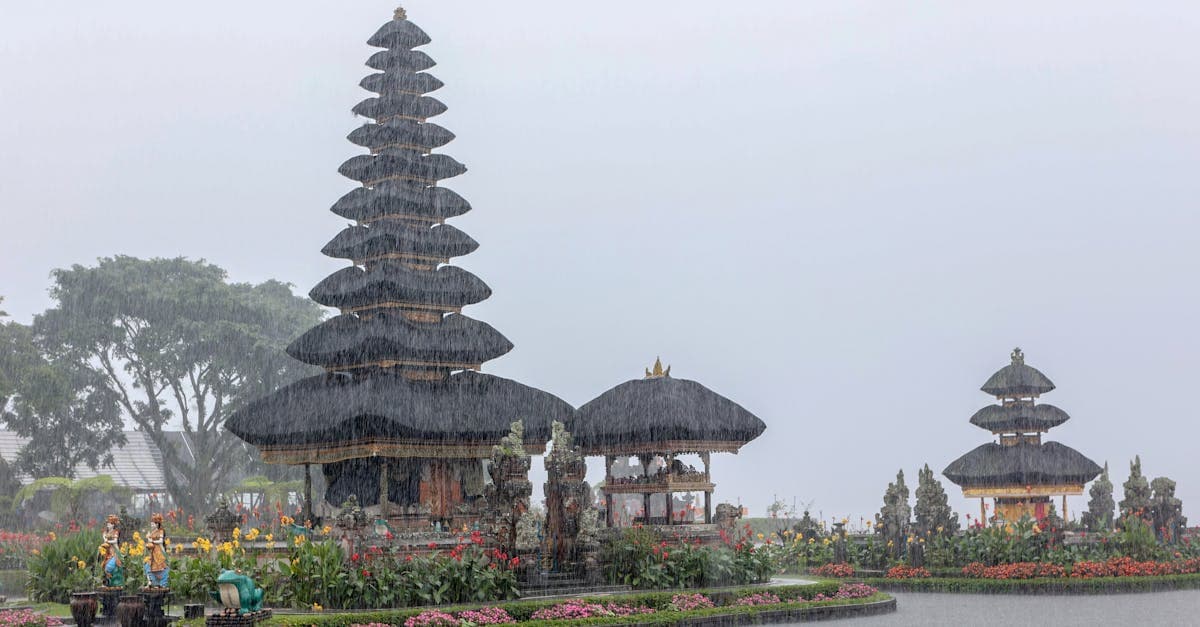
! [Ulun Danu Beratan Temple framed by lush greenery and tropical flowers during Bali rainy season! image
Quick Answer: Bali Rainy Season
! [Aerial view of Pura Ulun Danu Bratan Temple rising from a calm misty highland lake in Bali! image
Bali's rainy season runs November through April, with December, January and February the wettest months virginaustralia.com. Temperatures hold at 28 to 32 degrees Celsius throughout; nights cool to 24 to 26 degrees. Sea temperatures sit around 27 to 29 degrees year-round, so swimming and snorkelling stay viable in any month bali.com.
The pattern is consistent across the season: clear mornings, sharp afternoon downpours, and evenings that typically dry out before dinner baliholidaysecrets.com. Accommodation runs 20 to 50 per cent cheaper during wet season compared to the July-August peak, and the beaches shed their crowds outside the Christmas window baliholidaysecrets.com. February is consistently Bali's quietest and cheapest month, settling into the post-New Year lull once the holiday crowd clears.
One trap most travellers miss: the Christmas-New Year window from late December to early January commands a sharp price spike despite sitting in the heaviest rainfall of the year hotels.com. Book that stretch expecting peak rates.
Wet season shifts more time indoors at cafes, spas and co-working spaces, which burns through mobile data faster than beach days would. Telstra, Optus and Vodafone AU international roaming all add up fast over a two-week stay. HelloRoam's eSIM for Indonesia eSIM runs on Telkomsel's 5G network, starting at ~A$3.53 for 1 GB over 7 days, and undercuts those daily carrier costs for anyone staying a week or longer. An eSIM activated before your flight sidesteps the local SIM scramble on arrival, a practical advantage during wet season when flight delays and crowded arrival halls can disrupt plans.
April is the month most Aussies skip. That's exactly why the prices stay low.
So what does a typical rainy day actually look like on the ground? The pattern is more predictable than most Aussies expect.
What to Expect From Bali Rainy Season Weather Month by Month
! [Traveller in a raincoat riding past motorbikes on a mountain road during Bali rainy season! image
December and January are the heaviest months, each averaging 300 to 350 mm of rainfall across 17 to 20 rain days, based on historical BMKG Denpasar averages. The storms arrive in short bursts of 1 to 3 hours, mostly late afternoon and early evening. Not all-day drizzle. That distinction matters more than the monthly totals.
A typical January day in Seminyak plays out like this: clear skies until around noon, cloud building from 2 pm, a heavy downpour by 3 or 4, and a dry evening by 6. Not a ruined day. An afternoon for a long lunch and a spa treatment, then a full evening out.
February shifts the balance. Rainfall drops to around 250 to 300 mm, and the post-New Year crowd has mostly dispersed. Mornings stretch a little clearer, and rain days thin to around 16 across the month.
March falls further still, to roughly 200 to 250 mm, with noticeably fewer interruptions to the afternoon schedule.
Key fact: April rainfall in Denpasar averages 100 to 150 mm across roughly 10 rain days per month. That's less than a third of the December-January peak.
The Christmas-New Year break, as noted earlier, is the one exception to wet-season pricing: expect peak rates from late December through early January regardless of the rainfall. Fly in on 6 January and both the crowds and the prices drop sharply.
That's the weather picture. What the rainfall totals don't tell you is why plenty of repeat visitors actually prefer this time of year.
Why the Bali Rainy Season Is Better Than You Think
! [Joyful group carrying colourful umbrellas through a lush tropical garden on a rainy day in Bali! image
Even in January, the peak of the wet season, mornings from 8 am to noon are almost always dry. That's four usable hours before the first cloud builds. Enough for the rice terraces, a temple visit, and a swim before lunch.
The landscape changes completely in wet season. Rice paddies at Tegalalang turn a deep, almost electric green. Waterfalls like Gitgit and Sekumpul run at full force, carrying genuine volume that simply isn't there by September. These are the images of Bali in travel photography, and every one of them requires rain thegarciaubud.com.
Tegalalang and Tanah Lot run near-empty compared to the July crowds. No queue for the lookout. No tour buses in the car park.
February is the extreme version of this. After the New Year crowd disperses, demand drops to its annual floor and the room rates follow. If your schedule has any flexibility, February is the most honest answer to 'when should I fly to Bali?'
The numbers back this up plainly. Perth to Bali return fares under A$400 are common during wet season, a figure that gets progressively harder to find once April ends. For east coast travellers, Sydney and Melbourne fares follow a similar seasonal dip. After more than 20 hours in the air, landing into a quiet, green, affordable Bali is a different experience from arriving into the July peak. Where in Bali you're based shapes how much those afternoon showers actually affect your trip.
Best Areas to Stay During Bali's Rainy Season
! [Tropical beachside pavilion and swaying palm trees offering a peaceful escape during Bali's rainy season! image
Ubud, Uluwatu, and Lovina in north Bali are the strongest bases during the wet season, each offering lower rain exposure than the low-lying south coast alternatives. Location shapes the wet season experience more than any waterproof jacket will. Pick a base with natural elevation, good drainage, or a drier microclimate and the season's downsides shrink considerably.
Lovina is the underexploited option.
North Bali sits in the rain shadow of the island's volcanic spine. While Denpasar and Ubud absorb the wet season's heaviest rainfall, the north coast catches a fraction of that total pelanbali.com. The trade-off is a significantly longer transfer from Ngurah Rai Airport and fewer tourist facilities. For travellers after a properly quiet wet season base, those are workable compromises.
Canggu fills up year-round for a specific reason: coworking infrastructure. Reliable fibre connections, a density of cafes with power outlets, and a community of Australians on flexible remote arrangements keep it occupied through December and February alike. It's less a beach destination in wet season and more a tropical office with good coffee.
February is the month to target for Ubud villas. The NYE spike has cleared, the prices are as low as they get, and the rice paddies are at full green.
Once your base is sorted, fill the days smartly.
Things to Do in Bali During the Rainy Season
! [Misty Balinese temple reflected in a tranquil lake surrounded by lush gardens on a rainy afternoon! image
Rainy season in Bali rewards one core tactic: front-load outdoor activity before noon and let the afternoon work itself out. The rain arrives predictably, generally between 2 pm and 5 pm, which turns what sounds like a scheduling problem into a genuine structure.
Step 1: Sunrise at the terraces and swings The Tegalalang rice terraces and Ubud's popular swing operators open at first light. Arrive before 8 am, before the tour buses, and the lush wet-season green is yours without a crowd. By 9 am the groups start arriving. By 11 am it's a queue.
Step 2: Waterfall hikes mid-morning Gitgit (north Bali) and Sekumpul near Singaraja run at their most dramatic volume in wet season. Tracks get muddy, so closed-toe shoes matter far more than rain protection. Uncrowded, full-flowing, worth the muddy boots.
Step 3: Temples before the rain builds Pura Ulun Danu Bratan and Tanah Lot work well from 9 am to 11 am. Bring or rent a sarong at the gate. Crowd levels are a fraction of the July peak at both sites.
Step 4: The afternoon pivot When the sky closes in around 2 pm, a Ubud cooking class fills the next two to three hours neatly. Many schools run a morning-market-to-table format that starts early and finishes before rain. A Balinese massage in Seminyak or Ubud costs a fraction of equivalent treatments back in Sydney or Melbourne.
Step 5: Evening markets and warungs Afternoon showers clear before dusk most days. Seminyak's evening market runs normally. A warung dinner is entirely indifferent to what the sky did at 3 pm.
All those plans need reliable mobile data to hold together.
Staying Connected in Bali's Rainy Season
! [Traveller posing before a dramatic Balinese waterfall, one of the best things to do in Bali's rainy season! image
An eSIM activated before departure is the most practical way to stay connected in Bali during the rainy season. For Australians, this removes the need to queue at Ngurah Rai Airport's SIM card counter after a long-haul flight. Local prepaid SIMs from Telkomsel and XL are available inside Denpasar arrivals and cover Bali well on both 4G and 5G networks.
The SIM process is workable if you have time and patience at the end of a long-haul flight. For Australians routing through Singapore or Kuala Lumpur on a 20-plus hour total journey, queuing for a physical SIM at 11 pm is not the arrival anyone plans for. Combine a peak-season afternoon arrival with a weather delay and that counter becomes a genuine obstacle.
Data usage runs higher in wet season than a beach-focused trip. Afternoon rain pushes activity indoors: streaming content during the downpour, pulling up Google Maps between temple stops, potentially managing a flight rebooking if disruptions stack up. That's meaningfully more than a trip where you're horizontal on a sun lounger from noon.
Canggu coworking spaces are generally reliable during off-peak hours, though the connection gets patchy from 10 am to 2 pm when the space fills. Spa and villa guest Wi-Fi varies. For video calls, travel insurance claims, or anything time-sensitive, your own mobile connection is the dependable option, not shared infrastructure. Setting up an eSIM at home takes minutes; that's the sensible window, not a kiosk in Ngurah Rai arrivals after your third connection of the day.
Still have questions? These come up most.
Bali Rainy Season: Your Top Questions Answered
! [Family with bright umbrellas walking together through heavy rain in the Bali countryside! image
Is January too wet to visit Bali? January sees the most rain days of any month in the wet season. That sounds discouraging until you factor in the pattern: heavy bursts in the afternoon, mornings almost always clear, temperatures still warm. Plenty of repeat visitors prefer January for exactly the reasons most first-timers avoid it: cheap accommodation, quiet beaches, and no competition for a spot at Tegalalang at sunrise.
Is A$1,000 enough for a week in Bali? In wet season, yes, for most travellers. Accommodation prices sit well below the July peak. Eating at warungs is cheap year-round. The bigger variable for Australians is the flight cost, not what you spend on the ground. Budget travellers stretching a fortnight have done it comfortably on less.
What are the health risks in the wet season? Dengue is present in Bali year-round, but mosquito populations rise with wet season standing water. A DEET or picaridin-based repellent, long sleeves at dawn and dusk, and travel insurance that includes Indonesian medical coverage covers the practical risk. It's a manageable concern, not a reason to rebook for July.
What should I pack for Bali's wet season? A packable rain jacket, closed-toe shoes for any waterfall or jungle track, and sandals for everything else. A sarong doubles as temple attire and beach cover. Most wet season preparation comes down to scheduling, not your bag. Pack light and front-load your outdoor days before noon.
Is Bali Worth It in Rainy Season?
! [Aerial view of a Bali beachfront resort glowing in golden sunset light during rainy season! image
For budget-conscious Australians, the answer is an unambiguous yes. Rainy season Bali runs significantly cheaper than the July-August school holiday window across accommodation, flights, and villa rates. The trade-off is smaller than the reputation suggests.
Rain doesn't wreck a Bali trip. Poor planning does.
The morning dry window is what makes rainy season workable in practice. Temples, rice terraces, and waterfall hikes all sit comfortably within the hours before noon. By the time afternoon storms arrive, most travellers are already back at the villa or settled into a warung.
February is the clearest pick for maximum value. Post-NYE flight prices drop, the holiday crowd thins out, and Bali's most visited spots operate at a pace that feels almost residential. Tegalalang with a handful of visitors is a different experience from the August version.
April sits close behind: lighter rain, prices still well below peak, and the landscape still rich from the season's moisture. For Aussies who can travel outside school term dates, this shoulder stretch earns a hard look.
The next question: which single month within the wet season actually stacks up the most rainfall?
What Is the Rainiest Month in Bali?
! [Padang Padang Beach revealing Bali's lush cliffs and clear turquoise waters during the rainy season! image
January is consistently Bali's wettest month. The rainfall totals and rain day counts detailed in the month-by-month breakdown above place it at the top of both measures across the full calendar year.
What those figures don't show is how the rain actually arrives. January storms come as heavy, concentrated bursts from mid-afternoon onward. Mornings stay warm and largely dry. That pattern holds even through the season's heaviest weeks.
December comes close on total rainfall, but carries the Christmas-New Year price premium. Same wet weather, steeper bill.
The all-day overcast that defines a Melbourne or Canberra winter weekend doesn't describe Bali in January. A storm that rolls in at 3 pm, runs hard for two hours, and clears by dusk leaves the evening cool and walkable. That's the typical pattern, not the exception.
Knowing which month is wettest is useful. Knowing when the rain actually falls within that month changes how you plan an itinerary.
So when should you actually book for Bali?
What Is the Best Month to Go to Bali?
! [Aerial sunset view of a Bali beach filled with visitors, showing why any month is worth a visit! image
For most Australian travellers with flexible dates, April or September offers the best balance of manageable rain, lower prices, and thinner crowds bali.com. No single month wins on every measure; the right choice depends on priorities across dry weather, cost, crowd levels, and festive atmosphere.
July and August deliver the most reliable dry conditions. These months also align directly with Australian school holidays, driving firm demand across flights and accommodation. Strong weather, real crowds, and premium prices, all in the same package.
April and May are consistently undervalued. Rain is noticeably lighter than the peak wet months, prices remain below the school holiday surge, and the landscape holds its lush wet-season green. A crisp option for Aussies who can flex their dates.
February is the cheapest month on the calendar. Minimal queues, post-NYE pricing, and afternoon storms that run shorter than January's. The occasional full-day downpour is possible but not the norm.
September and October offer dry season conditions without the school holiday premium. Late dry season is strong value for Australians travelling outside term breaks.
December works well for the first two weeks, with festive energy around Canggu and Seminyak. Prices climb and rain builds from mid-month onward.
For most Australian travellers with flexible dates, April or September is the practical pick.
Reviewed by HelloRoam's editorial team. Last updated: 08 April 2026.
Get Connected Before You Go