

HelloRoam is a global eSIM provider offering instant mobile data in 170+ countries. Buy prepaid travel eSIM plans with no extra fees, no contracts, and instant activation on any eSIM-compatible device.
15 min read


According to frequenttraveller.com.au, Cambodia, Malaysia, the Philippines, and Laos rank among the cheapest countries to travel from Australia, each combining daily costs under A$100 with return flights under A$800.
Cambodia is the budget outlier in this group. Flight costs from Australia are comparable to Vietnam and Thailand at ~A$400-750 return, but daily ground costs drop to ~A$32-55, the lowest tier in Southeast Asia vinwonders.com. Phnom Penh and Siem Reap are both well set up for budget travellers. A visa on arrival is required at around ~A$40. One practical standout: Cambodia's local SIM cards rank among the cheapest globally, at under ~A$4 for 30 days of data.
Kuala Lumpur doubles as a transit hub and a legitimate destination in its own right. Return flights run ~A$350-650 via AirAsia. Australian passport holders get 90 days visa-free. Daily costs of ~A$56-95 come with a food scene strong enough to build an itinerary around.
Cebu Pacific flies direct from Sydney and Melbourne, with returns from ~A$400-750. Australian passport holders enter without a visa. Daily costs run ~A$48-80. Island hopping between Palawan, Boracay, and Cebu is a genuine draw, but inter-island transport adds meaningful cost; factor those transfers in before you finalise your budget.
Most travellers reach Laos overland from Thailand or Cambodia rather than by direct flight. Daily costs are comparable to Cambodia's, with Luang Prabang and the 4000 Islands offering a pace of travel that's hard to find elsewhere in the region. eSIM coverage drops off outside major towns, making a local SIM card on arrival the practical choice.
eSIM availability is strong in Malaysia and the Philippines. Hello Roam covers both destinations with plans that activate before you leave Australia, removing the need to source a SIM on arrival. Cambodia and Laos are better served by purchasing a local SIM card at the airport or a street-side phone shop; rural coverage in both countries is patchy enough that a local network matters.
Cambodia's cheap local data and Laos's limited eSIM reliability outside towns are worth factoring in before you commit to an itinerary. A local SIM in either country costs next to nothing and solves the problem immediately.

According to frequenttraveller.com.au, Indonesia wins for most Australians. Bali flights run as low as ~A$250 return from Perth, and daily costs sit comfortably below ~A$70 even at mid-range comfort. According to vinwonders.com, Vietnam and Thailand follow closely, both combining accessible flights with genuinely cheap day-to-day spending.
The figures circulating online, almost always in USD and almost always just a daily spend, don't reflect what a trip actually costs an Australian. The honest formula is: return flights + (daily budget × days) + visa fee = your actual trip cost. Daily spend alone is the wrong metric because it ignores the biggest single line item most Australians face.
Proximity is where Australia's geography works in your favour for once. A destination at ~A$45 per day with ~A$1,800 in flights costs more over 14 days than somewhere at ~A$65 per day with ~A$400 flights. Eastern Europe and Latin America can look compelling on per-day numbers. Then you price the ticket from Melbourne or Brisbane, and the comparison shifts sharply.
The AUD/USD rate sitting around 0.63 means competitor guides denominated in USD understate real costs for Australians by roughly 60 per cent. Every figure in this guide is in AUD.
This guide covers return flight ranges, daily AUD budgets, visa requirements, and connectivity costs including eSIM options and local SIM pricing per destination.

Book outside school holidays and the numbers become almost absurd. Three destinations explain why Southeast Asia dominates every conversation about the cheapest countries to travel from Australia.
Vietnam's return fares and daily costs appear in the overview table above. What the table doesn't capture is the practical difference between the two main bases: Hanoi suits slower travellers willing to spend a few days in the Old Quarter; Ho Chi Minh City is more frenetic but equally manageable on a tight budget. Two capitals, two different travel styles, both running at the daily rate noted above. The e-visa fee, covered earlier, is the only real admin step before you fly.
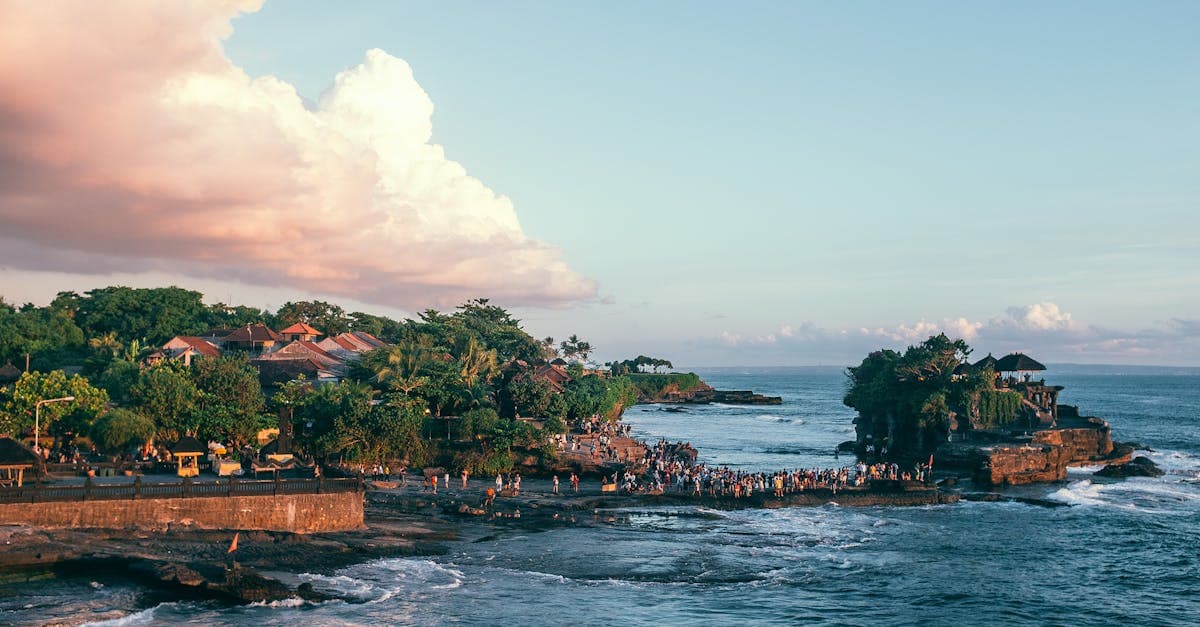
Bali reinforces the case. Perth travellers have the shortest hop, around six hours, which is why Bali earns the label of closest budget destination to any Australian capital. East coast fares sit at the higher end of the range this guide has already published, but daily costs remain consistent regardless of departure city. A Telkomsel SIM from the arrivals hall at Ngurah Rai sorts connectivity.
No visa required. Australians get 30 days on arrival. Return flights via AirAsia and Jetstar run ~A$400-750. Daily costs sit around ~A$56-95, depending on whether your base is Bangkok or Chiang Mai: the north is consistently cheaper, and better suited to stays of ten days or more.
The purchasing power context worth stressing: a sit-down meal across all three destinations costs roughly what a flat white does back home. Private rooms run at the guesthouse rate noted earlier in this guide. That gap between Australian spending power and local prices is the actual reason Southeast Asia holds the top position for budget travellers.
Timing matters across all three markets. School holiday windows in July-August and January push flights 30-50% above the figures in this guide. The cheapest booking windows sit in March-May and September-November. Plan into those months, and the value compounds considerably.

Cambodia's local SIM costs less than a flat white: under A$4 for 30 days of data. Daily spend runs A$32-55, returns land in the A$450-750 bracket, and there's a visa on arrival for around A$40. Phnom Penh and Siem Reap are both well-developed for budget travellers, with solid hostel infrastructure and cheap street food.
Malaysia gives Australians 90 days visa-free vinwonders.com, with Kuala Lumpur functioning as both a transit hub and a standalone destination worth a few days. AirAsia's KL network makes routing through easy, and daily costs run A$60-95. The food culture alone is reason enough to stay longer.
Visa-free for Australians, the Philippines has direct Cebu Pacific services from Sydney and Melbourne. Budget A$50-80 per day. If you're planning to island-hop between Palawan, Boracay and Cebu, build in the inter-island transport costs before you book. Those legs add meaningful spend to the overall trip.
Laos is most practically reached overland from Thailand or Cambodia. Daily rates sit in the same ultra-budget tier as Cambodia. Luang Prabang and the 4000 Islands offer genuine slow travel, not the packaged version. eSIM coverage drops off past major towns, so pick up a local SIM on arrival.
Across the four, eSIM works reliably in Malaysia and the Philippines. Cambodia and Laos are local SIM territory.

South Asia and North Africa offer genuinely cheap ground costs despite higher flights from Australia. Flights to India cost considerably more than anything heading into Southeast Asia, yet Nepal's daily costs land in the same ultra-budget tier as Cambodia. Stay three weeks in India and the total trip can undercut a two-week European city break.
India sits at ~A$600-1,100 return from Australian capitals. Daily costs for a budget traveller run ~A$50-87, with rural Rajasthan at the cheaper end and Mumbai considerably pricier. An e-visa is required, costing ~A$35-80 depending on duration and processed online before departure. The connectivity friction: a Jio SIM delivers the best nationwide 4G data value at ~A$5/month but needs passport registration at a Jio outlet on arrival. Sort it on day one.
Nepal brings daily costs down to roughly ~A$35-71. Return flights via Singapore or Bangkok run ~A$750-1,200. Trekkers on the Annapurna Circuit or Everest Base Camp route need an NTC SIM: the government mandates NTC infrastructure at altitude, and other networks become unreliable above the lower elevations. In 2026, Starlink terminals have appeared at some tea houses above 4,000 metres, though availability varies by season.
Sri Lanka sits at ~A$700-1,100 return, with daily spend around ~A$50-80. The recovering tourism market has brought accommodation pricing to genuinely competitive levels. An e-visa is processed online before you fly.
Egypt runs ~A$750-1,200 return via Gulf carriers, visa on arrival for Australians. A daily budget of ~A$50-90 covers a guide allowance for Nile sites, Cairo and the Siwa Oasis. The Egyptian pound's depreciation against the AUD has meaningfully amplified purchasing power at street level.
Morocco costs more to reach: ~A$1,000-1,700 return, visa-free for Australians, daily costs around ~A$62-95. It pairs naturally with a Southern Europe leg for travellers routing through Heathrow, Doha or Dubai, spreading the flight spend across two destinations.
Bolivia has the cheapest daily costs in the Western Hemisphere. Return flights run ~A$1,100-1,750 via South American hubs. The Salar de Uyuni salt flats and the colonial city of Sucre are the main draws, but Bolivia earns its place on an itinerary as part of a Peru or Argentina combination trip. Sharing the return flight cost across multiple countries is the only way South America becomes genuinely competitive with Asia on total trip value.

Georgia gives Australians a 365-day visa-free stay. No other country on the planet offers the Australian passport that kind of access. For remote workers and long-stay travellers, that policy changes the entire cost calculation: daily costs of ~A$60-95, a local SIM at ~A$5-7 for 10GB/month, and a functioning coworking and cafe scene in Tbilisi make Georgia one of the more convincing extended-stay options outside Southeast Asia.
Albania sits on the Adriatic, cheaper and less visited than its Balkan neighbours. Daily costs run ~A$58-95. A growing backpacker circuit tracks north through Shkoder and into the Accursed Mountains. The Accursed Mountains have zero mobile coverage. Download offline maps before heading in.
Bosnia-Herzegovina anchors the natural Balkans loop. Sarajevo's Ottoman quarter, the Bascarsija bazaar and the city's layered wartime and pre-war history make it one of Europe's more distinctive stops. Daily costs run ~A$60-111. A standard overland circuit from Sarajevo covers Mostar, Kotor, Belgrade and Skopje without repeating a border crossing.
Bulgaria runs broadband speeds of 200-400 Mbps, ranking it among Europe's most connected countries at budget prices backpackerswanderlust.com. Sofia and Plovdiv both offer solid value; the Black Sea coast adds a summer option. Romania's Transylvania region pairs naturally with Bulgaria on a single corridor trip: gothic castles, medieval walled towns and low accommodation costs rounding out the loop. Both countries run roughly ~A$60-111/day.
Return flights to Eastern Europe sit at ~A$1,100-2,000 via Gulf or European hubs. That flight cost makes this region financially sensible only for stays of three weeks or more. Combine multiple Balkan countries on a single trip. Most travellers in this corridor already do exactly that, and it's what makes the economics work.

Mexico's 180-day visa-free entry is the second most generous visa policy globally for Australian passport holders. Return flights via Los Angeles run ~A$1,100-1,800. Daily costs sit around ~A$64-111, higher than Southeast Asia, but the long visa window gradually offsets the flight premium: eight or more weeks across Mexico City, Oaxaca and the Yucatan and the per-day flight amortisation starts to look reasonable.
Colombia has shifted considerably for independent travellers in tourist-frequented areas. Medellin, Cartagena and the coffee region around Salento form a strong multi-stop circuit. Return flights run ~A$1,200-1,900. Daily costs come in at ~A$58-95. Medellin is consistently rated among Latin America's top cities for digital nomads: decent broadband, a solid cafe culture and a cost of living that makes multi-month stays viable.
Bolivia, covered in detail above, holds the cheapest daily costs in the Western Hemisphere. Best accessed from Lima or Buenos Aires, it makes the most sense as part of a Peru-Bolivia or Argentina-Bolivia itinerary, using the return flight costs already noted.
The Latin America calculation is straightforward. With return flights at ~A$1,500 or more, travellers need at least 30 days on the ground before daily-budget savings start to offset the cost gap against a Southeast Asia alternative. Latin America suits five-to-eight week trips, or remote workers with the flexibility to stay long enough for the economics to work in their favour.
eSIM coverage is reliable in Mexico City, Bogota and Medellin's urban centres. Bolivia is variable outside La Paz, Santa Cruz and Sucre.

Australian carrier roaming is easy to forget and expensive to leave running. Telstra and Optus charge ~A$10/day; Vodafone charges ~A$5/day. On a 14-day trip, that's A$140 at the Telstra or Optus rate before a single meal is bought. Vodafone's rate cuts it in half, but neither competes with a local SIM or eSIM plan.
Local SIM benchmarks across these destinations vary sharply. Cambodia's monthly rate and Georgia's SIM pricing were each covered in their respective sections. Vietnam's local SIM runs ~A$6-10/month. India's Jio SIM is ~A$5/month with strong nationwide coverage, once registered in-country as noted in the India section. The savings over any carrier roaming day rate are substantial in every case.
The pre-departure option is an eSIM: purchase and activate before leaving Australia, land with data already running. Hello Roam covers all major Southeast Asia, South Asia and Eastern Europe destinations, which spans the bulk of the countries in this guide. For multi-country Southeast Asia trips, the Airalo ASEAN regional plan runs ~A$20-30 for 15 days and covers Vietnam, Thailand, Malaysia, the Philippines, Indonesia and Cambodia in a single purchase.
A few connectivity alerts worth knowing before you pack:
Factor ~A$1-3/day for a local SIM or eSIM into your total trip cost from the start. That covers offline maps, WhatsApp contact with family and access to DFAT Smartraveller emergency information: the connectivity baseline for any budget trip abroad.

These answers cover what Australian travellers ask most when planning a budget trip overseas. All prices are in AUD and reflect 2026 data; the context behind the numbers matters.
Return flight costs are indicative fares booked four to eight weeks in advance from Sydney or Melbourne. Flights from Perth tend to sit lower for most Southeast Asian routes, sometimes by A$100 or more. Check from your actual departure airport before fixing a number.
Before committing to any destination in this guide, check DFAT's Smartraveller advisory. Most Southeast Asian and many Eastern European budget destinations sit at Level 1 (exercise normal safety precautions) or Level 2 (exercise a high degree of caution) as of March 2026. Level 2 isn't a travel ban. Register your trip on Smartraveller, read the local conditions update, and confirm your travel insurer covers the destination.
Timing shifts everything. The estimates throughout this guide reflect shoulder-season travel, outside Australian school holidays in January, April, July, and September-October, and outside peak local season. Flights, accommodation and even guesthouse rates can run 20-40 per cent higher during those peak windows. If the budget is the binding constraint, when you travel matters as much as where.

Southeast Asia is still the strongest answer for most Australian backpackers backpackerswanderlust.com. Vietnam, Thailand and Cambodia combine price, solid infrastructure and a well-worn traveller trail that makes first-time solo travel genuinely straightforward.
Three destinations are gaining traction beyond the classic SEA circuit. Georgia's 365-day visa-free window (the most generous policy available on the Australian passport, anywhere) paired with the cheap local SIM costs noted above makes it a compelling pick for Australians who can work remotely. Albania is pulling in the Balkans-curious crowd priced out of Croatia. Colombia, specifically Medellin and the coffee region, is where South America newcomers are landing first.
The most popular backpacker loop from Australia runs Bangkok, overland through Cambodia or Laos, north to Vietnam, then home from Hanoi or Ho Chi Minh City. A three-to-four-week version of this route, including accommodation, food, in-country transport and connectivity, runs A$2,000-3,000 all-in. A$40-60 a day covers dorm accommodation, street food and local transport across most of Southeast Asia without cutting corners backpackerswanderlust.com.
For the overland corridor, an Airalo ASEAN regional plan covers Vietnam, Thailand, Cambodia, Malaysia, the Philippines and Indonesia in a single purchase. No scrambling for a new SIM card at each border crossing. Sort it before you fly.
Yes. In Southeast Asia, it goes considerably further than most Australians expect.
Three destinations, three trip lengths, three realistic all-in costs.
Bali, 10 days. At around A$100-120 a day (comfortable guesthouse, proper restaurant meals, not strict street-food-only mode), plus flights at the lower end of the Bali corridor noted earlier, the all-in lands around A$1,400-1,700. More than A$3,000 of your original budget remains unspent.
Vietnam, 14 days. Using the flight and daily rates from the Southeast Asia section above, the all-in total sits around A$1,400-1,600. Comfortably under A$5,000, with room for activities.
Thailand, 21 days. At A$90-115 a day covering comfortable accommodation, a mix of street food and occasional sit-down meals, and domestic transport between cities, that daily spend alone totals A$1,890-2,415 over three weeks. Add flights at the range noted for Thailand above, and the all-in comes to around A$2,500-3,200. Three full weeks for under A$3,500.
What burns through budget fastest: resort-tier room upgrades, tourist-restaurant pricing in city centres, last-minute flight bookings, and carrier roaming at the daily rates covered in the connectivity section. Budget for a regional eSIM at the rate mentioned there, and at least one of those costs disappears before it starts.
A$5,000 is a real holiday, not a compromise.

Cambodia has among the lowest daily costs globally, at around A$32-55 per day, with local SIM cards costing under A$4 for 30 days of data. Nepal is similarly affordable at A$35-71 per day. Bolivia holds the cheapest daily costs in the Western Hemisphere at around A$45, though high flight costs from Australia affect the total trip value.
Indonesia is the cheapest overall for most Australians, with Bali flights as low as A$250 return from Perth and daily costs below A$70. Vietnam and Thailand follow closely, combining affordable flights with low day-to-day spending. The honest total trip formula is return flights plus daily budget multiplied by the number of days plus visa fees, since daily spend alone ignores the largest cost most Australians face.
Southeast Asia remains the top choice for backpackers in 2026, with Cambodia, Laos, Vietnam, and Thailand offering ultra-budget daily costs and well-developed hostel infrastructure. Georgia stands out for extended stays, offering Australians 365 days visa-free with daily costs of A$60-95 and a functioning coworking scene in Tbilisi. Albania's growing backpacker circuit through Shkoder and the Accursed Mountains is an emerging Eastern European option, though offline maps are essential in the mountains where there is zero mobile coverage.
A$5,000 more than covers a 14-day trip to the most affordable Southeast Asian destinations. A 14-day all-in trip to Bali costs approximately A$1,230-1,480, Vietnam runs A$1,285-1,585, and Cambodia comes in at A$1,255-1,605. At these rates, A$5,000 could fund three to four weeks across multiple countries including flights, visa fees, and daily expenses.
A 14-day trip to Bali from Australia costs approximately A$1,230-1,480 all-in. Return flights run A$250-500, the daily budget sits around A$70, and there is no visa fee as Indonesia offers 30 days visa-free entry for Australians. Perth travellers have the shortest hop at around six hours, making Bali the closest budget destination to any Australian capital.
No, Australian passport holders receive 30 days visa-free on arrival in Thailand. Return flights via AirAsia and Jetstar run approximately A$400-750, and daily costs sit around A$56-95 depending on whether your base is Bangkok or the cheaper Chiang Mai.
The cheapest booking windows for flights to Southeast Asia from Australia fall in March-May and September-November. School holiday periods in July-August and January push flight prices 30-50% above typical ranges, so travelling outside those windows compounds savings significantly.
eSIM coverage is limited in Cambodia and Laos, particularly outside major towns, making local SIM cards the practical choice in both countries. Cambodia's local SIMs cost under A$4 for 30 days of data. eSIM works reliably in Malaysia and the Philippines, where plans can be activated before leaving Australia.
Australian passport holders receive 90 days visa-free in Malaysia. Return flights to Kuala Lumpur run approximately A$350-650 via AirAsia, and daily costs of A$60-95 include access to one of Southeast Asia's strongest food cultures. Kuala Lumpur also functions as a transit hub for onward travel to other regional destinations.
Georgia is one of the most affordable extended-stay options, offering Australians a unique 365-day visa-free stay with daily costs of A$60-95 and local SIM cards at around A$5-7 for 10GB per month. Albania and Bulgaria offer similarly low daily costs in the A$58-111 range, with Bulgaria also ranking among Europe's most connected countries at broadband speeds of 200-400 Mbps.
Trekkers on high-altitude routes like the Annapurna Circuit and Everest Base Camp should purchase an NTC SIM card, as the Nepalese government mandates NTC infrastructure at altitude and other networks become unreliable at higher elevations. In 2026, Starlink terminals have appeared at some tea houses above 4,000 metres, though availability varies by season.
With the AUD/USD rate sitting around 0.63, travel guides denominated in USD understate real costs for Australians by roughly 60 percent. A destination that appears cheap in USD can be significantly more expensive when converted to Australian dollars, which is why AUD-denominated cost comparisons are more reliable for Australian travellers planning a budget.
Bolivia has the cheapest daily costs in the Western Hemisphere at around A$45 per day, but return flights run A$1,100-1,750 via South American hubs. It becomes genuinely competitive on total trip value only when combined with Peru or Argentina on a multi-country itinerary, spreading the high flight cost across multiple destinations.
Local SIM cards in Cambodia are among the cheapest globally, costing under A$4 for 30 days of data. eSIM options are limited in Cambodia, so purchasing a local SIM at the airport or a street-side phone shop on arrival is the most practical and affordable approach. Rural coverage can be patchy, so a local network card matters outside major cities.
Malaysia offers 90 days visa-free, Thailand offers 30 days visa-free on arrival, and the Philippines allows visa-free entry for Australians. Indonesia offers 30 days visa-free. Cambodia requires a visa on arrival costing around A$40, and Vietnam requires an e-visa costing approximately A$25.
The Philippines is affordable at A$48-80 per day, with direct Cebu Pacific flights from Sydney and Melbourne running A$400-750 return. However, inter-island transport between destinations like Palawan, Boracay, and Cebu adds meaningful cost to the overall trip and should be factored into the budget before booking. eSIM coverage works reliably across the Philippines.
HelloRoam: your trusted travel eSIM that keeps you online across borders.
Explore Plans