HelloRoam eSIMs cover 185+ destinations, but Cuba isn't one of them. Finish the online steps below (visa, arrival form, hotel checks) before you leave the US. Then plan to buy a temporary line from ETECSA, Cuba's state phone company, when you land.
US law bans tourism in Cuba, not every trip
The ban works through money. The Cuban Assets Control Regulations (CACR), which the Treasury first issued on July 8, 1963, require US government authorization to spend money on a trip to Cuba. OFAC says the tourism ban follows a 2000 law, the Trade Sanctions Reform and Export Enhancement Act (TSRA). That's why OFAC can only authorize travel that fits the 12 categories, and why OFAC's Cuba travel regulation says nothing in it authorizes tourist travel.
The rules reach more people than most travelers expect. They cover every US citizen and US resident wherever they live, plus anyone physically in the United States, whatever their nationality. Flying through Mexico, Canada or Panama changes nothing, because OFAC applies the same rules to authorized travelers who route through a third country. A second passport doesn't help either, since the rules follow your US citizenship. Citizens of other countries who aren't US residents and aren't in the US fall outside these US rules, though Cuba's own entry requirements still apply to them.
If what you want is a beach week, US law rules that out in Cuba. Our guide on when to go to Cancun covers a nearby beach trip that needs no OFAC category. If you book that trip, you can set up mobile data for Cancun.
The 12 authorized travel categories at a glance
Each category has a general license in the CACR. If your trip meets every condition of one, you don't apply to anyone. OFAC says no further permission is needed, and your airline or travel agent collects your certification of the category. If your trip fits a category but not its general license, you can apply to OFAC for a specific license.
| Category (31 CFR) | Who it fits | Watch for |
|---|---|---|
| 1. Family visits (515.561) | Visiting a close relative who is Cuban or lives in Cuba; people who live with you as family can come | Cuba Restricted List payment ban still applies |
| 2. Official government business (515.562) | Employees, contractors and grantees of the US government, foreign governments and certain intergovernmental groups | The trip must be official business |
| 3. Journalistic activity (515.563) | Full-time and freelance journalists and their broadcast or technical crews | Full-time schedule, little free time |
| 4. Professional research and professional meetings (515.564) | Research tied to your profession, background or expertise | Meetings and conferences now need a specific license |
| 5. Educational activities (515.565) | Accredited US colleges and universities, their students and staff; other programs under a US sponsor | Group people-to-people tours have ended |
| 6. Religious activities (515.566) | A program of religious activities | Full-time schedule |
| 7. Public performances, clinics, workshops, competitions and exhibitions (515.567) | Amateur and semi-pro international sports federation competitions | Other events need a specific license |
| 8. Support for the Cuban people (515.574) | A full-time schedule that supports civil society and brings real contact with Cubans | A casa particular stay alone isn't enough |
| 9. Humanitarian projects (515.575) | Medical, disaster relief, historic preservation, environmental and community projects, among others | Full-time schedule |
| 10. Private foundations or research and educational institutes (515.576) | Groups with an established interest in international relations collecting information on Cuba, noncommercial | Full-time schedule |
| 11. Information and informational materials (515.545) | Sharing information, plus professional film, music and art production by people experienced in the field | Full-time schedule |
| 12. Certain export transactions (515.533, 515.559) | Trips tied to exports the Commerce Department authorizes, or to US-owned foreign firms | Tied to authorized trade |
Most of these licenses also bar payments to businesses on the State Department's Cuba Restricted List and stays at properties on its Cuba Prohibited Accommodations List. Both lists get their own section below.
OFAC narrowed Cuba travel on September 30, 2026
OFAC rewrote parts of the CACR that day, following a June 30, 2025 presidential memorandum on Cuba policy (the 2025 NSPM-5). OFAC describes the new rules as tools to counter what it calls the continued threat posed by the Government of Cuba. Many guides that rank today were written before the change, so check any advice about tours and conferences against OFAC's September 2026 alert.
- Group people-to-people educational tours are no longer authorized. Individual people-to-people trips already weren't.
- Educational trips outside accredited US colleges and universities must run under a US sponsoring organization, and almost all travelers must be accompanied by its representative.
- Professional meetings and conferences in Cuba lost their general license. Travelers already in Cuba for one on September 30 may stay through October 30, 2026, and must leave by then.
- The ban on payments to Cuba Restricted List businesses now covers indirect payments too. OFAC already treated paying a listed hotel through a foreign travel agency as a direct payment, so that route was never open.
Already booked? OFAC says a trip that fit the old educational or group people-to-people rules remains authorized if you completed at least one travel-related transaction, such as buying a flight or reserving a room, before September 30, 2026. Even then, the trip can't involve any payment, direct or indirect, to a business on the Cuba Restricted List. A January 2026 executive order declared a national emergency over Cuba, and E.O. 14404 of May 1, 2026 added new sanctions, but OFAC says E.O. 14404 doesn't change the CACR, so the CACR's remaining travel licenses still apply.
Support for the Cuban People takes a full-time schedule
Many independent travelers look at this category first, and its conditions are strict. Under 31 CFR 515.574, each traveler needs a full-time schedule of activities that enhance contact with Cubans, support civil society or promote independence from Cuban authorities. Those activities must lead to meaningful interaction with people in Cuba, and free time can't go beyond what a full-time schedule allows.
OFAC's own examples draw the line. Renting a room in a casa particular, eating at private paladares and shopping at stores run by self-employed Cubans all count. They don't fill a full-time schedule alone, though. Biking to the beach and chatting with vendors doesn't qualify at all. Volunteering full time with a recognized nonprofit to build a school does, even with a museum visit in your free time.
A group doesn't qualify just because some of its members do, so each person needs their own schedule. Keep your itinerary, receipts and notes on what you did: OFAC's recordkeeping rule, 31 CFR 501.601, now requires records for at least 10 years. It said five years until March 2025, so older guides often still say five.
Family visits cover relatives up to three generations removed
The family category lets you visit a close relative who is a Cuban national or lives in Cuba. OFAC defines a close relative as anyone related to you by blood, marriage or adoption. They can be no more than three generations removed from you or from a shared ancestor. People who share your home as family can travel with you.
Cuban-born US citizens face an extra rule. Cuba requires its dual nationals to enter and leave on a Cuban passport, and it treats Cuban-born US citizens who keep residency there as Cubans. US law still requires you to carry your US passport on the trip and to reenter the United States with it, the State Department says.
Many Cuban hotels and resorts are off-limits to US travelers
Two State Department lists decide where you can sleep and spend. The Cuba Restricted List, dated July 14, 2025, names more than 100 hotels, including large resorts in Varadero, Cayo Santa María and Cayo Coco. It also names holding companies tied to the Cuban military, such as GAESA and the Gaviota tourism group. OFAC bars both direct and indirect payments to listed businesses.
The Cuba Prohibited Accommodations List goes further. Its first edition, published September 28, 2020, lists more than 400 properties. All are owned or controlled by the Cuban government or by certain officials and Communist Party members, and some are marketed as casas but are really state-run. US travelers can't stay at, pay for or book rooms for others at any of them.
So can Americans stay at resorts in Cuba? A beach-resort vacation is tourism, which no category allows, and many big resorts sit on one list or both. Before you book any room, search both lists for its name. OFAC says a booking made before a property was added to a list stays allowed.
Documents US travelers need for Cuba
| Document | Who issues it | How to get it |
|---|---|---|
| OFAC authorization | US Treasury (OFAC) | General license: no application, you certify your category when you book. Specific license: apply online with OFAC. |
| US passport | US State Department | Carry it on the trip; you reenter the US with it. Cuban-born dual nationals also need a Cuban passport. |
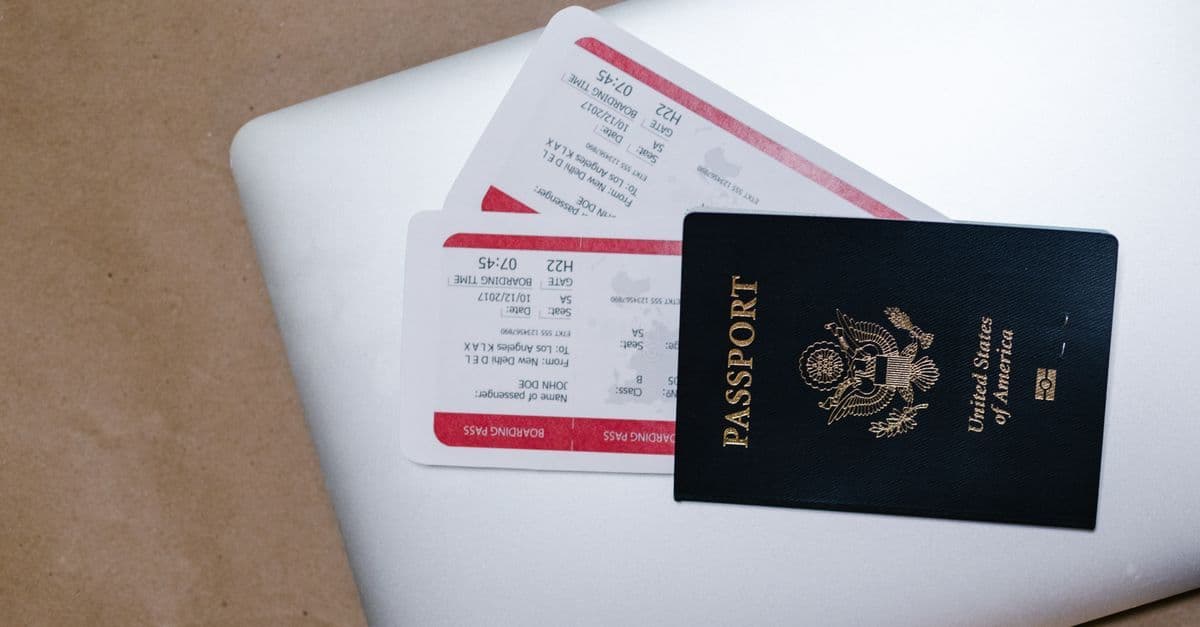
| Cuban visa | Cuba's Foreign Ministry and consulates | Apply on the official eVisa site through a consulate, or activate a code bought from an agency. The visa is linked to your passport. |
| D'Viajeros arrival form | Cuban immigration, customs and health authorities | Online, from 72 hours before arrival. One form per traveler, children included. |
| Health insurance | Asistur, the official insurer airlines contract | Usually included in tickets on flights from the US. If not, buy it at an airport kiosk on arrival. |
Cuba's visa options depend on the trip. The Cuban Embassy in Washington lists a tourist visa, often called the tourist card, plus a journalist visa (D-6) and business visas. Its family visa (A-2) is for foreign spouses and children of Cuban citizens. "Tourist visa" is Cuba's label, and it doesn't make a vacation legal under US law. Ask the embassy which visa matches your OFAC category.
Stay length is where official sources disagree. Cuba's Foreign Ministry eVisa site lists the tourist visa as single entry for 90 days, extendable by 90. The embassy's consular page still lists 30 days, extendable by 30. The State Department adds that airline-included insurance lasts 30 days, so you'd extend it before extending a stay. Confirm with the embassy before you plan a long trip.
Commercial visa websites aren't the Cuban government. If one sold you a visa, check its status on the eVisa site's verification page.
From booking to landing in Havana, step by step
- Pick your category and read its section of the CACR. If no general license fits your trip, apply for a specific license before you book.
- Book your flight. OFAC lets authorized travelers buy tickets from US airlines, and the airline must keep your certification of the category.
- Check every hotel or casa against the Cuba Restricted List and the Cuba Prohibited Accommodations List.
- Get your Cuban visa on the eVisa site or through an agency, then confirm it on the site's verification page.
- Ask your airline to confirm that your ticket includes Cuban health insurance.
- Fill in the D'Viajeros form online. It opens 72 hours before arrival, the site tells passengers to complete it 48 hours ahead, and airlines may check it before boarding. Save the QR code on your phone and print a copy.
- At the airport, immigration finds your form by passport number, and health and customs officers check your QR code. This one form replaces the old paper arrival card, customs declaration and health affidavit.
- If you want a Cuban phone line, buy ETECSA's CubacelTur line at the airport desk before you head into town.
Bring enough cash, because US cards don't work in Cuba
According to the State Department, US-issued credit and debit cards don't work in Cuba. OFAC's rules would allow them for authorized travel, but no bank has to set that up, so plan to pay cash for the whole trip.
The US Embassy in Havana says US dollars can be exchanged into Cuban pesos at the airport, hotels or exchange houses. The State Department warns that Cuba's rules on US dollars are subject to change and suggests bringing more than one currency, such as euros. Change money only at state CADECA exchange houses or official banks.
Two cash limits apply on the way. Cuban customs asks you to declare cash over USD 5,000, or the same amount in other currencies, on your D'Viajeros form. Leaving the United States with more than $10,000 means filing FinCEN Form 105 with US Customs and Border Protection, and a family's cash counts together toward that limit.
Coming home, leave the rum and cigars behind. Authorized travelers can buy Cuban alcohol and tobacco to enjoy in Cuba. Since September 24, 2020, though, they can't bring any back to the United States, even for personal use.
Getting online in Cuba runs through ETECSA
There's no HelloRoam plan for Cuba, so your choices are roaming on your US plan or a local line. The State Department lists AT&T, Verizon and T-Mobile as carriers with roaming agreements with ETECSA. Check your carrier's Cuba coverage and rates before you go.
ETECSA's temporary CubacelTur line is the local option. Its Básico package lasts 7 days, and Básico Plus lasts 30 days with unlimited WhatsApp and Facebook. Add-on packages extend the line, up to 90 days in total.
ETECSA sells CubacelTur at José Martí International Airport in Havana, in Terminal 3 (hall C) and Terminal 2. It also has desks at the Varadero, Santa Clara, Cayo Coco, Camagüey, Holguín and Santiago de Cuba airports. Its offices take UnionPay and Mir cards, and US cards won't work, so ask at the desk how to pay.
Power is the bigger problem. On September 18, 2026, Cuba's grid collapsed nationwide, and the US Embassy in Havana reported cellphone and internet outages. By early August the Embassy had already counted six total grid failures in 2026.
The State Department advises downloading offline maps and carrying a printed one, since phone maps often fail. Keep a power bank charged. Stand-alone GPS devices aren't allowed in Cuba.

The State Department rates Cuba Level 2
The State Department's advisory for Cuba is Level 2, exercise increased caution, because of crime and unreliable electrical power. It was last reissued on May 7, 2025, and the US Embassy's Cuba travel page shows the current level. Pack every medicine you need, because the State Department says even common over-the-counter drugs aren't available in Cuba.
This guide explains the rules as published; it isn't legal advice. Before you book, read OFAC's Cuba sanctions FAQs and the regulation for your category, and check the State Department's Cuba page again before you fly.
Questions travelers ask
Is there a spending limit for US travelers in Cuba?
No dollar limit applies to authorized travel, OFAC says. You can pay normal living expenses and buy goods to use in Cuba. The limits are on who you pay, not how much: the two State Department lists above still apply.
Can I book a Cuba package through a travel agency in Canada or Mexico?
Not for a vacation. OFAC warns that prepaying a third-country agency for a Cuba tour package doesn't make tourist travel legal, whatever currency you pay in.
What happens if a US citizen visits Cuba as a tourist?
Travel to Cuba without OFAC authorization is illegal, the State Department says, and people who break the rules may face penalties and criminal prosecution.
Sources
- OFAC: Frequently Asked Questions on the Cuba sanctions program (updated September 29, 2026)ofac.treasury.gov
- OFAC Alert: Expanded Sanctions Against Cuba (September 29, 2026)ofac.treasury.gov
- 31 CFR 515.560: Travel-related transactions to, from, and within Cuba (eCFR)ecfr.gov
- 31 CFR 515.574: Support for the Cuban People (eCFR)ecfr.gov
- 31 CFR 501.601: Records and recordkeeping requirements (eCFR)ecfr.gov
- US Department of State: Cuba Restricted List (as of July 14, 2025)state.gov
- US Department of State: Cuba Prohibited Accommodations List, initial publicationstate.gov
- Cuban Foreign Ministry: eVisa Cubaevisacuba.cu
- D'Viajeros: Cuba's online traveler formdviajeros.mitrans.gob.cu
- Embassy of Cuba in the USA: Consular servicesmisiones.cubaminrex.cu
- US Customs and Border Protection: Money and other monetary instrumentscbp.gov
- ETECSA: CubacelTuretecsa.cu
- US Embassy in Cuba: Security Alert, September 18, 2026cu.usembassy.gov
- US Embassy in Cuba: Traveling to Cubacu.usembassy.gov
Written by
HelloRoam Team
The HelloRoam Team writes our guides on trip planning, visas and eSIMs. For every new or updated guide, we check each fact at its source. Sources include government, park and weather service pages. We note the date we read each one. A second review then checks every fact against its source before the guide goes live. If we cannot confirm a fact, we leave it out. We link those sources inside the guide, so you can check them.