
Quick Answer: What Is a Mobile Virtual Network Operator?
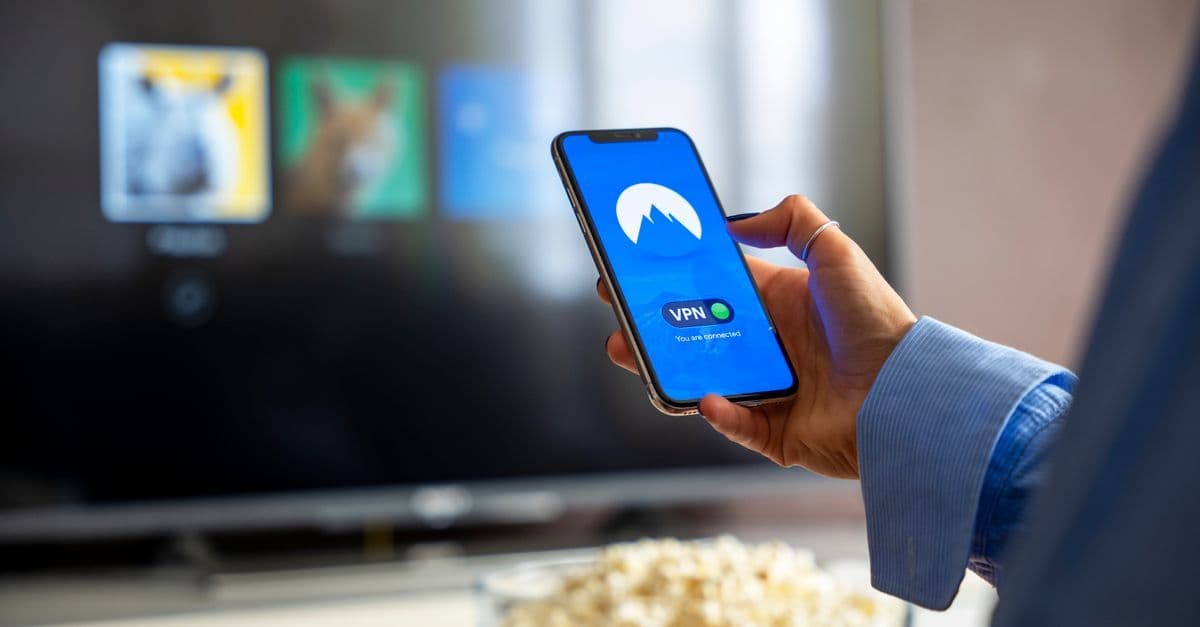
Over 100 active MVNO brands compete in the US market today. That competition keeps pricing lean: MVNOs typically cost 40-60% less than equivalent postpaid plans from the Big Three. For a household running multiple lines, that's a straightforward savings of several hundred dollars a year.
The coverage logic is blunt.
Pick a plan running on Verizon's network and your phone connects to Verizon's towers. Pick one on T-Mobile's network and you're on T-Mobile's footprint. The brand on your bill changes. The antenna on the tower doesn't. For travelers who want this same wholesale access model extended internationally,(https://www.helloroam.com/all-esim) covers options that follow a similar structure across borders.
The savings are real. The trade-offs deserve scrutiny.
Do Mobile Virtual Network Operators Have the Same Coverage as Verizon or AT&T?
Yes, technically. MVNOs run on the exact same tower infrastructure as their host carrier. If your plan uses AT&T's network, your phone connects to AT&T's cell sites. The antennas are identical. Knowing where the real difference lies will save you from picking a plan that underdelivers at exactly the wrong moment.
The problem isn't a coverage gap. It's a priority gap.
During peak congestion periods, Verizon, AT&T, and T-Mobile deprioritize MVNO traffic behind their own postpaid subscribers. Your signal bars look unchanged on the coverage map, but at a packed stadium or the security checkpoint at LAX Terminal B, your connection gets spotty while the AT&T postpaid customer next to you stays at full throughput. That asymmetry never shows up in the MVNO's marketing copy.
Where this actually stings: dense urban areas during evening rush hour, major sporting events, and holiday travel weekends at hubs like JFK, ORD, and ATL. Voice calls and basic messaging rarely get affected. Video streaming and large uploads take the hit first.
Host network choice matters more than most buyers realize. T-Mobile-backed MVNOs access the widest 5G footprint in the US by geographic area, which translates to a solid edge for mid-size cities and rural driving routes. Verizon-backed plans trade that breadth for stronger building penetration in dense metros. AT&T sits between the two. None is universally the right call; the correct pick tracks where you actually spend time, not brand recognition.
For rural routes and smaller markets, use the host carrier's own coverage map directly. The MVNO's page mirrors it, but the source is more reliable than the reseller's version.
Coverage itself isn't the hard part. How MVNOs actually secure that access involves wholesale agreements most subscribers never see.
How a Mobile Virtual Network Operator Accesses the Network
MVNOs negotiate wholesale spectrum capacity directly from Verizon, AT&T, or T-Mobile, the three carriers that own physical tower networks in the US. These agreements, struck between the MVNO and the mobile network operator (MNO), define everything: which frequency bands are available, whether subscribers qualify for 5G access, and whether calls can extend onto roaming partners beyond the host's own footprint.
The business mechanics behind the savings are simpler than most subscribers expect. MNOs price wholesale capacity in bulk, typically structured per-megabyte, per-minute, or as flat capacity blocks. MVNOs layer customer service, billing, and operational costs on top, then pass the remaining spread to subscribers as a lower retail price. The savings come from a no-frills business model, not from inferior network access.
5G eligibility follows the same chain of authority.
An MVNO on T-Mobile's network accesses T-Mobile's 5G bands, including its mid-band spectrum (the frequency range that balances geographic reach with indoor building penetration). An MVNO on Verizon's network gets Verizon's C-band and mmWave 5G deployment, the latter strongest in dense city blocks rather than suburbs. The MVNO can't negotiate for bands the host carrier hasn't provisioned in the wholesale agreement.
A separate category of MVNOs holds contracts with multiple host carriers simultaneously. These multi-network operators shift devices between carriers dynamically based on signal conditions. A subscriber might default to T-Mobile and pull from US Cellular in rural coverage gaps. For travelers hitting unfamiliar routes, a multi-network plan is the no-brainer pick for avoiding dead zones, though it costs more per month than a single-network option.
The host network agreement sets your ceiling. How operators structure their service within that ceiling is a different conversation entirely.
Light MVNO, Enhanced MVNO, Full MVNO: What the Tiers Actually Mean
Three tiers define how much infrastructure a mobile virtual network operator actually controls. Light MVNOs resell wireless service wholesale, owning zero network assets. Enhanced MVNOs own their SIM provisioning and billing systems. Full MVNOs operate an entire core network right down to the switching equipment, while still leasing tower access from the host carrier.
Most US prepaid brands own nothing.
That's not an insult. It's the honest structure of the US market, where Light and Enhanced MVNOs dominate because the capital required to go Full is substantial.
| Tier | What the MVNO Controls | US Prevalence | Pricing Flexibility | Support Resolution |
|---|---|---|---|---|
| Light MVNO | Brand identity and customer service only | Dominant (most prepaid brands) | Minimal | Escalates to host carrier |
| Enhanced MVNO | SIM provisioning, billing, customer platform | Common | Moderate | Resolves most issues in-house |
| Full MVNO | Entire core network, excluding towers | Rare in US consumer market | Full control | Near-carrier-grade, end-to-end |
The tier shapes how quickly you get help when something breaks. Enhanced and Full MVNOs resolve billing and provisioning problems directly, without escalating to AT&T or T-Mobile. A Light MVNO passes that ticket up the chain, which stretches resolution time for issues as routine as a missing activation email.
Compare eSIM plans for your destination — See 2026 pricing →
Pricing tracks the same logic. Full MVNOs control their margins entirely. Light MVNOs work within whatever wholesale rates the host carrier sets, which limits how aggressively they can price plans.
Full MVNOs also negotiate their own international roaming agreements. Light MVNOs inherit the host carrier's terms and can't improve them. That ceiling is the tier gap that bites hardest the moment you leave the US.
How Mobile Virtual Network Operators and eSIMs Fit Into US International Travel
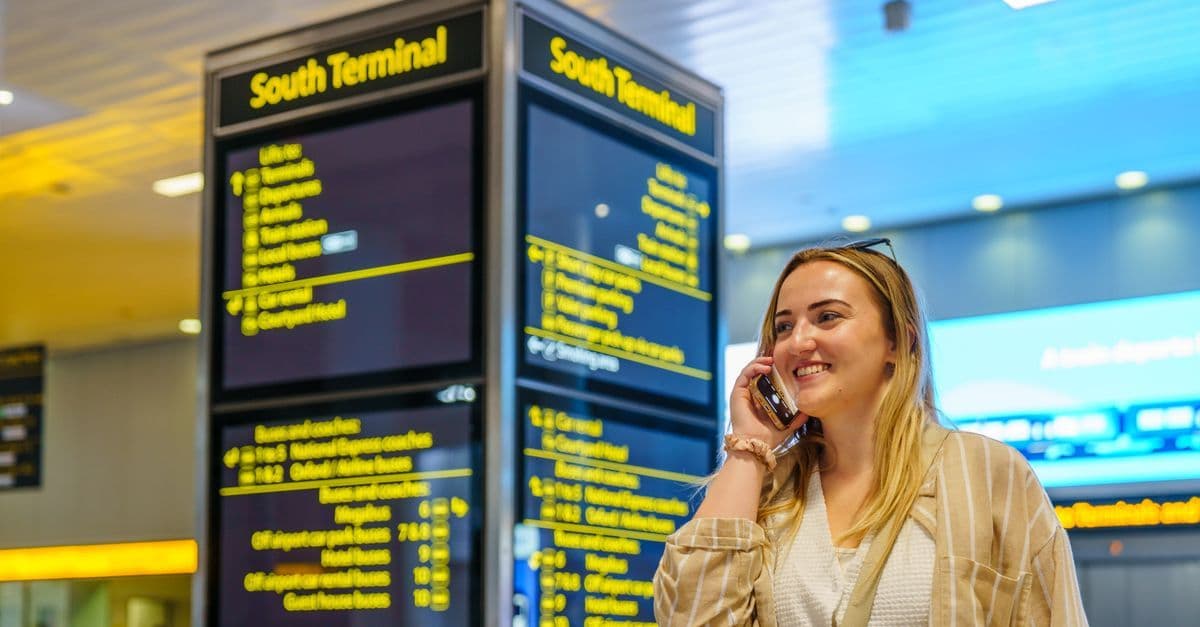
Travel eSIM providers operate on the same MVNO model as domestic prepaid brands, just on foreign networks instead of US ones. A travel eSIM negotiates capacity from local carriers in your destination country, then delivers data at local wholesale rates rather than US carrier international day pass fees. Same underlying structure, different geography, and for most travelers a substantially lower bill.
The domestic plan isn't built for this.
Most US prepaid plans cover US territory and little else. International data, when included at all, is often throttled to speeds that won't load navigation reliably. Big 3 carriers sell international day passes to fill the gap, but those fees stack up fast across a multi-day trip. The math is why most frequent US flyers stop accepting that trade-off after the first surprise charge clears.
The practical workaround most travelers settle on is a dual-SIM setup. Keep your T-Mobile, AT&T, or Verizon number active on the physical SIM for banking two-factor texts and voicemail. Run an international eSIM for data. Banks push SMS verification codes when a login appears from a foreign country, so keeping that US number live isn't optional. Modern iPhones and most Android flagship phones support both profiles simultaneously.
If you carry a Global Entry card, you're already in the habit of moving through customs in minutes. An eSIM activated before boarding means your maps are working before your bag hits the carousel. That's the point where the MVNO model stops being infrastructure background noise and becomes something you actually feel.
HelloRoam delivers eSIM data through tier-1 networks in destination countries, with 24/7 multilingual support available when activation runs into a snag at midnight across time zones. That support access is a real differentiator for travelers who can't afford to troubleshoot in business hours only.
Which local carrier an eSIM routes through in a given country sets the ceiling on connection quality.
Can an MVNO Plan Replace Your Carrier for International Trips?
Your domestic MVNO plan stops working the moment your flight lands abroad. The host network, T-Mobile, Verizon, or AT&T, keeps its coverage domestic under standard prepaid terms. An international eSIM fills that gap directly. Whether you need one depends on the specifics of the trip.
The decision framework is simple.
Trip under three days, one city, solid hotel Wi-Fi: Downloaded offline maps and the property's internet cover most needs. An eSIM may not be worth activating for a 48-hour conference stop where you won't be moving around independently. This holds only if you're not renting a car or navigating between locations on your own.
Trip over three days or covering multiple destinations: Get an eSIM. A flat-rate plan costs far less than per-day roaming fees stacked across a full week of travel.
Any trip where banking authentication is a factor: Run both SIMs. Keep your US number active on the physical SIM for two-factor SMS codes. Banks routinely flag foreign logins and trigger verification texts, and a missed code can lock you out of accounts mid-trip.
Beyond duration, the most important variable is which local carrier the eSIM routes through at your destination. An eSIM connecting through a tier-1 carrier in France, Japan, or Mexico gets local subscriber priority on the network. One routed through a smaller regional partner will deprioritize faster under peak load.
Most eSIM providers let you purchase with Apple Pay or Google Pay and complete profile installation at home on Wi-Fi before you leave. The eSIM connects automatically on landing. No airport kiosk, no SIM tray tool, no queue at the carrier counter.
Physical SIM cards handled this use case for decades. That default is shifting fast.
How Does a Mobile Virtual Network Operator Relate to eSIM?
eSIM providers are MVNOs that skip the plastic card entirely, delivering a SIM profile via QR code instead. The wholesale model is identical: a provider negotiates capacity from Verizon, AT&T, or T-Mobile, then sells you access to that network. The only thing that changed is how the credentials reach your phone.
That shift removes friction in ways that matter.
Physical SIM cards meant waiting on mail, finding a kiosk between connecting flights, or realizing you packed the wrong adapter for your SIM tray. eSIM eliminates that chain entirely. Scan the QR code, tap Install, and the profile activates in minutes.
eSIM vs. physical SIM: the honest trade-off
| Factor | Physical SIM MVNO | eSIM MVNO |
|---|---|---|
| Activation | Mail, store, or kiosk | QR code or app |
| Time to first use | Hours to days | Minutes |
| Switching friction | High (physical swap) | Low (profile toggle) |
| Compatible devices | Any unlocked handset | iPhone XS or later; Pixel 3 or later |
| Works without a second slot | No | Yes |
The device check is the only real hurdle. Every iPhone sold in the US since the iPhone 14 (2022) ships without a physical SIM tray, so most recent buyers already qualify. Android support varies by manufacturer, but Pixel 3 and later handle eSIM natively.
For a mobile virtual network operator, eSIM closes the last gap in the switching process. There's no hardware delay. A plan change happens the same afternoon you decide to make it. That's a fundamentally different relationship with wireless service, and it's why travel eSIMs have shifted from a niche workaround to the default choice for frequent flyers.(https://www.helloroam.com/all-esim) before your next international departure.

Reviewed by HelloRoam's editorial team. Last updated: 22 June 2026.
Questions travelers ask
What is a mobile virtual network operator (MVNO)?
An MVNO is a wireless carrier that leases network capacity from a major carrier and resells it under its own brand, typically at 40-60% less than equivalent postpaid plans.
Do MVNOs offer the same network coverage as the major carriers?
Yes. MVNOs run on the exact same tower infrastructure as their host carrier. If your plan uses AT&T's network, your phone connects to AT&T's cell sites with identical antennas.
Why does MVNO data slow down in crowded places?
During peak congestion, carriers deprioritize MVNO traffic behind their own postpaid subscribers. Video streaming and uploads are hit hardest at stadiums, major airports, and rush hour.

Written by
Sean Mitchell
Sean Mitchell is a travel writer at HelloRoam covering eSIM options and mobile connectivity for international travelers. Sean tests carrier coverage across airports, transit hubs, and remote destinations to help readers pick the right data plan. His guides break down network speeds, data costs, and activation steps in plain, practical language.