
Thai immigration expects proof of onward travel and of where you are staying, so keep a saved or printed copy of both. Once you are through the checkpoint, a HelloRoam Thailand eSIM set up at home gets you straight onto a taxi app, directions to your first hotel and a message home.
Thailand's entry rules for UK passport holders in one table
Each answer below comes from the Royal Thai Embassy in London or the UK government's Thailand entry requirements, both read on 1 October 2026. GOV.UK writes its advice for full British citizen passports, so ask the embassy if you hold another type of British passport.
 Get your Thailand eSIM before you flyInstall it at home, then switch on data roaming for it when you land. From £2.60.See Thailand plans
| Question | Official answer | Source |
|---|---|---|
| Do I need a visa for a holiday? | No, for up to 30 days of tourism under the visa exemption scheme | Royal Thai Embassy, London |
| How often can I enter visa-free? | Twice per calendar year | Royal Thai Embassy, London; GOV.UK |
| Can I go to meetings or a conference? | Not visa-free. Business travel needs a visa | GOV.UK |
| How long must my passport last? | At least 6 months after the day you arrive, with 1 blank page | GOV.UK |
| Is there an arrival form? | Yes. The TDAC is free, filed online within 3 days before arrival, for every entry | Royal Thai Embassy, London; GOV.UK |
| What must I show on arrival? | Proof of accommodation and of onward travel within 30 days. Officers may also ask for funds or an interview | Royal Thai Embassy, London |
| Can I stay longer than 30 days? | You may request up to 30 more days from Thailand's Immigration Bureau, or get a tourist visa before you fly | Royal Thai Embassy, London |
| What if I overstay? | A fine of 500 baht a day, up to 20,000 baht, with a risk of detention, deportation and a ban of up to 10 years | GOV.UK |
| Do I need a yellow fever certificate? | Only if you arrive from a country listed as a transmission risk | GOV.UK |
Thailand's own authorities set and enforce these rules, as GOV.UK points out, and the September 2026 change shows they do move. Check both official pages again in the week you fly.
The visa exemption now gives 30 days, for tourism only
The Royal Thai Embassy in London has published the change on its visa pages, and it covers Irish passports as well as British ones. The embassy's own visa FAQ, last updated in May 2025, still describes the earlier 60-day allowance, and at least one visa website in the search results still quotes 60 days. Go by the dated announcement, not the older pages.
Visa-exempt entry does not cover business. GOV.UK lists conferences, meetings and other business activities as outside it, and says anyone planning to work, study, retire or live in Thailand needs the right visa before travelling.
The scheme allows two entries per calendar year. Every arrival under the exemption counts, so a side trip to Laos or Malaysia followed by a return to Thailand uses two entries, not one. For a third visit in the same calendar year, GOV.UK and the embassy both point you to a visa.
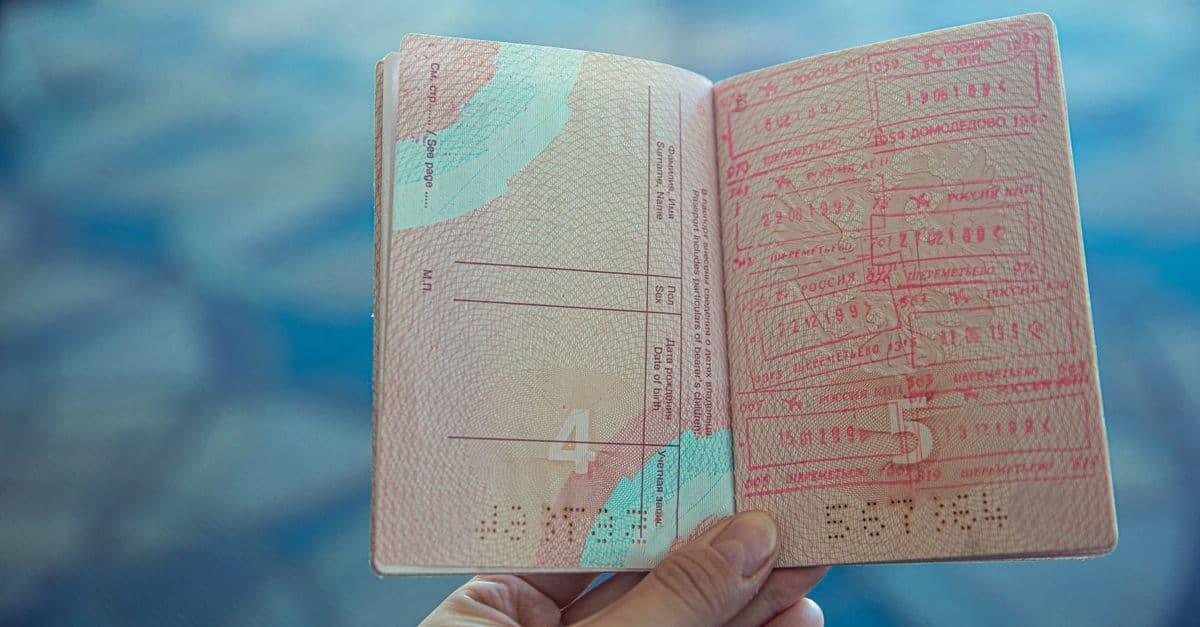
On arrival, the officer stamps your passport with the last date you may stay, and the embassy asks you to check it before you leave the checkpoint. To stay longer, the embassy says you can request an extension of up to 30 days from Thailand's Immigration Bureau. Do it before the stamped date passes.
The Thai embassy and GOV.UK quote different proof-of-funds figures
Officers can ask for proof of money, but the check is at their discretion rather than a fixed step for every visitor. The embassy's visa exemption page says they may request proof of sufficient funds of 20,000 baht per person. That comes on top of the proof of accommodation and onward travel you must show, and they may also interview you.
GOV.UK gives a lower figure: at least 10,000 baht per person or 20,000 baht per family. That is the amount the embassy lists for its separate visa on arrival scheme. GOV.UK also says British nationals have been refused entry for failing to provide this evidence.
Thailand sets the rule, so the embassy's 20,000 baht per person is the safer figure to plan around, ready to show if an officer asks.
The TDAC arrival card is free and opens 3 days before you land
Since 1 May 2025, every foreign national entering Thailand by air, land or sea must submit the Thailand Digital Arrival Card. You file it in the 3 days before you arrive, and again for each new entry, on the Immigration Bureau's official TDAC site.
The TDAC is not a visa and does not replace one. It is free, and the embassy tells travellers to use only the official site, to watch for fraud and never to pay if asked. At least one UK visa agency sells TDAC filing as a paid add-on, for a form you can complete free yourself.
A tourist visa gives 60 days per entry, with a possible 30-day extension
If 30 days is not enough and you would rather not rely on an extension in Thailand, get a tourist visa before you go. The embassy's single-entry tourist visa is valid for 3 months from the date of issue. You must enter within that window, and you may then stay up to 60 days from the day you arrive. An extension of another 30 days is possible, for a maximum of 90 days, so one visa can cover a stay of up to 90 days if Thai immigration grants the extension.
The validity and the stay are easy to confuse. The 3 months are your window to enter Thailand, and the 60 days start at the border.
| Visa | Valid for | Stay per entry | Fee in the embassy's table |
|---|---|---|---|
| Tourist visa, single entry | 3 months from issue | Up to 60 days, extendable by 30 | £30 |
| Tourist visa, multiple entries | 6 months from issue, first entry within 3 months | Up to 60 days per entry, extendable by 30 | £150 |
| Non-Immigrant visa, single entry (business and other non-tourist trips) | 3 months | Up to 90 days | £60 |
These fees come from the embassy's published visa fee table, last revised in September 2022. The embassy says fees are paid online in pounds only, are non-refundable and can change without notice, so confirm the amount at the payment step.
For remote work or long stays, the London embassy also issues the Destination Thailand Visa (DTV). The embassy's DTV requirements page lists a £300 fee and 5 years of validity, with stays of up to 180 days per entry. It covers remote workers and freelancers, and activities such as Muay Thai, Thai cookery training or medical treatment. Applicants need proof of permanent residence in the UK, Ireland or a British Overseas Territory, such as indefinite leave to remain. They also need funds of at least £12,000 and a police certificate issued in the last 6 months, such as an ACRO certificate.
Applying from the UK happens online through the e-Visa system
The London embassy no longer accepts paper applications. Every application goes through Thailand's official e-Visa website, run by the Ministry of Foreign Affairs. These steps follow the embassy's visa guidance for UK applicants.
- Pick your timing. You can apply up to 90 days before you arrive, and the embassy recommends applying at least 6 to 8 weeks before you leave.
- Book a flight you can show. The embassy wants a confirmed e-ticket downloaded from the airline's own website, with your name, dates and every flight from the UK to Thailand, plus any onward flight. Tickets from travel agencies or tickets on hold are not accepted, and the embassy suggests refundable or changeable bookings.
- Gather the documents. A tourist visa needs your passport's photo page and a photo taken in the last 6 months on a plain white background. Add proof of your UK address, such as a utility bill or tenancy agreement, and proof of accommodation in Thailand.
- Upload clean files. Use PDF, JPG or JPEG, no larger than 3 MB each. Screenshots and password-protected files are refused.
- Check every detail before you submit. Your name must match your passport exactly, nothing can be corrected after submission, and the fee is not refunded.
- Stay in the UK until you get a decision. Processing takes about 15 working days, longer if the embassy asks for more documents. The embassy can call you to an interview at its consular section, 30 Queen's Gate, London SW7 5JB. It may cancel an application if you leave the UK, Ireland or a UK territory before the decision.
- File the TDAC. Do it within the 3 days before you land, whichever way you enter.
Non-British passports and UK travel documents follow different rules
Thailand's rules follow the passport you travel on, not where you live. The 30-day exemption in this guide applies to British and Irish passports.
Holders of a UK refugee travel document, or another travel document issued by the UK or Irish government, need a visa before travelling, the embassy says.
If you live in the UK on another country's passport and need a visa, you can still apply through the London embassy. You will need proof of your UK immigration status, such as your eVisa, plus proof of work or self-employment, or of study if you are a student. If you still think of this as a BRP, GOV.UK confirms that all biometric residence permits have expired and been replaced by eVisas.
Dual nationals should note one GOV.UK tip: leave Thailand on the same passport you used to enter, to avoid problems at immigration.
If you searched this as a Thai national planning a visit to Britain, that is a separate process. GOV.UK's tool to check whether you need a UK visa is the place to start. For mobile data during your visit, see our eSIM plans for the UK.
Getting online when you land takes one step before you fly
Most of this trip runs on your phone: the e-Visa, the TDAC, your airline e-ticket and the hotel confirmation. Roaming on your UK network is one way to stay online, and our comparison of eSIM and roaming sets out the costs for UK travellers. HelloRoam's Thailand plans run on AIS, DTAC or TrueMove H, depending on the plan you choose.
Install the eSIM at home on Wi-Fi and switch it on when you land. Our guide to setting up an eSIM before you fly covers each step, and it is worth taking a minute to check that your phone supports eSIM first.
If your route loops through Laos or Malaysia and back, look at data plans that cover several Asian countries. The HelloRoam Asia plan includes Thailand, Laos and Malaysia on one eSIM, so you skip buying a new SIM at each border.
Questions travellers ask
I entered Thailand before 15 September 2026. Does the 30-day limit apply to me?
Usually not for that stay. GOV.UK says travellers who entered earlier will usually be allowed to stay for the period granted on arrival, so check the date stamped in your passport. To stay beyond that date, GOV.UK points you to an extension from the Thai immigration authorities, if you are eligible.
How is Thailand's visa on arrival different from the visa exemption?
They are separate schemes. The embassy says the visa on arrival, for passport holders from eligible countries, gives up to 15 days for tourism, costs 2,000 baht in cash and needs a passport with 2 blank pages. It cannot be extended except for illness. The exemption gives British passport holders up to 30 days with no visa.
What extra documents does a child under 16 need for a Thai visa from London?
The embassy asks for a full birth certificate with the parents' names (or an adoption certificate), the parents' or guardians' passports or ID cards, a signed sponsorship letter, their recent UK bank statement from the last 3 months, their council tax or utility bill, and a signed declaration form.
Sources
- Entry requirements: Thailand travel advice (FCDO, GOV.UK)gov.uk
- Visa Information (Royal Thai Embassy, London)london.thaiembassy.org
- Visa Exemption and Visa on Arrival Schemes (Royal Thai Embassy, London)london.thaiembassy.org
- Tourist Single Entry Visa (Royal Thai Embassy, London)london.thaiembassy.org
- Multiple Entries Tourist Visa (Royal Thai Embassy, London)london.thaiembassy.org
- Visa Fees (Royal Thai Embassy, London)london.thaiembassy.org
- FAQ about Thai visa (Royal Thai Embassy, London)london.thaiembassy.org
- Thailand Digital Arrival Card (Immigration Bureau)tdac.immigration.go.th
- Official Website of Thailand Electronic Visa (Ministry of Foreign Affairs)thaievisa.go.th
- Biometric residence permits (BRPs) (GOV.UK)gov.uk
- Check if you need a UK visa (GOV.UK)gov.uk
- Destination Thailand Visa (Royal Thai Embassy, London)london.thaiembassy.org
Written by
HelloRoam Team
The HelloRoam Team writes our guides on trip planning, visas and eSIMs. For every new or updated guide, we check each fact at its source. Sources include government, park and weather service pages. We note the date we read each one. A second review then checks every fact against its source before the guide goes live. If we cannot confirm a fact, we leave it out. We link those sources inside the guide, so you can check them.