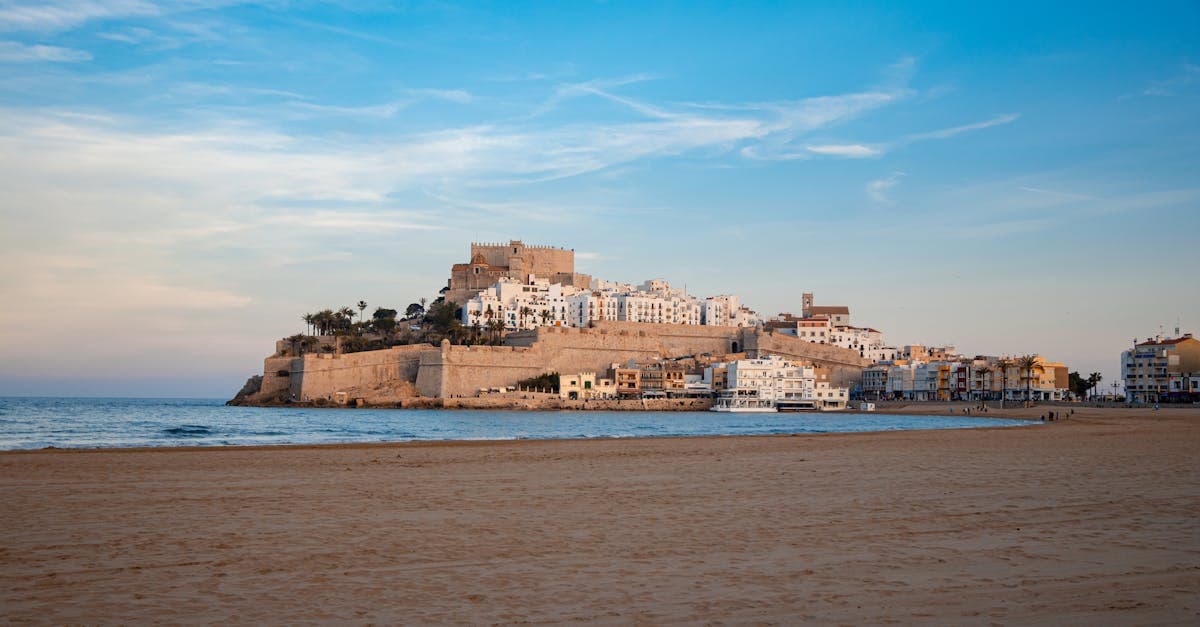
Month-by-month averages for the south coast
The table below uses AEMET's 1981-2010 averages for Tenerife South Airport. The airport sits on the dry southern side of the island, like the resorts of Los Cristianos, Playa de las Américas and Costa Adeje. Sea temperatures are 2015-2024 averages from Puertos del Estado, Spain's state ports authority, taken across four buoys off Tenerife and Gran Canaria. Sunshine is AEMET's monthly total divided by the days in each month, and a rain day means at least 1 mm fell.
 Get your Spain eSIM before you flyInstall it at home, turn it on when you land. From £2.09.See Spain plans
| Month | Average high | Average low | Rain days | Sunshine a day | Sea (Canaries average) |
|---|---|---|---|---|---|
| January | 21.7°C | 15.2°C | 1.8 | 6.2 h | 20.0°C |
| February | 22.0°C | 15.0°C | 2.2 | 7.0 h | 19.4°C |
| March | 23.1°C | 15.6°C | 1.9 | 7.3 h | 19.3°C |
| April | 23.1°C | 16.0°C | 1.1 | 7.3 h | 19.9°C |
| May | 23.9°C | 17.0°C | 0.3 | 7.9 h | 20.5°C |
| June | 25.4°C | 18.8°C | 0.0 | 8.6 h | 21.6°C |
| July | 27.7°C | 20.2°C | 0.0 | 9.5 h | 22.4°C |
| August | 28.4°C | 21.1°C | 0.2 | 8.9 h | 23.3°C |
| September | 27.9°C | 21.1°C | 0.6 | 7.1 h | 23.9°C |
| October | 26.8°C | 20.0°C | 1.6 | 6.9 h | 23.7°C |
| November | 24.8°C | 18.2°C | 1.9 | 6.4 h | 22.7°C |
| December | 22.8°C | 16.5°C | 3.5 | 6.3 h | 21.2°C |
Even December averages only 3.5 rain days, and June and July average none at all. The sea also lags behind the air. April and November have similar daytime highs, 23.1°C and 24.8°C, yet the water is almost 3°C warmer in November.
North and south Tenerife have different climates
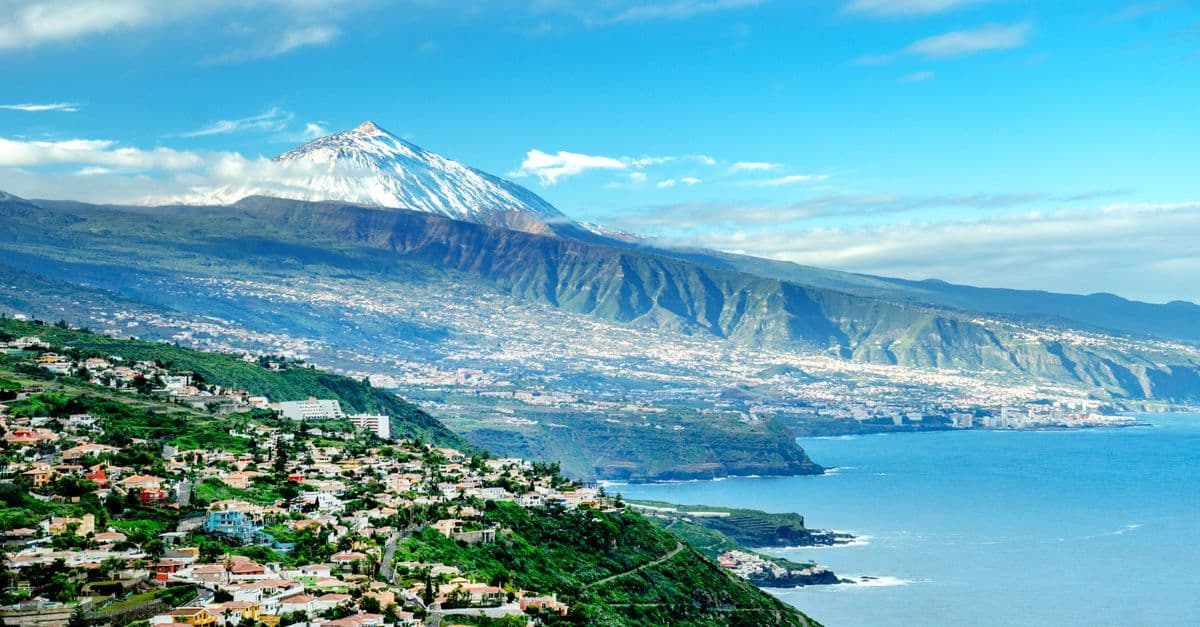
Tenerife's north faces the trade winds, which push cloud against the mountains and bring more rain and greener hills. The south sits in their shelter and stays drier. Turismo de Tenerife, the island's tourism board, puts that cloud layer at 500 to 1,500 m above sea level. Four of AEMET's long-term stations on the island show how wide the spread is.

| Area (AEMET station, height) | January high | August high | Rain a year | Fog days a year | Sunshine a year |
|---|---|---|---|---|---|
| South: Tenerife South Airport, 64 m | 21.7°C | 28.4°C | 132 mm | 0.3 | 2,725 h* |
| East: Santa Cruz de Tenerife, 36 m | 21.0°C | 29.0°C | 226 mm | 0.3 | 2,913 h |
| North: Tenerife North Airport, La Laguna, 632 m | 16.0°C | 25.7°C | 520 mm | 78 | 2,409 h* |
| Mountain: Izaña, 2,369 m | 7.5°C | 22.6°C | 392 mm | 84 | 3,473 h* |
*AEMET gives no yearly sunshine total for these three stations, so the figure adds up its monthly averages.
Tenerife North Airport, in the hills above La Laguna, gets 520 mm of rain a year and fog on about 78 days. Its rainfall is not far off the 615 mm the Met Office records at Heathrow. The capital, Santa Cruz, logs more sunshine than the south airport over a full year, but only because of April to October. From November to March, the south is sunnier every single month. And the sunniest station of all is Izaña, at 2,369 m on the road up to Teide, well above the cloud band.
Height matters more than distance. By AEMET's own coordinates, the Santa Cruz station and Tenerife North Airport are only about 7 km apart, yet their January highs differ by 5°C. The northern coast is milder than the airport up at 632 m. Turismo de Tenerife gives the north's coastal areas, where Puerto de la Cruz sits, an average of 19 to 23°C.
Winter is when Tenerife beats UK weather most
The gap between Tenerife and home is widest in winter. Here are the Met Office's 1991-2020 averages for Heathrow next to AEMET's figures for Tenerife South Airport.
| Month | Heathrow high | Tenerife South high | Heathrow sunshine | Tenerife South sunshine |
|---|---|---|---|---|
| November | 11.5°C | 24.8°C | 71 h | 193 h |
| December | 8.8°C | 22.8°C | 55 h | 195 h |
| January | 8.4°C | 21.7°C | 61 h | 193 h |
| February | 9.0°C | 22.0°C | 79 h | 195 h |
| March | 11.7°C | 23.1°C | 124 h | 226 h |
| July | 23.9°C | 27.7°C | 218 h | 295 h |
From November to February, the south of Tenerife runs 13 to 14°C warmer by day and gets roughly two and a half to three and a half times London's sunshine. By July the gap in daytime highs shrinks to about 4°C. If you only have one Tenerife trip in you this year, winter is when the weather does the most work. The two sources cover different 30-year periods, so treat the gap as a guide, not an exact figure.
The sea is warmest in September and coolest in March
Sea temperatures around the Canaries move slowly. Puertos del Estado's 2015-2024 averages are measured 0 to 3 m below the surface at its four Canary Islands buoys. They bottom out at about 19.2°C in late March and peak at about 24°C in mid-September. Two of those buoys sit off Tenerife, at Santa Cruz and off the south coast, and the other two are off Gran Canaria.
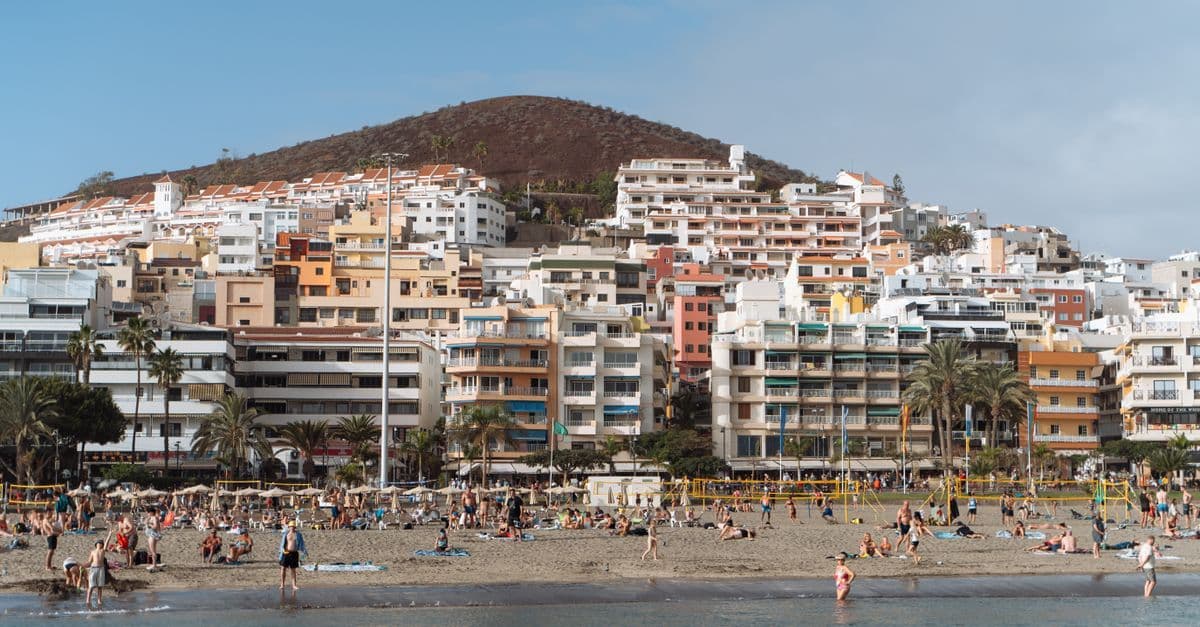
That narrow range, under 5°C across the whole year, is why a January swim is realistic here: the water averages 20°C that month. It never gets bath-warm either. Even in September, the sea stays about 4°C cooler than the afternoon air on the south coast.
Mount Teide has mountain weather all year
Teide's summit stands at 3,718 m, and the weather up there has little in common with the beach. AEMET's Izaña station, at 2,369 m on the way up, averages a January low of 1.1°C, with frost on about 12 days that month. Snow is possible from late autumn to spring and most likely from December to March, when Izaña averages around 2 snow days a month.
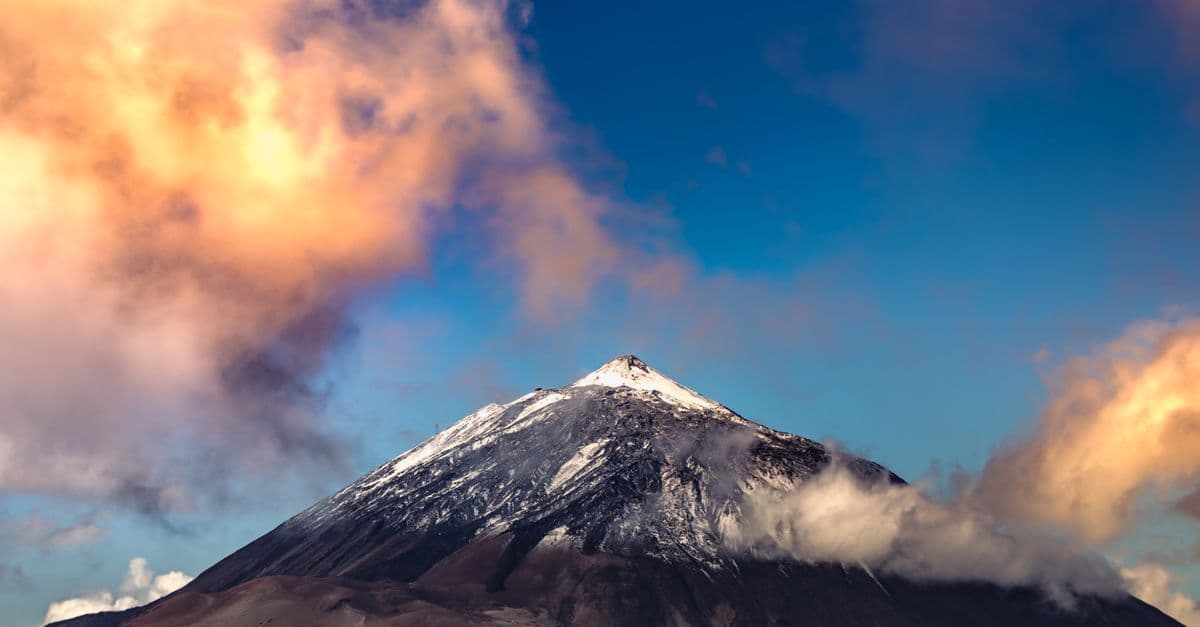
Summer up there is bright and dry. July highs reach 23.0°C at Izaña, average humidity drops to about 25%, and the station logs 382 hours of sunshine in both June and July. Frost is possible at Izaña from October to May, so pack a warm layer for a trip up the mountain then. Take sun cream whatever the month.
The best time to visit depends on what you want
There is no bad month on the south coast, so the right time comes down to what you want from the trip.
| If you want | Go in | Why |
|---|---|---|
| Winter sun | November to March | South-coast highs of 21.7 to 24.8°C and 193 to 226 hours of sun a month |
| The hottest beach days | July to September | Highs of 27.7 to 28.4°C and almost no rain |
| The warmest sea | September and October | Sea around 23.7 to 23.9°C |
| Walking in the green north | May to September | Fewer than 4 rain days a month at Tenerife North Airport, though fog peaks at about 11 days in July |
| Snow on Teide | December to March | About 2 snow days a month at Izaña |
Tenerife South Airport still averages 195 hours of sunshine in December, its wettest month. That is more than Heathrow gets in a typical September.
Check the 7-day forecast for the town you're heading to
Long-range Tenerife weather forecasts are guesswork. AEMET's official town forecasts, such as the one for Adeje, run seven days ahead, so treat any 14-day outlook as a rough guide. Check the town you're heading to, not the island as a whole, because a foggy morning in La Laguna can sit beside a clear one on the south coast.
Saharan dust is the other thing to watch. AEMET notes its effects on health and air travel, and publishes daily dust maps for the Canary Islands covering today and tomorrow.
On an island where the weather changes with the road, you'll check those town forecasts on your phone more than you expect. Our eSIM for Tenerife gives you mobile data while you're there. Check your handset is on our list of eSIM-compatible phones, then use the data usage calculator to size a plan. Set up the eSIM before you fly, and the forecast can be on your screen before you reach the baggage hall.
If your UK plan already includes roaming in Spain at a price you're happy with, you may not need a travel eSIM at all. Our guide to how data roaming charges work explains what to check first.
Questions travellers ask
Is Tenerife hot enough to sunbathe in January?
In the south, usually yes. Tenerife South Airport averages a January high of 21.7°C, about 6 hours of sunshine a day and fewer than two rain days. The sea around the islands averages 20°C that month. Expect cooler, cloudier days in the north and near-freezing nights up on Teide.
Sources
- Standard climate values: Tenerife Sur Aeropuerto (1981-2010)aemet.es
- Standard climate values: Santa Cruz de Tenerife (1981-2010)aemet.es
- Standard climate values: Tenerife Norte Aeropuerto (1981-2010)aemet.es
- Standard climate values: Izaña (1981-2010)aemet.es
- Sea water temperature indicator, Canary marine demarcation (mean 2015-2024)puertos.es
- Heathrow location-specific long-term averages (1991-2020)metoffice.gov.uk
- Tenerife climatologywebtenerife.co.uk
- North-south contrastwebtenerife.co.uk
- Sea of cloudswebtenerife.co.uk
- Adeje 7-day weather forecastaemet.es
- Saharan mineral dust intrusionsaemet.es
- Spring temperatures (Teide 3,718 m)webtenerife.co.uk
- Sea water temperature indicator: method (buoys measure 0-3 m depth)puertos.es
Written by
HelloRoam Team
The HelloRoam editorial team writes about eSIM technology, travel connectivity, and mobile data tips for international travelers.