
Holiday guidesSpain

Gran Canaria Airport: the Complete UK Traveller's Guide for 2026

Gran Canaria Airport (IATA: LPA, ICAO: GCLP) operates from a single passenger terminal in Telde municipality, 18 km south of Las Palmas de Gran Canaria [en.wikipedia.org. It's the busiest airport in the Canary Islands, ranks fifth in Spain, and processed 15.2 million passengers in 2024, a record that surpassed the previous pre-pandemic peak of 14.1 million.

By Emily ThorntonTravel WriterHow we write our guides

Published

Gran Canaria Airport: the Complete UK Traveller's Guide for 2026

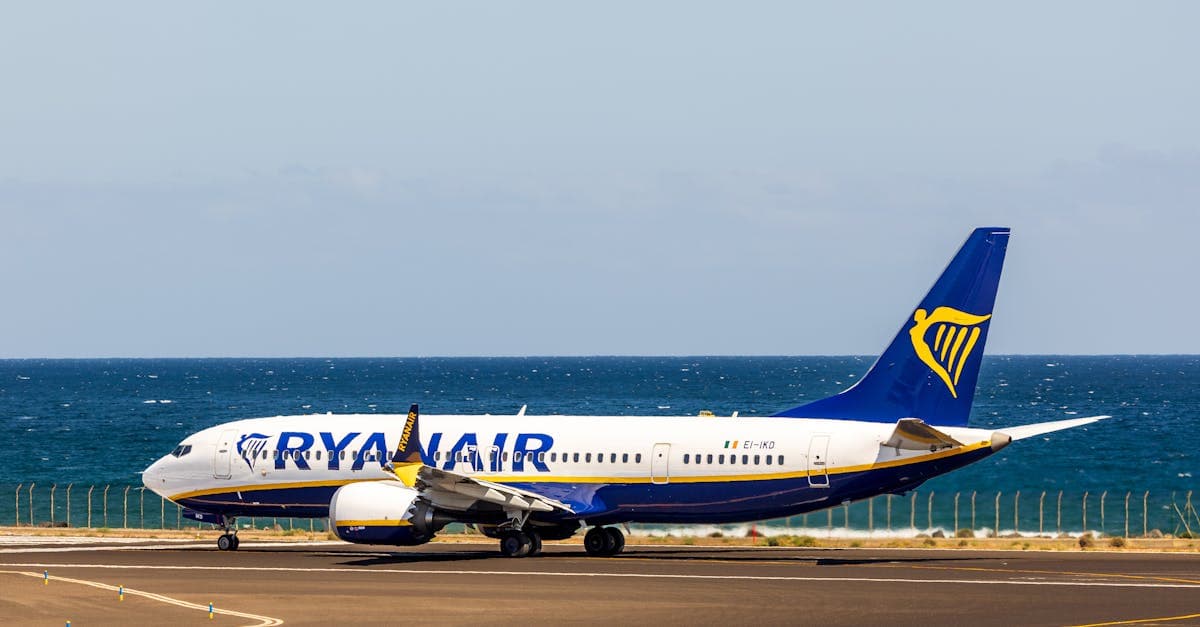
![Ryanair aircraft taking off into clear skies above the Canary Islands, Gran Canaria Airport in the distance.! image

Gran Canaria Airport at a glance

![Gran Canaria Airport runway stretching alongside the Atlantic coastline during a sunny afternoon departure.! image

Get your Spain eSIM before you flyInstall it at home, turn it on when you land. From £2.09.See Spain plans

British travellers are LPA's second-largest nationality group, behind Germans only. That's a tangible sign of how deeply the Canaries are embedded in the UK travel calendar, particularly for winter sun and Easter breaks.

Aena, Spain's national airport authority, runs the terminal. You may still see it listed as "Gando Airport" in older guides, a reference to the shared site with the Spanish Air Force's Base Aérea de Gando. For booking and navigation purposes, search "LPA" or "Gran Canaria Airport." "Gando" returns inconsistent results online.

Post-Brexit, most EE, Vodafone, and O2 customers arrive to find EU roaming charges already active. Three and Sky Mobile are the main exceptions. HelloRoam's Spain eSIM starts at ~£1.11 for 1GB on Vodafone's 4G network, and [eSIM for Spain plans can be activated before boarding so data is live the moment wheels touch tarmac.

Key fact: HelloRoam's Spain eSIM starts at ~£1.11 for 1GB, 7 days, on Vodafone's 4G network.

Those are the grounded fundamentals. What catches most first-timers off guard comes next.

UK flights to Gran Canaria Airport: routes, airlines and fares

![Commercial aircraft taxiing at Gran Canaria Airport, ready for a direct flight back to the UK.! image

Direct services to LPA depart from more than 15 UK airports, spanning from Gatwick and Heathrow to Newcastle, Edinburgh, and Belfast expedia.co.uk. Ryanair holds roughly 25 to 28 percent of total LPA seat capacity, the largest single-carrier share at the airport [flightradar24.com. Flight times run between 3 hours 45 minutes and 4 hours 15 minutes, depending on departure city.

Low-season one-way fares start from around £60. Peak summer and Christmas fortnight prices can reach £140 to £280 on the same routes. That's a vivid illustration of why flexible travel dates matter more than carrier preference on this route.

Ryanair alone accounts for more than a quarter of all seats out of LPA.

Jet2 runs a particularly strong operation on northern routes, with Manchester, Birmingham, and Leeds Bradford as its main Gran Canaria bases, competing directly with TUI in the package-holiday market. British Airways operates seasonal Heathrow services, typically attracting premium leisure passengers rather than the standard beach crowd.

easyJet and Vueling cover Gatwick, Luton, and Stansted. The choice between carriers usually comes down to departure airport convenience rather than any concrete difference in the flight itself. Most major UK cities now have at least one non-stop option for the winter sun season; several regional airports offer two competing routes through the peak months.

The cheapest booking windows are November through early March, outside school holiday blocks. Flights departing in those months consistently cost far less than July equivalents, and the airport is considerably quieter on arrival.

Booked and confirmed. What actually happens when you land is a different matter entirely.

Arriving at Gran Canaria Airport: terminal layout, passport control and baggage

![Spacious arrivals terminal at Gran Canaria Airport with check-in counters, flags, and passenger signage.! image

The passenger terminal at LPA has expanded considerably since its 1972 opening, but it remains a single-building operation [en.wikipedia.org. Arrivals, baggage reclaim, and car hire desks sit on the ground floor; departures occupy the level above. The site shares its perimeter with the Spanish Air Force's Base Aérea de Gando, which is why military aircraft are visible on the apron during final approach.

UK passport holders join the non-EU queue, a direct consequence of Brexit. In peak summer, that wait runs between 30 and 60 minutes during busy arrival windows. Several flights from Manchester, Gatwick, and Bristol can land within the same 90-minute stretch, all funnelling into the same passport control booths.

That queue is the one detail most first-time visitors fail to account for.

Baggage carousel waits on charter flights typically run 20 to 35 minutes from wheels down. Pack essentials in your hand luggage if you've got a tight transfer or early check-in booked.

Departing from LPA: what to allow

On the way home, Aena offers a Fast Track security option that trims the standard queue by roughly 15 to 20 minutes [aena.es. In July and August, aim to arrive at the airport 2.5 hours before your flight. That's not padded timing; it's necessary. The departure hall fills fast when several wide-body charters board simultaneously.

Winter departures are more workable. An hour and 40 minutes is adequate on most days in November or January, though October and February half-term weeks generate queues closer to August levels than autumn ones.

UK travellers regained duty-free purchasing rights at EU airports after Brexit, and LPA's departure zone carries the standard Canarian selection. Worth planning around on the way home if you're picking up gifts or local spirits before the flight [aena.es.

Through arrivals and out into the warm air. The resort is close, but the transport option you choose from here shapes how the holiday actually begins.

Getting from Gran Canaria Airport to your resort

![White shuttle bus outside Gran Canaria Airport ready to transport arriving passengers to nearby resorts.! image

Four options connect Gran Canaria Airport (LPA) to the island's main destinations: public bus, taxi, pre-booked transfer, and car hire. The right call depends on where you're heading and what time you land.

DestinationBusTaxi
Las Palmas city centreRoute 60, ~€2.55-3.00, 30-45 min~€25-35, 20-30 min
Maspalomas / Playa del InglésChange required, ~90-120 min total~€55-75, 35-50 min
Puerto Rico de Gran CanariaChange required, ~120 min+~€65-85, 45-60 min

Bus Route 60 is the cracking cheap option for anyone heading to Las Palmas. Frequent, reliable, and the fare is pocket-friendly. The south resorts are a different calculation entirely: the bus requires a change and total journey time stretches past 90 minutes. For Maspalomas or Puerto Rico, a taxi or pre-booked transfer is the serviceable choice for most arrivals.

Taxi rank queues matter in July and August. Waits of 20 to 30 minutes are common after busy charter flights land. Pre-booking a transfer online sidesteps that cleanly.

Car hire suits anyone spending more than a few days and wanting to explore beyond the resort belt. The local firm Cicar consistently undercuts the international chains on base rates, and their desk sits inside the terminal. Compare before defaulting to the familiar brands from home. If your travel insurance already covers hired vehicles, decline the counter's redundant upsell.

Transport sorted. Your phone signal on arrival is the next hurdle.

Staying connected at Gran Canaria Airport and on the island

![Woman using her mobile phone to stay connected while waiting at an airport departure lounge.! image

Gran Canaria Airport has Aena free Wi-Fi in the terminal, but it's time-limited and speeds vary enough to make it unreliable for anything beyond a quick message [aena.es. For usable data across the island, you need a plan sorted before you land.

Post-Brexit, every UK carrier sets its own EU roaming rules. EE, Vodafone UK, and O2 all charge daily bolt-ons when you use data in Spain, typically in the £2 to £5 range per day. Three's Feel At Home scheme covers Spain without a daily charge, though fair-use data caps apply. Two clear camps, and most UK travellers are in the more expensive one.

The cleaner alternative is an eSIM activated before departure. Movistar, Orange ES, and Vodafone ES all provide solid 4G coverage across Gran Canaria, including the south resort belt and Las Palmas city centre. An eSIM connects to those networks without requiring a physical SIM swap at arrivals.

HelloRoam's Spain eSIM starts at ~£1.11 for 1GB over 7 days on the Vodafone ES 4G network. For a short break where you're mostly on resort Wi-Fi and just need data for maps and messaging, that's adequate cover without overthinking it. Data-heavy use or longer stays will want a higher-volume plan.

Key fact: HelloRoam's Spain eSIM starts at ~£1.11 for 1GB over 7 days on the Vodafone ES 4G network.

eSIM support requires iOS 12.1 or above, or Android 9 or above. Check your handset before banking on it. And before you fly, download offline Maps and cache WhatsApp media. That preserves your allowance for when it counts: navigating from the airport, finding a cash machine in an unfamiliar resort, or pulling up a restaurant booking three streets from the promenade.

One practical worry still comes up repeatedly before travellers fly.

Are there queues at Gran Canaria Airport?

![Busy airport terminal queue with travellers waiting in line beneath modern overhead architecture.! image

Yes, and in summer they're longer than most first-timers expect. Passport control peaks in July and August, with waits regularly hitting 30 to 60 minutes for UK travellers on busy days. The cause is simple: UK passports no longer qualify for EEA fast-track lanes after Brexit. Everyone joins the non-EU queue, full stop.

Security tells a different story. The worst pinch point is between 05:00 and 08:00, when several low-cost carriers depart in close succession. Allow at least two and a half hours before a morning flight. According to Aena, passengers are permitted terminal access two hours prior to flight departure, making early arrival essential during peak periods [aena.es. Aena offers a paid Fast Track security option that genuinely reduces the wait at peak times, though it's an extra cost worth factoring in if you're travelling with children or cutting it close.

The myth worth busting: off-peak Gran Canaria is noticeably calmer. October, November, and April all see shorter queues at passport control and security alike. Shoulder season arrivals often clear the terminal in under 15 minutes.

Customs checks are rare for UK leisure travellers arriving within personal allowances. The green channel is standard for the vast majority.

The short version: summer mornings are the bottleneck. Plan your departure time around the security pinch point, not when the terminal opens. Shoulder season gives you breathing room at both ends of the journey.

A few travellers still have a simpler question before any of this matters.

What airport do you fly into in Gran Canaria?

![Commercial aircraft docked at a sun-drenched Gran Canaria Airport gate beneath a vivid blue sky.! image

Gran Canaria has one commercial airport: Gran Canaria Airport, IATA code LPA, ICAO code GCLP. There is no second passenger airport on the island. All scheduled flights, charter services, and low-cost carriers land here. Full stop.

The airport sits in Telde municipality on the island's eastern coast and is operated by Aena, Spain's national airport authority. Some older travellers still call it Gando Airport, a holdover from its origins near the Spanish Air Force's Base Aérea de Gando, which still shares the site. The military base and the commercial terminal coexist on the same footprint, which explains the two parallel runways: one stretches 3,100 metres, the other 2,960 metres [en.wikipedia.org.

Worth knowing for trip planning: the Canary Islands have four main airports, and they're easy to muddle.

Tenerife has two. Tenerife South (TFS) handles the bulk of UK charter and low-cost traffic, aimed at Playa de las Américas and Los Cristianos. Tenerife North (TFN) serves Santa Cruz and La Laguna, with fewer UK direct routes. Fuerteventura (FUE) and Lanzarote (ACE) are entirely separate island airports, each on their own landmass across the water.

LPA is the busiest of the group. As of early 2026, it handles more passengers annually than Tenerife South, which surprises travellers who assume Tenerife dominates skyscanner.net. Gran Canaria's airport edges ahead in volume, partly because Las Palmas functions as a year-round city destination as well as a resort gateway.

For any flight booked to Gran Canaria specifically, LPA is the only answer. There's no risk of landing at the wrong airport, no fork in the road between north and south terminals. The single-terminal layout keeps things straightforward once you're on the ground.

If your itinerary combines islands, knowing those four IATA codes upfront saves considerable confusion at the booking stage.

Reviewed by HelloRoam's editorial team. Last updated: 07 April 2026.

Questions travellers ask

What airport do you fly into in Gran Canaria?

Gran Canaria has one commercial airport: Gran Canaria Airport, with IATA code LPA and ICAO code GCLP. All scheduled flights, charter services, and low-cost carriers land here. The airport is located in Telde municipality on the island's eastern coast and is operated by Aena, Spain's national airport authority. Some older guides refer to it as Gando Airport.

Are there two airports in Gran Canaria?

No, Gran Canaria has only one commercial passenger airport: Gran Canaria Airport (LPA). There is no second passenger airport on the island. The site shares its perimeter with the Spanish Air Force's Base Aérea de Gando, which explains the two parallel runways, but all commercial flights use the single passenger terminal.

Are there queues at Gran Canaria Airport?

Yes, particularly in summer. UK travellers join the non-EU passport control queue after Brexit, with waits regularly hitting 30 to 60 minutes in July and August during busy arrival windows. The security pinch point is between 05:00 and 08:00, when several low-cost carriers depart in close succession. Shoulder season months like October, November, and April are noticeably calmer, with many passengers clearing the terminal in under 15 minutes.

Sources

  1. Welcome you to Gran Canaria Airportaena.es
  2. flightradar24.comflightradar24.com
  3. Shops and restaurantsaena.es
  4. Cheap Flights from Gran Canaria Airport (LPA)expedia.co.uk
  5. Gran Canaria Airporten.wikipedia.org
  6. Gran Canaria Airport (LPA) Arrivals and Departuresskyscanner.net
  7. Information | Gran Canaria Airportaena.es

Written by

Emily Thornton

Emily Thornton is a travel writer at HelloRoam who covers travel connectivity and eSIM tips for international visitors. She writes about finding reliable data at outdoor events, during weekend city breaks, and on ferry and rail journeys. Emily keeps her tone friendly and jargon-free so any traveler can follow along.

Keep planning

All holiday guides