Install a HelloRoam Mexico eSIM before you fly. You'll have data the moment you land at MTY to open your maps, line up a ride into the city, and text family back home.
Quick Answer: Monterrey, Mexico at a Glance
Monterrey is the capital of Nuevo León in northeast Mexico, and its metro area had 5.3 million people in the 2020 census. Metrópolis de México 2020, a joint study by Mexico's urban development ministry, population council and national statistics institute, ranks it the country's second-largest metro area for the first time, just ahead of Guadalajara. The city sits in a valley framed by the Sierra Madre Oriental, south of the Texas border at Laredo. No beaches here. Just mountains, serious industry, and northern Mexican cuisine that rarely gets the attention it deserves.
 Get your Mexico eSIM before you flyInstall it at home, then turn on data roaming for it when you land. From $3.37.See Mexico plans
| Category | Detail |
|---|---|
| Location | Nuevo León state, northeast Mexico |
| Metro population | 5.3 million (2020 census) |
| US State Department rating | Level 2, Exercise Increased Caution (Nuevo León) |
| Main airport | MTY, 15.6 million passengers in 2025 |
| Geographic backdrop | Sierra Madre Oriental mountain range |
| Best travel window | October through April |
| Summer average highs | 96°F to 97°F (June to August) |
Summers in this valley run brutal. Mexico's national weather service puts average highs at 96°F to 97°F from June through August at its Monterrey station, where the record since 1951 is 115°F, set in May 2002. From October to April, average highs sit between 72°F and 89°F, and hiking the foothills becomes reasonable rather than reckless.
What Monterrey, Mexico Is Known For
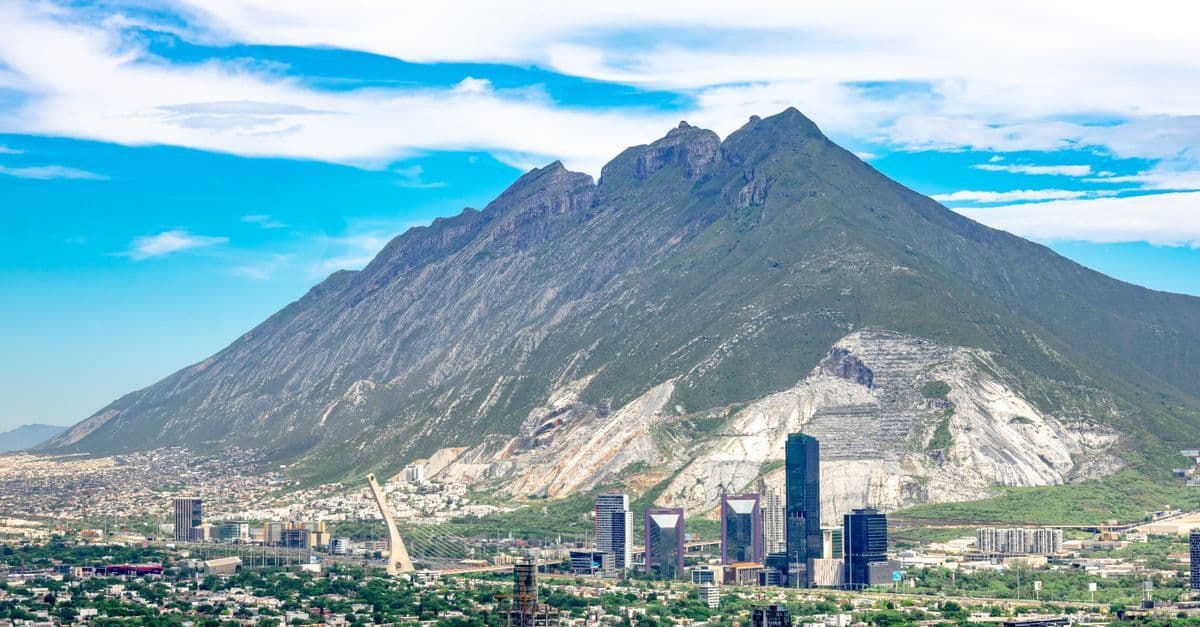
Monterrey is Mexico's industrial capital, nicknamed La Sultana del Norte (Sultan of the North, a nod to its long dominance in northern Mexican commerce). Founded in 1596, it now hosts a corporate lineup that would raise eyebrows even in Houston: Cemex, a multinational construction materials company, has its principal offices in neighboring San Pedro Garza García, and FEMSA, the group behind the OXXO convenience chain and Coca-Cola FEMSA, is headquartered in Monterrey itself.
Tec de Monterrey, formally the Instituto Tecnológico y de Estudios Superiores de Monterrey, consistently ranks among Latin America's most prestigious universities.
The food scene runs deeper than most US travelers expect.
Norteño cuisine centers on cabrito (slow-roasted kid goat), machaca (dried, shredded beef), and flour tortillas thick enough to hold a proper taco, bearing little resemblance to grocery-store versions back home. A craft beer movement has taken real hold in Barrio Antiguo, the historic quarter where colonial-era buildings now house breweries, galleries, and restaurants serious enough to warrant a reservation.
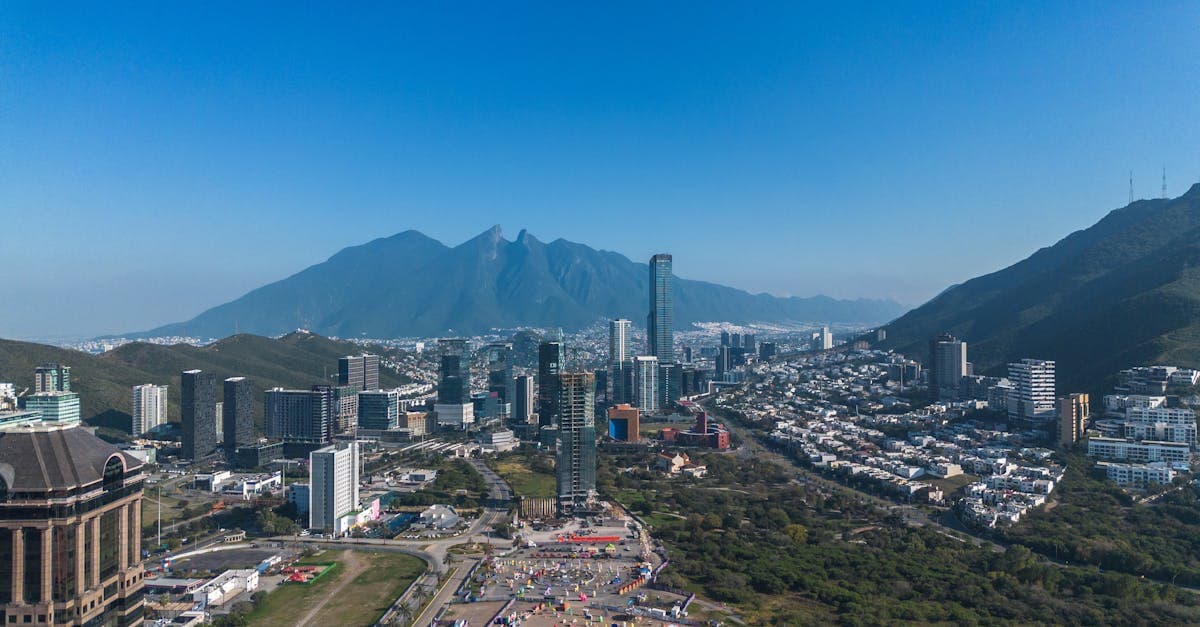
Then there's the skyline. Cerro de la Silla, a saddle-shaped peak visible from nearly every point in the city, gives Monterrey a visual signature found nowhere else in Mexico. Beach destinations have the sea; Monterrey has the Sierra Madre pressing directly into the urban grid. MARCO, the Museum of Contemporary Art anchoring Macroplaza, competes with Mexico City institutions for exhibition quality, and Macroplaza itself ranks among the largest public squares in the world. It's a city that earns a second look from anyone who assumed Mexico meant sand.
How Safe Monterrey Is for US Visitors
The State Department's Level 2 rating for Nuevo León, "Exercise Increased Caution," puts Monterrey's state alongside France and Germany. The difference is in the fine print: Mexico's advisory, unlike theirs, asks US citizens to follow the travel rules set for US government staff. Those rules bar travel between cities after dark, waving down taxis on the street, and driving from the US border into Mexico's interior. Nuevo León adds no state-specific limits on top.
San Pedro Garza García, the affluent municipality immediately southwest of the city center, shows the other side. In the June 2026 urban safety survey by INEGI, Mexico's statistics institute, 10.6% of adults there said their city felt unsafe. That was the lowest share among the 91 urban areas surveyed, though up from 4.4% in March. In Monterrey municipality the figure was 57.2%, against 59.8% across all 91. San Pedro is where Monterrey's professional class lives and where the top restaurants concentrate.
The neighborhoods where tourists spend most of their time are Barrio Antiguo (the historic quarter with galleries and nightlife), San Pedro (upscale dining and shopping), Centro (around Macroplaza and the civic museums), and the Cintermex convention district.
Never wave down a taxi on the street. Use a ride app such as Uber or a dispatched car from a regulated taxi stand, the same rule the State Department sets for its own staff in Mexico.
The State Department advisory deserves respect rather than dismissal, but it doesn't single out any Monterrey neighborhood. So the practical rules are the ones above: stay in the districts where visitors spend their time, use app-based rides, and don't travel between cities after dark. Read the State Department's Mexico travel advisory on travel.state.gov again before you go.
Getting to Monterrey, Mexico from the US
General Mariano Escobedo Airport (MTY) handled 15.6 million passengers in 2025, up 15% on 2024, according to its operator, OMA. The airport's own route list shows flights to Houston, Dallas/Fort Worth, San Antonio, Austin, Chicago, Atlanta, Miami and New York (JFK), among other US cities.
Houston's service runs from Bush Intercontinental (IAH) on United and VivaAerobus; the list shows no Hobby (HOU) flights. Dallas/Fort Worth has American and VivaAerobus, Chicago O'Hare has United and VivaAerobus, and Miami has American and VivaAerobus. The list doesn't show frequencies, so check schedules for your dates before you plan around a daily flight.
Mexican airlines fill out the options. VivaAerobus appears on more of MTY's US routes than any other airline, including San Antonio, Austin and Los Angeles, and Aeroméxico adds routes such as Atlanta, Detroit and New York. Spirit isn't on the airport's airline list, and Volaris doesn't show up on its US routes. Our guide to cheap flights to Mexico covers routes and timing if you want to dig into fares.
Driving is where the advisory bites. The State Department advises US citizens not to drive from the US border into Mexico's interior, and for its own staff, the trip from Nuevo Laredo to Monterrey is limited to Federal Highway 85D in daylight, with prior approval. Nuevo Laredo, across the river from Laredo, is in Tamaulipas, which the department rates Level 4, "Do Not Travel," and it warns that armed criminal groups patrol the state's border region from Reynosa to Nuevo Laredo. SENTRI won't speed the drive south either: CBP's program only speeds your return into the United States.
At MTY, the airport's transport page lists seven authorized taxi and transport companies, all running 24 hours and taking cash or credit cards. That lines up with the State Department's advice to use regulated taxi stands or app-based rides. For a budget option, the airport also lists the express "Aeropuerto - Y Griega" bus route, which connects with the Y Griega Metro station.
On the way home, Global Entry speeds your arrival at major US airports, but it won't shorten any line at MTY. TSA PreCheck works the same way: it's available on domestic connecting flights after you return to the United States.
Top Things to Do in Monterrey, Mexico
Monterrey's activity list spans a free urban park inside a converted steel mill, a mountain hike with panoramic summit views, world-class contemporary art, and a colonial quarter that runs on two completely different speeds depending on when you arrive. The beach-and-resort framing doesn't apply here.
Parque Fundidora is the natural starting point. Entry is free every day from 6:00 AM to 10:00 PM, and the 144-hectare (356-acre) former steelworks holds Horno 3, a blast furnace turned science and technology museum, plus the Centro de las Artes galleries and open green space. The tradeoff: weekend crowds build fast by late morning. Go early.
Paseo Santa Lucia links Fundidora to Macroplaza via a 2.5-kilometer pedestrian canal walk through the city center. It works as practical transit and as a destination worth the time. Macroplaza anchors the downtown end, one of Latin America's largest public squares, surrounded by government buildings and cultural institutions. Monumental in scale, more interesting than it first appears.
Cerro de la Silla defines the Monterrey skyline, the saddle-shaped peak visible from anywhere in the metro. The main hiking route has significant elevation gain, and the summit views are panoramic. The trail is exposed, and summer heat makes the upper sections genuinely punishing. October through April is the practical window.
MARCO (Museo de Arte Contemporáneo de Monterrey) holds a strong permanent Latin American contemporary collection alongside rotating international exhibitions. Entry fees are modest. The building's architecture justifies the trip independently of what's showing.
Barrio Antiguo runs on two modes. Weeknights bring quiet cantinas, street tacos, and cold Carta Blanca without fighting a crowd. Weekends turn the neighborhood loud, which has its own appeal depending on your energy level.
Cola de Caballo, a waterfall in Villa de Santiago, south of the city, works as a half-day trip. The falls run strongest after rain. The site has basic food vendors but it's not a heavily developed tourist area, which is part of the draw. Plan to be back before dark, since the State Department asks US citizens not to travel between cities after dark.
One caveat applies to every outdoor stop on this list: summer heat. The October-through-April window is when the city earns its outdoor reputation.
How to Stay Connected in Monterrey
Travelers in Monterrey can stay connected with their US phone plan, a local SIM card, or a travel eSIM installed before departure. Each option differs in cost, activation requirements, and whether a passport is needed.
Start with your US plan, because it may already cover Mexico. AT&T's eligible unlimited plans include talk, text and your plan data in Mexico with no roaming charges, though AT&T notes roaming may run at 2G speeds. Verizon includes calling, texting and data in Mexico on its Unlimited plans, and as of October 2026 its TravelPass costs $6 a day there on other plans. If your plan charges a daily fee, compare cheaper ways to get data abroad before you pay it.
Three steps worth sorting before you board:
Step 1: Set up before you fly. Airport Wi-Fi is a poor place to download an eSIM profile or troubleshoot a new SIM, so handle it at home on a network you trust. If you'd rather carry a separate device, our guide to portable Wi-Fi hotspots and eSIM alternatives compares the options.
Step 2: A local SIM works, but it now comes with an ID step. OXXO, the convenience chain on seemingly every corner, signed a 2024 deal to sell AT&T Mexico SIM cards in its 21,000+ stores. Under rules Mexico's telecom regulator published in December 2025, new SIMs are sold disabled until the line is linked to an ID, and foreign visitors link theirs with a passport. Telcel's own site now tells customers that registering active lines is required by official order. You can link a line at the carrier's store or online, through a link the carrier texts you when you insert the SIM.
Step 3: A travel eSIM skips the store visit. An eSIM is a digital SIM you add by scanning a QR code or typing in an activation code; our guide explains what an eSIM is in more detail. Check that your phone supports eSIM, then install it at home over Wi-Fi before you board. Your phone keeps your US number active while the eSIM handles data separately on the local network. No physical card to track down, no store queue to join.
| Option | Activation | Passport Required | Hotspot |
|---|---|---|---|
| US phone plan | Plan dependent | No | Yes (plan dependent) |
| Local prepaid SIM | Link to your passport in store or online | Yes | Plan dependent |
| Travel eSIM | QR code or activation code, before you fly | Varies by provider | Varies by provider |
If your US plan already covers Mexico, you may not need anything else. If it charges for Mexico, or you'd rather keep trip data off your US line, a travel eSIM for Mexico set up before departure saves you an errand on arrival. If the eSIM doesn't connect when you land at MTY, HelloRoam's support team is available 24/7.
What Monterrey Offers Tourists, and What It Lacks
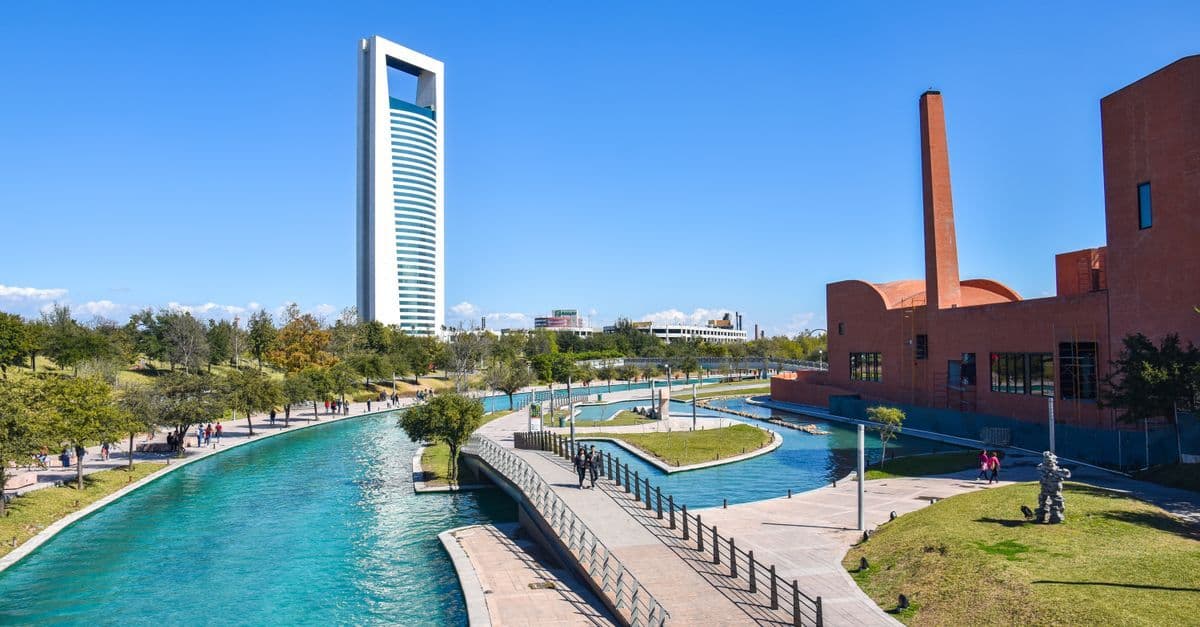
Monterrey rewards travelers who want something other than resort beaches, and the genuine surprise is how well-resourced it is for visitors once you arrive. The same federal study that ranks its population second puts its metro economy second too, behind only Mexico City's. That economic weight shows up in ways tourists notice immediately: polished hotels and reliable infrastructure, especially in San Pedro Garza García.
Street tacos from carts near Macroplaza and through the Barrio Antiguo cost pocket change. A short walk away, you can sit down for a tasting menu at a chef-driven restaurant where the bill looks more like San Francisco than northern Mexico. This range isn't a quirk. It reflects a city that has served both working-class norteño culture and multinational executives for decades, and both ends of that spectrum are done well.
What Monterrey doesn't offer is a finished tourist circuit. There's no Cancún-style resort zone. No Condesa-equivalent stretch where every storefront is calibrated for foreign foot traffic. The city's tourism infrastructure is still developing, which means lower crowd density at MARCO, Parque Fundidora, and Cola de Caballo than you'd encounter at comparable attractions in Mexico City or Guadalajara.
For US visitors, especially from Texas, the calculus is straightforward. Shorter flights than Cancún. Thinner crowds. A city whose economic profile means the amenities exist. Monterrey just hasn't been packaged for tourists yet, and right now that's its best quality.
Reviewed by HelloRoam's editorial team.
Questions travelers ask
Is Monterrey the wealthiest city in Mexico?
Not by total output. Mexico City's metro economy is larger, and the federal Metrópolis de México 2020 study ranks Monterrey's second. The city is home to FEMSA, and Cemex has its principal offices in neighboring San Pedro Garza García.
Sources
- US State Department: Mexico Travel Advisory (Level 2; Nuevo León and Tamaulipas entries)travel.state.gov
- INEGI: Encuesta Nacional de Seguridad Pública Urbana, June 2026inegi.org.mx
- Servicio Meteorológico Nacional: Monterrey (Obs) climate normals 1991-2020smn.conagua.gob.mx
- Servicio Meteorológico Nacional: Monterrey (Obs) extreme values since 1951smn.conagua.gob.mx
- OMA: December 2025 passenger traffic reportbmv.com.mx
- Monterrey Airport: popular destinationsaeropuertomonterrey.oma.aero
- Monterrey Airport: airlinesaeropuertomonterrey.oma.aero
- Monterrey Airport: authorized taxisaeropuertomonterrey.oma.aero
- Monterrey Airport: public transportaeropuertomonterrey.oma.aero
- SEDATU, CONAPO and INEGI: Metrópolis de México 2020gob.mx
- Diario Oficial: CRT Lineamientos para la identificación de líneas telefónicas móvilesdof.gob.mx
- Telcel: line registration noticetelcel.com
- FEMSA: OXXO and AT&T México SIM card agreementfemsa.com
- AT&T: using your plan in Canada and Mexicoatt.com
- Verizon: TravelPass FAQsverizon.com
- CBP: SENTRIcbp.gov
- CBP: Global Entrycbp.gov
- TSA: PreCheck FAQtsa.gov
- Parque Fundidoraparquefundidora.org
- Cemex: Form 20-F for 2025sec.gov
- FEMSA: Form 20-F for 2025sec.gov
- Ayuntamiento de Monterrey: city founding, 20 September 1596monterrey.gob.mx

Written by
David Chen
David Chen is a travel writer at HelloRoam who covers mobile connectivity and travel tech for international visitors. He compares data plan pricing for short trips and extended stays, and tests eSIM activation at major international airports. David also covers hotspot options for business travelers so readers can skip the SIM card counter and get online fast.