



Frequently Asked Questions
The vaccines you need depend on your destination, planned activities, trip duration, and personal health profile. MMR, Tdap, varicella, and seasonal influenza form the baseline for any international trip. For travel to developing regions, Hepatitis A is the most broadly recommended addition, while Hepatitis B, Typhoid, Yellow fever, and Rabies may be needed depending on destination. Consult a certified travel medicine clinic six to eight weeks before departure for a personalized list.
MMR (measles, mumps, rubella), Tdap (tetanus, diphtheria, pertussis), varicella, and seasonal influenza form the baseline recommended for any international trip. From that foundation, destination risk and planned activities determine what else is needed — Hepatitis A is the most broadly recommended addition for travel to developing regions. Four factors shape the final vaccine list: destination risk level, planned activities, trip duration, and individual health profile. A travel medicine clinic consolidates risk assessment, prescriptions, and documentation into one visit.
Twinrix is recommended for Mexico travel when protection against both Hepatitis A and Hepatitis B is desired in a single vaccine series. The Public Health Agency of Canada recommends Hepatitis A vaccination for all travel to Mexico due to foodborne and waterborne exposure risk. Hepatitis B risk depends on individual behaviour, including medical or dental procedures, tattoos, and unprotected sex abroad. Travellers who do not anticipate those activities may choose a standalone Hepatitis A vaccine instead of the combined series.
Travel vaccinations are not always legally required but are strongly recommended depending on your destination. Some countries require proof of yellow fever vaccination for entry, particularly for travellers arriving from endemic regions in sub-Saharan Africa and South America. Routine vaccines such as MMR, Tdap, and influenza are recommended for all travellers regardless of destination. Skipping destination-specific vaccines such as Hepatitis A or Typhoid increases the risk of preventable illness that could derail your trip.
Canada does not require vaccination documentation from the vast majority of international visitors. The ArriveCAN vaccination requirements were dropped in 2022 and have not been reinstated. Travellers arriving directly from countries where yellow fever is actively transmitted — primarily in sub-Saharan Africa and parts of South America — may need to present a valid International Certificate of Vaccination or Prophylaxis at border health screening. This is a World Health Organization protocol applied selectively by country of origin, not a standard border requirement.
Most travellers do not need a yellow fever vaccine to enter Canada. Only travellers arriving directly from countries where yellow fever is actively transmitted may need to present a valid yellow card (ICVP) at border health screening. This is a WHO protocol applied based on country of origin and affects only a small share of arrivals. It is not a CBSA customs requirement and does not apply to travellers coming from non-endemic countries.
Hepatitis A is the travel vaccination recommended across the widest range of destinations, including Latin America, Africa, most of Asia, and parts of Eastern Europe. Hepatitis B is a priority for Southeast Asia, sub-Saharan Africa, and travellers likely to receive medical care or dental work abroad. Typhoid is recommended for the Indian subcontinent, parts of Africa, and Latin America. Yellow fever certification is required for entry to certain countries in Africa and South America, and Rabies pre-exposure vaccination is recommended for remote or wildlife-heavy destinations.
Travel vaccinations in Canada are not covered by any national program, and adult travellers pay out of pocket. Hepatitis A costs roughly $85 to $120 per dose, Typhoid runs $65 to $95, and Yellow fever ranges from $130 to $200. A Rabies pre-exposure series of three doses costs between $300 and $600. Many employer health benefit plans cover travel vaccines partially or in full, so check your group benefits before booking a clinic appointment.
Provincial health plans do not cover destination-specific travel vaccines for adults. Vaccines such as Hepatitis A, Yellow fever, and Typhoid fall outside provincial immunization schedules, which fund routine childhood immunizations. Some provinces cover certain vaccines for children, but adults almost universally pay out of pocket. Checking employer group benefit plans before your clinic visit may reveal partial or full reimbursement coverage.
Travel vaccinations in Canada are available at PHAC-affiliated travel medicine clinics, pharmacy chains such as Shoppers Drug Mart and Rexall, and family doctor offices. Only certified travel medicine clinics can administer yellow fever and issue the official ICVP yellow card required at certain international borders. Pharmacy chains handle common vaccines such as Hepatitis A and B, Typhoid, and seasonal flu without a referral. Book six to eight weeks before departure to allow time for multi-dose vaccine series.
No, yellow fever vaccines can only be administered at certified travel medicine clinics affiliated with the Public Health Agency of Canada. Pharmacies and family doctors cannot administer yellow fever or issue the International Certificate of Vaccination or Prophylaxis (ICVP). Only accredited vaccination centres are authorized to issue the official WHO yellow card, which is required at certain borders for travellers from endemic regions. The PHAC travel clinic directory lists accredited locations searchable by postal code.
Certified travel medicine clinics recommend booking six to eight weeks before departure. This allows time for multi-dose series such as Hepatitis B (three doses over six months) or the standard Twinrix schedule. Accelerated schedules are available for travellers with shorter timelines — the Twinrix accelerated series runs at zero, seven, and twenty-one days with a booster at twelve months. Three weeks of lead time is the minimum needed to start an accelerated series and have the first two doses working before departure.
The standard Twinrix schedule consists of three doses given at zero, one, and six months. An accelerated schedule is available for travellers with shorter timelines, with doses at zero, seven, and twenty-one days, followed by a booster at twelve months. Three weeks of lead time before departure is enough to start the accelerated series and have initial doses working before boarding. Per-dose cost at a Canadian travel clinic runs roughly $80 to $100 CAD, with most provincial health plans not covering the cost for adults.
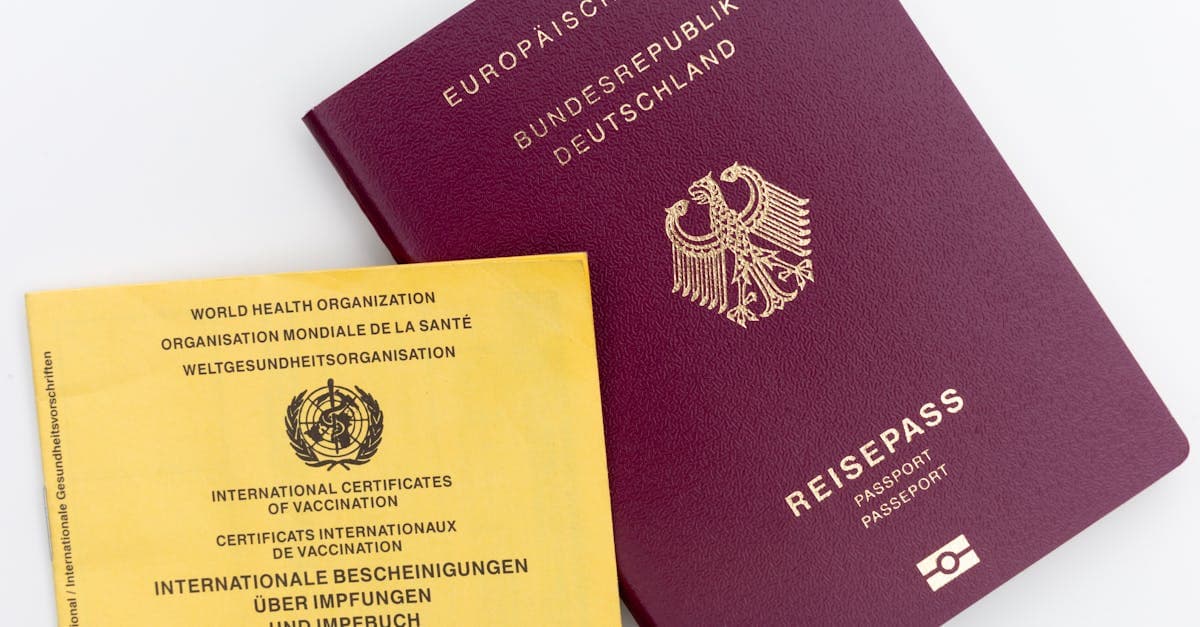
The ICVP (International Certificate of Vaccination or Prophylaxis), commonly called the yellow card, is an official WHO document that certifies yellow fever vaccination. Under the 2016 WHO ruling, the certificate is valid for life starting ten days after vaccination. It is required for entry to certain countries in Africa and South America and may be requested at Canadian border health screening from travellers arriving from yellow fever endemic regions. Only certified travel medicine clinics can issue the ICVP; pharmacies and family doctors cannot.
For travel to India, Hepatitis A, Hepatitis B, and Typhoid are standard additions to routine vaccines. Rabies pre-exposure prophylaxis is strongly recommended for remote areas where the nearest hospital is more than an hour away, and the three-dose series should be started well in advance of departure. Routine vaccines including MMR, Tdap, varicella, and seasonal influenza should be up to date before departure. A certified travel medicine clinic can provide a personalized assessment based on your specific itinerary and planned activities.
For travel to Thailand, Hepatitis A and Hepatitis B are standard recommendations. Japanese encephalitis is recommended for rural areas and travellers on extended stays during active transmission season. Routine vaccines including MMR, Tdap, varicella, and seasonal influenza should be current before any international trip. A travel medicine clinic can assess whether additional vaccines are warranted based on your specific itinerary.
Rabies pre-exposure prophylaxis is strongly recommended when travelling to remote or wildlife-heavy destinations where the nearest hospital is more than an hour away. The vaccine consists of a three-dose series available at Canadian travel clinics. It is particularly recommended for parts of India, rural Asia, and sub-Saharan Africa. A certified travel medicine clinic can assess whether rabies vaccination is warranted based on your specific destination and planned activities.
Seasonal influenza is the illness most likely to sideline a visitor to Canada. The flu season runs from October through April, peaking in January and February. Travellers from the southern hemisphere, where flu peaks during northern summer months, may have gaps in immunity to circulating northern strains. A flu shot before departure provides cost-effective protection for the duration of the trip.
Sources
- Vaccines and medications before travel — travel.gc.ca
- Immunization of travellers: Canadian Immunization Guide — canada.ca
- Immunization and travel — myhealth.alberta.ca
- Travel immunizations — fraserhealth.ca
- Vaccinations and travel — jeancoutu.com
- Destinations | Travelers' Health — wwwnc.cdc.gov
- Travel Health Vaccine Information — canadiantravelclinics.ca
- Travel Clinic Near Me | TravelVAX Vaccination Clinic | Travel ... — travelvax.ca