


New York Weather at a Glance
New York City averages 12.9°C annually and logs around 234 sunny days a year weather.gov. Those numbers read as moderate until two details emerge: there is no dry season anywhere in the calendar, and the urban heat island effect pushes Manhattan temperatures 2 to 4°C above the surrounding suburbs. That second point matters more than most regional forecasts communicate.
Annual snowfall sits at roughly 63 cm, well below what Toronto or Montreal typically accumulates wunderground.com. The city's reputation for brutal winters lands somewhat softer for Canadian travellers.
Rain is the consistent variable. New York weather delivers meaningful precipitation every month, with no window of true dryness anywhere in the year. Afternoon thunderstorms arrive fast in summer. Sleet and wet snow mix through winter. Even October, the month most travel guides point to as the best window, delivers wet days with regularity.
For Canadians planning around rain events and unpredictable weather delays, HelloRoam's USA eSIM-new-york) starts at ~C$3.41 per day on T-Mobile and Verizon 5G networks. Browse All eSIM Plans to compare data volumes before you pack.
No month offers a true reprieve. That consistency shapes every other planning decision.
The month-by-month breakdown sharpens that picture considerably.
New York Weather Month by Month: A Canadian Comparison
New York runs warmer than Toronto in every calendar month, though the character of that warmth shifts considerably by season. Winter is wet and manageable by Canadian standards. Summer layers intense humidity onto high heat in ways most Canadian cities simply don't replicate, with the heat index capable of exceeding 40°C during peak July conditions accuweather.com. October, with its comfortable temperatures and lower rain frequency, sits at the most appealing midpoint in the calendar.
The table below lays out all 12 months.
Reading These Numbers as a Canadian
Winter in New York tracks closest to Montreal's sleet season rather than the dry cold that Calgary or Edmonton residents know. December through February temperatures are manageable, but the wet-snow and slush combination demands waterproof footwear in ways that prairie cold rarely does. A proper insulated coat still earns its space; a rain jacket alone won't cover it.
Summer is where New York weather diverges sharply from any major Canadian city. The 30°C average July high pairs with overnight lows of 22°C and peak humidity that sits well above anything Toronto produces. Subway platforms get stifling. Outdoor events, and July has many of them, require deliberate heat management. The question worth asking before booking a July trip: how well do you tolerate humid heat when the temperature doesn't drop after dark?
September and October stand out immediately. Both months share 9 rain days, the lowest count in the calendar. October's 18°C average high suits walking-heavy itineraries, and Central Park foliage peaks in mid to late October. Canadians already attuned to autumn colour at home will recognize the experience: a familiar palette, amplified by the scale of Manhattan.
May records the highest rain-day count at 12, higher than any summer month. Building flexibility into a May itinerary is sensible rather than optional.
Knowing the temperatures is useful; knowing what to pack is practical.
What to Pack for New York Weather in Each Season

New York weather varies enough across the year that packing demands a layered, considered approach regardless of travel dates. Four seasons, four distinct strategies, with one rule that runs through all of them: rain gear is never wasted space.
Winter (December to February)
Waterproof boots first. NYC sidewalks collect slush and wet snow more than dry powder, and wind channelling through Midtown's skyscraper corridors cuts harder than the thermometer suggests. An insulated coat rated for serious cold, a windproof outer layer, thermal gloves, and a base layer cover the essentials. Vancouverites who rely on a rain jacket alone will regret that choice by the second afternoon.
Spring (March to May)
Temperatures range widely across spring, from cool March mornings to genuinely warm May afternoons. A three-piece layering system handles those swings more sensibly than a single heavy coat. May runs particularly wet compared to the rest of the year, so a packable rain jacket earns its keep throughout the season rather than sitting at the bottom of the bag.
Summer (June to August)
Breathable fabrics only. Not all subway cars maintain reliable air conditioning, and street-level humidity in July and August is relentless for visitors arriving from drier Canadian cities. A compact umbrella belongs in the day bag: summer thunderstorms arrive fast and typically clear within the hour. Hydration demands more careful attention than most Canadians expect.
Fall (September to November)
A light jacket carries October comfortably. Keep a packable rain layer accessible rather than buried. September runs warm enough that a single mid-layer handles most evenings without effort.
Year-round consideration
NYC delivers consistent wet days across every calendar month. A compact, packable umbrella isn't optional gear in any season.
Wardrobe sorted. The next question is which month actually rewards the trip.
Best Time to Visit New York from Canada

September through October offers the strongest overall balance of weather, crowd levels, and accommodation value for Canadians making the trip. Both months share the calendar's lowest wet-day frequency, temperatures suit walking-heavy itineraries, and Central Park's canopy turns gold and amber through the back half of October. For Canadians attuned to autumn colour at home, this delivers a familiar palette at a scale that Canadian urban parks rarely match.
For travellers sensitive to heat and humidity
July and August are worth reconsidering. Summer humidity peaks around 68%, creating a heat-humidity combination that most Canadian cities, including Toronto on its warmest days, simply don't replicate wunderground.com. Travellers from Vancouver and Victoria feel the gap most sharply: Pacific coast summers are warm but dry. New York's are neither, and overnight temperatures stay elevated, so the city doesn't cool down the way even Toronto does.
For budget-conscious travellers
Winter visits from December through February carry real advantages. Hotel rates drop city-wide, attraction queues shorten considerably, and New York's modest annual snowfall keeps disruption unlikely by Canadian standards. For longer stays, a monthly data plan removes the per-day cost calculation entirely. HelloRoam's 30-day USA plan provides 3GB at ~C$15.74 on T-Mobile 5G networks.
For spring travellers
April and May are pleasant and less crowded than summer. Consistent rain throughout both months warrants building schedule flexibility into the itinerary.
The honest assessment
Mid-September through the third week of October is the obvious window for most Canadians. Conditions cooperate, fall programming peaks across the city, and the foliage experience delivers something familiar at a scale that most Canadian urban destinations simply can't match.
One practical question remains before you land: connectivity.
Staying Connected in New York: Mobile Data Options

Rogers, Bell, and Telus all offer US roaming add-ons. The cost runs roughly $14 CAD per day, which feels manageable for a short visit but becomes a real line item on a stay of five days or more.
The alternative Canadians are increasingly turning to: a dual-SIM setup. Your Canadian physical SIM stays active for calls and texts. A US eSIM handles all your data without triggering that roaming meter. The two operate independently, which means Interac notifications, iMessages, and calls home keep working normally throughout the trip.
Activation doesn't require a kiosk or a queue.
Most eSIM plans for the US can be configured from your phone before you board, or from the departure lounge at YYZ or YVR. By the time you clear US Customs at JFK or Newark, your phone is already pulling data from local networks.
That matters more in New York than most destinations. New York weather shifts borough to borough, so weather apps refresh constantly. Maps runs continuously through a subway grid covering five boroughs and over 470 stations. FaceTime calls back to family are data-heavy in ways casual browsing isn't. eSIM plans running on T-Mobile or Verizon infrastructure cover all five boroughs with 5G service across the dense urban environment New York demands.
A reasonable counter-point: if your stay is two nights and your hotel has dependable Wi-Fi, a carrier day-pass might cover you adequately. The calculation shifts decisively for trips of four days or longer.
A few questions come up consistently from first-time Canadian visitors.
New York Weather: Common Questions from Canadian Visitors
New York weather varies by season in ways that monthly averages only partly capture. Humidity, wind channelling between skyscrapers, and the urban heat island effect all shape the on-the-ground experience in ways that differ meaningfully from what temperature data alone suggests. The questions below address what the monthly numbers leave out.
Step outside JFK's arrivals level in August and the city announces itself before you've found the taxi queue: the air is thick and close, nothing like a dry Canadian summer afternoon. Each season carries a character that numbers alone don't fully communicate: the particular weight of a July evening when the temperature won't drop, the damp bite of a February sleet shower in Midtown, the way October afternoons feel genuinely mild rather than just passable. Winter, in particular, tends to catch even experienced Canadian travellers off guard once the sleet starts and the wind finds the gaps in their layering.
What is the coldest month in New York?
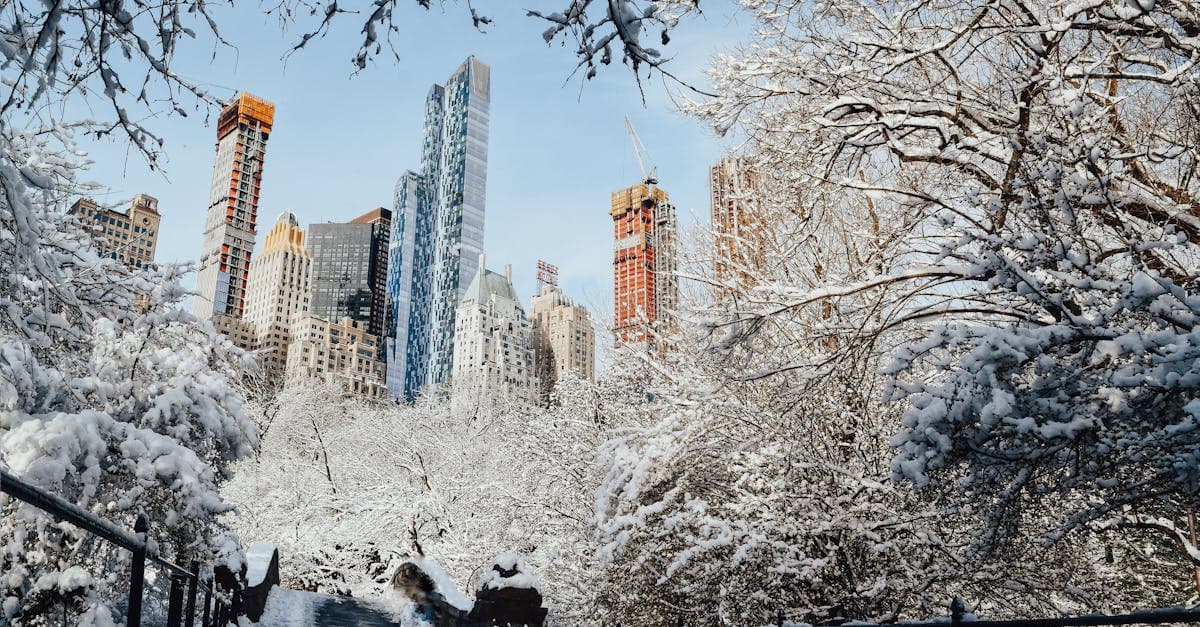
January is New York's coldest month, with average daytime highs around 4°C and overnight lows near -3°C. February runs close behind; the city's all-time record low of -26°C was set in February 1934, though temperatures anywhere near that extreme are genuinely rare weather.gov.
For travellers from Calgary, Edmonton, or Winnipeg, those numbers read as unremarkable. A January evening at -3°C would qualify as mild by Prairie standards. The misunderstanding about New York winters isn't the temperature itself.
It's the character of the cold.
New York winter air is damp. Sleet is common. A day that reads as 0°C with precipitation and wind moving through the corridor canyons between Midtown skyscrapers feels different from a -10°C clear day on the Prairies. The moisture penetrates layering in a way dry continental cold doesn't, which catches travellers off guard when the thermometer reads something they'd consider manageable at home.
Travellers from Quebec and Atlantic Canada recognize this immediately. The rest of Canada typically needs a day to recalibrate expectations. The practical takeaway is straightforward: prioritize waterproofing over bulk. An insulated waterproof shell outperforms a heavier but water-susceptible coat on most January days in New York.
That cold arrives with snow, and in more volume than many expect.
Is there snowfall in New York City?
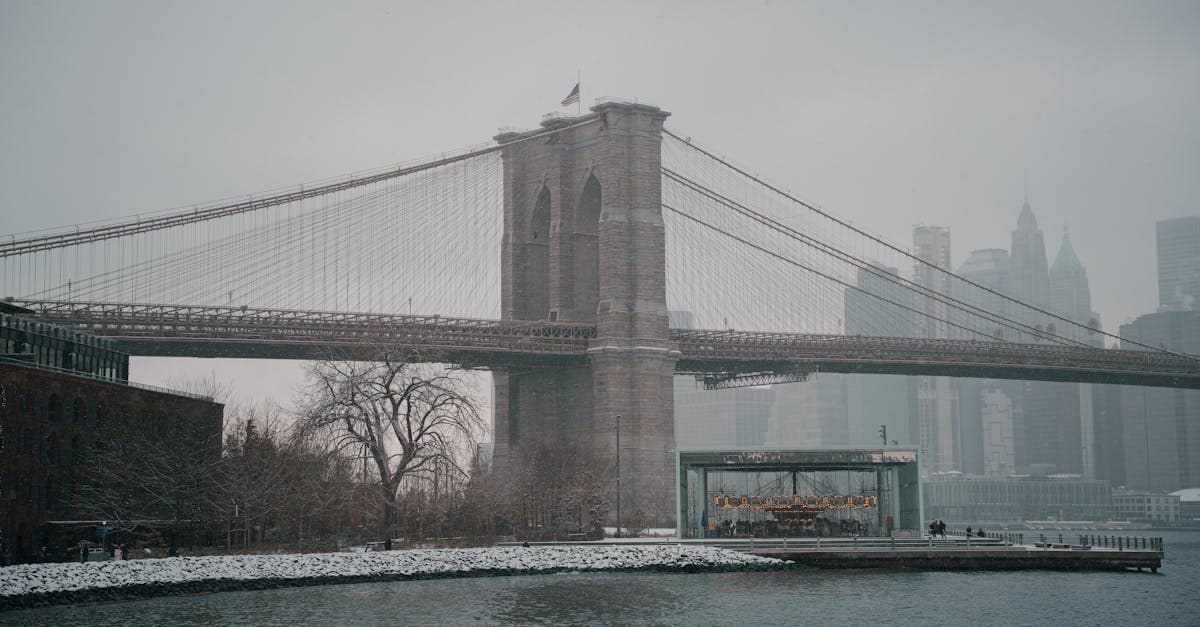
Yes. New York City receives meaningful winter snowfall. The annual total, noted at the outset of this guide, sits in the range of a moderate Canadian winter city, concentrated mostly between December and February, with occasional flurries into March.
The record tells the more dramatic story. Winter Storm Jonas in January 2016 dropped 68 cm in a single event, the largest one-day snowfall accumulation on record for the city weather.gov. That kind of total is exceptional; a typical winter brings several snowfall events, most of them modest and short-lived.
Here's the nuance most visitors miss: Manhattan accumulates less than the outer boroughs. The city's dense built environment retains heat, keeping temperatures in Manhattan's core noticeably above what Queens, Staten Island, and the surrounding suburbs record, which means a storm that blankets the outer boroughs with several centimetres may arrive in Midtown as sleet or cold rain. The concrete and glass absorb and retain heat in ways that shift the precipitation type.
For tourists, this is largely a non-issue. The subway runs. Theatres, museums, and restaurants stay open. New Yorkers treat snowfall as weather, not a disruption. Waterproof footwear handles the slush well; the streets clear within hours of most storms.
Taken together, that raises the broader question of how New York's full temperature range compares to what Canadians experience through a typical year.
Is New York more cold or hot?

New York weather runs temperate rather than extreme, with an annual average of 12.9°C spread across four genuinely distinct seasons. Summer dominates the hot side: June through August delivers sustained heat with humidity that makes the air feel thick and close. Winter is real but mild by Canadian standards.
The record extremes tell the full story. According to weather.gov, the city hit 41°C in July 1936 and bottomed out at -26°C in February 1934, a 67-degree spread across the city's recorded history, though those readings represent rare outliers and not typical visits.
For Canadians, the practical read is this: New York runs warmer than home in every month of the year. A Calgary traveller finds January NYC almost comfortable. A Torontonian finds July NYC genuinely oppressive, not because the mercury is higher than home, but because the humidity stacks on top of it in a way that dry Ontario summers rarely do.
The trend line matters too. New York City has warmed roughly 2°C since 1900, a shift that has pushed shoulder seasons warmer and made summer heat events more frequent and intense weather.gov.
Hot wins on points. Summer is longer, more physically demanding, and more likely to reshape your itinerary than winter ever will.
Reviewed by HelloRoam's editorial team. Last updated: 20 April 2026.
Get Connected Before You Go


Frequently Asked Questions
January is New York's coldest month, with average daytime highs around 4°C and overnight lows near -3°C. February runs close behind. The cold is notably damp, with sleet and wet snow common, which can feel more penetrating than the dry continental cold familiar to Canadian Prairie travellers.
Yes, New York City receives meaningful winter snowfall, with an annual total of roughly 63 cm concentrated mostly between December and February, with occasional flurries into March. Single storms can be significant — Winter Storm Jonas in January 2016 dropped 68 cm in one event, the largest one-day accumulation on record for the city.
New York City experiences four distinct seasons, so conditions vary widely by time of year. Summers are hot and humid with July highs averaging 30°C and a heat index that can exceed 40°C, while winters are cold and damp with January highs around 4°C. The city averages 12.9°C annually, and the urban heat island effect can push Manhattan temperatures 2 to 4°C above surrounding suburbs.
New York has a true four-season climate that is neither consistently cold nor consistently hot. Winters are damp and cold (December to February highs around 4 to 6°C), while summers are hot and humid (July highs around 30°C with overnight lows staying near 22°C). The annual average temperature is 12.9°C, making it a temperate city with meaningful seasonal extremes.
September through October offers the strongest overall balance of weather, crowd levels, and value for Canadian visitors. Both months share the calendar's lowest wet-day frequency (9 days each), temperatures are comfortable for walking-heavy itineraries, and Central Park foliage peaks in mid to late October. Winter visits from December to February are worth considering for budget-conscious travellers, as hotel rates drop and disruption from snow is less likely than Canadians might expect.
New York summer humidity significantly exceeds that of most Canadian cities. Summer humidity peaks around 68%, and July overnight lows stay near 22°C, meaning the city does not cool down after dark the way even Toronto does. Travellers from Vancouver and Victoria feel this gap most sharply, as Pacific coast summers are warm but dry, while New York's are neither.
New York sees roughly 9 to 12 rain days per month throughout the year, with no truly dry season. May has the highest count at 12 rain days, while September and October share the lowest at 9 days each. Canadian travellers should expect meaningful precipitation in every month and carry rain gear regardless of travel dates.
Waterproof boots are the top priority, as NYC sidewalks accumulate slush and wet snow rather than dry powder, and Midtown wind channelling makes conditions feel colder than the thermometer suggests. An insulated waterproof coat, windproof outer layer, thermal gloves, and a base layer cover the essentials. A rain jacket alone is not sufficient, as the damp, wet cold penetrates lighter layers quickly.
October is widely considered one of the best months to visit New York, with average highs around 18°C and only 9 rain days — the joint lowest count in the calendar. Central Park foliage peaks in mid to late October, and conditions suit walking-heavy itineraries comfortably. A light jacket handles most October days, though a packable rain layer is still worth keeping accessible.
New York's annual snowfall of roughly 63 cm is considerably less than what Toronto, Montreal, or most major Canadian cities typically accumulate. The city's reputation for harsh winters is somewhat overstated by Canadian standards. However, the wet, slushy character of New York snowfall — combined with damp air and wind — can feel challenging even when temperatures are mild.
July records the highest monthly precipitation at 117 mm, though May has the highest number of rain days at 12 — more than any summer month. Rain is distributed fairly consistently year-round, with no genuinely dry month in the calendar. Building schedule flexibility into any New York itinerary, particularly in spring, is sensible rather than optional.
New York winter temperatures are milder than Montreal or Toronto, with January highs averaging around 4°C compared to the colder averages of those cities. However, New York's wet, damp winter character — with frequent sleet and wet snow — more closely resembles Montreal's sleet season than the dry cold familiar to travellers from Calgary or Edmonton. Waterproofing is more important than insulation weight for most New York winter days.
Canadian carriers like Rogers, Bell, and Telus offer US roaming add-ons at roughly $14 CAD per day, which adds up quickly on stays of five days or more. A popular alternative is a dual-SIM setup using a US eSIM for data while keeping the Canadian physical SIM active for calls and texts. USA eSIM plans running on major US 5G networks can be activated before departure and provide full five-borough coverage for navigation, weather apps, and streaming.
New York and Vancouver both experience wet winters, but their summers differ sharply. Vancouver summers are warm and relatively dry, while New York summers are hot and intensely humid, with July overnight lows staying around 22°C and humidity levels that produce a heat index exceeding 40°C during peak conditions. West coast Canadian travellers typically find New York's summer heat the most challenging seasonal adjustment.
The urban heat island effect pushes Manhattan temperatures 2 to 4°C above the surrounding suburbs, due to dense building coverage, heat-absorbing pavement, and reduced green space. This means regional weather forecasts can understate actual conditions experienced on Manhattan streets, particularly in summer. Travellers should account for this when interpreting temperature forecasts from regional weather services.
Sources
- New York, NY Current Weather — theweathernetwork.com
- NWS Forecast Office New York, NY — weather.gov
- New York City, NY 10-Day Weather Forecaststar_ratehome — wunderground.com
- New York, NY Weather Forecast — accuweather.com
- NYC Weather — ny1.com
- 10-Day Weather Forecast for New York City ... — weather.com
- NY weather forecast, NYC weather – NBC 4 New York — nbcnewyork.com
- Accutrack Radar | New York Weather News — abc7ny.com