

Quick Answer: Lithuania in Europe at a Glance
Lithuania is in Europe, a confirmed Northern European EU member since May 2004, operating on the Euro and fully inside the Schengen Area. Canadians enter without a visa. Five UNESCO World Heritage Sites. A capital, Vilnius, that holds one of Central Europe's largest surviving medieval old towns.
The country's population sits at 2.8 million, smaller than many travellers expect from an EU state. Lithuania is roughly the size of Ireland, and that compactness shows: it's a tangible destination, navigable in a single trip without the sprawling logistics of larger European countries.
For connectivity, HelloRoam's eSIM for Lithuania starts at ~C$3.45 for unlimited daily data (2 GB at full 5G speed) via Telia and Tele2, Lithuania's two national carriers. Rogers and Bell international day passes for the Baltics cost considerably more for a comparable day of access.
Key fact: HelloRoam's Lithuania plans run on Telia and Tele2, both supporting 5G connectivity.
Geography tells the richer story.
Where Exactly Is Lithuania Located in Europe?

Geographically, Lithuania belongs to Northern Europe, sitting on the eastern shore of the Baltic Sea. Latvia borders it to the north, Belarus to the east and southeast, Poland to the south, and Russia's Kaliningrad exclave to the southwest. Land area: roughly 65,300 square kilometres, comparable in size to Ireland.
Here's the striking detail most guides skip.
Research placed a village called Purnuškės, 26 kilometres north of Vilnius, at the geographic centre of Europe. A marker stands at that spot. The calculation shifts depending on how Europe's eastern boundary is drawn, but multiple independent studies land the centroid within Lithuanian territory. It's a concrete, grounded claim for a country routinely mislabelled "Eastern Europe" through Cold War habit rather than actual cartography.
The Baltic label fits better. Lithuania, Latvia, and Estonia sit further west than Finland and align with Denmark in terms of longitude. EU and NATO membership arrived together in May 2004, during the largest single expansion wave in either organization's history. Eurozone membership followed in January 2015, when Lithuania adopted the Euro. If you're arriving from Germany or France and already carrying euros, no currency swap needed in Vilnius.
Schengen membership is what Canadian travellers need to understand most clearly. The Schengen Area allows free movement across 27 European countries after a single border entry. Your 90-day visa-free window runs across all 27 combined, not per individual country.
Days spent in Germany, Poland, and Lithuania all draw from the same clock. For a multi-stop Baltic itinerary, that's the arithmetic to track before booking.
Lithuania also shares the Curonian Spit, a UNESCO-listed sand dune peninsula on the Baltic coast, with Russia's Kaliningrad exclave. The Lithuanian half is fully accessible to Canadian visitors. Kaliningrad requires a separate Russian visa and is a different entry process entirely.
Entry rules for Canadians, and one new authorization step expected later in 2026, come next.
Do Canadians Need a Visa for Lithuania?
No visa required. Canada sits on the Schengen visa-exempt list, covering Lithuania along with the rest of the zone. Canadian passport holders cross the border with no consulate appointment, no application form, and no fee, for now.
That last qualifier matters. ETIAS (the European Travel Information and Authorization System, a pre-travel screening tool comparable to Canada's own eTA for inbound visitors) is expected to launch for Canadians in late 2026. ETIAS is not a visa.
The application runs online in minutes, carries a modest fee, and stays valid for multiple Schengen trips over three years once approved. Check Government of Canada travel advisories for the confirmed launch date; the ETIAS rollout has shifted timelines before.
The 90-day allowance noted above has a detail worth understanding.
It runs on a rolling 180-day calendar across all Schengen countries combined. Spend six weeks in Germany before flying to Vilnius: those 42 days already count. You'd arrive in Lithuania with 48 days remaining in the current window. For a longer European itinerary, tracking entry and exit dates across the whole zone matters more than counting days per country.
Entry into Lithuania is practical: Vilnius Airport (VNO) connects through Amsterdam (KLM), Frankfurt (Lufthansa), Warsaw (LOT), and Helsinki (Finnair), among others. No direct flights from Canada, but single-connection itineraries are standard. Land crossings from Poland to the south or Latvia to the north are both fully open, with no internal Schengen border check.
Passport validity: carry a document with at least three to six months remaining past your planned departure date. Border officers across the Schengen zone apply this as a working standard regardless of the technical minimum.
Now for what actually draws Canadians to Lithuania.
What Makes Lithuania Worth Visiting for Canadian Travellers?
Lithuania in Europe's tourism landscape occupies a genuinely underserved tier: five UNESCO World Heritage Sites, a daily travel budget of €60 to €120 for mid-range travellers, and a medieval centre in Vilnius that rivals any Western European capital on history per square kilometre. The price gap is tangible. A proper sit-down dinner with drinks in Vilnius costs what a coffee and pastry runs in Amsterdam.
That comparison reveals something non-obvious. Canada's default European circuit runs France, Italy, Spain. Lithuania offers comparable historical depth, a fraction of the tourist traffic, and room rates that actually leave budget for the things worth spending on.
The Hill of Crosses near Šiauliai tells you something about Lithuania's character before you reach the capital. More than 100,000 crosses cover the pilgrimage site, accumulated through centuries of religious devotion and rebuilt after repeated Soviet demolition attempts. No guidebook quite prepares you for the scale of it.
Vilnius Old Town is the UNESCO anchor, inscribed in 1994 and recognized as the largest surviving medieval old town in Northern Europe. Gothic, Baroque, and Renaissance buildings run together across a walkable, compact area. Peak summer crowds stay reasonable compared to Tallinn or Kraków in July.
Three stops anchor most Canadian itineraries beyond Vilnius:
- Trakai Island Castle: A 14th-century fortress on a lake island, 30 km from Vilnius. A dependable day trip, with a short ferry crossing and lake views that photograph well in any season.
- Curonian Spit: A UNESCO dune landscape stretching along the Baltic coast, shared across national borders. The Lithuanian section runs from Klaipėda south along striking coastal dune geography.
- Kaunas: Lithuania's second city held the European Capital of Culture designation in 2022. Its Art Deco district is largely intact and tourist-free compared to the capital.
The decision framework is practical. Five to seven days covers Vilnius, Trakai, and Kaunas with a Hill of Crosses day trip viable if you're routing north from Vilnius. Ten days adds the Curonian Spit and the Aukštaitija lake district without compressing any stop.
Itinerary set. Connectivity ties it all together.
Staying Connected in Lithuania: eSIM, SIM Cards, and Wi-Fi
Mobile coverage in Lithuania is a non-issue for most Canadian itineraries. Full 4G reaches nationwide; Tele2 Lithuania and Telia Lithuania run 5G in Vilnius and Kaunas. Rural coverage is solid across main highways and national parks, though signal gets patchy in the deepest lake districts of Aukštaitija. The constraint isn't coverage. It's choosing how to carry data into the trip.
Three options cover the range of Canadian travellers:
Rogers, Bell, and Telus roaming activates automatically on landing, but per-day European rates make a week in Lithuania expensive quickly. For a two-night stopover where hotel Wi-Fi covers most needs, it's not unreasonable. Stretch to a full itinerary and the roaming costs outpace the country's otherwise pocket-friendly budget.
A local SIM from Bite, Tele2 Lithuania, or Telia Lithuania is available at Vilnius Airport (VNO) arrivals. In-person activation is required; English-speaking kiosk staff are on hand. The networks are well-sorted on 4G and 5G across Lithuania. The limitation: no data until you land, so offline maps downloaded before departure aren't optional.
A travel eSIM activates before you leave home by scanning a QR code on your phone. Most Canadian handsets sold after 2019 are unlocked under the CRTC wireless code, and eSIM support is standard on current iPhones and flagship Android devices.
HelloRoam's Lithuania plans run from ~C$3.49 for 1 GB over seven days to ~C$10.55 for 10 GB over thirty days on Telia and Tele2 networks. A five-day trip covering Vilnius, Trakai, and the Hill of Crosses fits inside the 3 GB thirty-day plan at ~C$6.66. Maps, messaging, and transit lookups don't consume data at the same rate as video.
Key fact: HelloRoam's 10 GB Lithuania plan runs ~C$10.55 over 30 days on Telia and Tele2 networks.
Hotel Wi-Fi in Vilnius is generally reliable. Guesthouses near the Curonian Spit and in rural Aukštaitija vary considerably. An eSIM means navigation works before you find out which category the accommodation falls into.
Timing your trip is the next practical question.
What Is the Best Time to Visit Lithuania?
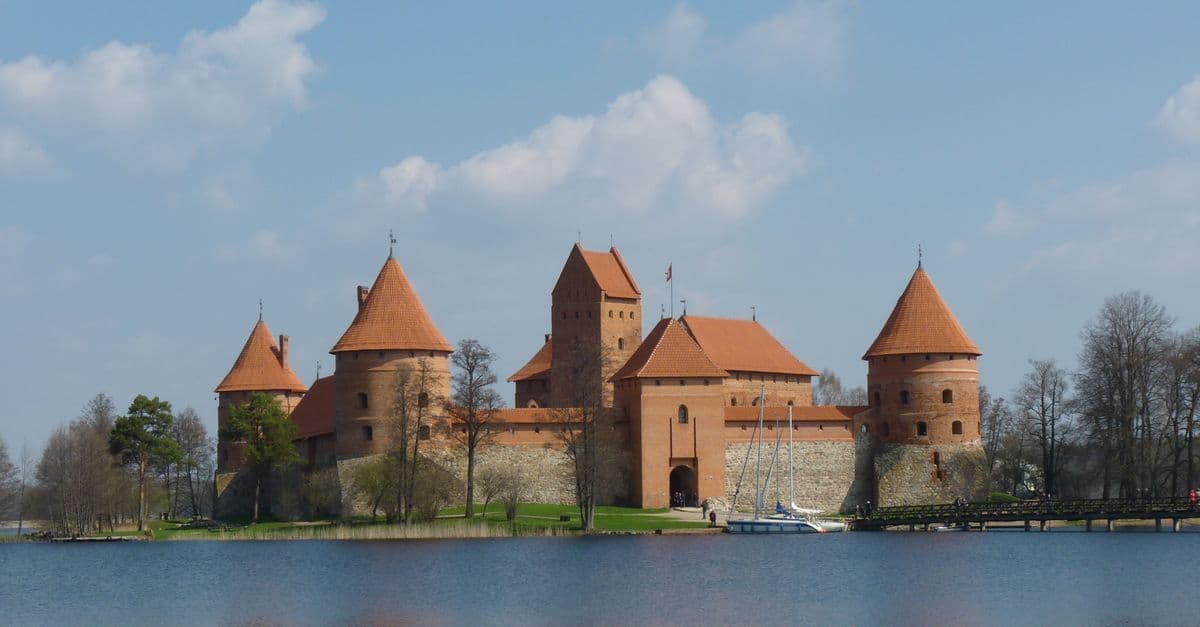
June through August is Lithuania's warmest window and its peak festival season in Vilnius and Kaunas. July delivers the longest daylight hours and the most outdoor programming; the Baltic coast along the Curonian Spit sees its highest visitor numbers. Accommodation prices rise to match demand, though by Northern European standards they stay reasonable even at peak.
May and September are the sharper choice for most Canadian travellers. Temperatures stay comfortable, crowds thin across Vilnius Old Town, and hotel rates drop. The medieval streets actually feel uncrowded. Shoulder season is when the city rewards slower walking.
December deserves a specific mention. Vilnius runs one of Northern Europe's more grounded Christmas markets through the month, with the UNESCO-listed Old Town lit against cold air and short days. Pack for it: winter temperatures drop below zero Celsius regularly, and coastal sites near the Curonian Spit operate on reduced schedules.
January and February are functional for cold-weather travellers, but visitor activity drops sharply and some rural attractions scale back hours.
From YYZ, Vilnius connects via Frankfurt on Lufthansa, Amsterdam on KLM, or Warsaw on LOT. Total travel time runs roughly 10 to 13 hours with one connection. YVR and YUL route through the same hub cities. No direct flight from Canada currently exists, but the connection options are clean and frequent.
Five to seven days covers the core highlights: Vilnius, Trakai, Kaunas, and a Hill of Crosses day trip. Ten days adds the Curonian Spit and the Aukštaitija lake district without compressing any stop. Lithuania's compact geography keeps driving time between highlights to two or three hours at most.
One practical connectivity question remains.
Can I Use an eSIM in Lithuania?
Yes. Lithuanian networks fully support eSIM technology, and the whole setup process runs about two minutes from QR scan to working data. Telia and Tele2, Lithuania's two main carriers, both handle eSIM provisioning (loading a carrier profile wirelessly, without a physical SIM card) with no special configuration needed.
Rogers, Bell, and Telus roaming charges can quietly compound across a two-week European trip. An eSIM cuts that off before you board.
Which phones qualify
iPhone XS and later models support eSIM natively. Most Android flagships released after 2019 do too. A quick check under Settings > Cellular (or Mobile Data) confirms your specific model in seconds. One thing worth flagging: the CRTC mandated phone unlocking rights in 2017. Most Canadian handsets sold since are carrier-free, but verify yours before buying any plan.
How to get connected
- Buy a plan online. Browse Lithuania eSIM options on a provider's app or website. Plans run from per-day unlimited passes to 30-day data bundles suited for longer Baltic itineraries.
- Receive your QR code. Most providers send it by email within minutes of purchase.
- Scan before leaving Canada. Go to Settings > Cellular > Add eSIM, then hold your camera over the QR code. The profile downloads in seconds. Data stays dormant until your phone detects a Lithuanian network.
- Switch on data after landing. Your handset connects to Telia or Tele2 automatically at Vilnius Airport (VNO). No kiosk queue. No SIM ejector pin.
The dual-SIM setup
Keep your Canadian number active on one line. Interac e-Transfer confirmations and two-factor authentication texts arrive on your existing Bell or Rogers SIM, so banking access stays intact. Route all mobile data through the eSIM instead. Day-rate roaming charges disappear without making you unreachable to anyone who already has your number.
Per-day passes work for a Vilnius long weekend. A 30-day bundle handles a longer trip without daily cost calculations. Most plans support mobile hotspot too, so a laptop can share the connection.
One caveat: eSIM profiles lock to the device after installation. A backup handset needs a separate plan.
Reviewed by HelloRoam's editorial team. Last updated: 27 June 2026.
Get Connected Before You Go


Frequently Asked Questions
Yes, Lithuania is in Northern Europe, sitting on the eastern shore of the Baltic Sea. It has been an EU and Schengen member since May 2004 and adopted the Euro in January 2015.
No visa is required for Canadians. Lithuania is part of the Schengen Area, allowing Canadian passport holders visa-free entry for up to 90 days within any 180-day period across all 27 Schengen countries.
ETIAS is a pre-travel authorization system for Schengen countries, expected to launch for Canadians in late 2026. It is not a visa — the online application takes minutes and stays valid for three years.
The 90-day visa-free allowance covers all 27 Schengen countries combined within a 180-day rolling window. Days spent in any Schengen country, including Germany or Poland, count toward the same limit.
May and September offer the best balance of comfortable temperatures, thinner crowds, and lower accommodation prices. June through August is warmest with the most festivals, but costs more and is busier.
Lithuania has five UNESCO World Heritage Sites, including Vilnius Old Town, recognized as the largest surviving medieval old town in Northern Europe, and the Curonian Spit on the Baltic coast.
Yes, Lithuania fully supports eSIM technology. Telia and Tele2, the country's two main networks, handle eSIM provisioning with no special configuration needed, covering 4G and 5G nationwide.
iPhone XS and later models support eSIM natively. Most Android flagships released after 2019 also support eSIM. Check under Settings, then Cellular or Mobile Data, to confirm your specific model.
Buy a plan online, receive a QR code by email, then go to Settings, Cellular, Add eSIM and scan the code. The profile downloads in seconds and activates automatically when you land in Lithuania.
Tele2 Lithuania and Telia Lithuania are the two main carriers. Both offer 4G nationwide and 5G in Vilnius and Kaunas, with solid rural coverage on main highways and in national parks.
Travel eSIM plans for Lithuania typically range from around C$3.49 for 1 GB over seven days to around C$10.55 for 10 GB over thirty days, running on Telia and Tele2 networks.
A travel eSIM activates before departure via QR code, so you have data on arrival without queuing at a kiosk. Local SIMs from Lithuanian carriers require in-person activation at the airport.
Lithuania is notably budget-friendly. A mid-range daily budget runs roughly 60 to 120 euros, and a sit-down dinner with drinks in Vilnius can cost less than a coffee in Western European capitals.
Research placed the geographic centre of Europe near the village of Purnuškės, 26 kilometres north of Vilnius. A marker stands at that location, making Lithuania a literal centroid of the continent.
Five to seven days covers Vilnius, Trakai, Kaunas, and a Hill of Crosses day trip. Ten days adds the Curonian Spit and the Aukštaitija lake district without compressing any stop.
No direct flights from Canada to Vilnius currently exist. Single-connection itineraries via Frankfurt, Amsterdam, Warsaw, or Helsinki are standard, with total travel time of roughly 10 to 13 hours.
Yes. With dual-SIM support, your Canadian SIM stays active for calls and texts, including banking and two-factor authentication messages, while the eSIM handles all mobile data.
The Curonian Spit is a UNESCO-listed sand dune peninsula shared between Lithuania and Russia's Kaliningrad. The Lithuanian half is fully accessible to Canadians; the Kaliningrad side requires a Russian visa.
Yes, Lithuania adopted the Euro in January 2015. Canadians already carrying euros from other Schengen countries need no currency exchange when arriving in Vilnius.
Hotel Wi-Fi in Vilnius is generally reliable. Guesthouses near the Curonian Spit and in rural Aukštaitija vary considerably, so a travel eSIM ensures navigation works regardless of accommodation quality.
Sources
- en.wikipedia.org — en.wikipedia.org
- Lithuania — european-union.europa.eu
- Lithuania — britannica.com
- What Is Lithuania Known For? Facts & Highlights — lawhill.lt