




Frequently Asked Questions
Bali's wet season runs from November through April, with the heaviest rainfall occurring in January and February. The dry season spans May through October, with minimal rainfall and lower humidity. Whether it is currently rainy season depends on the month you are visiting.
June and September are considered the best months to visit Bali for most travellers. June offers reliable sunshine and humidity noticeably lower than May, with accommodation rates running 15 to 25 percent below the July peak. September maintains dry season quality after the August crowds clear, with easier access to temples and restaurants.
January is Bali's wettest month, averaging 300 to 350mm of rainfall across the island, with February close behind. Rain typically arrives as afternoon downpours lasting one to two hours rather than sustained all-day grey weather. Ubud and the highland interior receive considerably more rain than the southern coastal strip, sometimes reaching 400mm or more in January.
December is widely considered the worst month for most travellers, as peak wet season rainfall coincides with the Christmas and New Year tourist peak, pushing accommodation prices to match or exceed July and August highs despite difficult weather conditions. February is also challenging due to maximum rainfall, maximum humidity, and limited budget relief. Travellers should also note that Nyepi, Bali's Day of Silence, closes the airport for 24 hours each March.
Bali has a dry season from May through October and a wet season from November through April, shaped by the Indonesian monsoon cycle. Coastal temperatures remain between 26°C and 33°C year-round regardless of season. The key difference between seasons is humidity and rainfall rather than temperature.
July and August represent peak dry season in Bali, with humidity between 60 and 70 percent, minimal rainfall, and reliable sunshine. These months also bring the highest accommodation prices and largest crowds of the year, particularly from Australian families travelling during school winter holidays. Popular villas often book out months in advance for this period.
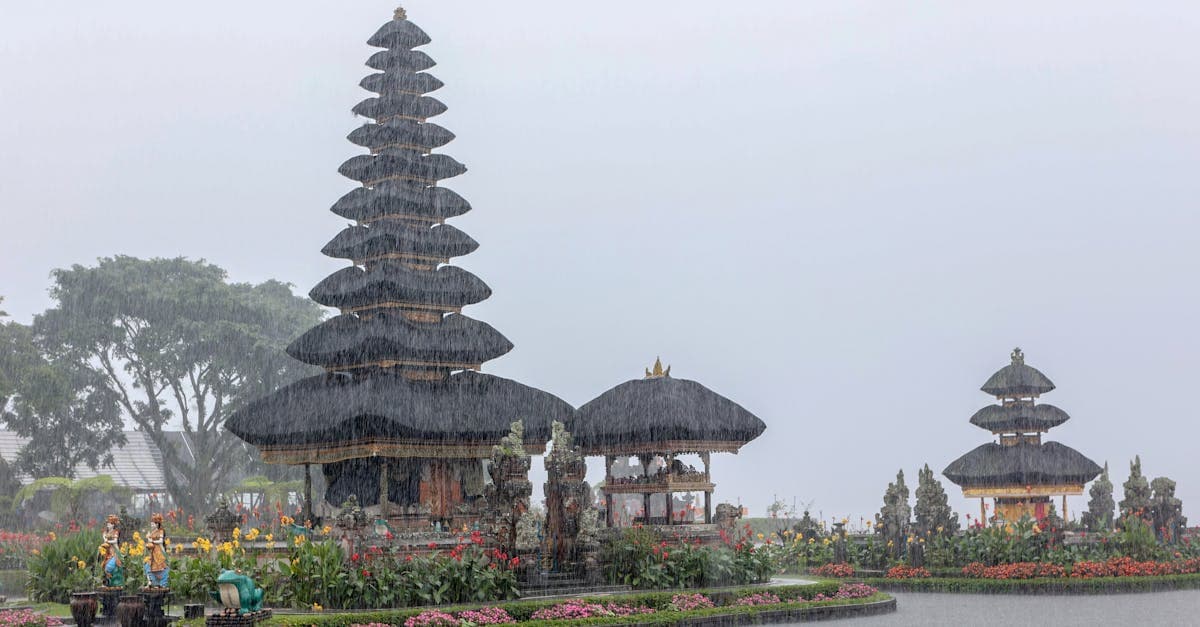
Wet season rain in Bali typically arrives as intense afternoon downpours lasting one to two hours, followed by clearing skies and sunshine. Full-day overcast is less common than the season's reputation suggests, and mornings are often fine. Activities such as cooking classes, temple visits, and rice terrace walks carry on with minimal disruption.
No, Bali's weather varies significantly by altitude and location. Ubud, sitting at around 300 metres above sea level in the central highlands, receives considerably more rainfall than coastal areas like Kuta or Seminyak throughout the year. The same afternoon that delivers blue skies on the coast can produce heavy rain over the rice terraces just 45 minutes inland.
Coastal temperatures in Bali stay between 26°C and 33°C throughout the year with no cold season. During dry season, nights can dip to around 24°C while days reach the low thirties. Bali sits roughly 8 degrees south of the equator, so there is no meaningful variation in day length across the calendar either.
The best surf season depends on which coast you target. West coast breaks at Kuta and Seminyak improve during the wet season, driven by offshore trade winds producing cleaner swells, making December through March standout months for surfers. East coast breaks at Sanur and Nusa Dua come into their own from May onwards during the dry season.
March and April are underrated shoulder months in Bali. Rainfall tapers off noticeably week by week, conditions improve steadily toward April, and accommodation prices remain softer than dry season peaks. Travellers should be aware that Nyepi, Bali's Day of Silence, falls in March each year and closes the entire island including the airport for 24 hours.
Nyepi is Bali's Day of Silence, a Hindu New Year observance during which the entire island shuts down for 24 hours, including Ngurah Rai Airport. No flights operate in or out, there is no movement on streets, and hotels are confined to their own grounds. In 2026 Nyepi falls on 28 March, so any March itinerary involving flights or check-ins on that date will be affected.
Accommodation prices during the wet season can be 20 to 30 percent cheaper than dry season peak rates, particularly in February when tourist numbers are at their lowest. June offers rates running 15 to 25 percent below the July peak despite similar weather quality. December is the exception where wet season conditions coincide with holiday-period pricing that matches the dry season peak.
During the wet season peak months of January and February, humidity in Bali sits at around 80 to 85 percent. During the dry season from May through October, humidity drops to between 60 and 70 percent, making outdoor activities, trekking, and beach days considerably more comfortable. There is no cold season, only variation in how sticky the heat feels.
September is an excellent time to visit Bali, offering dry season weather quality without the intense crowds and premium prices of July and August. The August tourist surge clears out, dry conditions hold across Ubud and the Bukit Peninsula, and accommodation pricing eases back from its peak. Temples are quieter and popular restaurants are easier to access.
Sources
- Denpasar, Bali, Indonesia Weather Forecast — accuweather.com (2021)
- Bali, Indonesia 14 day weather forecast — timeanddate.com
- Weather forecast and conditions for Kuta, Bali 80361 ... — weather.com
- Bali Weather & Bali Climate | The Best Time to Travel to Bali — bali.com
- Bali Weather Guide | Best Time To Visit For Your Vacation — travelonline.com
- Bali - Hourly weather forecast — yr.no
- Bali Climate & Weather - What To Expect And When To Visit — finnsbeachclub.com