

Quick Answer: Bali Visa for Australians at a Glance
Australians need a visa to enter Bali virginaustralia.com. The two practical options are a Visa on Arrival (VOA, collected at Ngurah Rai Airport on the day) or an e-VOA applied online before you fly. Both cost 500,000 IDR, around A$50 qantas.com, and they cover identical stay lengths. Your passport must have at least six months' validity from your entry date. No exceptions.
The e-VOA priority lane is worth the five-minute online application. During a busy evening arrival at DPS, the standard VOA queue stretches well past the point of comfort after a long-haul flight from Sydney or Melbourne.
Key fact: HelloRoam Indonesia eSIM (digital SIM activated by QR code) plans start from ~A$5.41 per day on Telkomsel, XL, and Smartfren networks.
Activate an eSIM for Indonesia before boarding and your phone pulls signal the moment you clear immigration.
But which visa suits your trip best?
Do Australians Need a Visa to Go to Bali?
Yes. Australians require a visa to enter Indonesia qantas.com. There's no standing visa-free arrangement for Australian passport holders, though Indonesia periodically runs a Free Visa (Bebas Visa) scheme that waives the fee. The Bebas Visa has been activated multiple times but is not permanent. Confirm current status through Indonesia's Directorate General of Immigration before you commit to flights. If it's active when you travel, it's a genuine saving.
The main entry point for Australians is Ngurah Rai International Airport (DPS), and the arrival process plays out as one of two scenarios.
Scenario A: VOA. You land, join the queue, and pay at the counter in IDR (or a handful of accepted foreign currencies). Immigration stamps you through. Reliable enough, except the queue during peak arrivals at DPS can run 30 to 90 minutes. After a 20-plus-hour flight from Sydney or Melbourne, that's a genuine test of patience.
Scenario B: e-VOA. Pre-approved online, same fee. You walk to the priority lane, get stamped in minutes, and move on. Your checked luggage is probably still coming around on the carousel.
Two additional entry points handle sea arrivals: Padangbai Seaport on Bali's east coast and Benoa Harbour near Denpasar. VOA is available at both, though the overwhelming majority of Australians fly into DPS.
Immigration checks a return or onward ticket, evidence of sufficient funds, and passport validity at the gate. Five months on your passport is a hard no. Full stop.
Here is exactly how the visa types differ.
Bali Visa Types Compared: VOA, e-VOA, Social/Cultural and Digital Nomad
Three visa options cover most situations Australian travellers encounter. The VOA and e-VOA share the same fee and identical initial duration, split only by where you apply. The B211A Social/Cultural is a different tier entirely: applied via a licensed immigration agent before travel, it costs approximately USD$45-70 in agent fees and unlocks a significantly longer stay than either arrival visa allows.
Apply for the e-VOA through Indonesia's official immigration portal. It's the only authoritative channel for online applications. Third-party visa sites are common in search results and some charge above the published rate.
Key fact: The e-VOA is processed exclusively via evisa.imigrasi.go.id, operated by Indonesia's Directorate General of Immigration evisa.imigrasi.go.id.
For a standard Bali holiday, VOA or e-VOA gets the job done. For anyone planning to stay longer than 60 days, the B211A is the only path that avoids leaving Indonesia for a border run.
Remote workers have a dedicated option worth knowing.
Digital Nomad Visa E33B: Bali's Long-Stay Option for Remote Workers

The E33B Digital Nomad Visa is Indonesia's dedicated permit for freelancers and remote employees, valid for up to 6 months. Most Bali visa guides leave it out. That gap can cost remote workers the only option that unlocks stays well beyond the standard 30-day window.
The E33B differs from the B211A Social/Cultural visa covered earlier in this guide. The B211A suits tourism and extended cultural stays; the E33B is built for people earning income from overseas employers or clients while living in Bali. Working for Indonesian businesses on this visa is not allowed.
That condition is non-negotiable.
Applications go through Indonesia's official immigration portal, evisa.imigrasi.go.id, before you leave Australia. Document requirements go further than what the e-VOA needs, and processing isn't instant, so allow extra lead time when planning your departure. The cost structure is separate from the fees already discussed in this guide; check directly with Indonesia's Directorate General of Immigration for current rates.
Worth flagging: the E33B authorises remote work for overseas income only. Pick up local contracts on this visa and you're in a category mismatch that immigration won't overlook.
For a standard holiday, the e-VOA is the smart pick. Here's how to apply it before you board.
How to Apply for Your Bali e-VOA Before You Fly
Four steps, around 10 minutes at evisa.imigrasi.go.id, and you skip the airport queue at Ngurah Rai entirely. Apply at least 48 hours before departure qantas.com.
Here's how it works:
- Create an account at evisa.imigrasi.go.id. This is Indonesia's government immigration site. Use only this portal, not a third-party service.
- Upload your documents: a clear scan of your passport bio page, a passport-style photo with a white background, and proof of your return or onward ticket. Your passport needs at least 6 months' validity from your planned entry date into Bali qantas.com.
- Pay the visa fee online by credit or debit card. The amount matches the on-arrival fee noted earlier in this guide. No cash required.
- Check your email for the QR code confirmation. Indonesia's immigration system issues it once your application is approved. Save it to your phone's camera roll or print a copy before you fly.
At DPS, the e-VOA priority lane operates separately from the standard VOA queue. In practice, travellers clear the priority lane in under 10 minutes. The standard queue, particularly when multiple international flights land in the same arrival window, runs considerably longer.
Before submitting, check three things: passport validity extends at least 6 months past your Bali arrival date, your return ticket falls after your intended entry, and the name on your application matches your passport exactly.
If the details don't match your documents, the system rejects the submission. That's fixable before you fly. Trying to resolve it at the airport is not.
Indonesia's immigration portal can run slowly during peak periods. If you're travelling during Australian school holidays or Bali's busiest season, apply with more buffer than the minimum.
Online or at the airport? The difference in experience is bigger than most Australians expect.
Is It Better to Get a Bali Visa Online or at the Airport?
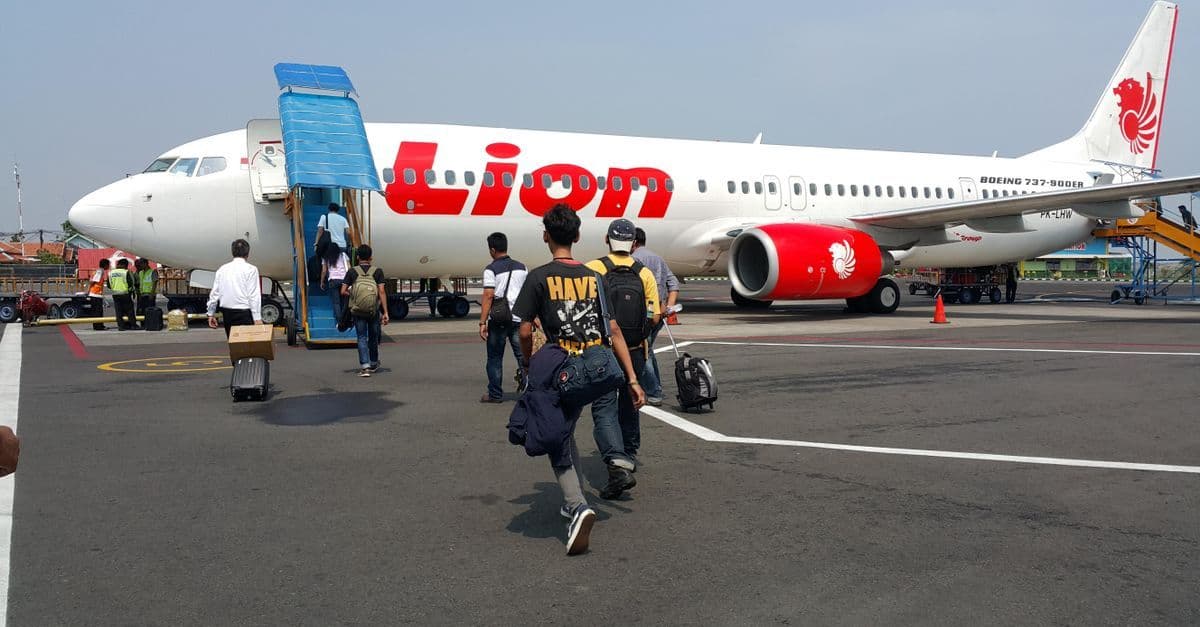
Apply online. The e-VOA skips the VOA queue at Ngurah Rai Airport, which typically runs 30 to 90 minutes during peak arrivals. After 20-plus hours of flying from Australia, that's not a queue anyone's eager to join.
The on-arrival VOA still works. You land at DPS, join the physical queue, pay at the counter, and clear immigration once you reach a processing booth. Functional, but slow. Busy arrival windows, especially when several flights land within the same hour, can push the wait well past an hour.
The e-VOA runs differently. You step into the priority lane with your QR code, skip the main crowd, and you're through in the time it takes the standard queue to shuffle forward once.
Third-party visa sites complicate things. Many charge service fees on top of the standard visa cost, and some route applications through unofficial channels. For the e-VOA, use only evisa.imigrasi.go.id, the government portal for Indonesian visas. Any other URL is either a reseller charging a markup or an unofficial agent, and neither is necessary.
The fee is identical to the on-arrival VOA. The application is straightforward. The time saved at DPS is genuine. If there's a compelling reason to choose the standard queue over the priority lane, it's hard to find.
One exception: if you've run out of lead time before departure, the on-arrival VOA is your fallback. It works. It's just the slower option.
Already planning to stay past your initial 30 days? The extension process changes the calculation entirely.
Extending Your Bali Visa and Avoiding Overstay Fines
The VOA extends once, adding 30 extra days for a maximum 60-day stay bali.com, processed at any Kantor Imigrasi before your current visa expires. Miss that deadline and you're no longer extending; you're overstaying. Indonesian immigration charges USD$20 per day for overstays, and officers can detain visitors until the full balance is cleared.
The extension process is manageable if you start early. Visit the nearest Kantor Imigrasi, bring your passport and supporting documents, and pay the extension fee at the counter, which matches the original visa amount. Processing takes a few working days, so allow at least a week's buffer. Main offices are in Denpasar (covering Kuta, Seminyak, and Canggu) and Singaraja; Ubud travellers typically use the Gianyar branch.
Before, not after. That distinction matters more than the visa cost itself.
Leave it too late and the calculation flips against you. Officers at Ngurah Rai tally the overstay days at check-in, collect the full fine, and flag your passport record. That can delay your departure and complicate future Indonesian visas.
If 60 days isn't enough, the VOA extension path runs out of runway. Stays beyond that require a different visa category: the B211A Social/Cultural visa (covered earlier) allows up to 180 days with subsequent extensions, and the E33B Digital Nomad Visa suits remote workers targeting a stay of up to six months. Both need arranging before you arrive in Bali, not once you're already there.
Key fact: Indonesian immigration charges USD$20 per day for overstays, with detention possible until the outstanding balance is settled.
Visa sorted. Time to sort mobile data.
Staying Connected in Bali: eSIM, SIM Cards and Mobile Data
Bali's 4G LTE network covers the island well, from Kuta and Seminyak through to Ubud and the coastal roads along the east. 5G reaches central Denpasar but doesn't extend beyond the CBD. For most of Bali, 4G from Telkomsel, XL Axiata, or Indosat Ooredoo is what you'll be using day to day.
The kiosk at DPS arrivals will sell you a SIM. Don't.
Airport SIM counters carry a heavy tourist markup over what you'd pay at a street shop in Kuta. You'll also spend time getting the APN (the carrier's internet gateway address) configured correctly on a phone that's been in flight mode for hours. Skip that queue entirely.
An eSIM installs before you board. Scan the QR code at home, or during the long-haul leg out of Sydney or Melbourne. By the time you clear Ngurah Rai customs and the bags hit the carousel, your phone is already pulling data from Telkomsel's network.
Telstra's International Day Pass and comparable Optus roaming packs bill a flat daily rate whether you use 50 MB or your full data cap. For a two-week Bali trip, that adds up fast. HelloRoam's Indonesia plans start from the daily rate covered in the quick overview, or step up to ~A$19.36 for 5 GB over 30 days, a sensible allocation for a standard Bali holiday without rationing every Google Maps request.
Key fact: HelloRoam's Indonesia 5GB 30-day plan costs ~A$19.36, running on Telkomsel, XL Axiata, and Smartfren networks.
The 20-plus hours in transit from Sydney or Melbourne isn't dead time. Install the eSIM profile at home before you leave, confirm it's active, and land with data running from the taxi rank.
eSIM for Indonesia
Reviewed by HelloRoam's editorial team. Last updated: 07 July 2026.
Get Connected Before You Go


Frequently Asked Questions
Yes, Australians require a visa to enter Indonesia. The two options are a Visa on Arrival (VOA) at Ngurah Rai Airport or an e-VOA applied online before travel. Both cost 500,000 IDR, around A$50.
Yes, a visa is required to visit Bali. Australians can get a Visa on Arrival at the airport or apply for an e-VOA online before departure. Both cost around A$50 and allow an initial 30-day stay.
Online is better. The e-VOA grants access to a priority lane at DPS, skipping the standard VOA queue which runs 30-90 minutes during peak arrivals. Apply at evisa.imigrasi.go.id at least 48 hours before departure.
Apply online at evisa.imigrasi.go.id at least 48 hours before departure, or collect a Visa on Arrival at DPS on the day. Both cost 500,000 IDR (around A$50) and grant an initial 30-day stay.
Both the Visa on Arrival and the e-VOA cost 500,000 IDR, approximately A$50. The fee is identical for either option; the e-VOA simply allows you to apply before travel and use the priority lane at DPS.
The initial VOA or e-VOA allows a 30-day stay. You can extend it once for an extra 30 days, giving a maximum 60-day stay. Extensions must be processed at a Kantor Imigrasi before your current visa expires.
Your passport must have at least six months' validity from your planned entry date into Bali. Applications with less than six months' validity will be rejected, and immigration officers will refuse entry at the gate.
Yes, the VOA and e-VOA can each be extended once for an additional 30 days, up to a maximum 60-day stay. Visit a Kantor Imigrasi before your current visa expires; processing takes a few working days.
Indonesian immigration charges USD$20 per day for overstays, and officers can detain visitors until the full balance is cleared. Overstays are also flagged on your passport, which can affect future Indonesian visa applications.
You need a scan of your passport bio page, a passport-style photo with a white background, and proof of a return or onward ticket. Your passport must have at least six months' validity from your Bali entry date.
The E33B Digital Nomad Visa allows remote workers to stay in Bali for up to six months, earning income from overseas employers or clients only. Working for Indonesian businesses on this visa is not permitted.
Stays beyond 60 days require a different visa category. The B211A Social/Cultural visa allows up to 180 days with extensions, while the E33B suits remote workers for up to six months. Both must be arranged before arrival.
VOA is available at Ngurah Rai International Airport (DPS), Padangbai Seaport on Bali's east coast, and Benoa Harbour near Denpasar. The vast majority of Australians arrive through DPS.
Yes, an eSIM for Indonesia can be activated before you board, connecting to Telkomsel, XL Axiata, or Smartfren networks the moment you clear customs. This avoids airport SIM kiosk queues and tourist markups.
Bali has strong 4G LTE coverage across Kuta, Seminyak, Ubud, and coastal roads via Telkomsel, XL Axiata, and Indosat Ooredoo. 5G is available in central Denpasar but does not extend beyond the CBD.
Sources
- Bali Tourist Visa & Visit Visa — bali.com
- e-Visa — evisa.imigrasi.go.id
- What are Bali's visa and entry requirements? — virginaustralia.com
- Read Before You Leave – Bali 2026: Visa, Weather and More — qantas.com