

Quick Answer: vietnam visa for australian
All Australian passport holders need a visa to enter Vietnam. There's no exemption for Australian citizens vietnam-immigration.org.vn. The eVisa is the approved route: apply through the official government portal at evisa.gov.vn, and the turnaround is quick. Keep your passport validity well clear of your intended departure date.
Sort connectivity before you board, too. HelloRoam offers Vietnam data from ~A$5.41 for 1GB over 7 days on Viettel Mobile's network, and an eSIM for Vietnam (a digital SIM loaded wirelessly to your phone) activates before you fly. After 20-plus hours in the air from Sydney or Melbourne, landing with data already running beats hunting for a tourist SIM in arrivals. Telstra and Optus roaming day rates compound quickly on anything beyond a short trip.
Quick answer: Vietnam visa for Australians at a glance
Australia is not on Vietnam's visa exemption list vietnam-immigration.org.vn. Every Australian citizen needs a visa. The eVisa is the cleanest approved route: apply at evisa.gov.vn and you'll have a result within a few business days. The cost splits depending on how many times you plan to cross a border.
Key fact: Vietnam's 2023 visa law reform extended the maximum eVisa stay from 30 to 90 days, making slow-travel itineraries viable without a border run smartraveller.gov.au.
For trips of two weeks or more, HelloRoam's Vietnam plans scale to match: 5GB over 30 days for ~A$17.19 on Viettel Mobile's network. That undercuts standard Telstra or Optus international day rates on a fortnight-plus stay.
Which visa type suits your trip depends on how many border crossings you're planning.
Do Australian citizens need a visa for Vietnam?
Yes. Australia is not on Vietnam's visa exemption list. A valid visa is required before arrival, regardless of trip length.
The eVisa (evisa.gov.vn) is the most practical choice: no agent required, fully online, and the official application is straightforward. Smartraveller.gov.au specifically recommends the official portal and flags third-party "visa service" websites as a source of unnecessary cost smartraveller.gov.au. The scam risk is concrete: some unofficial sites charge two to four times the government fee to do exactly what you can do yourself.
Passport validity deserves precise attention.
Vietnam's requirement applies from your intended departure date, not your arrival date. If your trip ends in October, count backward from your exit date. Many Australians catch this too late and face a rushed passport renewal.
Before you apply, confirm: - Passport validity covers the required window calculated from your Vietnam exit date - Your intended entry point is a designated eVisa crossing (Noi Bai in Hanoi, Tan Son Nhat in Ho Chi Minh City, and Da Nang International all qualify) - Name on the application matches your passport exactly
Vietnam's 2023 visa law reform was significant: maximum eVisa stays more than tripled under the new rules smartraveller.gov.au. For Australians who fly a long way and tend to commit to longer trips to justify the journey, that change made genuine slow-travel itineraries possible on a single document. A three-month stretch across Hanoi, the central highlands, and Ho Chi Minh City now fits on one eVisa.
Visa on arrival is technically still an option, but the process involves considerably more friction than most travellers expect.
Is a Vietnam visa on arrival still an option?
Visa on arrival (VOA) for Vietnam requires a pre-arranged approval letter from a licensed Vietnamese agent, obtained before you board your flight. The eVisa requires no agent at all. That single difference explains why most Australians skip VOA.
The VOA process runs like this: find a licensed agent, pay their fee for the approval letter, print that letter, present it at immigration on arrival, then pay a stamp fee at the border. Three steps, two separate payments, one middleman. The eVisa is one application, one government payment, one document.
Embassy visas round out the three routes. Generally the slowest and most expensive option of the three, requiring an in-person or postal application to the Vietnamese consulate, with processing that runs considerably longer than either alternative.
For most Australians, the eVisa is the no-fuss call. No agent, no printed paperwork to lose in a carry-on, no VOA counter queue after a long-haul flight from Sydney or Brisbane. VOA is worth considering only in narrow circumstances: genuinely last-minute travel where the eVisa portal is inaccessible, or situations with no reliable internet for the application. That covers very few trips.
Single-entry or multiple-entry changes the cost picture considerably.
Vietnam eVisa options: single entry vs multiple entry
Vietnam's eVisa comes in two types: single entry and multiple entry. The choice is simpler than it looks, and picking the right one before you apply saves genuine hassle later. What catches most travellers off guard: both types permit up to 90 days inside Vietnam smartraveller.gov.au. The entry count changes what you pay, not how long you can stay.
Multiple entry sounds like it unlocks more time in-country. It doesn't. Both carry the full 90-day allowance; multiple entry simply lets you cross into Cambodia or Laos and return to Vietnam without starting a fresh application.
If your itinerary touches Angkor Wat or a few days in Luang Prabang before you fly home, multiple entry is the clear pick. Without it, crossing back into Vietnam means starting a new application from the road. That processing window resets from scratch, mid-trip.
Both types use the same application process on the same portal. Once you've settled on the type, applying takes minutes.
How to apply for a Vietnam eVisa: step by step
The eVisa application runs entirely online through Vietnam's official government portal, evisa.gov.vn. Start there and nowhere else. Lookalike commercial sites with similar domain names charge inflated service fees for submitting an application you can complete yourself.
Apply in 6 steps:
- Create an account at evisa.gov.vn. Use an email address you can access from your phone while travelling. You'll need it to retrieve the eVisa PDF once it's issued.
- Complete the online form. Enter your passport details exactly as they appear in your travel document. Name spelling errors are the leading cause of complications at the Vietnamese border, so check twice before submitting.
- Upload your documents. The portal requires a passport-style photo and a clear colour scan of your passport's photo page. Both files must be sharp and in colour. Photo specifications are covered in the next section.
- Pay the fee online. The portal accepts international credit and debit cards. The transaction processes immediately; keep your payment confirmation email.
- Wait for the eVisa PDF. It arrives by email within the processing window noted in the previous section. Check your spam folder if nothing appears after four days.
- Save or print the PDF before departure. Vietnam border officials ask to see the eVisa document on arrival. Download it to your phone for offline access. A screenshot isn't always accepted at entry points, so the full PDF is the reliable option.
The full application, from account creation to payment, typically runs under 30 minutes with documents ready. During Vietnamese public holidays and busy travel periods, the portal can slow down. Submit at least a week before your departure date if timing allows.
Compare eSIM plans for Vietnam — See 2026 pricing →
Getting your documents in order before you open the portal cuts out the delays that trip most applicants up.
What documents do Australians need for the Vietnam eVisa?
The document requirements for a Vietnam tourist eVisa are genuinely slim. Three items cover the entire list.
What you need:
- Valid Australian passport, with at least 6 months of validity remaining beyond your planned Vietnam exit date. This is a hard entry rule, not a guideline. Check your expiry date before booking flights.
- A digital passport photo, 3.5 x 4.5 cm on a plain white background. Most phone camera apps produce a compliant image when the lighting is even and there are no shadows across your face.
- Entry and exit dates, plus a confirmed accommodation address in Vietnam for your first night. A hotel booking confirmation or Airbnb listing address both satisfy this requirement.
No invitation letter. No sponsor documentation. No employment paperwork. Tourist eVisas cut all of that out.
The passport validity rule is the one that catches Australians off guard most often. If your passport expires within 6 months of your Vietnam exit date, you cannot board the flight in Sydney or Melbourne. Renew first. Check current Australian Passport Office wait times before booking flights, as processing can run several weeks depending on demand.
With documents confirmed, the cost in Australian dollars is next.
How much does a Vietnam visa cost in AUD?
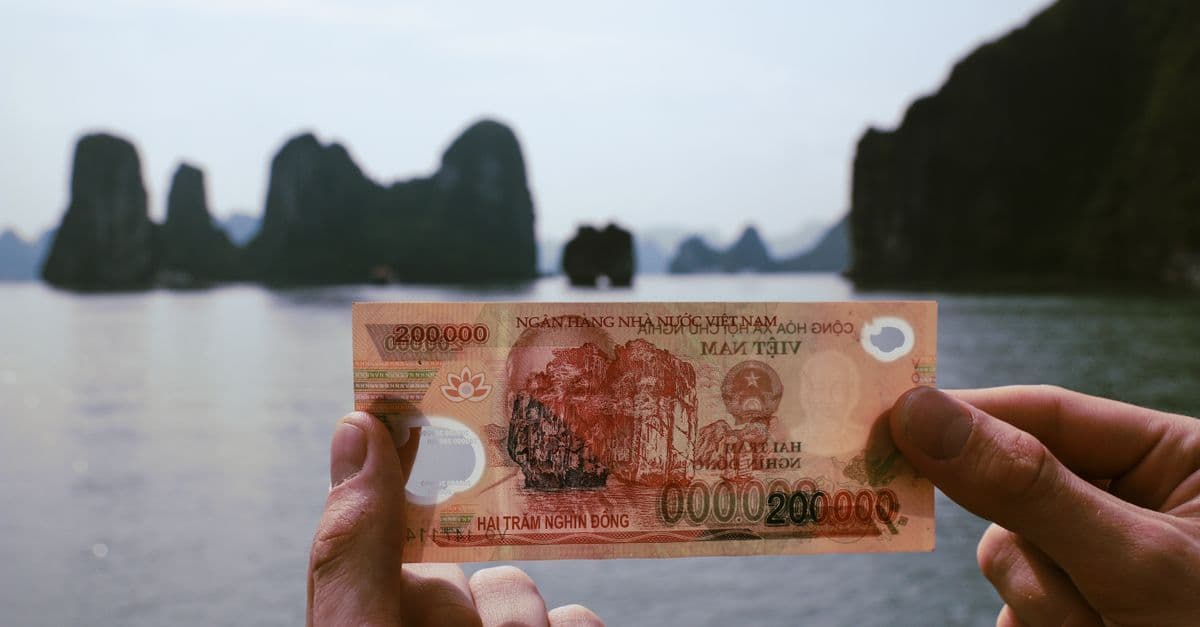
At current exchange rates, a single-entry Vietnam eVisa costs approximately A$38. Multiple entry runs to around A$76. Both figures represent the government fee, paid directly through evisa.gov.vn without any markup evisa.gov.vn.
Third-party agent sites are where that cost inflates fast. These services typically add A$30 to A$80 on top of the government fee for lodging an application you can complete yourself at evisa.gov.vn.
Apply direct. Skip the markup entirely.
One practical note: the Vietnamese government sets the fee in USD evisa.gov.vn. Your bank converts at the prevailing spot rate on the day you pay, so the AUD amount can shift a few dollars either way depending on exchange conditions. The figures above reflect mid-2026 rates.
Compare that to the embassy visa route: higher agency fees, weeks of processing instead of days, and no practical advantage for standard tourist travel. For almost every Australian heading to Vietnam, the eVisa through the official portal is the financially sensible path.
A$38 for a single trip. A$76 to keep re-entry options open. Those are the numbers to work with when you're budgeting the trip.
Sorting mobile data before you land makes the arrival experience considerably smoother, and there are well-priced Vietnam data plans available in Australian dollars to suit any trip length.
Staying connected in Vietnam: eSIM, SIM cards and mobile data
Vietnam's 4G network covers all major cities and tourist corridors reliably, running on three main operators: Viettel Mobile, Vietnamobile, and Vinaphone. Viettel Mobile has 5G live in major urban centres. For most Australian itineraries, from Hà Nội through to Đà Nẵng, Hội An, and the Mekong Delta, signal is solid throughout.
Local SIM cards
Local SIMs are cheap and sold at shops and kiosks throughout Vietnam. Registration requires your passport, in-person, at the point of purchase. That means joining a counter queue at Nội Bài or Tân Sơn Nhất on arrival. Fine when you're reasonably fresh, but considerably less appealing after 20-plus hours in economy from Sydney or Melbourne.
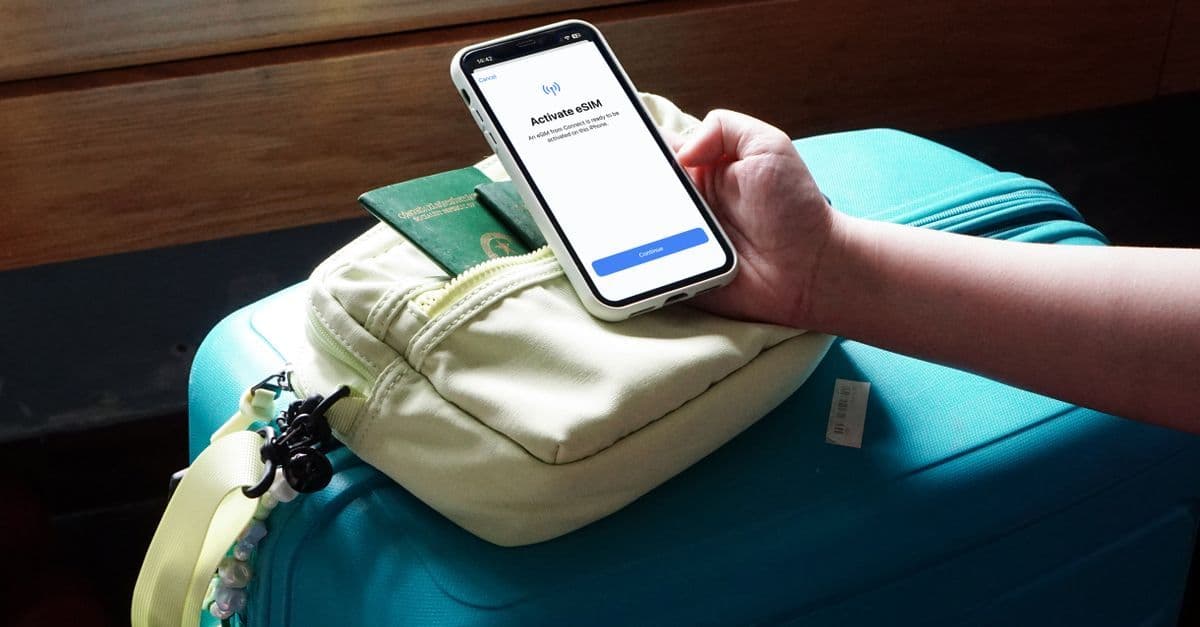
An eSIM sidesteps that counter process entirely.
Scan the QR code before boarding, and the profile installs in under two minutes. By touchdown in Hanoi or Ho Chi Minh City, the data plan is already live. No counter queue, no SIM tray pin, no rushed decisions under arrivals-hall lighting. Most Vietnam eSIM plans include tethering support, so you can share data with a laptop or tablet without paying for a separate connection.
Airport Wi-Fi
The free Wi-Fi at both Nội Bài International Airport and Tân Sơn Nhất International Airport is patchy and throttled under peak arrivals load. Don't rely on it to access your eVisa PDF or contact accommodation. Dedicated mobile data is more dependable for anything time-sensitive.
A few visa traps catch Australians out every single year, and most of them are entirely avoidable.
Common Vietnam visa mistakes Australians make
Most Vietnam eVisa rejections trace back to a handful of preventable errors. The form itself is genuinely simple. The problems arrive from outside it: the wrong website, an application submitted too late, or assumptions built on rules that changed in 2023.
- Using an unofficial website. Search results for 'Vietnam eVisa' surface dozens of third-party services that look governmental but aren't. They charge agent fee markups on top of the government cost, often without making that clear before checkout. The only authorised portal is evisa.gov.vn.
- Applying too close to departure. Processing typically runs around three working days, but peaks in June, July, and December, when Australian outbound travel is highest, can push that out. A week's buffer is the minimum. Two weeks is the sensible call.
- Entering wrong passport details. A transposed digit in your passport number, or given names entered in the wrong field order, triggers a rejection. Vietnamese immigration cross-checks the eVisa against your physical passport at the entry point. Any mismatch creates a problem.
- Forgetting to save or print the eVisa PDF. You'll need it at check-in and on arrival. A phone screenshot is a workable backup, though it's not something to leave to the last minute when airport Wi-Fi is unreliable.
- Assuming pre-2023 rules still apply. Vietnam's 2023 visa reform extended tourist stays significantly smartraveller.gov.au. Guidance built on the old limits, or advice from sources that haven't been updated, will steer you wrong.
- Not accounting for the non-refundable fee. A rejected application doesn't come with a refund. You reapply, correct the error, and pay again. Getting the details right the first time is straightforwardly cheaper.
One more question trips up plenty of Australians considering Vietnam for longer than a holiday.
Can you retire in Vietnam on a tourist visa?
The tourist eVisa covers up to 90 days per stay. Vietnam has no official retirement visa category, so there's no direct pathway for Australians wanting long-term residence. Unlike Thailand's retirement visa or Malaysia's MM2H programme, Vietnam has created no dedicated retiree route. That gap has practical consequences worth understanding before making any longer-term plans.
The eVisa is generous by Southeast Asian standards and works well for extended slow travel. The ceiling is fixed, though. Staying longer requires exiting the country and re-entering on a fresh eVisa.
Visa runs. That's the phrase most long-term Vietnam expats know well.
Crossing into Cambodia at the Moc Bai land crossing, or flying to Bangkok, resets the clock. Border officials retain discretion to question repeated patterns of short stays, however. Re-entry isn't guaranteed, and that's a live consideration rather than a hypothetical risk.
For genuine long-term residency, the realistic options involve a business visa (requiring a sponsoring Vietnamese entity), an investor visa, or a work permit issued through an employer. Each demands documentation and an ongoing relationship with Vietnamese immigration authorities well beyond what an eVisa requires.
If retirement in Vietnam is a serious plan, qualified immigration legal advice is worth the cost upfront. The rules shift, enforcement varies by region, and the consequences of an overstay or denied re-entry are considerably more disruptive than the expense of proper legal guidance.
Reviewed by HelloRoam's editorial team. Last updated: 28 June 2026.
Get Connected Before You Go


Frequently Asked Questions
Yes, Australia is not on Vietnam's visa exemption list, so all Australian passport holders need a valid visa. The eVisa via evisa.gov.vn is the recommended route, with no agent required.
A single-entry Vietnam eVisa costs approximately A$38, and multiple-entry costs around A$76. These are government fees paid at evisa.gov.vn; third-party sites add A$30–A$80 in unnecessary markups.
Vietnam's tourist eVisa allows stays of up to 90 days per entry, suitable for extended trips. Permanent residency or retirement requires different visa categories not covered in this article.
Yes, but it requires a pre-arranged approval letter from a licensed agent before boarding, plus a stamp fee at the border — three steps and two payments. Most Australians use the eVisa instead, which needs no agent.
Vietnam's eVisa allows a maximum stay of 90 days, for both single and multiple-entry types. The 2023 visa law reform tripled this from the previous 30-day limit, making slow-travel itineraries viable.
Vietnam eVisa applications typically process within 3 working days through evisa.gov.vn. Submit at least a week before departure to allow buffer time during Vietnamese public holidays or busy travel periods.
Both allow up to 90 days inside Vietnam. A single-entry eVisa covers one stay only, while multiple-entry lets you leave for Cambodia or Laos and re-enter without a new application, at roughly double the cost.
You need a valid Australian passport with 6 months validity beyond your Vietnam exit date, a digital passport photo on a plain white background, and your intended entry and exit dates with a first-night accommodation address.
Your passport must remain valid for at least 6 months beyond your planned Vietnam exit date. This is a hard entry requirement, not a guideline — renew before booking flights if you are close to the limit.
Yes. The eVisa is applied for directly at evisa.gov.vn with no agent required. Third-party service sites charge an extra A$30–A$80 to submit the same form you can complete yourself in under 30 minutes.
Major international airports including Noi Bai in Hanoi, Tan Son Nhat in Ho Chi Minh City, and Da Nang International all accept eVisa holders. Confirm your planned entry point is on the official designated crossing list.
An eSIM is the most convenient option — it activates before you land, requires no in-person registration, and supports tethering. Data plans start from around A$5.41 for 1GB over 7 days on Vietnam's 4G network.
Free Wi-Fi at Noi Bai and Tan Son Nhat airports is patchy and throttled during peak arrivals. Dedicated mobile data is more dependable for time-sensitive tasks like accessing your eVisa PDF or contacting accommodation.
The most common errors are using unofficial third-party websites, name spelling mismatches between the application and passport, and applying too close to departure. Check all passport details carefully before submitting.
The eVisa fee is paid online through evisa.gov.vn using an international credit or debit card. The government sets fees in USD, so your bank converts at the prevailing exchange rate on the day of payment.
Sources
- apply.joinsherpa.com — apply.joinsherpa.com
- Vietnam National Electronic Visa system — evisa.gov.vn
- Vietnam Travel Advice & Safety — smartraveller.gov.au
- Vietnam | Australian Government Department of Foreign ... — dfat.gov.au
- Vietnam visa for Australia citizens, passport holders, ... — vietnam-immigration.org.vn