

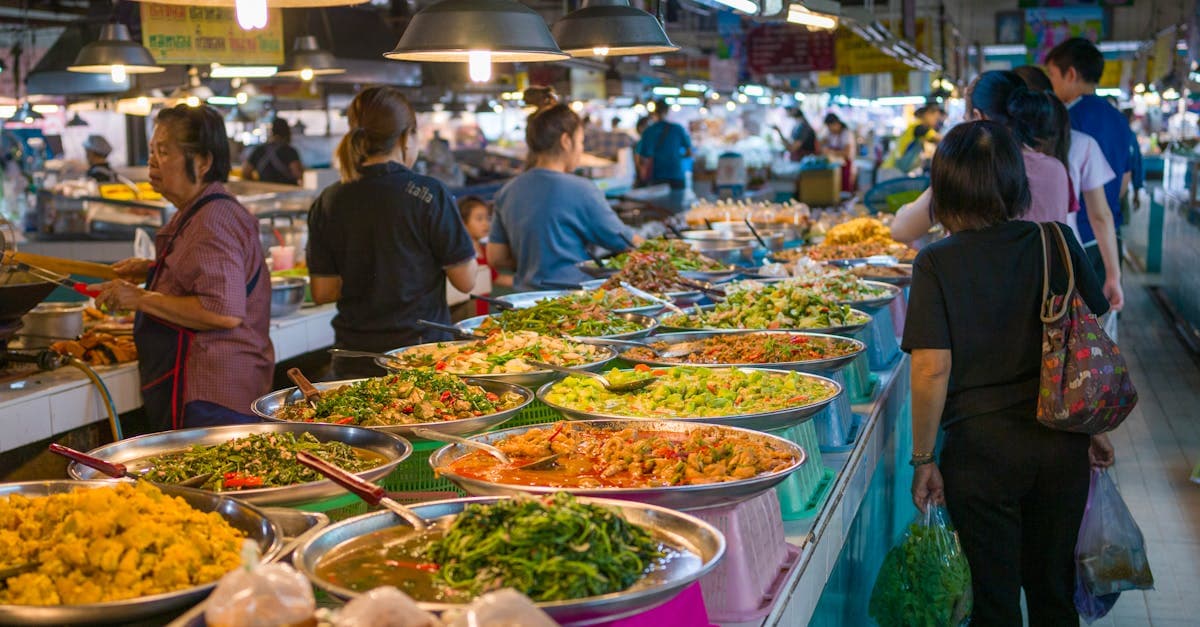
Quick Answer: best food in thailand's street food scene runs on pocket-friendly plates around 40 baht (roughly $1 at current exchange), sold from open-air carts that frequently run out before noon. Four distinct regional cuisines divide the country's cooking into styles different enough that a meal in Chiang Mai bears little resemblance to one in Bangkok or Hat Yai.
Get your eSIM for Thailand before you travel.
The solid short list for American visitors: Pad Thai, Pad Kra Pao, Tom Yum Goong, Som Tum, and Khao Man Gai. Each is straightforward to find across most of Thailand and represents what Thai people actually eat, not what tourist-facing menus promote.
Finding those stalls takes mobile data. Google Translate's camera mode reads Thai menus in real time, and Google Maps surfaces the spots that locals actually rate. For travelers flying from the US, HelloRoam covers Thailand as part of its 190-plus destination network; the [eSIM for Thailand plan activates before departure so translation and navigation apps are live before you leave the arrivals hall.
Regional location determines everything. The best food in Thailand depends entirely on where in Thailand you are eating.
What Is the Most Popular Food in Thailand?
Pad Thai leads every international recognition list, but inside Thailand, Pad Kra Pao over rice is arguably the most-eaten dish in the country. The Thai government classifies more than 80 dishes as national dishes, which makes "most popular" a genuinely contested designation depending on the region and which survey you consult.
Four distinct regional styles divide Thai cooking into versions that can taste almost unrelated to one another. Street food accounts for the majority of daily meals across all four regions, not sit-down restaurant dining, which is why regional location shapes what you actually eat far more than any single "must-order" list.
Northern cooking runs milder and earthy, built on sticky rice and herbal pastes with restrained heat. Northeastern Isan food is fiery and assertive, leaning on pla ra (fermented fish sauce) and grilled meats. Central Thai cooking is what most Americans recognize from stateside restaurants: jasmine rice, fish sauce, moderate heat. Southern cuisine runs heavier on coconut milk and fresh seafood, shaped by both the Gulf coast and the Andaman coast, with strong Malay culinary influence carrying over from the Malaysian border.
Tom Yum Goong, Som Tum, and Pad Kra Pao consistently appear alongside Pad Thai in domestic food surveys. Pad Kra Pao, the holy basil stir-fry made with minced pork or chicken and finished with a fried egg, shows up at virtually every lunch cart in the country. Office workers, construction crews, and students order it with equal consistency.
Why does the international picture of Thai food look so different from this? American Thai restaurants have historically drawn from central Thai cooking, softening the heat and reducing the fermented elements. The dish you recognize from home can taste dramatically different at its regional source.
Knowing what is popular is one thing. Knowing which of those dishes are actually worth ordering is a different question entirely.
The Best Thai Food Dishes Worth Ordering
Four flavor profiles anchor every well-made Thai dish: sour, sweet, salty, and spicy, all present at once in different proportions. Heat is adjustable at most stalls and restaurants; the underlying balance of the other three is not. Thai cooking is snappy in execution, rarely more than a few minutes over a high-heat wok, but the flavor payoff consistently outperforms the time investment.
Price is not a reliable quality signal in Thailand. A bowl of boat noodles from a cart regularly outperforms a $12 restaurant plate on flavor and freshness. Broadly, the most satisfying eating in the country happens under $4 per meal.
The dishes here are organized practically: widely available street food classics first, then the regional and lesser-known options that most guides skip entirely. One key note before the list: dishes labeled "Thai" at American restaurants are almost always central Thai interpretations. Regional variations can taste dramatically different from what you expect, especially anything from the Isan northeast or the northern mountains.
- Pad Kra Pao over rice: Minced pork or chicken wok-fired with holy basil, fish sauce, and chilies. Crisp, charred edges on the meat signal proper high-heat cooking. Served with a fried egg on top, always.
- Gaeng Keow Wan (green curry): The coconut milk base runs richer and sweeter than red or yellow versions. A reliable sit-down canteen will outperform a street cart here, where paste quality is harder to control.
- Khao Soi: A Chiang Mai specialty. Egg noodles in a coconut-curry broth served with both soft and crispy noodles in the same bowl. The flavor profile is punchy and layered in a way that sets it apart from anything you will find in Bangkok. Worth planning a trip north around.
What makes these dishes work is balance, not heat. Spice level is negotiable; the sour-sweet-salty foundation is fixed from the first stir.
Street food is where the real eating happens. Start there before moving to the dishes most tourists never order.
Street food classics you should not leave without trying
Order Pad Thai with shrimp, extra lime, and ask for the bean sprouts left crunchy. The best versions come from wok stations with visible char marks on the noodles, not from tourist-area restaurants with laminated menus. That char is physical evidence of real high-heat cooking, and it changes both texture and flavor.
Tom Yum Goong is available at virtually every street stall in the country. The quality tell is the broth: it should be clear, sour, and lemongrass-sharp, with a clean citrus finish. Muddy or reddish broth usually means a paste-from-a-jar shortcut rather than stock built from scratch.
Som Tum has regional versions that most guides collapse into one dish. The Isan take uses fermented fish sauce and salted crab, producing a funkier, more complex profile than the central Thai tourist standard. In Bangkok, you get the milder version by default unless you ask.
Khao Man Gai, dead-simple poached chicken over rice with ginger broth and a dark dipping sauce, rarely costs more than $2 from a cart. A no-brainer lunch between temple visits.
Mango sticky rice (Khao Niew Mamuang) is the non-negotiable dessert. The stellar window runs April through June, when Thai mangoes hit peak sweetness. Outside that season, the dish is perfectly serviceable. Inside it, nothing beats it on the street.
Moo Ping, grilled pork skewers sold from morning carts with sticky rice on the side, is the local breakfast. Most vendors are done by 10 a.m. Arriving at 9 is not early; it is on time.
Those are the dishes every guide covers. What follows is the list most tourists never order.
Lesser-known Thai dishes that deserve more attention
Most tourists leave Thailand without ever tasting Khao Soi. That is a genuine miss.
The northern coconut curry noodle soup layers soft egg noodles in a turmeric-forward coconut curry broth, topped with crispy fried noodles and served alongside pickled mustard greens and shallots. The preparation is specific to Chiang Mai and the surrounding north. If your itinerary reaches that far, plan a meal around it specifically. The surprising part? Nothing on the Bangkok tourist circuit prepares you for how different northern Thai cooking actually tastes.
Pad See Ew is the no-drama noodle that Thai office workers order constantly and tourists overlook. Wide rice noodles, egg, Chinese broccoli, a soy-based sauce, wok char. No chili load, no heat management, no menu negotiation. The gap between what locals order and what tourist menus push is not accidental.
Gaeng Massaman is the mildest curry on any Thai menu, built around cardamom, cinnamon, and star anise rather than fresh chilies. Slow-cooked beef with potatoes and peanuts. The spice profile traces back to Persian influence through the Muslim communities of southern Thailand. Unhurried food on a completely different register than anything else on this list.
Yum Woon Sen, a glass noodle salad with pork, shrimp, and lime, is clean and snappy. Light enough to order mid-afternoon after a heavy morning, straightforward to find at any market stall. Easy to underestimate, consistent to enjoy.
Crying Tiger earns its name. Grilled marinated beef with a spicy dipping sauce, Isan in origin, now carried on most Bangkok menus. Order it when the chili quotient needs to go up.
Nam Prik Ong, a northern pork and tomato chili dip served with fresh vegetables, delivers fermented depth without the scorched-palate heat of deep Isan cooking. A dead-simple entry point into northern Thai flavors for anyone who found the Isan section a little intense.
Once the dish list is settled, the practical question is sequencing: which meals belong at which point in a week-long trip?
What Are the 7 Most Popular Thai Meals?
The seven most commonly cited Thai meals are Pad Thai, Tom Yum Goong, Green Curry (Gaeng Keow Wan), Massaman Curry, Som Tum, Pad Kra Pao, and Khao Man Gai. That lineup reflects central Thai cooking almost entirely, which is worth knowing before you build an itinerary around it.
Pad Kra Pao is the actual daily workhorse of the Thai diet. Minced pork or chicken stir-fried with holy basil and chilies, served over jasmine rice with a fried egg balanced on top. Thai office workers order it for lunch at a frequency Pad Thai cannot match inside the country. The best version comes from a neighborhood rice-and-curry shop with rotating pots, not a tourist restaurant with laminated photos.
Green Curry sits at the intersection of accessible heat and coconut richness. That balance explains why it appears on every menu, tourist-facing and neighborhood alike. It converts both audiences because the formula is rock-solid, not because anyone watered it down.
Massaman Curry occupies a separate flavor register entirely. International food publications have cited it among the world's most well-regarded dishes, driven by slow-cooked depth from cardamom, cinnamon, and star anise. Beef, potatoes, peanuts. It belongs in a different conversation than the rest of the seven.
Khao Man Gai is quiet. Poached chicken over rice cooked in chicken fat, served with a punchy ginger-garlic dipping sauce. The restraint is deliberate.
Tom Kha Gai deserves a spot on any practical top-eight list even when it gets cut from the canonical seven. Galangal and lemongrass broth, coconut milk body. It shares no real resemblance to Tom Yum and should not be ordered as a substitute.
Practical ordering sequence for a seven-day trip: Moo Ping skewers and Khao Man Gai for breakfast, Som Tum and Pad See Ew for lunch, Pad Kra Pao for quick dinners, Tom Yum Goong for a sit-down evening meal, and Green Curry at least once across the week. Travelers heading to Chiang Mai or the south should replace at least two dishes on that list with regional alternatives. The canonical seven defaults to Bangkok without announcing that it does so.
A ranked list tells you what to order. Where you order it shapes what you actually eat.
Best Thai Food Experiences in Bangkok holds more than 50,000 street food vendors and restaurants. Picking individual venues is the wrong strategy for a first visit. Neighborhoods work better as a planning unit, especially if you want to find the best food in Thailand rather than the most photographed version of it.
Chinatown on Yaowarat Road is the benchmark for seafood and Chinese-Thai hybrid cooking. The productive window is after 6 p.m., when grilled seafood carts take over the sidewalks and the lunch crowd has cleared. Get there early in that evening window to find space without waiting.
Or Tor Kor market near Chatuchak consistently ranks among the cleanest and highest-quality fresh markets in the city. The prepared food stalls aim at Thai shoppers, not tourists. Prices reflect that distinction. The mango sticky rice here is the version most Bangkok food writers use as their quality baseline.
Victory Monument specializes in boat noodles (Kuay Teow Rua): pork or beef broth served in small bowls so concentrated the stock runs nearly black. Order four or five bowls rather than one large portion. The bowl sizes are calibrated for stacking orders, and ordering one is a tell that you have never been before.
Timing is the variable most visitor guides skip entirely. The majority of Bangkok street vendors operate at 7 a.m. or from 5 p.m. The mid-afternoon gap is real, predictable, and worth planning around. Walk those same streets at 2 p.m. and you will find shuttered carts and a lot of foot traffic going nowhere useful.
Budget reality: a full street food meal at a neighborhood stall runs a fraction of tourist-area pricing, which sits three to four times higher for food that is not objectively better. The price gap is not subtle.
Bangkok's neighborhoods give you the where. The section below maps each district to its specific food category, so a single day or a full week can be planned without circling back.
Where to find Bangkok's best street food by neighborhood
Four districts anchor Bangkok's street food scene, and knowing which one covers which category saves a lot of directionless walking. The rest of the city has food worth eating, but these neighborhoods are where density and quality converge.
Thong Lo and Ekkamai in the Sukhumvit corridor built a denser vendor cluster after the former Soi 38 night market closed. The food skews upscale-street: better sourced ingredients, slightly higher prices, a younger Bangkok crowd. Reliable cooking, not the most pocket-friendly option in the city.
Banglamphu near Khao San Road requires navigation. The main tourist strip is mediocre at best. One block over on Tanao Road and Ratchadamnoen Avenue, the food changes completely: traditional central Thai dishes at local prices, aimed at residents rather than backpackers working through their first Chang.
Din Daeng barely surfaces in tourist guides. Bangkok food professionals eat lunch here. Rotating daily curries, rice plates, grilled meats priced for construction workers and office staff. No English menus at most stalls. No staging for photographs. Unfussy cooking at its least performative.
Phra Nakhon near the Grand Palace runs morning and midday markets for government workers. Practical central Thai cuisine, well-executed, not designed to photograph well. The food is better for that.
Knowing where to eat in Bangkok handles the logistics side of the trip. The next practical question is whether the food fits specific dietary or health requirements, which is where a lot of travelers hit an unexpected wall.
What Thai Food Is Good for Diabetics?
Thai cuisine has a sugar problem in specific dishes, not across the menu. Larb, Yum Woon Sen, clear Tom Yum broth, and stir-fried vegetable dishes keep refined carbohydrates genuinely low. The challenge is knowing which dishes to lean on and which carry hidden sugar loads that do not announce themselves on the plate.
Dishes that work well
Larb leads the list. Minced pork or chicken tossed with fish sauce, lime juice, shallots, and fresh herbs, the only carbohydrate in a standard plate is the toasted rice powder scattered on top as a textural garnish. It is not a base. Protein is high; added sugar is absent.
Yum Woon Sen uses mung bean glass noodles rather than white rice noodles or wheat noodles. Mung bean noodles carry a lower glycemic index than either alternative, making this herb-forward, sour salad a workable choice for blood glucose management rather than a compromise.
Clear Tom Yum broth, the "nam sai" version ordered without coconut milk, is low-calorie and low-carb. Sodium runs high, a practical consideration for anyone also watching blood pressure, but as a carbohydrate choice it is clean and available at every stall in the country.
Morning glory stir-fry (Pad Pak Boong) and mixed stir-fried vegetables (Pad Pak Ruam) appear on virtually every menu. They are genuinely good rather than consolation dishes, and ordering one alongside a protein-based plate builds a complete meal without a rice base.
Dishes to approach carefully
Pad Thai is built on palm sugar and tamarind paste at the wok level. The sweet load is structural, not cosmetic. The phrase "wan noi" (a little sweet) when ordering can reduce it, but only partly.
Thai iced tea (Cha Yen) carries over 40 grams of sugar per glass. Treat it as dessert in a cup, not a beverage order alongside a meal.
Mango Sticky Rice combines glutinous rice, palm sugar, coconut cream, and ripe mango by design. There is no lower-carb variant of this dish.
Two requests that work at most stalls: "wan noi" to reduce sweetness on any dish, and asking to serve over brown rice (Khao Geng) where available to lower the glycemic load. Most vendors accommodate both without complaint. Dietary management is one kind of food risk. The more immediate concern is avoiding what will put you out of commission for a full day.
What to Avoid in Thailand to Not Get Sick?
Most traveler's diarrhea in Thailand traces to three specific sources: ice from unclear origins, raw vegetables washed in tap water, and shellfish held at ambient temperature. Street food takes the blame repeatedly for illnesses it did not cause. Knowing where the actual risk sits changes how you eat, and it changes it for the better.
The ice question
Factory-produced ice, uniform in shape with a hollow center, is standard in tourist areas and established restaurants across Bangkok and major cities. It is typically safe. The risk rises at remote rural markets and roadside stalls where the ice source is unclear. When the origin is genuinely uncertain, skip the ice rather than the drink.
The one dish to order differently
Som Tum Poo, the papaya salad made with raw fermented salted crab, is the single dish most commonly linked to food-borne illness among foreign visitors. The fermented raw crab is the vector. Ordering Som Tum without the crab ("mai sai poo") removes that risk entirely while keeping the dish. Worth asking for every time.
Reading a stall before you sit down
Two signals predict safety more reliably than neighborhood or price point. First, active cooking: steam rising, oil moving in the wok, constant output. A stall turning over food steadily through the lunch or dinner rush is restocking from fresh supply. Second, a visible queue. High-turnover stalls at peak hours are safer by definition.
The fine print changes that calculation at a low-traffic stall. Food sitting at room temperature with a dull, dry surface and no heat underneath is a different situation. At noon to 1 p.m. and 6 p.m. to 8 p.m., an empty stall is a signal worth reading.
Eat where Thai people are eating in volume. That is not a platitude about authenticity. It is a practical risk filter. Locals avoid the same stalls you should avoid.
Pre-cut fruit at open-air markets has been washed in local tap water and sits exposed at room temperature. Buy whole fruit and peel it yourself. The extra 30 seconds is worth every one of them.
The dishes and the neighborhoods are now mapped. The last practical layer is staying connected while you navigate all of it.
Staying Connected While Eating Your Way Through Thailand
A reliable data connection is a functional tool for food travel in Thailand, not a convenience. Live maps reach markets outside the tourist corridor. Google Translate's camera mode reads Thai-script menus in real time. Ride-share apps put you in a car headed to Din Daeng instead of standing on a Silom corner hoping a cab slows down.
American travelers have three options: US carrier international day passes, local SIMs purchased on arrival, and travel eSIMs activated before departure.
Carrier day passes run $10 to $12 per day. Over a 10-day trip through Bangkok and Chiang Mai, that adds $100 to $120 to the phone bill before a single baht goes toward eating. Fine for a long weekend. For two weeks, that daily rate makes a poor case for itself.
Local SIMs at Suvarnabhumi Airport (BKK) run roughly $10 to $20 for 15 to 30 days with 10 to 30 GB of data. The trade-off is a queue at the arrival hall and a phone with an open SIM tray. Dual-SIM-capable phones handle the logistics cleanly. Single-SIM phones mean choosing between your home number and local data for the duration of the trip.
Travel eSIMs activate before departure and connect automatically on landing. Regional Asia-Pacific plans frequently cover Thailand at competitive per-gigabyte rates without requiring a physical card. For a 10-day food-focused itinerary, maps, translation, and food research average roughly 300 to 500 MB per day, putting a 5 to 10 GB plan in range for most travelers.
Trying to read a Thai-script menu without a data connection means pointing and hoping the kitchen interprets your gesture generously. With Google Translate's camera mode running, the dish names and ingredients resolve before you flag down the server.
HelloRoam offers Thailand coverage with transparent per-plan pricing and 24/7 customer support, which is a practical advantage when you are troubleshooting a connectivity issue at midnight before a 5 a.m. market run. Activate before departure and the connection is live before you clear customs.
Pre-downloading Google Translate's Thai language pack over Wi-Fi before leaving home extends camera translation to offline use, a useful backup when signal drops in rural markets or underground transit. With dishes picked, neighborhoods mapped, health guidance noted, and a data plan ready before you land, the only remaining step is booking the flight.
Get Connected Before You Go

Frequently Asked Questions
Pad krapao, stir-fried meat with holy basil served over jasmine rice with a fried egg, is the most commonly ordered dish at local Thai restaurants according to the Tourism Authority of Thailand. It costs roughly 50 baht (about $1.40) from a street vendor and is available at virtually all of Bangkok's estimated 30,000 street food stalls. Pad thai, despite its global fame, is more concentrated in tourist-heavy areas and is not what most Thai people eat daily.
The seven dishes that appear most consistently across travel guides and Tourism Authority of Thailand lists are khao man gai, massaman curry, pad thai, green curry, pad krapao, tom yum goong, and som tum. Khao man gai and massaman curry are the mildest options, while pad krapao, tom yum, and som tum carry more heat that varies by vendor. All seven are available in Bangkok, making it the most practical single city to work through the full list within a week.
Khao man gai, poached chicken over rice cooked in broth, is among the simplest and least sweet dishes in Thai cuisine, with a mild ginger-garlic dipping sauce and no heavy sugar-based sauces. Massaman curry is another lower-heat option built around potato, peanut, and onion in an aromatic sauce without the sweetness of many other curries. Tom kha gai, a coconut milk soup with chicken and aromatics, offers a rich but relatively straightforward flavor profile compared to sweeter stir-fry dishes.
The article focuses on food quality rather than food safety, but notes that quality varies significantly between vendors, particularly for dishes like tom yum goong where a busy street stall typically produces a better, fresher result than hotel restaurant versions. Choosing stalls with a visible, actively smoking wok and a short line of locals is a reliable indicator of freshness and high turnover. Laminated picture menus at tourist-facing stalls are flagged as a sign to keep looking for a better option.
Pad thai is stir-fried rice noodles with egg, bean sprouts, peanuts, and a choice of shrimp, chicken, or tofu. Its global fame traces to a 1940s government campaign by Prime Minister Plaek Phibunsongkhram, who promoted it as a nationalist symbol to replace Chinese-style noodles with rice noodle alternatives. The best versions come from street stalls with a visible, actively smoking wok and a short line of locals.
Khao soi is a coconut curry noodle soup topped with crispy fried noodles, native to Chiang Mai and northern Thailand. It is the most recommended regional dish for northern Thailand visitors, and Chiang Mai versions are noticeably richer and more layered than Bangkok imitations. Genuine versions are scarce south of Bangkok, so it is best sought out at small local shops in Chiang Mai rather than tourist-facing restaurants in the capital.
Pad thai uses thin rice noodles with a sweet-savory sauce, peanuts, egg, and bean sprouts, while pad see ew uses wider flat rice noodles with sweet soy sauce and has a more char-forward flavor. Pad see ew is milder than pad thai and a practical choice for visitors who find heavy fish sauce flavor challenging. Both dishes benefit significantly from being cooked on a high-heat street cart rather than in a sit-down restaurant kitchen.
Thai street cooking uses heat levels that most restaurant kitchens cannot match, producing a slightly smoky, caramelized quality known as wok hei, a Cantonese term meaning breath of the wok. This high-heat cooking creates a categorically different result in stir-fries and noodle dishes compared to indoor cooking. The street-versus-restaurant gap matters more in Thailand than almost anywhere else in Southeast Asia.
Massaman curry is a mild, Persian-influenced Thai curry built around potato, peanuts, and onion in an aromatic sauce, rated as one of the least spicy Thai curries. Its roots trace through Muslim traders who brought spice traditions into southern Thailand centuries ago, giving it a flavor profile closer to a stew from the Persian Gulf than a standard Thai curry. It is considered the most accessible curry for heat-sensitive travelers.
Northern Thai food, centered on Chiang Mai, leans on herb-forward, milder cooking with dishes like khao soi and sai oua spiced pork sausage. Southern Thai cooking uses heavier coconut and turmeric influence with the highest chili concentrations in the country. Northeastern Isaan food is fermented, sour, and grilled-meat-forward, while Bangkok and central Thailand offer the broadest range, blending all three regional styles with Chinese, Indian, and Malay influences.
Som tum is a green papaya salad that comes in over 20 regional variations across Thailand. The beach restaurant version is typically a simplified, tourist-adjusted bowl, while the Isaan version made with fermented crab is considered a distinct dish with a more complex, fermented edge. Heat levels vary significantly between regional versions, ranging from mild to very spicy.
Moo ping, grilled pork skewers marinated in garlic, coriander root, and fish sauce, is sold from sidewalk carts alongside sticky rice and is most reliably available before 7 PM. Bangkok night markets in particular sell out fast, and arriving at 8 PM typically means settling for whatever remains. No menu or ordering process is involved; vendors sell directly from the grill.
Isaan is the northeastern regional cuisine of Thailand, characterized by fermented, sour, and grilled-meat-forward flavors, with signature dishes including larb, som tum, and grilled chicken. It is considered the most underrated regional cuisine in Thailand and the one most visitors miss by staying only in Bangkok. Larb in particular suffers when made for tourist palates at Bangkok restaurants, losing the fermented edge that defines the authentic dish.
Khao man gai is poached chicken served over rice cooked in the chicken broth, accompanied by a ginger-garlic dipping sauce and a small bowl of broth on the side. It is Bangkok's working-breakfast dish, available from early morning and often sold out well before noon. It is rated as one of the mildest dishes in Thai cuisine, with a heat level of 1 out of 3.
Tom yum goong is a hot-and-sour shrimp soup with lemongrass, galangal, and kaffir lime that delivers a sharp, punchy, citrus-forward broth at medium to high heat levels. Tom kha gai uses the same aromatics but adds coconut milk, which softens and enriches the flavor into something milder and creamier. Tom kha gai is described as the practical counterbalance after a stretch of spicier meals.
Sources
- 5 of My Favorite Thai Dishes to Try in Bangkok — ourtastytravels.com
- Healthy Thai Food: 21 Delicious Dishes that are Actually ... — eatingthaifood.com
- 15 Foods to Try in… THAILAND — thecultureur.com