

Quick Answer: Travel to New Zealand for US Visitors
US citizens need two pre-trip authorizations before landing in New Zealand: an NZeTA electronic travel authorization and an IVL conservation levy. Combined, they cost roughly ~$35 through the official government app, and processing typically takes minutes. No embassy appointment, no visa interview.
Here's the decision framework:
- Entry authorization: NZeTA via the official NZ Immigration app. Valid two years, multiple entries, 90-day maximum per visit.
- Conservation levy: An IVL conservation fee paid simultaneously with the NZeTA. Most American travelers don't see this charge coming until they reach the payment screen.
- Best timing: March to May (New Zealand's autumn) delivers mild weather, lower accommodation prices, and noticeably fewer crowds than the December-February peak.
- Itinerary scope: South Island alone fills a strong two-week trip. Queenstown, Milford Sound, and the West Coast glaciers each deserve serious time.
- Data costs: Travel eSIM plans for New Zealand start around ~$10, far less than US carrier international day rates. For any trip longer than a long weekend, an eSIM for New Zealand is the measured choice.
Get the NZeTA sorted before booking anything else. Entry paperwork is the first step, and the full cost breakdown has a detail most first-timers miss entirely.
What US Travelers Need Before Arriving in New Zealand
The NZeTA is mandatory for every US passport holder entering New Zealand. Apply through the official NZ Immigration app for NZD $23 (roughly ~$14 USD), or through the government website for NZD $35 (~$21 USD). The app version costs less. The authorization is identical either way.
The IVL is where most American travelers get caught short.
Paid at the same time as the NZeTA, the International Visitor Levy adds NZD $35 (~$21 USD) to your total. Most travelers search "NZeTA requirements," read the first result, and miss the second charge entirely. Via app, those two fees add up to the ~$35 USD figure noted above. It isn't a surprise if you've done careful research beforehand. For the majority of first-time visitors, it genuinely is.
The levy isn't arbitrary. New Zealand funds conservation programs and biosecurity screening partly through it, including the checks that protect native bird species from introduced pests. The landscapes most travelers book flights to see are maintained in part by that budget.
Here's the step-by-step process:
- Download the official NZ Immigration app directly from immigration.govt.nz. A near-identical-looking third-party version appears in some app stores.
- Have your passport ready. The app photographs the data page and pre-fills most personal details automatically.
- Pay both fees in one transaction: NZeTA authorization plus the International Visitor Levy.
- Keep your confirmation email. Approval typically arrives within minutes; the official maximum processing window is 72 hours.
The NZeTA is valid two years with multiple entries. Each stay has a 90-day maximum.
US travelers with Global Entry will find New Zealand's automated arrival kiosks work similarly: scan your passport, confirm details, and exit immigration without secondary queuing. Pre-approved NZeTA is part of that flow.
Avoid third-party NZeTA processing services. They charge ~$50 to $100 for a result identical to the official app, with no faster processing.
With entry locked in, timing becomes the next nuanced consideration: New Zealand's seasons run opposite to the US, and choosing the wrong window can cost both money and experience.
When Is the Best Time to Travel to New Zealand?
March to May is the optimal window for most US visitors. New Zealand's autumn delivers mild temperatures, cooperative weather for outdoor activities, and accommodation prices that drop noticeably from the December-February peak. Crowds thin out too, especially at the most congested entry points to Milford Sound and along the Routeburn Track.
The seasonal picture is more layered than most travel guides suggest.
December through February is New Zealand's summer and its most heavily booked period. Flights from the US run more expensive. Accommodation at the South Island's marquee destinations books out weeks ahead. If your schedule is fixed in this window, plan earlier and budget more generously than the headline prices imply.
Winter suits one narrow traveler profile.
June through August works well specifically for skiers and snowboarders targeting the South Island. The Remarkables and Coronet Peak near Queenstown open in late June, with conditions reliable through August. Outside the ski fields, South Island winters are quiet and dramatic. Some high-altitude roads close. Cold temperatures require thoughtful gear choices.
March to May threads the needle most effectively. Autumn color arrives in the Queenstown basin and across Central Otago's vineyard country. High-country roads stay open. Hiking tracks, scenic flights, and lake activities run without peak-season crowds. Accommodation that was sold out in January typically has availability, and prices reflect it.
September and October offer a comparable value window on the spring side. Weather is less settled, particularly on the West Coast and in Fiordland, but both months remain considered alternatives if March-May doesn't fit your travel dates.
The gap between a March trip and a December one isn't subtle. It shows in accommodation availability, track booking windows, and whether Milford Road feels like a discovery or a convoy. Season sorted, the route itself becomes the more consequential planning call.
North Island or South Island: Picking Your New Zealand Route
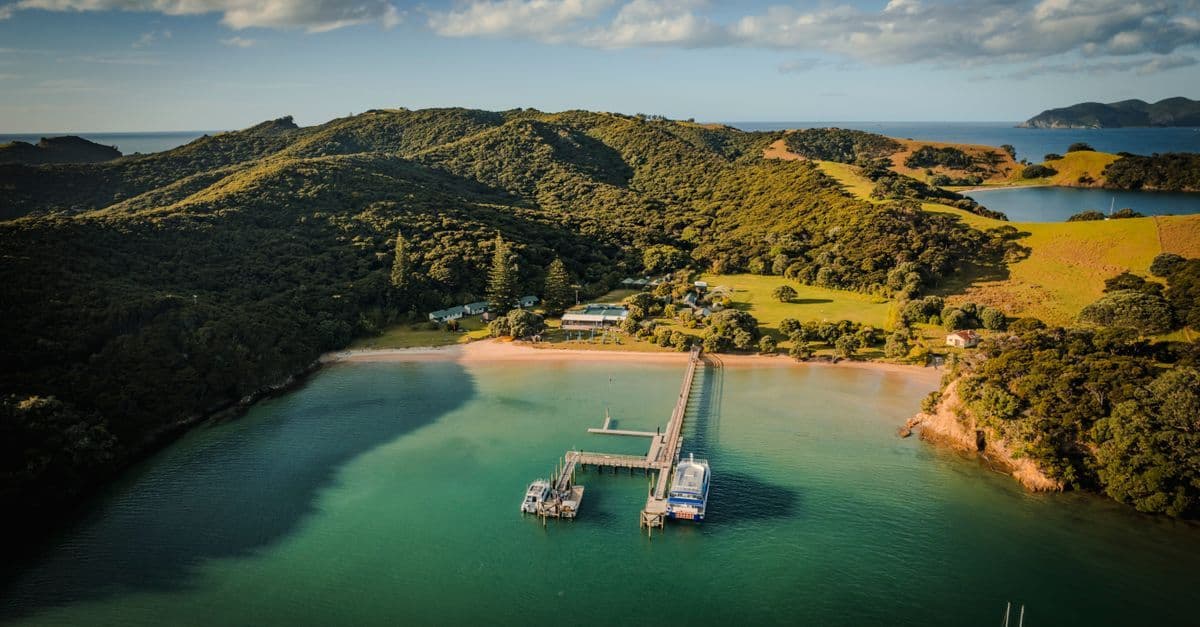
South Island alone fills two weeks with more than most travelers can reasonably absorb. Splitting two weeks between both islands sounds like the thorough approach, and most itinerary guides present it that way.
The North Island makes a real case for its own trip. Auckland's Waitemata Harbour gives the journey a proper urban anchor. Rotorua delivers an experience with no North American equivalent: a working geothermal landscape where the ground steams, sulphur traces the air, and thermal pools bubble roadside within three hours of the airport. The Waitomo glowworm caves add a subterranean river journey, the ceiling lit by bioluminescent larvae, to the itinerary. For first-timers with 10 days or fewer, the North Island is a coherent, satisfying route on its own terms.
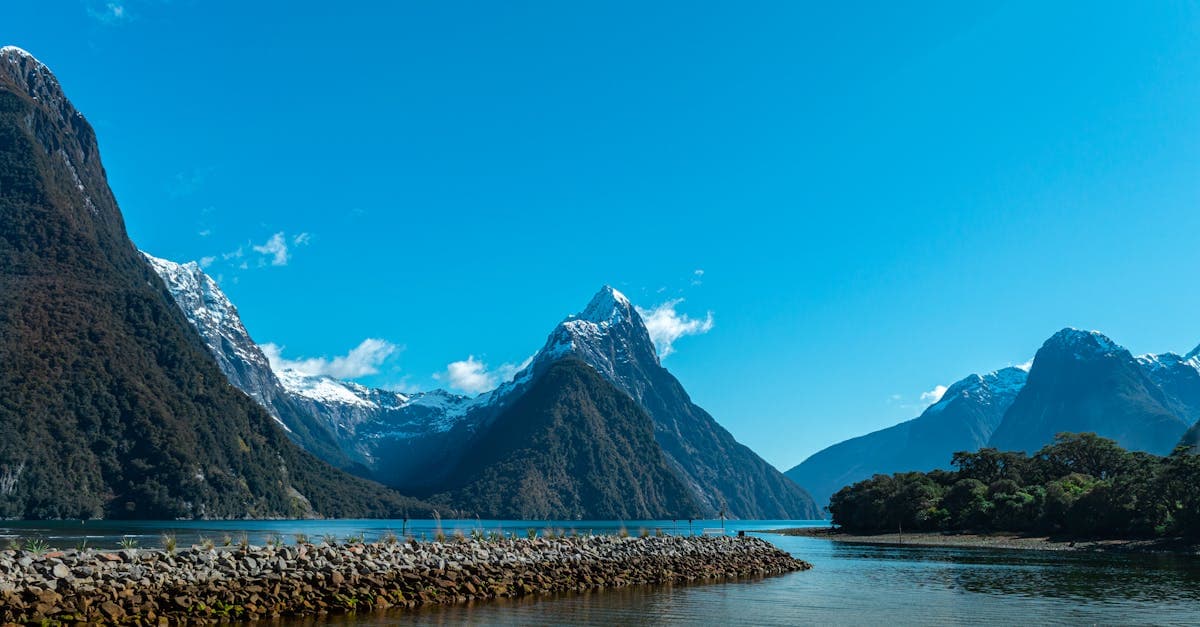
The South Island operates at a different scale. Queenstown concentrates adventure travel infrastructure into a compact lakeside town. Milford Sound still surprises even the most image-saturated traveler who's scrolled past it a hundred times. Franz Josef glacier delivers ice time via helicopter for around NZD $300-400 per person. The Haast Pass, Wanaka, and Aoraki/Mount Cook fill the corridor between those anchors.
Two weeks disappears without revisiting anywhere.
Getting between islands requires actual planning. The Interislander ferry runs Wellington to Picton in 3.5 hours; adult tickets range from NZD $60 to $120 depending on sailing time and booking lead time. A domestic flight is faster but adds up to USD $80 per person, and it removes the Cook Strait crossing from the itinerary, which is a worthwhile experience on its own.
Compare eSIM plans for New Zealand — See 2026 pricing →
The measured call: pick one island and give it the time it actually deserves. Trying to cover both in under 12 days tends to produce a highlights reel rather than a trip.
Route locked in, staying connected across New Zealand's remote roads becomes the next practical question to sort.
Staying Connected in New Zealand: eSIM, SIM Cards, and Carrier Options
A travel eSIM (a digital SIM profile installed via QR code, no physical card required) is the most practical connectivity option for most US visitors to New Zealand. Plans for 10 GB on Spark, New Zealand's largest network, run around $19. That's the baseline your US carrier's international pricing has to beat, and most don't.
Standard US carrier plans don't come close. Verizon TravelPass and AT&T's international day pass each total $140 over a 14-day trip. T-Mobile includes free international roaming on eligible unlimited plans, but it's throttled to 128 kbps, which handles Google Maps at walking pace and not much else. The T-Mobile Day Pass unlocks full speed at $5 per day, totaling $70 over two weeks. Still more expensive than a pre-trip eSIM.
Activate an eSIM at the departure gate before boarding. Most eSIM providers accept Apple Pay and Google Pay, so purchase and installation takes under two minutes on any recent iPhone. By the time you clear customs at Auckland Airport, the connection is already live.
For travelers who prefer a physical SIM and don't mind picking one up on arrival, Spark's 6 GB card runs NZD $29 and leads on rural South Island coverage. The 2degrees 20 GB card at NZD $49 offers the strongest per-gigabyte rate for itineraries centered on Auckland, Wellington, and Christchurch.
HelloRoam covers New Zealand on tier-1 networks with 24/7 multilingual support. That support detail matters when you're off-grid on a Fiordland back road at midnight and need to troubleshoot a dropped connection.
For a trip under three days in Auckland with reliable hotel Wi-Fi, your carrier's free throttled data may be enough for basic navigation. For anything longer, a pre-trip eSIM covers more ground at a fraction of the cost.
First-timers often move straight from the data question to the safety question, and New Zealand has a fairly short answer.
Is New Zealand Safe for Solo Travelers?
No deadly snakes. No venomous spiders. New Zealand ranks consistently among the world's safest tourist destinations, and its wildlife profile is the sharpest distinction from neighboring Australia.
That wildlife-free status shapes the outdoor experience in a layered way. Hiking the Tongariro Alpine Crossing or tramping through Fiordland requires careful preparation for weather and terrain. It doesn't require wildlife awareness. US travelers accustomed to researching dangerous animals before visiting national parks will find that checklist nearly empty here.
Personal security in urban areas follows a familiar pattern. Auckland sees petty theft in the usual contexts: valuables left visible in parked rental cars, unattended bags at beaches.
Standard urban caution applies.
Outside Auckland, the risk profile drops considerably. Regional towns and rural areas present minimal personal safety concerns for solo travelers, including women traveling alone.
Freedom camping is a separate and more nuanced issue. Post-2021 regulations significantly tightened where campervans can legally park overnight. Fines reach NZD $200, and local councils enforce the rules with more consistency than before. Any campervan itinerary should include pre-booked certified campgrounds rather than assuming roadside overnight stops are permitted.
One logistical point that catches visitors off guard: power. New Zealand runs on 230V at 50Hz. US devices rated for 110V need a voltage converter alongside a Type I plug adapter. Most modern laptop chargers and phone bricks handle dual voltage (the label will show "100-240V"), but hair dryers, electric shavers, and some medical devices do not. Check the labels before packing, not after unpacking at the hotel.
The remaining planning question is cost, and that's where many New Zealand trips go noticeably over budget.
How Much Does a Trip to New Zealand Actually Cost?
Mid-range travel in New Zealand typically runs $150 to $250 per day, covering hotels or B&Bs and restaurant dining. New Zealand prices in NZD, and 1 USD currently buys roughly 1.60 to 1.65 NZD, giving Americans a modest cushion against local costs but limited insulation from the South Island's premium activity market. The exchange rate helps. It doesn't solve the problem.
Pre-trip authorizations (the NZeTA and conservation levy detailed in the opening section) represent a small, fixed cost before boarding. What often catches travelers off-guard is how quickly accommodation and activity spending compounds once a real itinerary takes shape.
Daily spend is where the variation lives. Budget travel, built around hostel dorms and supermarket meals, comes in well below the mid-range ceiling. Most US visitors land somewhere in this layered middle band.
That figure compounds fast. Over 14 days, the mid-range bracket runs to roughly $2,100 at the conservative end and around $3,500 if you're choosing private rooms and sit-down meals every night. Neither total counts the transpacific flight.
Activities are the nuanced part of any New Zealand budget. They don't fold neatly into a daily average. The Franz Josef Glacier helicopter excursion reaches up to NZD $400 per person for the full route, around $245 USD at mid-rate exchange. The more measured approach is treating it as a separate line item, not a daily cost. The Interislander ferry between Wellington and Picton, with per-ticket costs covered in the routing section, rewards early booking since prices climb as departure approaches.
Data costs, detailed in the connectivity section, add a predictable, smaller expense. Fourteen-day plans covering most usage profiles sit well under a single night of mid-range accommodation.
New Zealand is genuinely expensive. The exchange rate softens the sticker. It doesn't change the underlying math.
These numbers drop noticeably in the March to May window.
Get Connected Before You Go


Frequently Asked Questions
US citizens don't need a traditional visa but must obtain an NZeTA electronic travel authorization and pay the IVL conservation levy before arrival. Combined cost is roughly $35 USD via the official app.
The NZeTA is New Zealand's mandatory electronic travel authorization for US passport holders. It costs NZD $23 (~$14 USD) via the official NZ Immigration app, or NZD $35 (~$21 USD) through the website.
The IVL is a NZD $35 (~$21 USD) conservation fee paid alongside the NZeTA. It funds New Zealand's conservation programs and biosecurity screening that protect the country's native wildlife and landscapes.
The NZeTA is valid for two years with multiple entries. Each individual stay is limited to a maximum of 90 days per visit.
NZeTA approval typically arrives within minutes after applying through the official NZ Immigration app. The official maximum processing window is 72 hours, so apply before booking other travel arrangements.
No. Third-party NZeTA services charge $50 to $100 for an identical result with no faster processing. Apply only through the official NZ Immigration app at immigration.govt.nz to pay the correct government fee.
March to May, New Zealand's autumn, is the optimal window for most US visitors. It offers mild weather, lower accommodation prices, and fewer crowds compared to the busy December-February peak season.
The South Island fills a strong two-week trip with Queenstown, Milford Sound, and West Coast glaciers. The North Island suits trips of 10 days or fewer, offering Rotorua's geothermal landscape and Waitomo glowworm caves.
The Interislander ferry connects Wellington to Picton in 3.5 hours, with tickets ranging from NZD $60 to $120. Domestic flights cost around USD $80 per person but bypass the scenic Cook Strait crossing.
A travel eSIM is the most practical option. Plans for 10 GB run around $19, far cheaper than US carrier international day passes that can total $140 or more over a 14-day trip.
A travel eSIM is a digital SIM profile installed via QR code before departure, requiring no physical card. Purchase and installation takes under two minutes on a compatible device, and coverage is active upon landing.
Free throttled roaming caps data speeds at 128 kbps, which handles basic map navigation and little else. For any trip longer than a few days, a pre-trip travel eSIM or local SIM card is a better value.
Mid-range travel in New Zealand typically costs $150 to $250 per day, covering hotels and restaurant dining. Over 14 days, expect $2,100 to $3,500 before factoring in the transpacific flight.
New Zealand consistently ranks among the world's safest tourist destinations and has no venomous snakes or dangerous spiders. Standard urban caution applies in Auckland; rural areas and regional towns present minimal safety concerns.
New Zealand uses 230V at 50Hz with Type I plugs. US travelers need a Type I adapter, and devices rated only for 110V also require a voltage converter. Most modern phone and laptop chargers support dual voltage (100-240V).
Freedom camping rules tightened significantly post-2021. Fines reach NZD $200, and local councils enforce restrictions consistently. Campervan itineraries should include pre-booked certified campgrounds rather than assuming roadside overnight stops are legal.
The Franz Josef Glacier helicopter excursion costs up to NZD $400 per person (~$245 USD) for the full route. Budget this as a separate line item rather than folding it into your daily travel average.
New Zealand's ski season runs June through August. Major South Island resorts near Queenstown open in late June, with reliable conditions through August. Outside ski areas, South Island winters are cold and quiet with some high-altitude road closures.
Sources
- International Travel — travel.state.gov
- VisitToro — immigration.govt.nz
- Guide to travelling to New Zealand | 100% Pure New Zealand — newzealand.com
- Welcome to New Zealand | Official site for Tourism New Zealand — newzealand.com