

Quick Answer: packing list for holiday
A holiday packing list covers five categories: clothes matched to your actual activities, toiletries within the airline liquids rule, essential travel documents, medications, and tech including a way to stay connected. Get all five right and you'll travel without surplus weight or last-minute panic, according to postoffice.co.uk.
The costliest packing mistake isn't forgetting something. It's carrying dead weight that costs money to check and effort to drag through terminal queues.
Connectivity belongs on the list. Post-Brexit, every major UK network charges for EU roaming, and the notification that pings at the gate is rarely a welcome one. A travel eSIM lets you install a local data plan before boarding, without touching your UK SIM. What Is an eSIM? explains the whole process in plain language.
Pack deliberately. Each category deserves its own calculation.
Quick answer: what belongs on a holiday packing list?
YouGov research found 62% of UK travellers consistently overpack. A category-by-category list fixes that.
Four categories cover everything a trip demands: clothing, health and medications, documents, and connectivity, as outlined by tui.co.uk. Carry-on-only travel has grown 28% year on year among UK flyers, a shift driven by rising baggage fees as much as any change in travel philosophy.
Clothing accounts for most of the weight problem. Duplicate outfits and just-in-case items accumulate quietly until the hold bag tips the scale and the carry-on is full. Documents feel sorted until a Schengen border officer points out the passport was issued eleven years ago, outside the ten-year rule. Health items get deprioritised until day two of a stomach bug with nothing useful in the bag.
Connectivity is the category most packing guides miss entirely. UK carriers now charge for EU roaming: fees run from around £1 (Vodafone) to £3.50 (O2) per day. A Revolut or Monzo card handles the foreign currency side; a travel eSIM solves the data side. HelloRoam's EU plans start from ~£1.97 for 2GB per day, on Orange 5G in Spain and TIM 5G in Italy.
Key fact: HelloRoam's Spain and Italy travel eSIM plans start from ~£1.97 for 2GB per day on 5G networks.
But which items matter most in each category?
Clothes to pack for your holiday
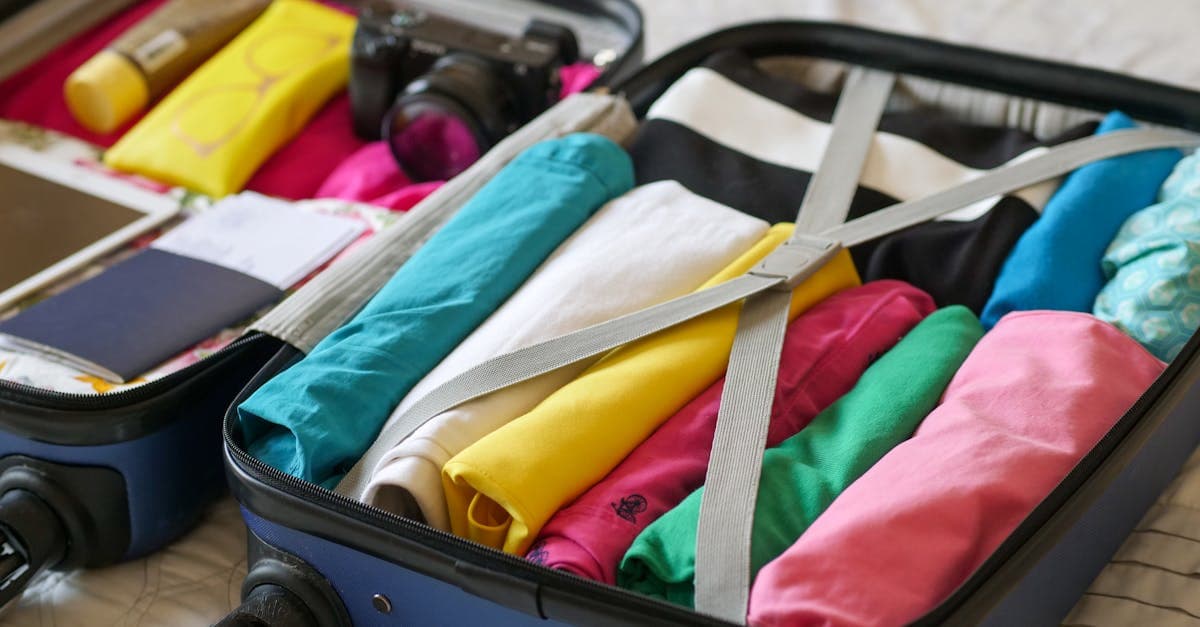
Pack for activities, not imaginary occasions. The question isn't 'what might I need?' but 'what does this specific trip actually demand?'
That shift cuts the clothing pile substantially. A beach week in Majorca calls for swimwear, light layers for evenings and one smart pair of shoes. Not three pairs of jeans, not a rain jacket for July as insurance, and not a formal shirt packed for a dinner invitation that hasn't arrived.
The average British checked bag weighs between 17 and 19 kg, well above what most holidays require. Lightweight, wrinkle-resistant fabrics close that gap. Merino wool, nylon-blend shirts and quick-dry linen compress into less space, recover fast when hung overnight in a bathroom and handle humid beach towns and air-conditioned restaurants without looking crushed. Switching to technical fabrics can substantially reduce the required weight without removing a single outfit from the list.
Laundry access changes the calculation entirely. One mid-trip wash means packing four days of clothes for a ten-day trip without running short. Many aparthotels, Airbnbs and guesthouses offer laundry for a modest charge. Plan a wash and the suitcase shrinks.
Build the clothing list around three pillars: swimwear or activity-specific kit for the destination, adaptable daywear that layers and one smarter outfit for evenings. Popular packing formulas like the 5-4-3-2-1 rule (five pairs of socks and underwear, four tops, three bottoms, two pairs of shoes, one smart outfit) offer a workable starting point for city breaks in particular.
That last item is singular on purpose. One works.
Resist the abstract just-in-case. 'What if there's a special occasion?' belongs on your social calendar, not your luggage scales.
Toiletries and medications deserve equally careful planning.
Toiletries to pack and how to handle medications

The liquids rule is consistent and catches more passengers than it should. Each container must hold no more than 100ml; all containers must fit in a single transparent resealable bag no larger than 20cm by 20cm; that bag must be presented separately at security postoffice.co.uk. One bag per passenger.
Solid toiletries sidestep the restriction. Shampoo bars, conditioner bars and pressed sunscreen use none of the 100ml allowance, weigh less than their bottled equivalents and clear security without theatre. The environmental case runs the same direction: no single-use plastic bottles leaving a trail across multiple countries.
Reusable silicone bottles handle anything that can't be sourced in solid form. Filled from larger containers before departure, they pass security legally and cost considerably less than travel-sized products sold at inflated airport prices.
Prescription medications require particular care. Keep them in the original pharmacy packaging, which carries the dispensing label with your name and the prescribing GP's details. For controlled drugs or anything that might raise questions at customs, a signed letter from the prescribing doctor stating the medication, dosage and clinical purpose removes ambiguity at border control.
Sunscreen, insect repellent and a compact first aid kit complete the health essentials. Pack plasters, antihistamines, rehydration sachets and ibuprofen as a minimum. Buy sunscreen at home; destination pharmacies in tourist areas routinely charge a premium for factor 50 that makes airport prices look measured by comparison.
Easy-to-forget items round out the picture.
Miscellaneous items: the bits most packing lists overlook

Universal travel adaptors, portable power banks and a set of packing cubes appear on almost no first-draft packing list, yet theholidaylet.com identifies them among the most consistently overlooked holiday essentials. They also prevent more holiday headaches than most items that do make the cut.
The adaptor is the classic oversight. You notice you need one when you're standing in a hotel room in Lisbon, Type G plug in hand, facing nothing but Type C sockets. Match it to the destination before you leave. For trips crossing multiple regions, a universal model handles Europe, the US and Asia without swapping.
Power banks travel in the cabin only.
Most airlines set 100Wh as the threshold for portable batteries in hand luggage. Above that limit, the bank stays at check-in. Anything within it travels without question.
Packing cubes have become the top-searched travel accessory on Amazon UK. The case for them is simple: they compress clothing into labelled, retrievable blocks instead of a single tangled pile. One cube per clothing category means finding one item doesn't require dismantling the rest.
Rounding out the list: a TSA-approved padlock for checked bags on US routes, two reusable bags folded flat for beach days and market runs, and a compact neck pillow for flights over four hours. Printed and digital copies of booking confirmations, travel insurance and your passport details earn their place every time a phone battery dies and airport Wi-Fi disappears.
Your carry-on deserves its own dedicated checklist.
What to always pack in your carry-on bag
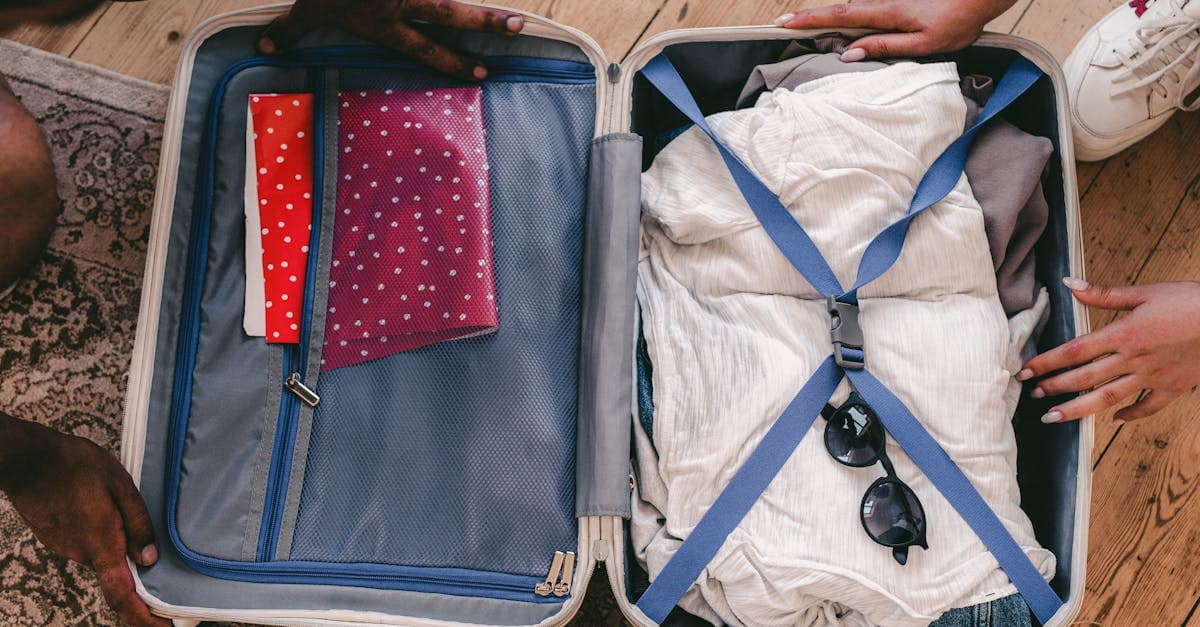
Three categories never go in checked luggage: valuables (passport, cash, camera), prescription medications particularly anything with a strict daily dosing schedule, and all electronics, as smartertravel.com documents in its comprehensive packing guide. The electronics rule is an aviation safety requirement as much as a practical one: lithium-ion batteries can overheat in cargo holds, which is why airlines mandate they travel in the cabin regardless of what the check-in desk suggests.
SITA's Baggage IT Insights report recorded around 26 million bags lost or delayed globally in 2022. That number makes a clear case for treating your carry-on as your primary bag, not overflow storage for items that didn't fit in the hold.
A spare outfit is the most considered addition to any carry-on packing checklist.
A 24-hour delay with a change of clothes is an inconvenience. Without one, it means hunting for a pharmacy at midnight or paying high prices for whatever the airport shop has in your size.
The decision framework is one question: what would make the first 12 hours unmanageable if it went missing? Prescription medication, contact lenses, charger, laptop, travel documents. Pack those first. Everything else fills the space left over.
That remaining space earns its keep with snacks, a refillable water bottle (empty through security, filled at the gate) and a neck pillow for flights over three hours. Chargers and power banks are cabin-only items for a second reason too: checked bag security requires all devices powered down, and arriving with a dead phone in an unfamiliar city creates a chain of problems that's entirely avoidable.
Connectivity is the one carry-on essential worth planning in detail.
Staying connected abroad: eSIMs, SIM cards and data roaming
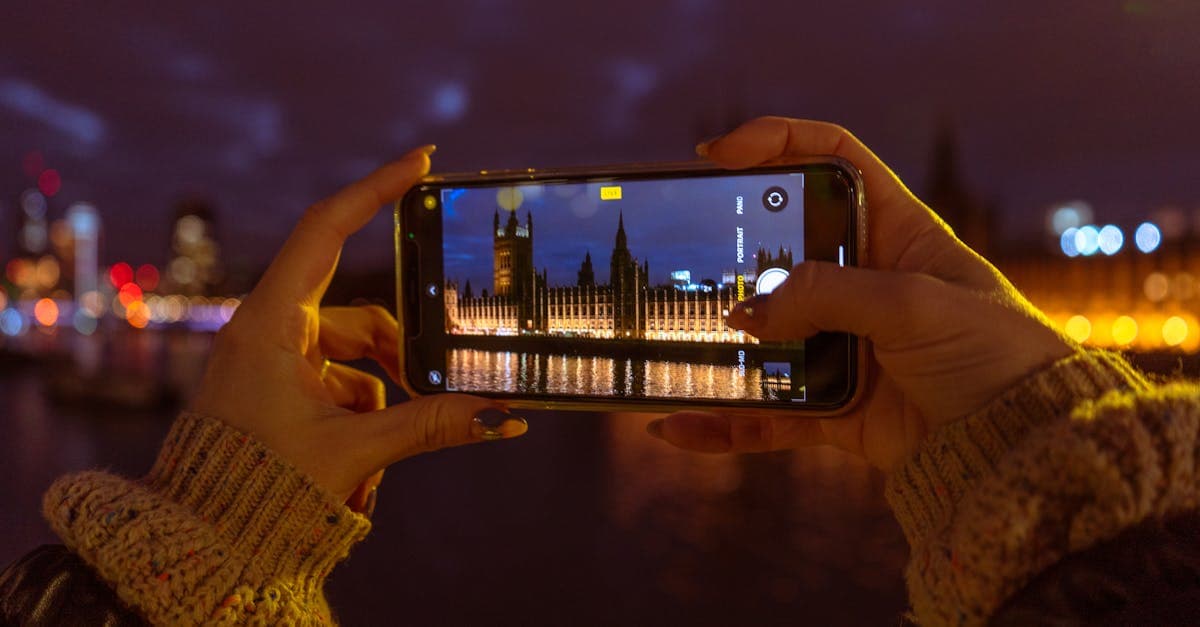
All four major UK networks now charge for EU roaming. EE, Vodafone, O2 and Three all introduced or reintroduced daily charges after Brexit-era protections expired. O2 has run the highest daily rate among the four since 2023. EE includes a roaming pass on some premium tariffs but charges separately on most standard contracts. Three's Go Roam allowance, once a real selling point, now operates with a 12GB data cap, which sounds generous until it runs out midway through a fortnight in Rome.
Travel eSIM plans typically cost 60 to 80% less than carrier roaming add-ons for equivalent data. On a two-week EU trip, that gap in daily charges compounds into a sum worth caring about.
For a weekend city break where hotel Wi-Fi handles most needs, a carrier's existing plan may be perfectly adequate. The calculation changes once you factor in full days away from the hotel or an itinerary crossing multiple countries.
The dual-SIM setup deserves careful thought before you travel. Most smartphones sold since 2022 support a physical SIM alongside a downloaded eSIM profile simultaneously. Keep your UK number active on the physical SIM to receive bank verification texts and two-factor authentication codes. Route all data through a destination eSIM. Losing UK number access mid-trip, even briefly, can block card payments when your bank sends a confirmation text to the number on file.
The installation sequence matters: set up the eSIM profile before departure while on home Wi-Fi, then activate on arrival when UK signal fades. UK-focused travel eSIM services offer country, regional and global plans covering Europe, North America and Asia. Most installs complete in under two minutes.
A few smart packing habits make the whole trip smoother.
Smart hacks for a lighter holiday packing list
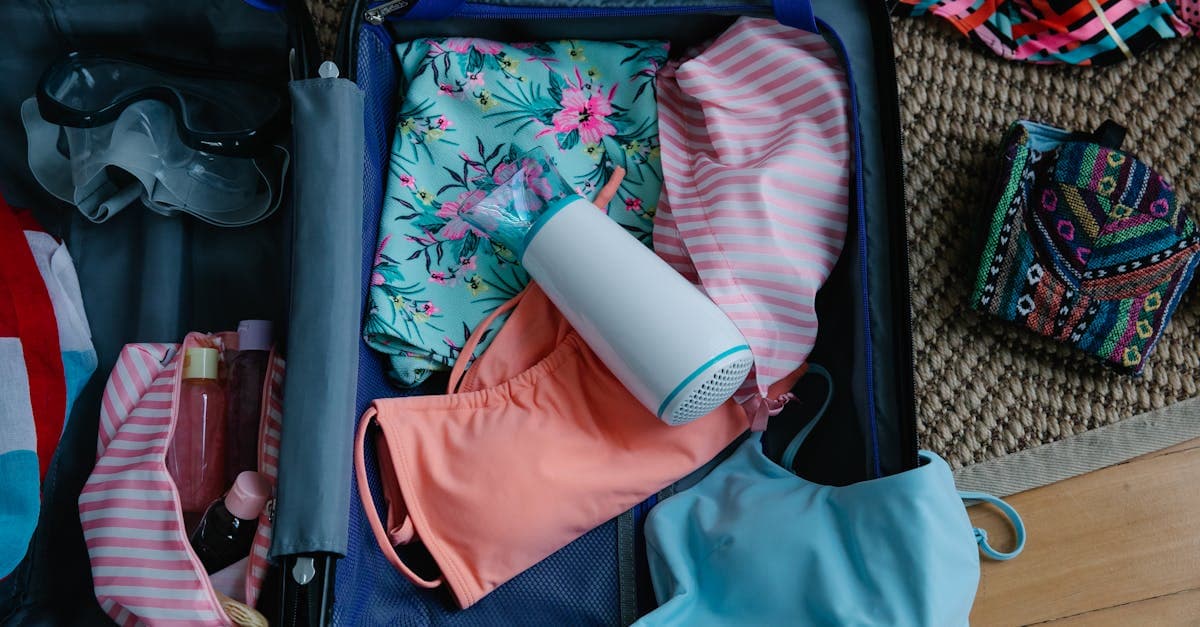
Rolling clothes is not just a packing tip. It's the technique that replaced folding for good reason: it compresses knit fabrics more efficiently and turns a suitcase into retrievable columns rather than a buried stack. You can see every item without moving anything else. This approach is consistently recommended by culture-explorer.co.uk as one of the most effective ways to reduce bag weight without reducing outfit count.
Wearing your heaviest items on travel day removes them from your weight calculation entirely. A winter coat, boots and a thick jumper can account for three or four kilograms. Put them on instead and most bags clear standard airline weight limits without adjustment.
Decanting toiletries into reusable 100ml containers rather than packing full-size versions addresses two issues at once: airport liquids compliance and luggage weight. Full-size shampoo and conditioner add more than most people expect before they step on a scale.
Weigh your luggage at home.
Excess baggage fees from budget carriers run significantly higher per kilogram than the cost of packing lighter from the start. Catching the problem on your bathroom scale costs nothing. Catching it at the Ryanair or easyJet desk costs considerably more.
A neutral colour palette built around two or three base tones generates more outfit combinations from fewer pieces than any complicated system. Black, navy and white travel together without clashing and quietly eliminate the "I have nothing to wear" problem that adds unnecessary items to a bag.
For stays longer than two weeks, shipping bulky items ahead via a courier often works out cheaper than checked baggage fees and removes airport handling entirely. It's the approach long-stay travellers tend to settle on after paying excess charges once.
Still have questions? The packing rules explained below.
What is the 5 4 3 2 1 rule for packing?
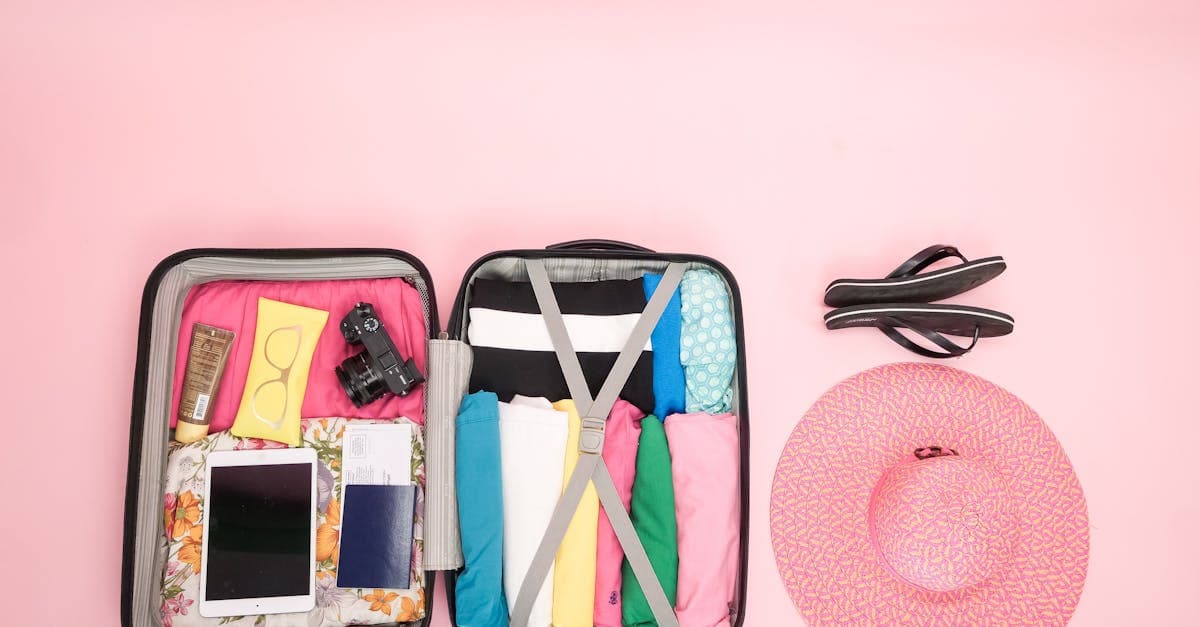
The 5-4-3-2-1 rule assigns a specific count to each clothing category: 5 tops, 4 bottoms, 3 pairs of shoes, 2 accessories, and 1 hat. According to smartertravel.com, the formula is designed for a one-week holiday packed into a single carry-on bag and pushes mix-and-match thinking rather than treating each day as a complete, separate outfit.
That shift in framing matters more than the numbers suggest.
Packing individual daily outfits for a seven-day trip means bringing seven complete sets. The 5-4-3-2-1 approach recognises that 5 tops paired with 4 bottoms produces 20 distinct combinations, well over enough for the week. The hat and accessories flex into evening or beach use without adding meaningful bulk.
The rule also scales cleanly in both directions. A weekend break might compress to 3 tops, 2 bottoms, 2 pairs of shoes, 1 accessory, and 1 hat. A fortnight could push tops to 7 and bottoms to 5, while keeping shoes at three, because shoes are both the heaviest and bulkiest items in the bag. The underlying ratio stays consistent even as the absolute numbers shift.
For the overpackers, and as noted earlier that describes most UK travellers, this framework provides a numbered structure that good intentions rarely replicate on their own. Vague promises to pack light tend to collapse at the wardrobe door. A specific formula doesn't.
A second rule strips it back even further.
What is the 3 3 3 rule for travel packing?
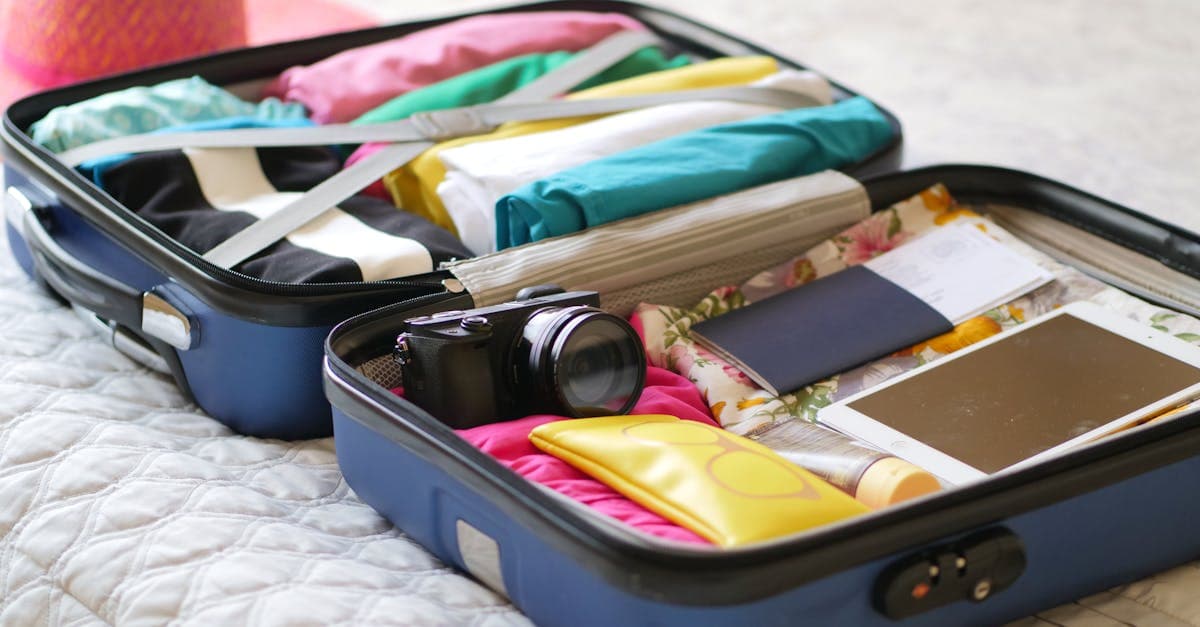
3 tops. 3 bottoms. 3 pairs of shoes. The 3-3-3 rule is the strictest of the named packing frameworks, built for weekend breaks and short city hops where every item needs to earn its place in the bag, as culture-explorer.co.uk notes in its expert packing guide. Nothing else prescribed.
One clarification worth having before you start: the 3-3-3 travel rule is entirely separate from the 3-1-1 liquids rule, which governs 100ml containers in a clear security bag. Different number, different purpose entirely.
Colour is what makes or breaks a 3-3-3 wardrobe. Three tops and three bottoms generate nine possible outfits, but only if the pieces actually mix. Choose one neutral, one dark, one mid-tone and the wardrobe does the combinatorial work. Load all three tops in loud prints and the rule falls apart at the hotel mirror.
Laundry access transforms the maths. A 3-3-3 list comfortably covers a week-long trip with a washing machine available. Without one, the practical ceiling sits at around four days before repetition becomes obvious.
The 3-3-3 rule rewards travellers who already own versatile, neutral pieces. Think of it as a ceiling, not a floor, and do the editing at the wardrobe rather than at the airport check-in desk.
Reviewed by HelloRoam's editorial team. Last updated: 29 April 2026.
Get Connected Before You Go





Frequently Asked Questions
A holiday packing list should cover five key categories: clothing matched to your planned activities, toiletries within airline liquids rules, essential travel documents, medications, and tech including a way to stay connected abroad. Getting all five categories right helps you travel without surplus weight or last-minute stress. Research shows 62% of UK travellers consistently overpack, so working through each category deliberately makes a significant difference.
The 5-4-3-2-1 packing rule means bringing five pairs of socks and underwear, four tops, three bottoms, two pairs of shoes, and one smart outfit. It offers a workable starting point for city breaks and helps prevent overpacking by giving each clothing category a defined limit. The rule works best when paired with lightweight, wrinkle-resistant fabrics that compress well and layer easily.
The 3-5-7 packing rule is a clothing formula that guides travellers to bring 3 bottoms, 5 tops, and 7 accessories, encouraging versatile outfits from a compact wardrobe. Choosing neutral, coordinating colours maximises the number of combinations from these pieces without adding extra items. Pairing this approach with mid-trip laundry access can extend a minimal wardrobe across longer trips.
The 3-3-3 packing rule typically means bringing 3 tops, 3 bottoms, and 3 pairs of shoes, keeping your wardrobe compact and mix-and-match friendly. Selecting neutral colours across all pieces maximises outfit combinations and reduces the temptation to add just-in-case extras. It works particularly well for short city breaks where laundry access is available or baggage fees make overpacking costly.
Valuables such as your passport and cash, all prescription medications, and every electronic device should always travel in your carry-on rather than checked luggage. Lithium-ion batteries in electronics are an aviation safety requirement for cabin travel, and with around 26 million bags lost or delayed globally in 2022, treating your carry-on as your primary bag is practical insurance. Pack anything that would make the first 12 hours unmanageable if it went missing.
All four major UK networks now charge daily fees for EU roaming following Brexit, with rates ranging from around £1 to £3.50 per day depending on the carrier. A travel eSIM is a cost-effective alternative: you install a local data plan before boarding without removing your UK SIM, and travel eSIM plans typically cost 60 to 80% less than carrier roaming add-ons for equivalent data. Set the eSIM up at home on Wi-Fi before departure and activate it on arrival when UK signal fades.
Each liquid container must hold no more than 100ml, all containers must fit in a single transparent resealable bag no larger than 20cm by 20cm, and that bag must be presented separately at security. Solid toiletries such as shampoo bars and conditioner bars bypass the restriction entirely and typically weigh less than their bottled equivalents. Reusable silicone bottles filled from larger containers at home are a practical alternative for liquids that cannot be sourced in solid form.
Keep prescription medications in their original pharmacy packaging, which carries the dispensing label with your name and the prescribing doctor's details. For controlled drugs or anything likely to raise questions at customs, carry a signed letter from the prescribing doctor stating the medication, dosage and clinical purpose. All medications, particularly those with a strict daily dosing schedule, should travel in your carry-on rather than checked luggage.
Rolling clothes rather than folding compresses knit fabrics more efficiently and organises a suitcase into retrievable columns so you can see every item without disturbing the rest. Wearing your heaviest items on travel day removes up to three or four kilograms from your weight calculation entirely. Building a neutral colour palette around two or three base tones generates more outfit combinations from fewer pieces and removes the temptation to pack unnecessary extras.
Packing cubes are zippered fabric organisers that compress clothing into labelled, retrievable blocks within your suitcase instead of a single tangled pile. They allow you to group items by category so finding one thing does not require dismantling everything else. They are consistently recommended as one of the most effective ways to organise luggage without adding significant weight.
A travel eSIM is a digital SIM profile you download and install onto a compatible smartphone before departure, giving you a local data plan without needing a physical SIM card. Most smartphones sold since 2022 support a physical SIM and a downloaded eSIM simultaneously, letting you keep your UK number active for bank texts and two-factor authentication while routing all data through the travel eSIM. Most installs complete in under two minutes on home Wi-Fi.
UK carrier daily EU roaming fees range from around £1 to £3.50 per day depending on the network, and these charges compound quickly across a fortnight abroad. Some premium tariffs include a roaming allowance but most standard contracts charge separately, and included data caps can run out mid-trip. Travel eSIM plans typically cost 60 to 80% less than carrier roaming add-ons for equivalent data volumes.
Weigh your luggage at home on bathroom scales before travelling, since excess baggage fees from budget carriers run significantly higher per kilogram than the cost of packing lighter from the start. Wearing your heaviest items on travel day, switching to lightweight technical fabrics, and planning a mid-trip laundry wash all reduce overall bag weight without sacrificing outfits. Using packing cubes helps you see exactly what you have packed and resist the urge to add last-minute items.
Planning one mid-trip wash means you only need to pack around four days of clothing for a ten-day trip without running short. Many aparthotels, Airbnbs and guesthouses offer laundry for a modest charge, making it a practical option for stays longer than a week. This single decision has more impact on overall luggage weight than almost any other item on the packing list.
Sources
- The Ultimate Packing List — smartertravel.com
- culture-explorer.co.uk — culture-explorer.co.uk
- Holiday checklist – what should I pack? — tui.co.uk
- Holiday packing and pre-travel checklist — postoffice.co.uk
- holiday checklist — theholidaylet.com