

Quick answer: internet cafes at a glance
An internet cafe is a commercial venue selling timed, pay-as-you-go access to networked computers and the internet en.wikipedia.org. The UK had around 6,000 of them in the early 2000s, driven by a generation of households that couldn't afford home dial-up. Today, fewer than 500 remain.
That collapse, roughly 93% of the market gone in two decades, is one of the sharpest in British retail history. The venues that survived split into two distinct camps: gaming cafes, where customers pay hourly rates for high-spec PCs and multiplayer gaming, and remittance shops serving diaspora communities who need to scan documents, send money abroad, or make cheap international video calls.
The mass-market internet cafe has largely gone.
For most travellers today, mobile data has made the whole concept redundant. A travel eSIM (digital SIM activated by QR code), installed before you board, gives you pocket connectivity without hunting for a PC terminal on arrival. Post-Brexit, UK travellers on EE or Vodafone face EU roaming charges, which sharpens the case for a local data solution. If you're unfamiliar with the technology, What Is an eSIM? covers the basics.
But where did they come from?
What does an internet cafe mean?
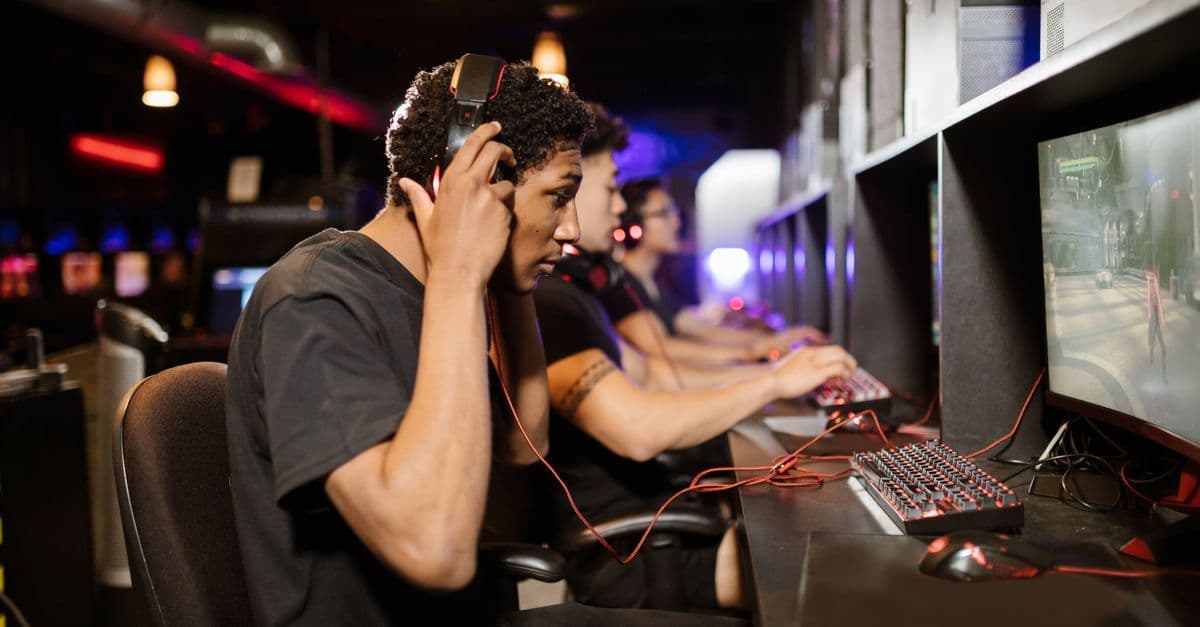
The term 'internet cafe' refers to a commercial space that rents networked computers by the hour dictionary.cambridge.org. Pay at the front desk, take a seat at a shared terminal, and the clock starts running.
It entered British usage in the early 1990s, when public internet access was a novelty and home connections were either absent or prohibitively expensive. Most people had never seen a browser. The internet cafe solved a genuine access problem.
Services varied by venue, but the standard offer covered web browsing, email access, printing and scanning, and VoIP (Voice over IP, internet-based calling) at international rates. That last one mattered enormously: phoning abroad via a shared PC could cost a fraction of a standard landline rate in the early 2000s.
Surviving UK locations today typically charge between £1 and £3 per hour, with printing charged separately at a few pence per page.
The definition, though, has always been slippery. Some venues are pure connectivity shops. Others bundle internet access into a broader offer of phone top-ups, money transfers, and photocopying. The term can cover all of them.
The shared-terminal, timed-session, pay-as-you-go (PAYG) model was the defining characteristic. Not the coffee. Many never sold a single espresso.
The concept predates the web itself, though, which raises a more interesting question about where the whole idea actually began.
The pre-internet origins of online cafes
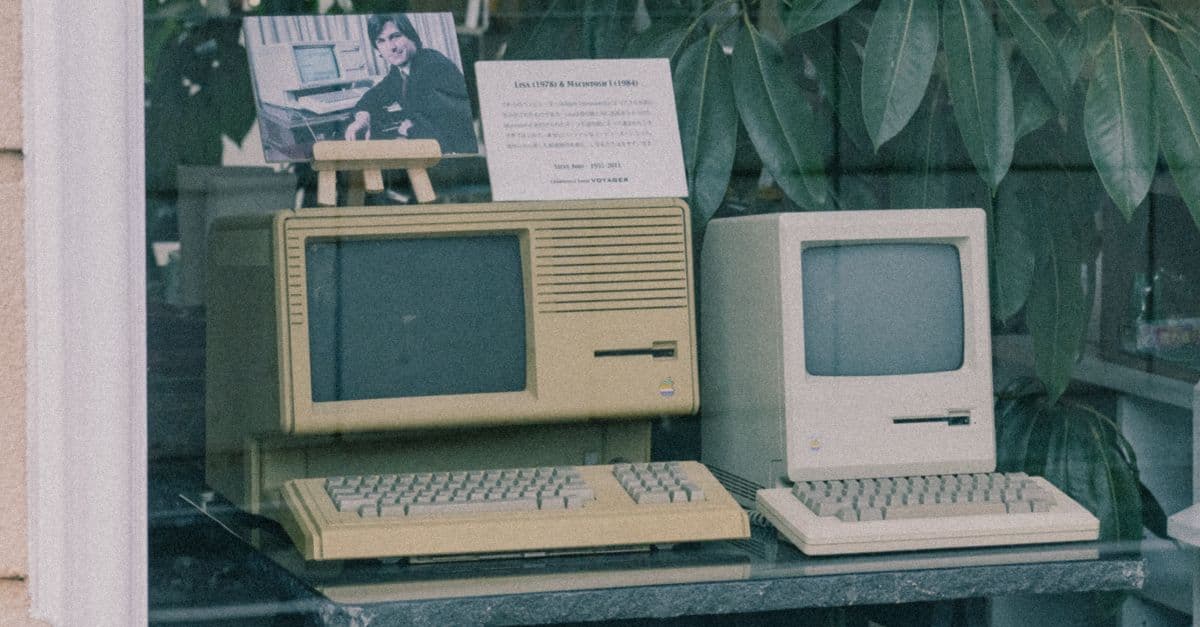
BBS (bulletin board system, a pre-web network for swapping files and messages) terminals and early dial-in access points predated the world wide web by years. The concept of a shared, paid public terminal is older than the browser.
Britain's first recognised cybercafe was Cafe Cyberia, which opened in London in 1994. It charged by the hour for web access at a time when most British households were still years away from connecting at home. The idea landed immediately. Entrepreneurs spotted the gap and moved fast.
Dial-up home connections were the problem.
Monthly line rental was expensive, speeds were poor, and rented properties rarely had the infrastructure. For students, recent arrivals, and anyone without a home setup, a public terminal was the only practical option.
The peak years ran from roughly 2000 to 2005. That window coincided with rising email adoption, the early stages of online banking, and the dot-com boom, before affordable broadband made shared access unnecessary. Internet cafes were everywhere in those years: city high streets, transport hubs, university towns.
Broadband changed that almost overnight. Home connections became affordable, smartphone prices dropped, and the core use case simply evaporated.
So did the industry survive?
Do internet cafes still exist in the UK?
Yes, internet cafes still exist in the UK. The venue you're picturing, rows of beige PCs and a card-swipe machine by the door, is mostly a memory, but the sector hasn't entirely disappeared.
The numbers cited earlier show how severe the contraction has been. What remains is a small, specialised market. Most surviving venues cluster in urban areas with large diaspora communities: Birmingham's Sparkhill and Handsworth, Manchester's Rusholme and Cheetham Hill, pockets of East London.
These aren't tourist amenities. They're working infrastructure for communities that rely on cheap international calls, document scanning, wire transfers, and in-person help navigating UK systems.
Gaming cafes are the unexpected story. High-spec rigs, LAN party bookings, and esports training sessions draw customers who want hardware performance beyond a standard home setup partner.steamgames.com.
The appeal isn't shared internet access. It's shared equipment. That segment is growing quietly, an entirely separate business from the original public-access model.
The broader collapse came down to two figures. Ofcom's 2024 data puts UK household broadband penetration at 96%. Smartphone ownership among UK adults sits at 92%. Those numbers made a mass-market, pay-per-hour terminal commercially impossible to sustain.
The internet cafe as a mass-market product is finished.
What remains is either a community lifeline or a premium gaming venue, depending entirely on which postcode you're standing in.
The global picture, though, is rather different, and that matters considerably if you're travelling outside Western Europe.
Internet cafes around the world
Internet cafes around the world range from bankrupt to booming, depending on which continent you're looking at. South Korea and Taiwan's PC bangs (dedicated gaming cafes with high-spec hardware rented by the hour) pack out on weekday evenings. These aren't fading community services; they're striking, profitable venues with premium seating, food delivery, and fibre internet.
Vietnam, the Philippines, and Indonesia maintain dense networks of basic cafes, driven by gaps in home broadband and device affordability in lower-income urban areas. Poland and Slovakia still have city-centre survivors, mostly doubling as print shops or gaming rooms to stay viable. The pattern is consistent: where those gaps close, cafes follow.
Australia, Brazil, and the United States shuttered the traditional model years ago. What remains in those markets operates as gaming lounges or coworking spaces, not public access terminals.
Gaming is the only segment genuinely growing internationally.
Back to the core question: why use one at all?
What is the point of an internet cafe?

Public terminals solve problems that smartphones don't. Printing, scanning, and formal document submission are the tangible use cases that keep surviving UK venues in business.
Consider the practical situations that still generate real footfall. A visa application requiring certified document scans. A remittance payment to family abroad. A passport renewal form that doesn't render correctly on a mobile browser.
For migrants, students, and occasional travellers, a functioning terminal with a printer and scanner handles all of those.
Document services are the underrated revenue driver at most surviving UK locations. Scanning a tenancy agreement, submitting a council tax form, producing certified copies: none require a personal device, but all require a connected printer. That's the quiet commercial logic behind most remaining venues.
Gaming cafes serve entirely different demand. They're grounded social infrastructure for competitive gaming communities, particularly among younger demographics without the space or budget for a high-spec home rig. Between £3 and £6 per hour buys access to hardware that costs thousands to build at home.
Legal requirements vary by jurisdiction. Some mandate CCTV at terminals, session logging, and identity checks before you can log on. UK venues operate under CCTV and data retention obligations.
Starting one is a different matter entirely.
How to start your own internet cafe?
Setting up an internet cafe in the UK requires sorting four categories before a single customer sits down: hardware, connectivity, premises, and compliance.
Hardware and connectivity. A basic setup of ten workstations runs into several thousand pounds at current component prices. A gaming cafe demands significantly higher specification: professional-grade monitors, peripherals, noise-dampened headsets, and cooling. Commercial broadband contracts with guaranteed uptime cost substantially more than domestic equivalents.
Premises and licences. Business rates, council planning consent, and a commercial lease form the largest ongoing overhead. Gaming venues may need a premises licence depending on late-night trading hours.
Compliance. UK law requires CCTV on premises and obliges operators to retain session logs, including timestamps and user identifiers. This isn't optional, and it applies from day one of trading.
The economics. Basic internet access alone produces thin margins. Viable operations add remittance services, printing, scanning, or gaming to the revenue mix. Without at least one of those streams, the business faces a structural problem that hourly access fees alone won't solve.
The gap between a community print shop with a few terminals and a full gaming venue is enormous, both in upfront investment and in the customer you're trying to reach.
Convenience has a darker side, though.
The risks of using a public internet cafe computer
Shared computers carry concrete security risks that most users underestimate. Keyloggers (software or hardware that silently records every keystroke) can capture banking passwords and passport numbers without leaving a visible trace. Hardware versions hide inside the keyboard itself, undetectable by any software scan.
The browser is a second attack surface. Previous users may have left active sessions for email or cloud storage. Stored cookies can expose account details even after a logout.
Public networks create a third exposure. Without a VPN (a virtual private network that encrypts your traffic), any connection over unencrypted HTTP is readable by anyone on the same network.
USB ports add a fourth risk. Plugging a personal device into a shared terminal to charge or transfer files creates a direct pathway for malware.
If you have no alternative:
- No banking or financial transactions on a shared terminal.
- No email accounts linked to financial services.
- No uploading passport scans or identity documents.
- Verify the HTTPS padlock in the browser bar before entering anything personal.
- Log out of every account. Then clear the browser history manually.
Common pitfall: Logging out isn't enough. Many financial accounts keep sessions active even after the browser tab is closed. Once you're back on a private connection, sign out all active sessions from your account's security settings to invalidate any cookies left on the shared terminal.
Residual risk remains after all of the above. A hardware keylogger defeats every precaution listed here.
Which raises the obvious question: what should you use instead?
Staying connected abroad without an internet cafe
A travel data plan activated before you board replaces the internet cafe for nearly every task you'd search one out for. The catch most UK travellers miss: post-Brexit, free EU roaming is no longer guaranteed. EE, Vodafone UK, O2, and Three all cap included EU data, and once those limits are hit, per-megabyte charges stack up. A week of heavy navigation and messaging can add €15 to €50 to your bill before you've noticed.
That's the problem. A tourist eSIM (a digital SIM profile loaded via QR code, no physical card required) removes it entirely.
HelloRoam's eSIM covers 190+ destinations with no contract required; for current pricing, see helloroam.com/en-GB/esim-united-kingdom.
Short breaks with reliable hotel Wi-Fi are the one scenario where an eSIM might genuinely be more than you need. Three days in Lisbon using your existing Three Feel At Home allowance, with your hotel covering evenings? That works fine. Stretch to a fortnight across four countries, and a tourist eSIM is the grounded, concrete pick.
The right choice depends on your trip.
eSIM, local SIM or pocket WiFi: which suits you?
Pick the format that matches your trip. No single option wins every scenario.
eSIM: Scan the QR code before you board, and data is live on arrival. No kiosk queue, no SIM tray, no fumbling with a tiny card at arrivals. Works on iPhone XS and later, plus most Android flagships from 2020 onwards. For a solo trip up to two weeks, this is the obvious pick.
Local SIM: Cheapest for stays over two weeks, especially if you need a local number for bookings and calls. Requires a physical SIM swap and, in some countries, passport registration at the counter.
Pocket WiFi: Connects multiple devices on one plan. Useful for families travelling together, but it needs daily charging and is one more item to misplace mid-trip.
Internet cafe: A last resort. Fine for printing a boarding pass or scanning a document when you have no device handy. Not a data strategy.
HelloRoam covers 190+ destinations with no SIM swap and no contract. Revolut and Monzo users can set a travel spending limit and track eSIM costs against it in real time, which keeps the budget tidy on longer trips. For a plain-language breakdown of how eSIM profiles install and switch between countries, the What Is an eSIM? guide is worth bookmarking before you buy.
Reviewed by HelloRoam's editorial team. Last updated: 02 July 2026.
Get Connected Before You Go





Frequently Asked Questions
An internet cafe is a commercial venue renting networked computers by the hour. Customers pay at the front desk and use shared terminals for browsing, email, printing, and cheap international calls.
Yes, but the market has shrunk by around 93% since its early-2000s peak. Fewer than 500 remain, mostly serving diaspora communities or operating as gaming cafes in urban areas.
Internet cafes provide shared access to computers for printing, scanning, document submission, and cheap international calls. Gaming cafes offer high-spec hardware for competitive gaming at hourly rates.
You need hardware, commercial broadband, premises with planning consent, and UK compliance including CCTV and session logging. Basic ten-workstation setups cost several thousand pounds upfront.
Surviving UK internet cafes typically charge between £1 and £3 per hour for computer access, with printing billed separately at a few pence per page.
Affordable home broadband and rising smartphone ownership made pay-per-hour terminals redundant. By 2024, UK broadband penetration reached 96% and smartphone ownership 92%, ending the mass-market model.
Yes. South Korea and Taiwan's gaming cafes are thriving. Vietnam, the Philippines, and Indonesia maintain dense cafe networks where broadband and device affordability gaps still exist.
Shared terminals carry real risks including keyloggers, saved browser sessions, and unencrypted public networks. Avoid banking, financial transactions, and uploading identity documents on any shared computer.
Never enter banking or financial details on a shared terminal. Always log out, clear browser history, and verify the HTTPS padlock. Hardware keyloggers can defeat all software precautions.
A travel eSIM is a digital SIM profile activated via QR code before departure, giving you mobile data on arrival without a physical card or airport kiosk queue.
Yes. Post-Brexit, major UK carriers cap included EU data allowances. Exceeding those limits triggers per-megabyte charges that can add €15 to €50 or more to a single week's bill.
The peak years ran from roughly 2000 to 2005, coinciding with the dot-com boom and rising email adoption. The UK had around 6,000 internet cafes at its early-2000s high.
A gaming cafe rents high-spec PCs for multiplayer and competitive gaming rather than general internet access. Rates typically run £3 to £6 per hour for hardware costing thousands to build at home.
Options include tourist eSIMs, local prepaid SIMs, pocket WiFi rentals, and hotel Wi-Fi. A tourist eSIM typically costs £5 to £12 for up to ten days, with data active immediately on arrival.
UK internet cafes must maintain CCTV on premises and retain session logs including timestamps and user identifiers. These obligations are mandatory and apply from the first day of trading.
Sources
- en.wikipedia.org — en.wikipedia.org
- Meaning ofinternet caféin English — dictionary.cambridge.org
- partner.steamgames.com — partner.steamgames.com