

HelloRoam is a global eSIM provider offering instant mobile data in 185+ countries. Buy prepaid travel eSIM plans with no extra fees, no contracts, and instant activation on any eSIM-compatible device.

Best Time to Visit the Maldives: the Complete Guide for UK Travellers

Emily Thornton
Written by: Emily Thornton
Published date
Updated:
Reading time

14 min read

Best Time to Visit the Maldives: The Complete Guide for UK Travellers

![Overwater bungalow with thatched roof, a classic scene during the best time to visit Maldives

Quick Answer: best time to visit maldives

Get your eSIM for Maldives before you travel.

![Overwater bungalow with thatched roof, a classic scene during the best time to visit Maldives

According to tui.co.uk, November to April is the window you want. The northeast monsoon keeps rainfall well under control, seas calm, and the Indian Ocean cooperative: clear conditions for swimming, snorkelling, and the blue-sky shots that define the destination [responsibletravel.com. February and March are the most consistently reliable months within that range.

Two sweet spots stand out for UK travellers. November opens the dry season while prices are still subdued, ahead of the Christmas demand spike. February to early March delivers peak conditions before Easter school holidays push resort rates and airfares upward.

No major UK mobile network includes the Maldives in its standard roaming allowance. HelloRoam covers 190-plus destinations via eSIM, with Maldives coverage available on local networks. For anyone new to the format, [HelloRoam's explanation of how eSIM works covers the setup clearly.

The Maldives runs on two seasons. Neither is uninhabitable, but each requires a different calculation.

The best time to visit the Maldives

![Luxury yachts reflecting sunset colours on calm water — the best time to visit Maldives

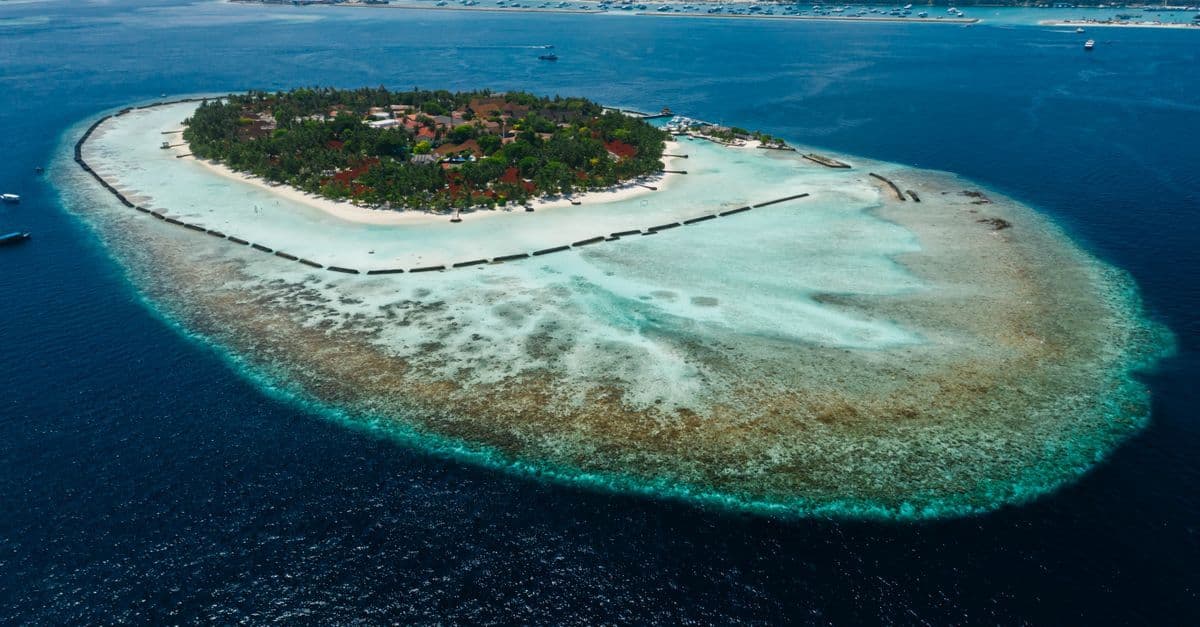
According to audleytravel.com, November to April is the dry season, known locally as Iruvai, and the consensus best time to visit the Maldives. This window delivers settled seas, minimal rainfall, and the kind of blue-sky reliability that justifies the fare. The Maldives spans twenty-six coral atolls and more than a thousand islands, at an average elevation of 1.5 metres above the Indian Ocean.

The core of the window runs from February to mid-March, when conditions are at their most dependable and sea surface temperatures reach their seasonal peak for reef swimming [hayesandjarvis.co.uk. Two sub-periods deserve specific attention. November is the value window: dry conditions have arrived, but prices haven't yet caught up with the late-December surge. February to early March is the prestige booking, offering the best overall conditions before Easter school holidays push airfares and resort rates higher.

Flights from London Heathrow or Gatwick to Malé take roughly 10.5 to 11 hours. The main routing options are Emirates via Dubai, Qatar Airways via Doha, or SriLankan Airlines via Colombo. No UK carrier currently operates a direct service.

No month makes the Maldives unvisitable. Every period involves trade-offs between weather reliability, which marine creatures are seasonally active, what flights and resorts cost, and how crowded the experience feels. Those trade-offs are driven by two monsoon systems, and understanding them is where the booking decision properly begins.

Maldives weather: understanding the two seasons

![Pristine beach with palm trees during the best time to visit Maldives in the dry season

Two distinct wind-driven monsoon systems shape Maldives weather across the year. Iruvai, the north-east monsoon, defines the dry season from November to April: wind speeds below 15 knots, sparse rainfall, and seven to nine daily sunshine hours [kuoni.co.uk. Hulhangu, the south-west monsoon, runs from May to October with higher rainfall and concentrated squalls. Which monsoon you visit under determines sea state, underwater visibility, and what is appearing on the reef.

Hulhangu shifts temperatures only marginally (28 to 30 degrees Celsius), but rainfall increases substantially, averaging around 130mm in May and climbing to 200 to 300mm at the June and July peak. The point most travel guides underplay: this rain arrives in concentrated squalls of 30 to 90 minutes, not persistent overcast days. Between those bursts, skies typically clear quickly. Daily sunshine drops to five to seven hours, which still exceeds most months in the UK.

Sea surface temperatures peak at around 30 degrees Celsius in March and April, with underwater visibility reaching 20 to 30 metres. That combination makes those months the optimal window for diving and reef snorkelling.

The Maldives lies outside the primary Indian Ocean cyclone belt. Mauritius and Madagascar carry meaningful cyclone seasons; the Maldives does not, making severe weather risk low across all twelve months.

MonthJanuary
Air temp (°C)29-31
Rainfall (mm)~65
Sunshine (hrs/day)8
Crowd levelHigh
Price index££££
MonthFebruary
Air temp (°C)29-31
Rainfall (mm)~50
Sunshine (hrs/day)9
Crowd levelHigh
Price index££££
MonthMarch
Air temp (°C)29-31
Rainfall (mm)~70
Sunshine (hrs/day)9
Crowd levelHigh
Price index£££
MonthApril
Air temp (°C)29-31
Rainfall (mm)~90
Sunshine (hrs/day)8
Crowd levelModerate
Price index£££
MonthMay
Air temp (°C)28-30
Rainfall (mm)~130
Sunshine (hrs/day)7
Crowd levelLow
Price index££
MonthJune
Air temp (°C)28-30
Rainfall (mm)~200
Sunshine (hrs/day)5
Crowd levelLow
Price index£
MonthJuly
Air temp (°C)28-30
Rainfall (mm)~220
Sunshine (hrs/day)5
Crowd levelLow
Price index£
MonthAugust
Air temp (°C)28-30
Rainfall (mm)~200
Sunshine (hrs/day)6
Crowd levelLow-moderate
Price index£
MonthSeptember
Air temp (°C)28-30
Rainfall (mm)~175
Sunshine (hrs/day)6
Crowd levelLow
Price index£
MonthOctober
Air temp (°C)28-30
Rainfall (mm)~140
Sunshine (hrs/day)7
Crowd levelLow-moderate
Price index££
MonthNovember
Air temp (°C)29-31
Rainfall (mm)~80
Sunshine (hrs/day)7
Crowd levelModerate
Price index£££
MonthDecember
Air temp (°C)29-31
Rainfall (mm)~70
Sunshine (hrs/day)8
Crowd levelHigh
Price index££££

Resorts stay open throughout the year. The reef ecosystem remains accessible in both seasons, and beaches are usable well into the wet months. A rainy afternoon in the Maldives bears very little resemblance to a rainy afternoon in northern Europe.

What is the rainy season in Maldives?

![Infinity pool at a Maldives luxury resort during the rainy season, surrounded by turquoise ocean

The rainy season in the Maldives runs from May to October, driven by the south-west monsoon known locally as Hulhangu. June and July sit at the wettest end of the scale.

Rainfall during those peak months arrives in brief, intense bursts rather than sustained grey days. In the breaks between downpours, the water stays warm and conditions on the beach are entirely reasonable.

Underwater visibility drops slightly during the wet season, typically running to 15 to 20 metres rather than the higher figures the dry months deliver. That still places the Maldives among the world's better dive destinations even out of its peak window.

Coral bleaching is a growing concern during the late wet months. It is most likely when sea temperatures remain elevated for extended periods, a pattern occurring with increasing frequency as average ocean temperatures rise. Divers planning trips from August to October should check current reef health updates before committing to specific sites.

One genuine advantage of wet-season timing: bioluminescent plankton. From June through October, shallow lagoons illuminate at night with a distinctive blue-green glow, particularly around less-developed local islands. This is a natural phenomenon and, unlike most Maldivian attractions, it costs nothing to see.

Resort occupancy falls substantially during these months, and pricing follows. Rates typically run 25 to 40 per cent below peak-season levels, making wet-season timing the most financially accessible entry point for Maldives travel.

Month-by-month guide: weather, marine life and prices

![Hand marking a calendar date to plan the best time to visit Maldives month by month

The headline season split misses most of the nuance. The table below shows what you are actually choosing between, month by month.

MonthJanuary
WeatherDry, clear
Marine highlightsManta rays (Baa Atoll), dolphins
CrowdsHigh
Price indexPeak
MonthFebruary
WeatherDry, warmest water
Marine highlightsManta rays, peak snorkelling clarity
CrowdsHigh
Price indexPeak
MonthMarch
WeatherDry, warmest water
Marine highlightsMantas, turtles, reef fish
CrowdsHigh
Price indexPeak
MonthApril
WeatherTransitional
Marine highlightsWhale sharks arriving (South Ari Atoll), turtles
CrowdsMedium
Price indexShoulder
MonthMay
WeatherFirst rains
Marine highlightsWhale sharks active, turtle nesting begins
CrowdsLow to medium
Price indexShoulder
MonthJune
WeatherWet, squalls
Marine highlightsWhale sharks, bioluminescent plankton
CrowdsLow
Price indexLow
MonthJuly
WeatherWettest month
Marine highlightsWhale sharks, bioluminescence, turtle nesting
CrowdsLow (a)
Price indexLow (a)
MonthAugust
WeatherWet
Marine highlightsWhale sharks, bioluminescence, turtles
CrowdsLow (a)
Price indexLow (a)
MonthSeptember
WeatherWet, improving
Marine highlightsWhale sharks, bioluminescence
CrowdsLow
Price indexLow
MonthOctober
WeatherMostly dry
Marine highlightsWhale sharks still active, mantas returning
CrowdsLow to medium
Price indexShoulder
MonthNovember
WeatherDry season opens
Marine highlightsReef mantas (Baa Atoll), calm seas
CrowdsMedium
Price indexShoulder
MonthDecember
WeatherDry, clear
Marine highlightsMantas, dolphins, flat seas
CrowdsVery high
Price indexPeak

(a) UK school holiday demand lifts July and August prices substantially. The low ratings reflect non-UK market conditions.

October stands out as the most undervalued month for British travellers. Conditions improve through the month, prices haven't yet rebounded to dry-season levels, and the marine life is still active.

December and January produce the clearest conditions and flattest seas of the year, but demand is fierce. Christmas and New Year bookings at the most sought-after resorts sell out many months ahead, with rates reaching up to 60 per cent above shoulder levels.

Best time for activities: diving, whale sharks and surfing

![Whale shark swimming alongside scuba divers underwater — best time to visit Maldives for diving

For diving, January to April is the optimal window, with visibility reaching 20 to 30 metres and calm surface conditions. Surfers should target April to October, when south-west swell activates breaks in the southern atolls. Whale shark encounters at South Ari Atoll peak from May to November. Each activity has its own best season, and the common assumption that January to April is simply better does not hold across all pursuits.

March and April combine clear visibility with the warmest surface water of the year, making them the strongest window for reef snorkelling too. Calm surface seas during these months also reduce current disruption at most dive locations.

Surfing runs to an entirely different calendar. The south-west monsoon generates the swell that activates breaks at Sultans, Honky's and Cokes in the southern atolls. April to October is the established surf season, and the best waves frequently coincide with the wettest days.

Bioluminescent plankton is available only in the wet season. Dinoflagellates light shallow lagoons blue-white from June to October, most visibly on moonless nights. No dry-season visit replicates it.

Photographers face a genuine choice rather than an obvious answer. Dry-season light on white sand and turquoise water is exceptional. Wet-season skies offer heavy cloud formations and a dramatically different visual register that suits its own aesthetic.

Most activities beyond the water run in all seasons. Dolphin watching, sandbank picnics, cooking classes on local islands and sunset fishing are available year-round, though transfers are calmer in the dry months.

Rising sea temperatures have increased the frequency of coral bleaching events, concentrated mainly in the late wet season. Reef quality varies significantly by atoll, and reputable dive operators now incorporate this into their site recommendations.

Marine life calendar: whale sharks, manta rays and bioluminescence

![Manta ray gliding gracefully over a vibrant coral reef during peak Maldives marine season

No single month in the Maldives is without notable marine life. The question is which atoll to position yourself in and when.

Whale sharks aggregate at South Ari Atoll from May to November, drawn by plankton blooms triggered by the south-west monsoon. This is one of the most reliable and accessible whale shark encounter sites in the world, reachable without a liveaboard.

Manta rays follow a different schedule. Reef mantas concentrate at Baa Atoll between December and April. Baa is a UNESCO Biosphere Reserve and consistently ranks among the premier manta aggregation sites globally. The same species then shifts to South Male Atoll from May to November, meaning encounters are achievable in either season provided the atoll choice is deliberate.

Hammerhead sharks can be encountered in any season at Rasdhoo Atoll, where early-morning descents to 30 to 40 metres offer the best sightings, and at Alimatha Jetty in Vaavu Atoll.

Sea turtles are resident at most reefs throughout the year. Nesting activity peaks between June and August on uninhabited outer islands.

Bioluminescent plankton, as detailed in the activities section above, is confined to the wet season from June to October.

A note for January and February visitors: some atolls see elevated jellyfish presence during these months. Not typically dangerous, but worth confirming with your resort or dive operator before night snorkelling.

Timing your trip from the UK: school holidays, honeymooners and value windows

![Family relaxing at a Maldives overwater resort — ideal for UK school holiday travel

For UK travellers, November and February to March offer the best combination of dry-season conditions and below-peak pricing [trailfinders.com. October half-term is the strongest option for families, sitting in a gap between the wet season and the Christmas surge. July and August are the worst value: the wettest months, yet school holiday demand inflates prices regardless.

Christmas and New Year deliver the best weather but also the highest prices, with popular resorts booking out well in advance.

The cleaner windows sit outside the obvious peaks. November opens the dry season before family demand fully arrives, with prices that haven't yet rebounded to December levels. February and March offer the most reliable dry conditions of the year without the family-holiday premium. For honeymooners, both windows work well.

October half-term sits in a gap most British travellers miss. Conditions improve steadily through the month, whale sharks remain active at South Ari Atoll, and prices typically run 20 to 30 per cent below the December peak.

Return flights from London to Malé run from around £700 to over £1,200 at peak, dropping to roughly £480 to £750 during shoulder months (October, November and April), and to around £380 to £600 in the low season from May to September.

Packing is straightforward in both seasons. Lightweight breathable clothing, reef shoes for shallow atoll wading, and a dry bag for speedboat and seaplane transfers are the essentials. Add a lightweight waterproof layer for wet-season trips.

UK passport holders receive a free 30-day on-arrival visa with no pre-application required. Resorts operate in US dollars; Maldivian Rufiyaa is the currency you will need on local islands.

What month is Maldives cheapest?

![Sunset cruise aboard a luxury yacht in the Maldives, perfect for budget-friendly travel windows

May is when resort pricing breaks. The wet season's arrival strips out leisure demand through early July, before UK school summer holidays push late July and August back up. Good news for the calendar. Mixed news for the budget.

Mid-range resorts typically discount 25 to 40 percent below January peak rates during this window. Liveaboard operators follow a similar pattern, reducing rates on schedules that fill quickly in the dry season.

The price swing is considerable. A 7-night stay for two at a mid-range resort (flights excluded) runs roughly ~£2,100 to ~£4,900 in shoulder season, against ~£4,900 to ~£17,500 at peak. That is a different class of holiday.

October is the most underrated month. The wet season is winding down, whale sharks remain active at South Ari Atoll, and prices haven't yet climbed to dry-season levels. For travellers with schedule flexibility, it earns little attention and deserves far more.

Guesthouses on inhabited islands including Maafushi, Thulusdhoo and Dhigurah offer an entirely different route at roughly ~£80 to ~£150 per night, year-round. The coral reefs are not price-sensitive.

For dry-season travel, booking six to nine months ahead secures the sharpest rates. Wet-season trips respond better to patience: eight to twelve weeks out, occupancy pressure prompts genuine discounts.

Staying connected in the Maldives

![Luxury yachts illuminated at sunset in the Maldives — staying connected on a remote island holiday

Every UK carrier charges expensive roaming fees in the Maldives. EE, Vodafone, Three and O2 all exclude it from standard bundle allowances, with typical costs reaching around ~£6 per day. For a ten-day trip, that is ~£60 before a single photo uploads.

Resort Wi-Fi is the usual fallback, but it comes with caveats. Five-star properties include basic connectivity as standard, then throttle bandwidth on overwater villas and charge ~£10 to ~£25 per day for usable speeds. Mid-range resorts are patchier still.

Two local networks operate across the islands. Dhiraagu is dominant, covering all inhabited islands with 4G LTE and offering 5G in Malé. Ooredoo Maldives is the secondary provider, solid in the capital and principal atolls but thinner at the outer islands. SIM cards for both are available at Malé International Airport on arrival.

An eSIM is the cleaner option for most travellers. Activated via QR code before departure, it skips the airport queue and covers the connectivity gap during seaplane or speedboat transfers between atolls. HelloRoam offers eSIM data plans for UK travellers visiting the Maldives, activatable before flying with no physical card swap needed.

Remote atolls including Addu, Laamu and Raa rely on satellite internet at resorts. Download offline maps and transfer confirmations before any seaplane departure.

What is the best month to go to Maldives?

February is the clearest answer. Sitting at the heart of the dry season, it combines minimal rainfall, calm seas, peak reef visibility and no festive-period surcharges [clubmed.co.uk.

November runs it close for value. Dry-season conditions are re-establishing, prices remain below peak, and the marine life calendar is still productive. For couples without school-holiday constraints, it is the month that delivers the most for the money.

Activity priorities shift the calculation. Whale shark encounters at South Ari Atoll peak between June and August. December to March brings manta rays to Baa Atoll, and surfers should target May to September, when south-west swell activates the southern atoll breaks.

UK families locked to school holidays have one solid choice: October half-term. Dry-season conditions are establishing, prices sit below the Christmas peak, and whale shark activity at South Ari may still be running.

Both the Maldives and the Seychelles follow a broadly similar two-season structure. The Maldives leads on underwater visibility and marine encounters; the Seychelles has the edge on above-water biodiversity and granite island scenery.

When the Maldives wet season aligns with summer, Bali's dry season is at full peak. Thailand's Andaman coast mirrors the Maldives dry window from November to April, giving UK travellers viable alternatives at a comparable price point.

  • Esim Cape Town
  • Esim Atlanta
  • Esim Hawaii

Get Connected Before You Go

Emily Thornton, Travel Writer at HelloRoam
Emily Thornton is a travel writer at HelloRoam who covers travel connectivity and eSIM tips for international visitors. She writes about finding reliable data at outdoor events, during weekend city breaks, and on ferry and rail journeys. Emily keeps her tone friendly and jargon-free so any traveler can follow along.

Frequently Asked Questions

February and March are the most consistently reliable months to visit the Maldives. They fall within the dry season (November to April), offering minimal rainfall, sea surface temperatures peaking at around 30 degrees Celsius, and underwater visibility of 20 to 30 metres. For UK travellers, February to early March is the strongest booking window before Easter school holidays push airfares and resort rates higher.

The Maldives is a collection of over a thousand islands across twenty-six coral atolls, sitting at an average elevation of 1.5 metres above the Indian Ocean, renowned for overwater bungalows, coral reef diving, and warm turquoise water year-round. The dry season from November to April delivers blue-sky reliability, calm seas, and some of the world's most reliable whale shark and manta ray encounters. The right choice depends on the experience you are seeking, as both destinations offer luxury resort stays in the Indian Ocean.

June and July are the cheapest months to visit the Maldives, sitting at the low end of the pricing index. Wet-season months from May to October generally run 25 to 40 per cent below peak-season levels, making this the most financially accessible entry point. Note that UK school holiday demand in July and August inflates prices even during the wet season, so June and September offer the best value for British travellers.

The rainy season in the Maldives runs from May to October, driven by the south-west monsoon known locally as Hulhangu. June and July are the wettest months, with rainfall averaging 200 to 220mm. Rain typically arrives in concentrated squalls of 30 to 90 minutes rather than persistent overcast days, and skies usually clear quickly between downpours.

The Maldives has two monsoon-driven seasons. Iruvai, the north-east monsoon, runs from November to April and delivers the dry season with wind speeds below 15 knots, sparse rainfall, and seven to nine daily sunshine hours. Hulhangu, the south-west monsoon, runs from May to October with higher rainfall and concentrated squalls, but temperatures shift only marginally between the two seasons, staying between 28 and 31 degrees Celsius year-round.

Yes, visiting the Maldives during the rainy season has genuine advantages. Resort rates typically run 25 to 40 per cent below peak levels, whale sharks are active at South Ari Atoll from May to November, and bioluminescent plankton illuminates shallow lagoons blue-green from June to October. Rain arrives in short squalls rather than all-day grey weather, and daily sunshine still averages five to seven hours.

Whale sharks aggregate at South Ari Atoll from May to November, drawn by plankton blooms triggered by the south-west monsoon. This is one of the most reliable and accessible whale shark encounter sites in the world and is reachable without a liveaboard. October is highlighted as particularly undervalued for British travellers, as conditions improve through the month while prices have not yet rebounded to dry-season levels and whale sharks remain active.

Reef mantas concentrate at Baa Atoll, a UNESCO Biosphere Reserve, between December and April. From May to November, the same species shifts to South Male Atoll, meaning manta encounters are achievable in either season if you choose the right atoll. January and February are particularly noted for manta ray activity alongside peak water clarity.

April to October is the established surf season in the Maldives. The south-west monsoon generates the swell that activates breaks such as Sultans, Honky's, and Cokes in the southern atolls. The best waves frequently coincide with the wettest days, meaning surfing runs on an entirely different calendar from the peak dry-season tourist window.

Bioluminescent plankton lights shallow lagoons with a blue-green glow from June to October, most visibly on moonless nights around less-developed local islands. This is a natural phenomenon that occurs only during the wet season, so no dry-season visit replicates it. It is also one of the few notable Maldives attractions that costs nothing to see.

November marks the opening of the dry season in the Maldives, bringing settled seas, minimal rainfall, and around seven hours of daily sunshine. Prices have not yet risen to match the late-December demand spike, making November a strong value window for dry-season conditions. Reef mantas begin returning to Baa Atoll during this month.

October is described as the most undervalued month for British travellers. Conditions improve through the month as the wet season eases, prices have not yet rebounded to dry-season levels, whale sharks are still active, and manta rays are beginning to return. It offers a strong combination of relative value, improving weather, and active marine life.

January to April is the optimal window for diving, with visibility reaching 20 to 30 metres and calm surface conditions. March and April combine the clearest visibility with the warmest surface water of the year, making them ideal for reef snorkelling too. Underwater visibility during the wet season still runs to 15 to 20 metres, which remains above average for global dive destinations.

No. The Maldives lies outside the primary Indian Ocean cyclone belt, making severe weather risk low across all twelve months. Destinations such as Mauritius and Madagascar carry meaningful cyclone seasons, but the Maldives does not. This makes the Maldives a relatively safe choice from a severe weather perspective regardless of travel timing.

Flights from London Heathrow or Gatwick to Malé take roughly 10.5 to 11 hours. The main routing options are Emirates via Dubai, Qatar Airways via Doha, or SriLankan Airlines via Colombo. No UK carrier currently operates a direct service to the Maldives.

October half-term is the strongest option for UK families, sitting in a gap between the wet season and the Christmas demand surge. November and February to March offer the best combination of dry-season conditions and below-peak pricing for UK travellers overall. July and August represent the worst value for British visitors, as school holiday demand inflates prices during the wettest months of the year.

Sea surface temperatures in the Maldives remain warm throughout the year, ranging from 28 to 31 degrees Celsius. Temperatures peak at around 30 degrees Celsius in March and April, which represents the optimal window for reef swimming and diving. Even during the wet season, sea temperatures shift only marginally, staying between 28 and 30 degrees Celsius.

No major UK mobile network includes the Maldives in its standard roaming allowance. Hello Roam covers 190-plus destinations via eSIM, with Maldives coverage available on local networks. An eSIM allows travellers to add a data plan digitally without needing a physical SIM swap before or during their trip.

Sources

  1. Best Time To Visit The Maldives kuoni.co.uk
  2. trailfinders.com trailfinders.com
  3. Best Time To Visit The Maldives hayesandjarvis.co.uk
  4. When's the Best Time to Visit the Maldives? tui.co.uk
  5. Best Time to Visit The Maldives audleytravel.com
  6. Best time to visit the Maldives responsibletravel.com
  7. Best Time to Visit the Maldives clubmed.co.uk

Related Articles

Stay Connected with Travel Data
View all destinations
United States travel destination
United States flag
United States
United Kingdom travel destination
United Kingdom flag
United Kingdom
United Arab Emirates travel destination
United Arab Emirates flag
United Arab Emirates