


Frequently Asked Questions
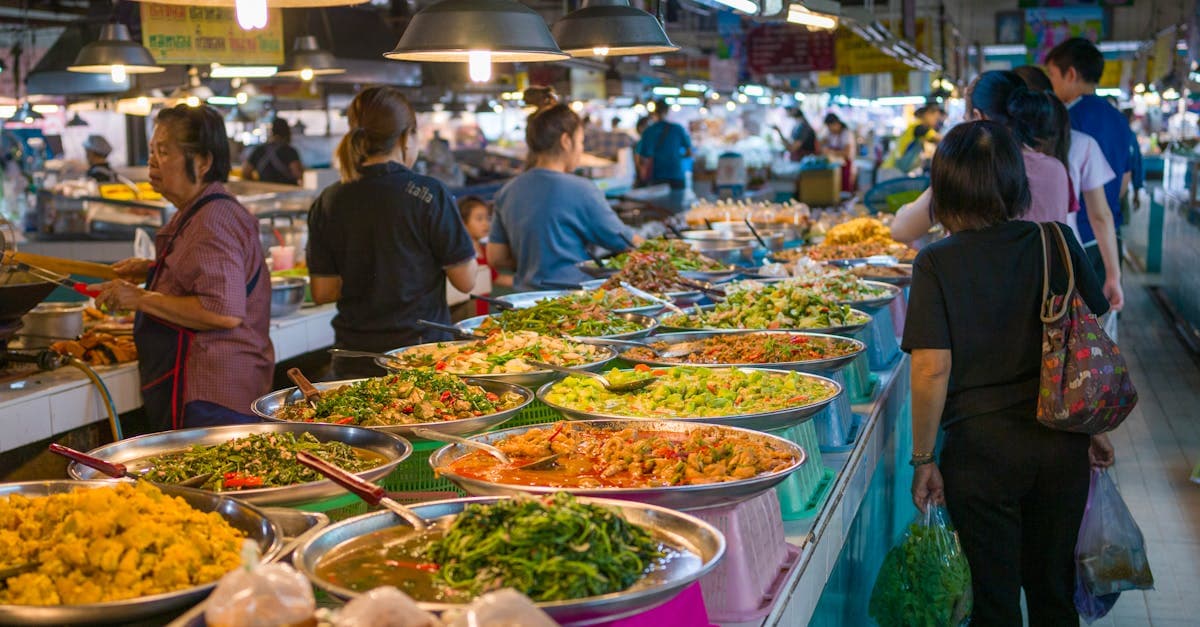
Typical Thai street food includes freshly prepared dishes sold from carts, shophouses, and market stalls, priced for daily eating. Common dishes include pad thai, som tum (green papaya salad), khao man gai (poached chicken rice), moo ping (grilled pork skewers), and various regional noodle soups. Fish sauce, palm sugar, lime, and chilli are the dominant flavour foundations across most dishes.
Grilled proteins and som tum ordered without added sugar are cleaner choices for travellers managing blood sugar. Pad thai is less suitable as it typically carries a significant sugar load from palm sugar and tamarind in the sauce. Dishes built around rice, fresh herbs, and grilled meats tend to have lower added sugar content than sauced noodle dishes.
Yes, eating street food in Thailand is a normal part of daily life for locals and visitors alike. The food is cooked fresh at stalls and carts and is a functioning food system rather than a tourist experience. Vegetarians and those with dietary needs should ask at each stall about fish sauce and shrimp paste, which are near-universal ingredients even in dishes that appear vegetarian.
Bangkok is widely considered the best street food city in the world, with precincts like Yaowarat (Chinatown) and areas around Or Tor Kor Market offering an unmatched concentration of options around the clock. Chiang Mai is the top pick for northern Thai regional food, while cities like Khon Kaen and Udon Thani in the northeast are best for authentic Isaan cuisine. Phuket Town is underrated for its unique Peranakan-influenced dishes.
Most individual street food dishes cost between 30 and 80 baht. A full street food meal with a drink typically runs the equivalent of A$5 to A$8. Boat noodles are among the cheapest options at around 15 to 20 baht per small bowl.
Thailand's street food divides into four distinct regional cuisines: northern (centred on Chiang Mai, featuring dried spices and dishes like khao soi), southern (featuring turmeric, shrimp paste, and fresh seafood with intense heat), central plains (the most familiar style internationally, including pad thai and green curry), and northeastern Isaan (featuring sticky rice, larb, and fermented flavours). Each region uses different base ingredients and cooking methods.
Bangkok's essential street foods include pad thai, som tum, khao man gai, boat noodles, pad kra pao (minced meat with holy basil and egg over rice), tom yum goong, hoy tod (crispy oyster omelette), and mango sticky rice. Moo ping (grilled pork skewers) is a popular breakfast option, and khanom buang (crispy rice-flour crepes) is a classic Bangkok footpath dessert.
Bangkok's top street food precincts include Yaowarat (Chinatown) for late-night seafood and barbecue, Or Tor Kor Market near Chatuchak for high-quality prepared food, Silom Soi 20 for affordable lunchtime eating among local office workers, Wang Lang Market for genuine local prices, and Victory Monument for boat noodles and grilled meats at working-class Bangkok prices.
Khao soi is a rich curry noodle soup served with crispy noodles and pickled mustard greens, and it is the standout dish of northern Thai cuisine. It is best experienced in Chiang Mai, where the flavour is sharper than Bangkok versions due to local supply chains and regional cooking tradition. It is available at Chiang Mai's Saturday and Sunday Walking Street markets and at Warorot Market.
Isaan food is the northeastern regional cuisine of Thailand, centred on sticky rice (khao neow), larb (minced meat with toasted rice powder and fresh herbs), gai yang (grilled chicken), and a fermented, funky style of som tum. It is the least-exported regional Thai style and is best experienced in cities like Khon Kaen and Udon Thani in the northeast. Bangkok restaurants attempt to replicate it but the depth of fermented flavour is difficult to reproduce away from the source.
Many Thai street food dishes appear vegetarian but contain fish sauce or shrimp paste as base ingredients. This applies across all four regional cuisines. Vegetarians should ask at each individual stall rather than assuming a dish is meat-free based on its visible ingredients.
Chiang Mai is the strongest pick for northern Thai food, with its Saturday and Sunday Walking Streets and Warorot Market offering khao soi and sai oua (herbed pork sausage) at their regional best. Phuket Town's Sunday Walking Street on Thalang Road is underrated for its unique Peranakan-influenced dishes blending Thai, Chinese, and Malay traditions. For Isaan food at its most authentic, Khon Kaen and Udon Thani in the northeast are the top choices.
Thai street food stalls operate across a wide range of hours, from before dawn through to well past midnight depending on the location. Morning markets (talad yen) serve locals from early morning and are generally cheaper and less tourist-oriented. Night markets and precincts like Bangkok's Yaowarat run until past 2 am.
Heat levels vary significantly by region and dish. Southern Thai food is the hottest, with dishes like gaeng tai pla at the intense end of any heat scale. Northern food runs milder. Most vendors will adjust spice levels on request. Knowing the phrase 'pet nit noi' (a little spicy) before visiting markets helps manage heat at more enthusiastic stalls.
Mango sticky rice (khao niao mamuang) is a Thai dessert made with glutinous rice and salted coconut cream served alongside fresh mango. It is considered one of the great desserts of Southeast Asia and is widely available at street stalls and night markets across Thailand. It is a staple at Bangkok markets and is found throughout the country.
Popular Thai street food breakfast options include moo ping (charcoal-grilled pork skewers with sticky rice), khao man gai (poached chicken over broth-cooked rice), and grilled bananas (kluay ping). Cha yen (Thai iced tea) is the standard accompanying drink. Morning markets in any Thai town of reasonable size are where locals eat breakfast and offer the best prices of the day.
Sources
- Top 16 Bangkok Street Food Sanctuaries (Are You Ready ... — migrationology.com
- 25 Must-Visit Bangkok Street Food Stalls — willflyforfood.net
- 15 Best Thailand Street Foods You Have to Try While ... — bucketlistly.blog